Tipping in Denmark: Is Service Included and Should You Leave Extra?
Walking into a Danish restaurant for the first time often ends in a moment of social paralysis when the bill arrives. Unlike the North American model where tipping is mandatory for survival, or some European countries where a small coin is expected, Denmark’s system is notoriously opaque to newcomers. This guide clarifies exactly when you should—and shouldn't—leave extra to avoid awkward social gaffes.
Is Service Truly Included in Denmark?
One of the most confusing aspects for expats newly arrived in Copenhagen or Aarhus is the concept of "service included." In many countries, the price you see on the menu is just the starting point. In Denmark, the price you see on the menu is the final price. By law, Danish restaurants, cafes, and hotels must include service charges, staff wages, and the 25 percent Value Added Tax (Moms) in their listed prices. This means that if a burger costs 150 DKK, you are legally and socially entitled to pay exactly 150 DKK and walk out the door without a single person looking at you twice.
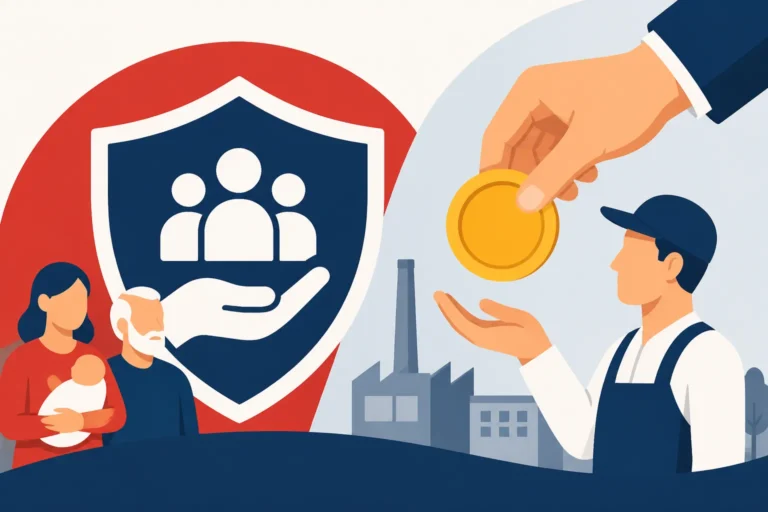
This structure is rooted in the Danish labor market. Unlike the United States, where tipped workers often earn a sub-minimum wage, service staff in Denmark are typically covered by collective bargaining agreements. These agreements ensure a living wage, pension contributions, and paid vacation. When you look at the Money in Denmark: Banking, Payments, and Financial Setup for Expats guide, you begin to see how the high cost of living is balanced by these robust social protections. Because the waiter is already being paid a professional salary, the tip loses its role as a necessary "top-up" for their livelihood and becomes a genuine reward for service that goes above and beyond the baseline.
Understanding this legal framework is the first step toward overcoming the "tipping guilt" that many foreigners carry. In Denmark, the transaction is seen as a fair exchange of money for a service already rendered at a price agreed upon by the establishment. There is no hidden moral debt to be paid at the end of the meal. This reflects a broader cultural transparency that you will also find when investigating the Cost of Living in Denmark 2026: Budgets for Singles and Families for your monthly planning.
Dining Out: To Tip or Not To Tip?
Even though service is included, you will notice that credit card terminals in Danish restaurants often prompt you to "add a tip" before you enter your PIN or tap your card. This is a relatively recent development, largely driven by the internationalization of payment software. For many expats, this prompt feels like a high-pressure demand. In reality, most Danes view it as a polite option.
If you are at a casual cafe where you order at the counter, you should almost never tip. Whether you are grabbing a quick coffee or a pastry, rounding up or adding a percentage is not expected. However, in a seated restaurant where a server has looked after you for two hours, the rules soften slightly. If the service was exceptionally friendly, the wine recommendations were spot on, or the staff handled a complicated dietary requirement with grace, leaving a tip is a kind gesture.
Usually, a tip of 5 to 10 percent is considered generous. If the bill is 960 DKK, rounding up to 1,000 DKK is a standard way to show appreciation without overthinking the math. If you are using an international card through a service like Wise to manage your local spending, you can easily see the conversion, but remember that the server sees the DKK amount. Using Wise can be particularly helpful for expats who are still balancing accounts in multiple currencies while trying to keep their Danish spending under control.
Tipping in Other Sectors: Taxis, Hotels, and Hairdressers
The "no-tip" rule extends far beyond the dining room. In many sectors, tipping is so rare that it might actually cause a moment of confusion for the service provider.
Taxis and Transportation
Danish taxi drivers do not expect tips. The fare is calculated by a meter that includes the service fee and taxes. While it was once common to "round up" to the nearest 10 DKK when paying with cash, the shift toward a cashless society has made this less common. Today, most people pay via app or card and pay the exact amount. If you are a frequent traveler using Public Transport in Denmark: Rejsekort, Trains, and Commuting, you already know how streamlined Danish transit is; taxis are no different. If a driver helps you with heavy luggage or provides an exceptionally smooth ride during a storm, rounding up is fine, but unnecessary.
Hotels
In large international hotel chains in Copenhagen, you might find a "tip jar" at the concierge desk, but this is an outlier. Porters and bellhops are rare in Denmark; most people carry their own bags. If you do receive help, a 20 DKK coin is a nice gesture, but again, the staff are paid professional wages. Housekeeping staff also do not expect a daily tip on the pillow. If you stay for a week and the room was kept immaculately, leaving a small note and some change is a personal choice, not a social requirement.
Hairdressers and Personal Services
This is perhaps the area where expats make the most mistakes. In the UK or the US, not tipping your stylist is seen as a major insult. In Denmark, it is virtually unheard of. The price of a haircut in Denmark is already quite high because it covers the stylist’s professional wage and the salon's high overhead. Adding 20 percent on top of a 600 DKK haircut is not expected and might even be met with a polite "no thank you."
| Service Type | Tipping Expectation | Standard Amount |
|---|---|---|
| Fast Food / Counter Service | Never | 0% |
| Casual Dining / Bistro | Optional / Rare | Round up to nearest 50 DKK |
| Fine Dining | Appreciated for great service | 5% – 10% |
| Taxis | Not expected | Round up to nearest 10 DKK |
| Hairdressers / Salons | Never | 0% |
| Hotel Housekeeping | Not expected | 0 – 20 DKK for long stays |
| Tour Guides | Optional | 50 – 100 DKK for private tours |
The Social Etiquette: Why Over-Tipping Can Be Awkward
There is a cultural nuance to tipping in Denmark that goes beyond the wallet. Danish society is built on a foundation of egalitarianism, often summarized by the cultural concept of Janteloven. While Janteloven is often criticized, its influence means that service workers generally want to be seen as equals to their customers, not as subordinates reliant on their "generosity."
Over-tipping can sometimes create an uncomfortable power dynamic. If you leave a massive tip at a local pub, you might be seen as "showing off" your wealth rather than being genuinely thankful. This is why the Surviving Janteloven: The Unspoken Law of Modesty in Danish Society guide is so crucial for newcomers to read. Understanding that "no one is better than anyone else" helps you realize that a simple, sincere "tak for mad" (thanks for the food) and a smile often carry more weight with a Danish server than an extra 200 DKK.
Furthermore, Danish servers do not usually "own" their tables in the way they do in other countries. The tip you leave on the card machine is often pooled and shared among the kitchen staff, the dishwashers, and the floor staff. Because of this, the direct "reward" for your specific waiter is diluted. If you really want to thank a specific person, a verbal compliment to the manager is often more effective for their career progression within the restaurant.
Digital Payments and Tipping Logistics
Denmark is one of the most cashless societies in the world. Whether you are using a local bank or an international card via Wise, you will rarely find yourself holding physical coins. This has changed how tipping works.
When the waiter brings the mobile card terminal to your table, they will usually enter the total amount and then hand the device to you. The screen will ask if you want to add a "Drikkepenge" (literally "drinking money" or tip). You can enter a percentage, a flat amount, or simply skip the step to pay the total. Do not feel embarrassed to press "Skip" or "Total." The waiter is often looking away specifically to give you privacy during this step.
If you are using MobilePay and Cashless Denmark: Surviving Without Physical Cash, you might occasionally see a QR code on a table or at a bar for tipping. This is more common in high-volume bars where people don't want to wait for a terminal. Again, this is entirely optional. If you are an expat managing finances between your home country and Denmark, using Wise to keep a balance in DKK can help you avoid the dynamic currency conversion fees that some terminals try to sneak in when they detect a foreign card.
Taxes, Tips, and the Law
If you are an expat working in the Danish service industry, or if you are simply interested in how the system works, it is important to know that tips are taxable income. According to SKAT, the Danish tax authority, any tips you receive must be reported. If the tips are paid through a card machine and distributed by the employer, they are often automatically registered. If they are given in cash, the individual worker is responsible for reporting them on their annual tax return.
For those of us living here as residents, managing these small streams of income alongside our main salaries can get complicated. If you are an American expat, for example, you have to consider how this income is viewed by the IRS as well as SKAT. Using a service like Taxes for Expats can be a lifesaver when it's time to file, as they understand the treaty nuances between Denmark and the US. They can help ensure you aren't double-taxed on your earnings, whether those earnings come from a high-tech job or a side-hustle in a cafe.
For more information on how to navigate the broader tax system, check out Taxes in Denmark Explained: A-Skat, AM-bidrag, and Marginal Rates. It’s vital to understand that your "disposable income" in Denmark is calculated after a significant tax bite, but that tax is what pays for the healthcare and education that makes the "service included" model possible.
The Expat Strategy for Tipping
If you are still feeling unsure, a good rule of thumb is to follow the lead of the locals. Watch the table next to you. In 90 percent of cases, they will pay the exact amount on the bill and say "Tak for i aften" (Thanks for tonight) as they put their coats on. If they are celebrating a big event, they might leave a little extra.
As a newcomer, you are likely still adjusting to the Cost of Living in Denmark 2026: Budgets for Singles and Families. There is no reason to put additional strain on your budget by tipping 20 percent everywhere you go. Save your tips for the places where you genuinely feel a connection to the staff or the food. In a small neighborhood "bodega" or a family-run Italian spot, a small tip can help build a relationship that turns you from a "stranger" into a "regular."
When you do decide to tip, don't make a big deal out of it. Just enter the amount on the terminal or leave the change on the table and depart quietly. In Denmark, the highest form of praise isn't a fat stack of bills; it's coming back next week. Loyalty and consistent patronage are far more valuable to a Danish business owner than a one-time tip.
Lastly, remember that your financial setup matters. If you are frequently dining out or traveling, using Wise to pay in local currency will save you enough in exchange fees over a month to pay for an entire extra meal. Balancing these small financial wins with the local culture of modesty will make your transition to Danish life much smoother.
Medical and Financial Disclaimer
This guide is for informational purposes only and represents the personal experiences and research of the author. It does not constitute professional financial, tax, or legal advice. Tax laws in Denmark and international tax obligations for expats (especially regarding the IRS) are subject to change. For specific advice regarding your tax situation, please consult a qualified professional such as Taxes for Expats or a local Danish accountant (revisor). Standard service practices may vary by establishment.