Public vs. Private Speech Therapy (Talepædagog) for Bilingual Children
Navigating the Danish healthcare and educational landscape for a child who isn't meeting language milestones is incredibly stressful, especially when you are balancing multiple languages at home. I remember sitting in a small, windowless office in Frederiksberg, clutching a translated report and wondering if my child’s silences were my fault for speaking English at home. This guide explains the differences between public and private speech therapy (talepædagog) in Denmark to help you advocate for your bilingual child's success.
Understanding the Public System: PPR and the Role of the Talepædagog
In Denmark, the public route for speech and language support is primarily handled by an entity known as PPR (Pædagogisk Psykologisk Rådgivning). This is the Educational-Psychological Advisory service attached to your local municipality (Kommune). Unlike many other countries where you might start with a pediatrician, the Danish system integrates speech therapy directly into the child’s daily environment—their daycare (vuggestue) or kindergarten (børnehave).
The public talepædagog is not just a therapist; they are a consultant who works with the parents and the educators. If you are just starting your journey, you’ll find that Healthcare in Denmark for Foreign Residents: Complete System Guide (2027) provides the necessary background on how these municipal services interact with the broader health system. The beauty of the public system is that it is entirely free of charge, funded by your Danish taxes. However, the "Danish way" often involves a heavy emphasis on integration and the acquisition of the Danish language, sometimes at the perceived expense of the child's mother tongue.
The Referral Process via Daycare and School
For most bilingual families, the first sign that support is needed comes during the mandatory language assessments. In Denmark, all children undergo a sprogvurdering (language assessment) at age three, and again at age five if there are concerns. This is a standardized tool used to measure a child’s vocabulary, comprehension, and communicative intent in Danish.
If your child’s results are "focused" or "intensive" (meaning they need support), the daycare staff will contact the PPR. You will then be invited to a meeting with a talekonsulent. It is important to realize that the PPR therapist often visits the daycare to observe the child in their natural social setting. They look at how the child interacts with peers during "samling" (morning circle) or playtime. If you are still in the process of setting up your life here, ensure you have The Yellow Health Card (Sundhedskort): Your Key to Danish Healthcare ready, as it is the primary identifier for your child in all municipal databases.
Pros and Cons of the Public Route
The primary advantage of the public system is the holistic approach. Because the therapist works with the daycare, the strategies they develop are implemented throughout the child's seven or eight hours at school, not just in a one-hour weekly session. They might suggest specific games, visual aids (like pictograms), or "dialogic reading" techniques that the Danish pedagogues can use daily.
However, the "wait and see" culture in Denmark can be frustrating for expats. It is common for PPR to suggest waiting six months to see if the child "catches up" naturally through immersion. Furthermore, public speech therapy is almost exclusively conducted in Danish. For a bilingual child struggling with phonological awareness in their mother tongue, this can feel like a missing piece of the puzzle. If you find the public system moving too slowly, you might be looking for more direct intervention. Many families choose to supplement with Finding Medical Care in Denmark: GPs, Specialists, and Referrals to rule out underlying hearing issues (høreprøve) before committing to a long-term speech plan.
Going Private: When Speed and Specialization Matter
Private speech therapy (privat talepædagog) is a growing field in Denmark, specifically in international hubs like Copenhagen, Aarhus, and Odense. Parents often turn to the private sector when they feel their child’s bilingualism is being treated as a "disability" rather than an asset in the public system. When you go private, you are the client, which gives you significantly more control over the frequency and language of the sessions.
During your first few months in the country, before your CPR registration is fully processed, you might not have access to PPR. In these instances, having Expat Health Insurance: Coverage Before You Get Your CPR Number or a plan from SafetyWing can provide a safety net for general health, though specialized speech therapy is often an out-of-pocket expense.
Finding a Bilingual Specialist
The biggest draw of private therapy is the ability to find a therapist who understands the mechanics of bilingualism. A specialized private talepædagog will not tell you to stop speaking your native language at home—a piece of advice that, unfortunately, some old-school public practitioners still give. Instead, they will work on "code-switching" strategies and help the child bridge the gap between their two (or three) languages.
In cities like Copenhagen, there are private clinics where therapists offer sessions in English, Spanish, French, or Arabic. This is crucial because if a child has a genuine language disorder (not just a delay due to relocation), it will manifest in all their languages. Testing them only in Danish, as the public system does, can lead to a misdiagnosis. If you are exploring private options, companies like Cigna Global often offer international health plans that include modules for vision, dental, and sometimes specialized therapies, which can help offset the costs of 800 to 1,200 DKK per session.
Costs and Insurance Coverage
Private speech therapy is an investment. Most private therapists do not have a direct agreement with the public health insurance (the Yellow Card). However, if you have Private Health Insurance (Sygeforsikring "danmark"): Is It Worth It?, you should check your specific "group" to see if any subsidies apply. Generally, "danmark" provides better coverage for dental and physical therapy than for speech, but it is always worth submitting your receipts.
| Feature | Public Speech Therapy (PPR) | Private Speech Therapy |
|---|---|---|
| Cost | Free (Tax-funded) | 800 – 1,200 DKK per session |
| Wait Time | 3 – 9 months typically | 1 – 2 weeks |
| Language | Primarily Danish | Multiple languages available |
| Location | Daycare, School, or Kommune office | Private clinic or home visits |
| Focus | Integration and Danish proficiency | Child’s specific speech/language needs |
| Parental Control | Collaborative with the school | High (You set the agenda) |
The Bilingual Challenge: Navigating the "Wait and See" Trap
One of the most difficult cultural hurdles for expat parents in Denmark is the egalitarian "all children develop at their own pace" philosophy. While this reduces pressure on the child, it can delay essential intervention for children with actual Speech and Language Impairment (SLI).
As a parent, you must be the "anchor." If you notice that your child is frustrated, using gestures instead of words, or avoiding social interaction, do not wait for the next sprogvurdering. You can request a meeting with your child's primary pedagogue at any time. Use the term "bekymringssamtale" (concern meeting). This triggers a formal process where the daycare must document the child's challenges and can lead to a faster referral to the PPR.
The "Home Language" vs. "School Language" Balance
A common fear among expats is that their child will never learn Danish if they continue speaking English or another language at home. Research and the modern Danish pedagogical approach actually suggest the opposite: a strong foundation in the mother tongue makes it easier to acquire a second language.
When working with a talepædagog, ensure they are looking at the "whole child." If you are considering Finding International Schools vs. Public Danish Folkeskole, the language environment will change significantly, and your speech therapy needs might change with it. In an international school, the speech therapist might be more accustomed to English-speaking milestones, whereas in a local Folkeskole, the focus will be heavily on Danish phonics and "lydering" (sounding out words).
Practical Steps for Parents in Copenhagen and Aarhus
If you are living in the Capital Region or Central Jutland, you have access to some of the best resources in the country, but the bureaucracy can be dense. For those in Copenhagen, the Børne- og Ungdomsforvaltningen (Children and Youth Administration) manages PPR. They often hold "Open House" hours where you can speak to a consultant without a formal referral.
For those who choose the private route, look for therapists who are members of Audiologopædisk Forening (ALF). This ensures they have the proper Danish credentials. While SafetyWing is excellent for nomadic expats and travelers, families settling long-term often find that Cigna Global provides the comprehensive coverage needed for recurring developmental support.
How to Advocate in the PPR Meeting
When you finally get that meeting with the public therapist, go prepared. Bring examples of how your child communicates in their strongest language. If they can tell complex stories in English but only say single words in Danish, this is vital information. It proves that the "hardware" for language is there, and the issue is likely "software" (vocabulary acquisition) or social anxiety related to the new language.
Ask the therapist for a handleplan (action plan). This should include:
- Specific goals for the next 3 months.
- How the daycare will support these goals daily.
- What you can do at home (in your native language) to support the same concepts.
- When the follow-up meeting (opfølgningsmøde) will occur.
Don't be afraid to ask for a translator if the technical Danish is too difficult. You have a right to understand the documents regarding your child's development. If you are unsure of your rights, How to Find an English-Speaking Pediatrician for Your Child can be a good starting point for a professional who can give you a second opinion on your child's physical development, such as checking for "glue ear" which often mimics speech delays.
Deciding Which Path is Right for Your Family
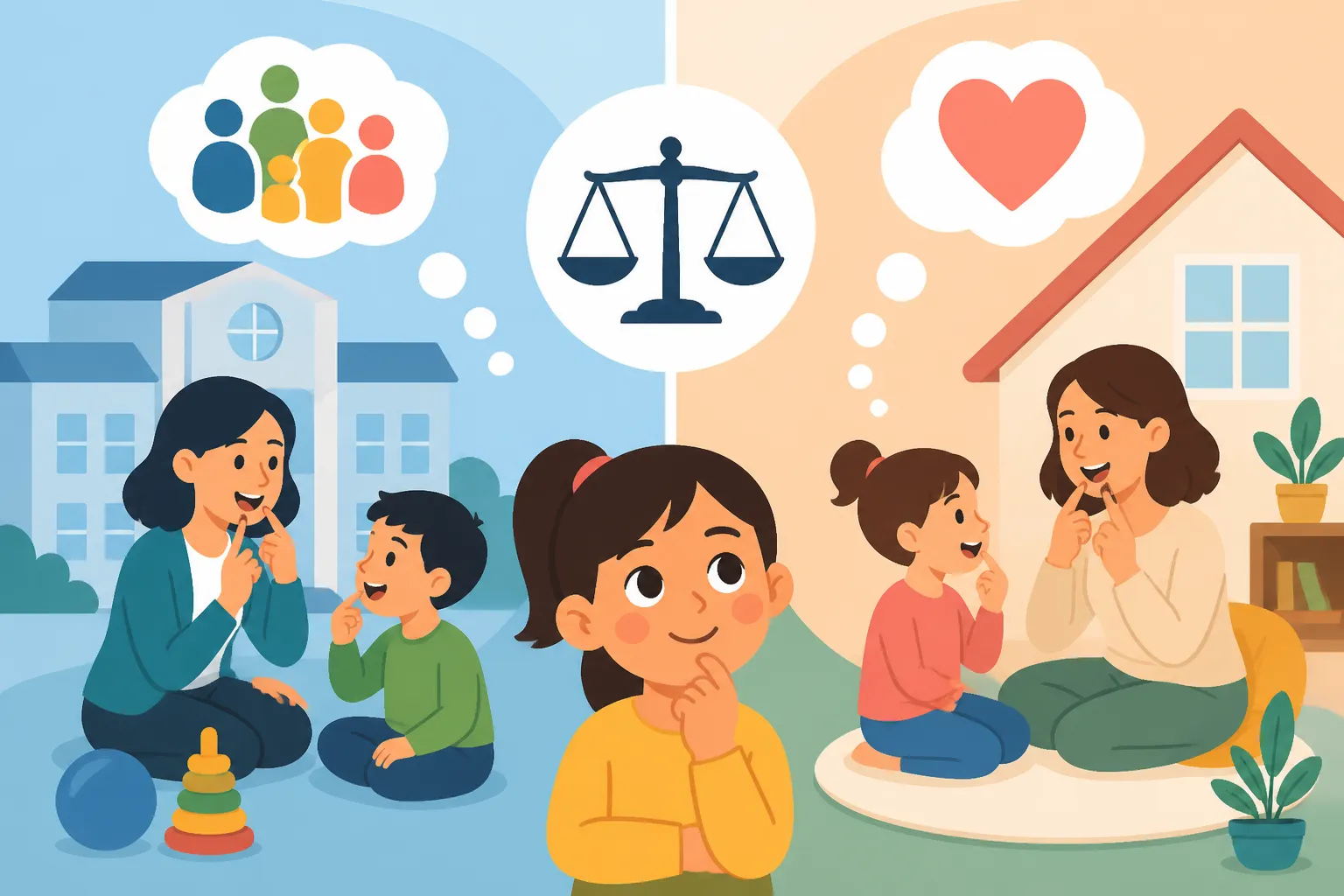
The choice between public and private speech therapy in Denmark doesn't have to be "either/or." Many families use the public system for its integration with the school while paying for a private therapist once a month to focus on the mother tongue and to get more personalized coaching for the parents.
If your child’s delay is mild and purely related to the transition to Danish, the public system's "immersion" approach often works wonders within 6 to 12 months. However, if there are signs of stuttering, significant articulation issues (lisping, substituting sounds), or a total lack of communication, the speed of the private sector is worth the cost.
Regardless of the path you choose, remember that the Danish system is designed to support the child's well-being. By staying proactive and informed, you can ensure that your bilingual child doesn't just "get by," but truly finds their voice in both their old and new homes. For more on managing your child's early years in Denmark, Family Health in Denmark: Pregnancy, Maternity, and Pediatric Care offers a broader look at the support systems available from birth through school age.
Disclaimer
This guide is for informational purposes only and represents the personal experiences and research of the author. Healthcare and educational policies in Denmark can vary by municipality and are subject to change. Always consult with a qualified medical professional or your local Kommune's PPR department regarding your child's specific developmental needs. External insurance providers like Cigna Global and SafetyWing have their own terms and conditions; ensure you review your policy for specific coverage details.