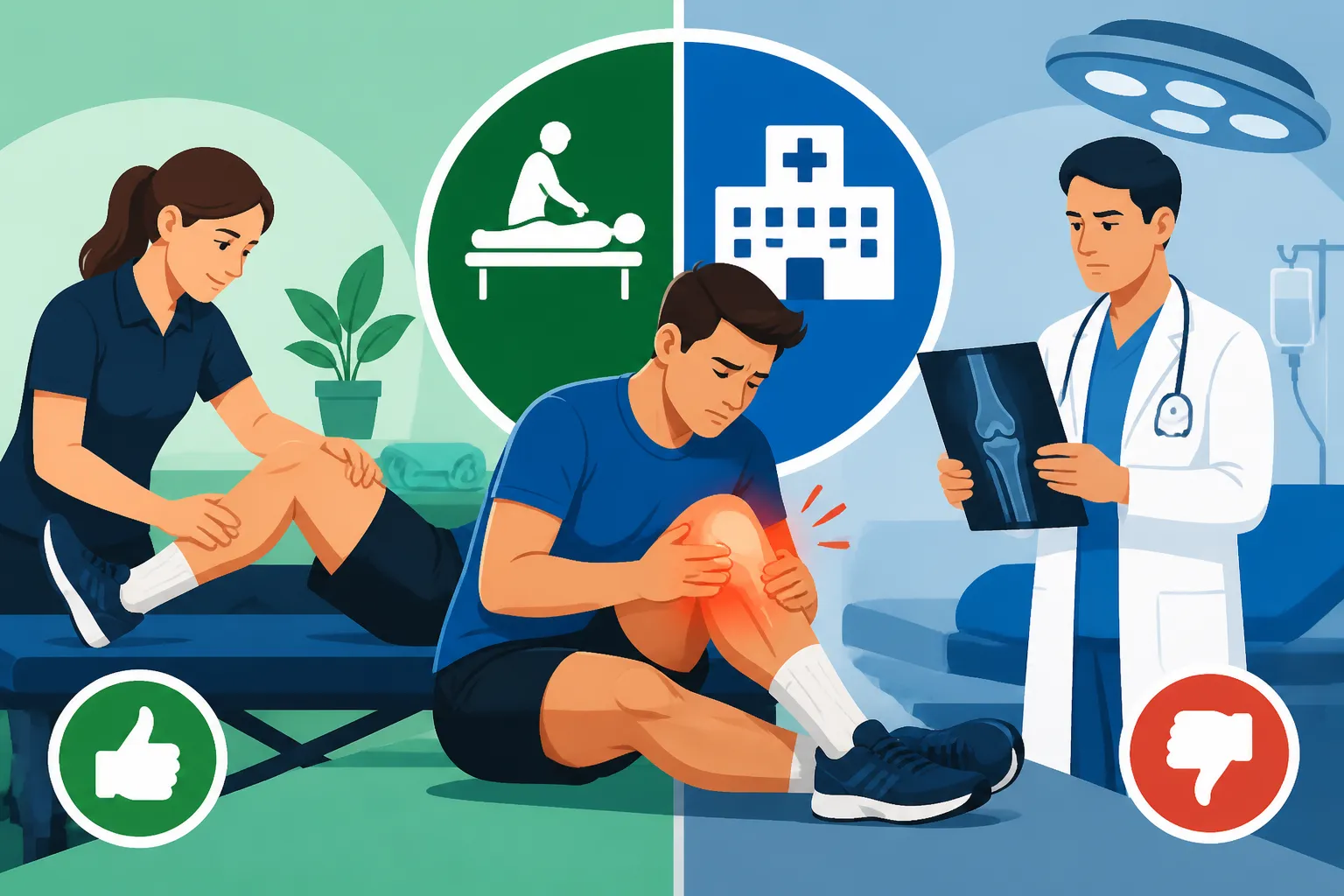
Getting Treatment for Sports Injuries: Physio vs. Hospital
You are halfway through a morning run along the Lakes in Copenhagen when a sharp, sickening pop in your ankle brings everything to a grinding halt. I remember my first major sports injury here; I spent three days hobbling around my apartment wondering if I should call an ambulance or just wait for my GP to open on Monday. This guide solves the confusion of navigating Danish sports medicine, whether you need a physiotherapist or a hospital surgeon.
Understanding the Danish Approach to Sports Injuries
The Danish healthcare system is world-class, but it operates on a very specific logic that can feel frustratingly slow to those used to on-demand private care. In Denmark, the system is designed to be conservative. This means the default response to most sports injuries—sprains, strains, and minor tears—is "watchful waiting" combined with rehabilitation rather than immediate high-tech intervention.
When you first get injured, your mind likely jumps to getting an MRI. However, in the public system, you will rarely get a scan in the first week unless there is a suspicion of a total rupture or a fracture. The philosophy here is that the human body is remarkably good at healing if given the right stimulus, which is why physiotherapy is the "Hero" of the Danish sports medicine world.
If you are an expat who has just arrived and hasn't received your CPR number yet, you might feel particularly vulnerable. This is where having a plan is crucial. While the public system is your eventual home, brands like SafetyWing provide an essential safety net for those in the "limbo" period before their yellow card arrives. They understand that a twisted knee doesn't wait for administrative paperwork to clear.
The GP as the Gatekeeper for Sports Medicine
Unless you are bleeding profusely or have a bone sticking out, your journey always begins with your General Practitioner (GP). I cannot stress this enough: you cannot simply call a hospital and ask for an orthopedic surgeon. This is a core pillar of Healthcare in Denmark for Foreign Residents: Complete System Guide (2027).
Your GP will perform a clinical assessment. They will move your limb, check your range of motion, and likely tell you to take it easy for two weeks. If the injury persists, they become the person who issues a "henvisning" (referral). Without this referral, the public system will not pay for your treatment. This is explained deeply in The Role of the GP: Why You Cannot Go Directly to a Specialist.
The Culture of Movement over Medication
One thing that shocked me when I first sought help for a rotator cuff injury was the lack of "strong" painkillers. Danes are very cautious with opioids and even high-dose NSAIDs. You might be told to buy basic paracetamol at the supermarket. If you are looking for something stronger, you'll find that Why You Cannot Buy Ibuprofen 400mg Without a Prescription is a real hurdle for many expats used to over-the-counter access in their home countries. The focus is always on getting you moving again through guided exercise rather than masking the pain with pills.
Physiotherapy in Denmark: The Go-To for Athletes
In many countries, physiotherapy is seen as a secondary "nice-to-have" after you’ve seen a "real" doctor. In Denmark, the physiotherapist (fysioterapeut) is often the primary clinician managing your recovery. They are highly trained and have a significant amount of autonomy.
Getting a Referral and Understanding Subsidies
If your GP agrees that you need professional help, they will send an electronic referral into the system. You don't get a piece of paper; it just "exists" in the national database. You can then contact any private physiotherapy clinic that has a "ydernummer" (a provider number that accepts public subsidies).
With a referral, the public health insurance covers about 35-40% of the cost. You are responsible for the remaining 60%. If you are looking to manage these out-of-pocket expenses, this is where Physiotherapy in Denmark: Getting GP Referrals and Managing Costs becomes essential reading. For those with more comprehensive needs, Cigna Global can often provide coverage that fills these gaps, allowing you to access specialized sports clinics without worrying about the per-session fee.
Private Physio Without a Referral
You can also choose to go "fully private." This means you find a clinic, book an appointment for tomorrow, and pay the full price (usually between 500 and 800 DKK per session). The benefit here is speed. Publicly subsidized slots often have a waiting list of 2 to 4 weeks. If you are training for the Copenhagen Marathon and time is of the essence, paying the full freight is often worth it.
What to Expect at Your First Session
When you arrive at the clinic, the first thing you must do is find the terminal at the front desk. Even in small private clinics, Why You Must Scan Your Yellow Card in the Waiting Room is the law of the land. This registers your arrival and allows the clinic to claim the subsidy from the state.
Your physiotherapist will not just "crack" your joints or give you a massage. The Danish approach is heavily "exercise-based." Expect to be given a program of "hjemmeøvelser" (home exercises) that you are expected to do religiously. They view themselves as coaches rather than healers; the hard work of recovery stays with you.
Hospital Treatment: When is it Necessary?
The hospital (Sygehus or Hospital) is reserved for acute trauma or cases where conservative physiotherapy has failed after several months.
When to Go Straight to the Emergency Room
If your injury happens outside of GP hours (which are usually 8:00 to 16:00), you must call the "Lægevagten" or, in the Copenhagen area, 1813. Never just show up at the ER (Akutmodtagelsen) without calling first, as they may turn you away if it isn't a life-threatening emergency.
For a suspected break or a severe ligament tear that leaves the joint "locked," they will direct you to a hospital. You can learn more about the specific phone numbers and protocols in Emergency Medical Care in Denmark: Calling 112, Lægevagten, and ERs.
Scans and Orthopedic Specialists
If your GP or physiotherapist believes you need surgery, you will be referred to an orthopedic department at a public hospital. This is where the "venteliste" (waiting list) comes into play. For non-urgent sports surgeries like an ACL reconstruction or meniscus repair, wait times can range from 3 months to over a year.
During this time, you can monitor your status and see any notes from the specialists via the national health portal. Knowing How to View Your Medical Records and Lab Results on Sundhed.dk is incredibly empowering, as it allows you to see exactly what the doctor wrote about your injury.
Using Private Hospitals to Skip the Wait
Denmark has a growing sector of private hospitals like Aleris or Capio. If you have international insurance through Cigna Global, you can often bypass the public waiting list entirely and get your surgery within days. These facilities feel more like hotels than hospitals and offer a level of specialized sports medicine that the general public hospitals, focused on life-saving care, sometimes lack. You should check Does Denmark Have Private Hospitals? Costs and Access to see if this route makes sense for your specific injury.
Comparing Your Treatment Options
To help you decide which path to take, I’ve put together a quick comparison of how the different tiers of the Danish system handle a typical sports injury (like a Grade II ankle sprain).
| Feature | Public GP + Subsidized Physio | Fully Private Physiotherapy | Hospital Emergency Room |
|---|---|---|---|
| Initial Cost | Free (GP visit) | 600 – 900 DKK | Free |
| Wait Time | 1-5 days for GP | Same day or next day | 2-8 hours (triage based) |
| Referral Needed? | Yes, for the subsidy | No | No (but must call 1813/Lægevagten) |
| Best For | Non-urgent recovery on a budget | Rapid start to rehab | Suspected fractures/dislocations |
| Treatment Focus | Exercise and long-term rehab | Specialized sports focus | Stabilizing and diagnostics |
Navigating the Financial Side of Recovery
One of the best things you can do as an athlete living in Denmark is to join "danmark" (Sygeforsikring "danmark"). This is a member-owned private insurance that works alongside the public system. They provide cash-back reimbursements for physiotherapy, which can take the sting out of a long recovery process. I highly recommend reading Private Health Insurance (Sygeforsikring "danmark"): Is It Worth It? to understand the different "groups" and how they apply to sports injuries.
However, "danmark" usually won't cover you for pre-existing injuries, and it doesn't cover major private hospital surgeries. For total peace of mind, especially if you are involved in high-risk sports like football, handball, or kitesurfing, having a policy with Cigna Global or SafetyWing is a game-changer. These brands are designed for the mobile expat who needs to know that a serious injury won't derail their finances or their career.
Managing Long-Term Injuries
If your sports injury turns into a chronic issue, the Danish system offers excellent long-term support, though it requires patience. You may be referred to a "Regional Center for Sports Medicine" if your case is complex. For those dealing with ongoing pain while managing other health issues, Managing Chronic Conditions (Diabetes, Asthma) in the Danish System offers insights into how the state handles multi-faceted healthcare needs.
Practical Advice for the Injured Expat
From my years of "field research" (mostly involving my own clumsy injuries), here are three tips for getting the best care:
- Be Your Own Advocate: Danish doctors value "ligeværdighed" (equality). Don't be afraid to ask, "What are the alternatives to waiting?" or "Can I have a copy of my X-ray?"
- Use the Apps: Download the "Min Læge" and "Sundhedskort" apps immediately. They make booking appointments and showing your insurance status seamless.
- Don't Stop Moving: Even if you can't run, ask your physio about "genoptræning" (rehabilitation) in a pool or on a bike. The Danish system thrives on proactive patients.
Whether you choose the public route or opt for the speed of private care via SafetyWing or Cigna Global, the goal is the same: getting you back on the bike and enjoying the Danish outdoors.
Medical Disclaimer
The information provided in this article is for informational and educational purposes only and does not constitute professional medical advice, diagnosis, or treatment. Always seek the advice of your physician, General Practitioner, or other qualified health provider with any questions you may have regarding a medical condition or physical injury. Never disregard professional medical advice or delay in seeking it because of something you have read on this website. If you think you may have a medical emergency, call your doctor, go to the nearest emergency department, or call 112 immediately. The author is an expat sharing personal experiences and research, not a licensed medical professional in Denmark.