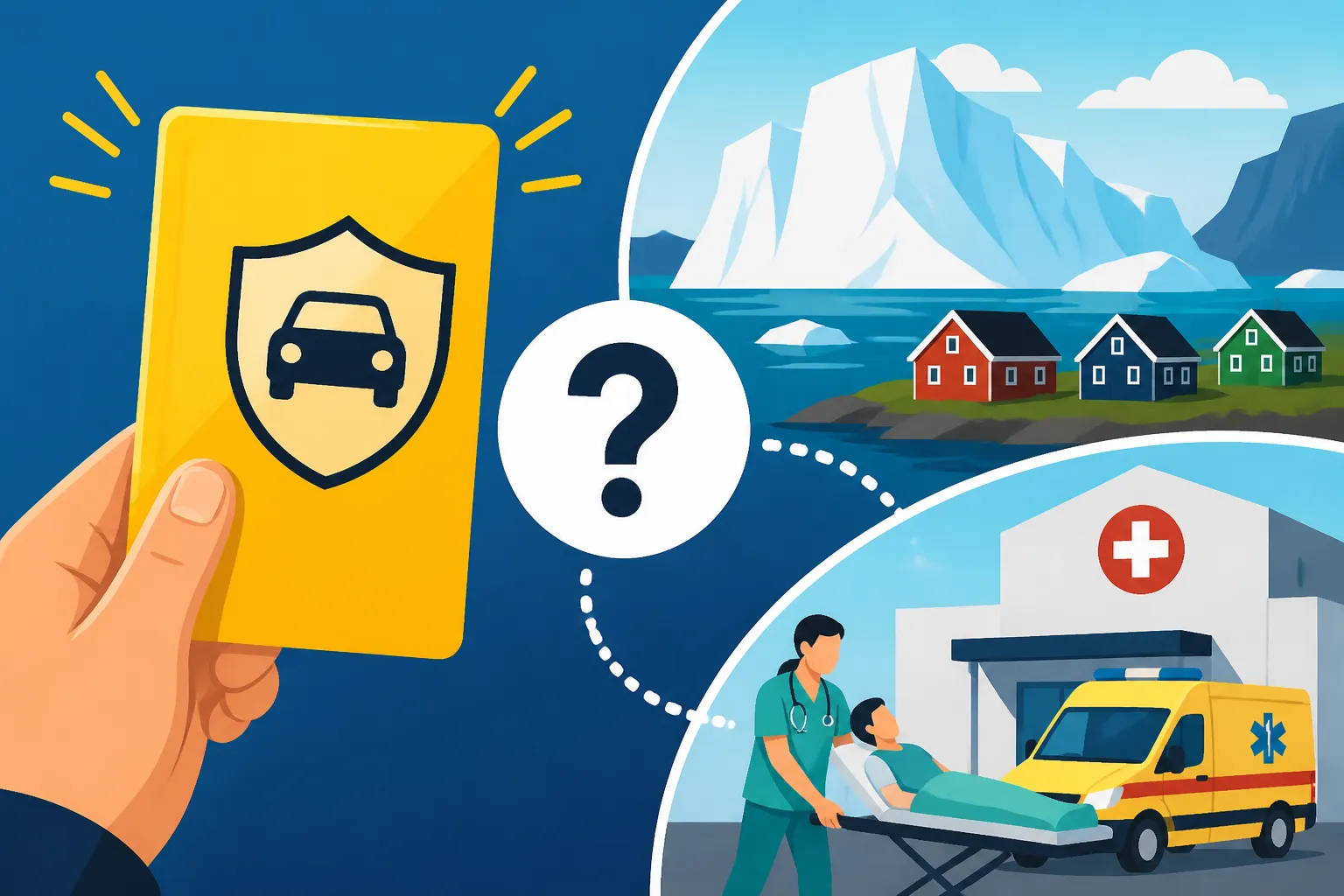
Does the Yellow Card Cover Emergency Care in Greenland and Faroe Islands?
Many expats assume that because Greenland and the Faroe Islands are part of the Kingdom of Denmark, their Yellow Card acts as a universal medical passport. I remember my first trip to the Faroe Islands, standing on a windy cliff and suddenly wondering if a twisted ankle would cost me my savings. This guide clarifies exactly how your healthcare rights translate across the North Atlantic.
The Relationship Between the Danish Yellow Card and the North Atlantic Territories
To understand how your healthcare works in Greenland and the Faroe Islands, you first have to understand the unique political setup of the Kingdom of Denmark, often called the Rigsfællesskabet. While Denmark, Greenland, and the Faroe Islands share a monarch, a currency, and a foreign policy, they do not share a unified healthcare budget. Each territory manages its own hospitals, clinics, and staff independently.
For you as a resident in Denmark, the Yellow Card is more than just a piece of plastic; it is proof that you are part of the Danish public health system. When you visit Greenland or the Faroe Islands, you are treated under the terms of the Nordic Convention on Social Security. This agreement ensures that residents of Nordic countries have access to "necessary" healthcare when visiting another Nordic territory. However, "necessary" is a word that carries a lot of weight and a few frustrating limitations that catch many foreigners off guard.
The Yellow Health Card (Sundhedskort): Your Key to Danish Healthcare is what grants you these rights, but it is important to realize that the card itself isn't always scanned in the same way it is at your local GP in Copenhagen. In many cases, you are entitled to the same treatment as a local resident of Nuuk or Tórshavn, but the administrative trail back to the Danish mainland happens behind the scenes. You must always carry the physical card with you, as digital versions or just knowing your CPR number might not suffice in a remote clinic in northern Greenland.
What Emergency Care is Actually Covered
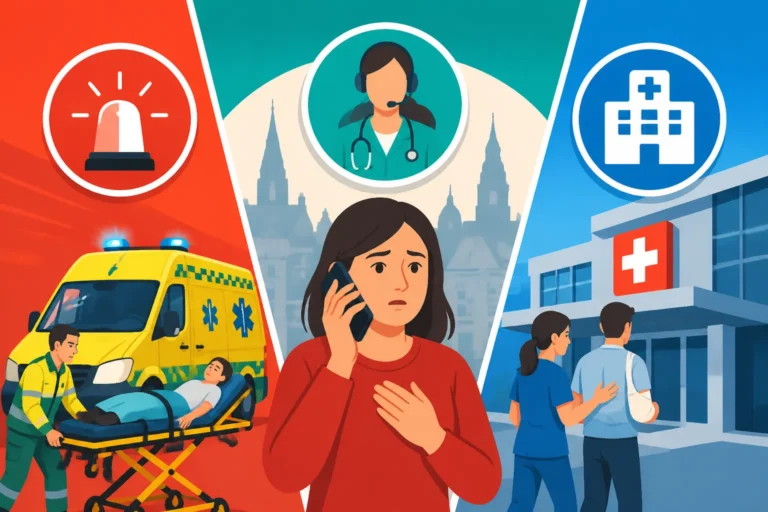
If you find yourself in a situation requiring immediate medical attention—such as a sudden illness, an accident, or an acute flare-up of a chronic condition—the Yellow Card generally has you covered. In both Greenland and the Faroe Islands, emergency hospital treatment, consultations with a district doctor, and necessary medication during your stay are provided free of charge to residents of Denmark.
In the Faroe Islands, the system is quite similar to what you experience on the mainland. If you need Emergency Medical Care in Denmark: Calling 112, Lægevagten, and ERs, you are used to a certain protocol. In the Faroes, you would contact the local "Lægevagt" or go to the National Hospital (Landssjúkrahúsið) in Tórshavn. Your Yellow Card ensures you won't be handed a massive bill for the consultation or the emergency surgery itself.
Greenland presents a more rugged reality. Because the population is so sparse, healthcare is organized into health centers and regional hospitals. If you are hiking in the backcountry and require an emergency evacuation to a hospital in Ilulissat or Nuuk, the immediate medical stabilization and hospital stay are covered. However, the definition of "emergency" is strictly interpreted. If you have a nagging back pain that you’ve had for six months and decide to see a doctor in Greenland about it, you might find that the system views this as non-essential, and you could be asked to pay or wait until you return to Denmark.
The Dangerous Gap: Medical Repatriation
This is the part where I need to be brutally honest with you: the Yellow Card does not cover medical repatriation. This is a common point of failure in an expat's travel planning. If you are seriously injured in a remote part of Greenland and need to be flown back to a specialized hospital in Denmark or even just flown home in a horizontal position on a commercial flight with a nurse, the Danish state will not pay for that flight.
Medical flights from Greenland to Denmark can cost hundreds of thousands of kroner. There are cases where families had to take out massive loans because they assumed the "Danish" system would take care of getting them back to the mainland. This is why having a robust private policy from a provider like SafetyWing or Cigna Global is not just an "extra" but a necessity when traveling in the Rigsfællesskabet. These companies specialize in the logistics that the public system ignores, specifically the high cost of getting you home if you are too ill to travel on a standard ticket.
Even if you have Understanding CPR Registration and Your Healthcare Entitlement, that entitlement ends at the hospital doors in the territory where you are being treated. The moment you need to cross the ocean to get back to your own bed, you are on your own. Private insurance like SafetyWing can bridge this gap, ensuring that a medical emergency doesn't become a lifelong financial burden.
Comparison of Healthcare Coverage for Danish Residents
| Service Category | Covered in Greenland? | Covered in Faroe Islands? | Notes for Expats |
|---|---|---|---|
| Emergency Hospitalization | Yes | Yes | Free at the point of use. |
| General Practitioner (GP) Visit | Yes | Yes | Must be for acute issues only. |
| Emergency Dental Work | Limited | Limited | Usually only for pain relief. |
| Prescription Medication | Yes | Yes | Only if prescribed for an acute illness during the stay. |
| Medical Repatriation to Denmark | No | No | This is the biggest risk factor. |
| Search and Rescue (SAR) | Usually Yes | Usually Yes | Provided by the Arctic Command or local police. |
| Non-Emergency Checkups | No | No | Wait until you return to the mainland. |
The Role of the Blue EHIC Card
Many foreigners living in Denmark also carry the Blue European Health Insurance Card (EHIC). It is a vital tool if you are Healthcare for EU/EEA Citizens: Using the Blue EHIC Card in Denmark, but its utility in the North Atlantic is specific. The Blue Card is generally intended for use within the EU and EEA. Greenland is not a member of the EU (it left in 1985), and the Faroe Islands have never been members.
However, because you are a resident of Denmark, your primary right to care in these territories stems from the Nordic Convention, not the EHIC. If you are an EU citizen living in Denmark and you haven't received your Yellow Card yet, you are in a vulnerable position. You might find that Expat Health Insurance: Coverage Before You Get Your CPR Number is the only thing protecting you if you decide to visit the Faroe Islands in your first month of residency. Without that CPR-linked Yellow Card, you are essentially a tourist without a safety net.
Navigating Local Logistics and Language
One thing you will notice as an expat is that while Danish is an official language and widely spoken in both territories, the healthcare environment feels different. In the Faroe Islands, most doctors and nurses speak Danish perfectly, so your communication should be seamless. If you are used to Calling 112 in Denmark: English Support for Ambulance Dispatch, you will find a similar level of English proficiency in the Faroese emergency services.
In Greenland, the situation can be more complex. Many healthcare professionals are Danes on short-term contracts, but in smaller settlements, you may encounter staff who primarily speak Greenlandic. While they will do their best to accommodate a Danish speaker, the cultural approach to medicine can be more "minimalist" than what you see in a high-tech hospital in Aarhus. There is a strong focus on self-reliance.
If you are traveling with a chronic condition, do not expect to find specialized clinics for everything. If you need Are Ambulances Free for Foreigners and Tourists in Denmark?, you'll be glad to know the answer is also "yes" in the North Atlantic for residents, but the "ambulance" might be a boat or a helicopter depending on where you are.
Practical Advice for Your Trip
Before you board that flight to Kangerlussuaq or Vágar, there are a few "boots-on-the-ground" steps you should take. First, check the expiration date on your Yellow Card. It sounds silly, but if your card expires while you are in a remote village in the Faroe Islands, proving your residency becomes a bureaucratic nightmare.
Secondly, always bring a sufficient supply of your regular medications. While the Yellow Card covers medication for new illnesses that arise during your trip, it is not designed to provide refills for your existing prescriptions. Trying to navigate a foreign pharmacy system for your standard blood pressure meds is a waste of your vacation time. If you do run out, you will likely have to pay the full price out of pocket and hope for a reimbursement later, which is never guaranteed.
Thirdly, consider the nature of your activities. If you are planning on extreme hiking, skiing, or sailing, your risk profile changes. The Danish public system is wonderful, but it is built for a stable, urbanized society. It is not built for the logistical nightmare of a broken leg on a glacier. This is where Cigna Global or similar international plans shine, as they often include coverage for more adventurous pursuits and the specific evacuations they might require. Traveling Outside the EU: Do You Need Private Travel Health Insurance? is a question you should answer with a firm "yes" when Greenland is the destination.
Moving Between Territories as a Resident
If you are not just visiting but actually moving to Greenland or the Faroe Islands for work, the rules change. You will eventually need to register with the local authorities and move out of the Danish CPR system. This transition period can be tricky. Generally, you remain covered by your Danish Yellow Card for the first few weeks until your local registration is complete.
During this "in-between" time, ensure you have a paper trail of your move. The authorities in these territories are used to Danes and expats moving for work, but they still require documentation. If you have any doubts about your coverage during a move, keeping a private policy with SafetyWing for a month or two can provide peace of mind while the local bureaucracy grinds away.
Final Thoughts on Safety and Preparation
The Yellow Card is a powerful document that provides a safety net most people in the world can only dream of. Knowing that you can walk into a hospital in the middle of the North Atlantic and receive life-saving care without showing a credit card is a huge relief. However, as an expat, you must be smarter than the average tourist. You must understand that the "Danish" system has geographical limits when it comes to the costs of transport and non-essential care.
By carrying your Yellow Card, understanding the limits of the Nordic Convention, and backing yourself up with private insurance for repatriation, you can enjoy the stunning landscapes of Greenland and the Faroe Islands with the same "hygge" and security you feel back in Denmark.
Disclaimer
This guide is for informational purposes only and does not constitute legal or professional medical advice. Healthcare regulations and international agreements can change; always check with the Danish Patient Ministry (Styrelsen for Patientsikkerhed) or your insurance provider for the most current information regarding coverage in Greenland and the Faroe Islands.