Sickness Benefit (Sygedagpenge): Your Rights When Off Work Due to Illness
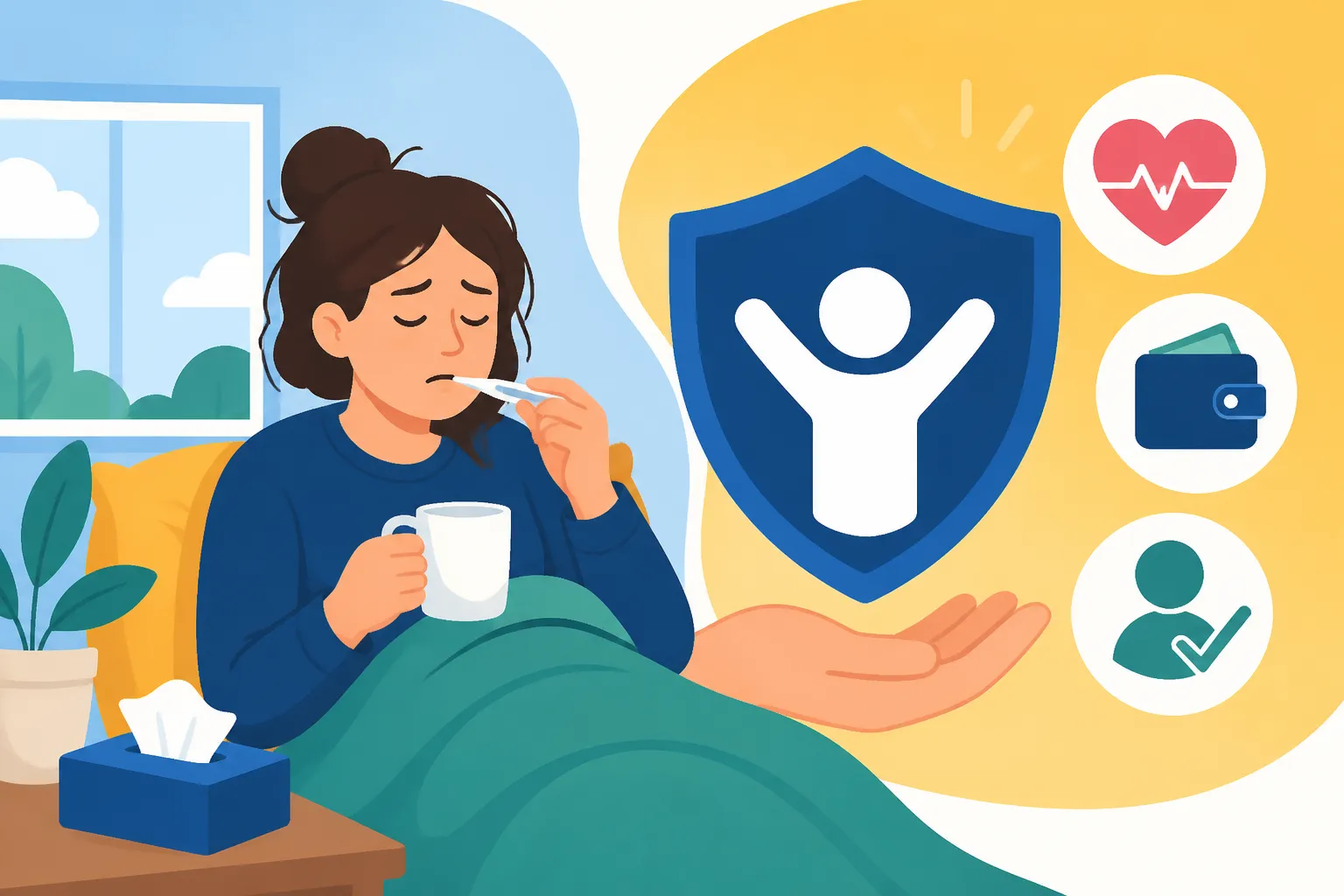
Waking up with a fever is one thing, but knowing you are too ill to work for weeks or months is a whole different level of stress when you are living abroad. I remember the sheer panic I felt when a prolonged illness sidelined me a few years ago, wondering if my rent in Aarhus would still be paid or if I’d be fired for being "unreliable." This guide breaks down the Danish sickness benefit system, known as Sygedagpenge, so you can focus on your recovery instead of your bank account.
Understanding the Fundamentals of Sygedagpenge
The Danish social security system is designed to provide a safety net if you lose your income due to illness or injury. However, the system is not just a "set it and forget it" mechanism. It requires active participation from you, your employer, and your doctor. At its core, Sygedagpenge is a cash benefit that replaces your salary, or a portion of it, when you are unable to work.
Many expats assume that because they have Healthcare in Denmark for Foreign Residents: Complete System Guide (2027), their income is automatically protected. In reality, the medical side and the financial side of illness are handled by two different branches of government. While your GP focuses on your health, the municipality (Kommune) and Udbetaling Danmark focus on the benefit payments.
What Exactly are Sickness Benefits?
Sygedagpenge is a temporary income replacement. It is not meant to be a long-term disability pension, but rather a bridge to get you back into the workforce. The amount you receive is capped at a maximum weekly rate, which is adjusted annually. For 2026, this rate is tied to the hourly wages in the labor market, but it rarely covers the full salary of a high-earning specialist.
This is why many expats choose to supplement their public coverage. If you are still in your first few months and haven't fully vested into the system, you might look at Expat Health Insurance: Coverage Before You Get Your CPR Number or private options like SafetyWing to ensure you have a broader safety net. It is important to realize that if your contract doesn't specify "salary during illness," you will likely transition to these state benefits relatively quickly.
Who Qualifies for Support?
To receive Sygedagpenge, you must meet the "employment requirement" (beskæftigelseskravet). This is the part that often trips up newcomers. Generally, you must have been employed for at least 240 hours within the last six months prior to your first day of illness. Additionally, in at least five of those months, you must have worked at least 40 hours per month.
I recall a friend who had just moved from Spain; she fell ill in her third month and was shocked to find she didn't meet the hour requirement yet. If you are an EU citizen, your work history from another EU country might be counted, but the paperwork is famously tedious. If you are a non-EU citizen, you almost certainly need to have built up those hours on Danish soil. For those who are worried about these gaps, having a policy from Cigna Global can provide peace of mind while you are building up your "seniority" in the Danish system.
The Difference Between Salary and Benefits
Many Danish employment contracts, especially those under the "Funktionærloven" (White-Collar Workers Act), guarantee full salary during illness. In this scenario, your employer pays you as usual and then they apply for reimbursement from the municipality. You don't see the "Sygedagpenge" on your payslip; you just see your normal salary.
However, if you are not covered by such a contract—common in hospitality, construction, or for those in Student Jobs and Internships: Bridging University and Career in Denmark—you might only get your salary for a short window, or not at all. In these cases, you receive the benefit directly from the municipality. Understanding which category you fall into is vital, as it changes who you need to "answer" to during your recovery.
The Employer Period vs. the Municipal Period
The timeline of a Danish sick leave is split into two distinct phases. Understanding when the responsibility shifts from your boss to the government is the key to avoiding missed payments. I’ve lived through the confusion of thinking my boss was handling everything, only to get a letter from the Jobcenter asking why I hadn't filled out my digital forms.
The First 30 Days of Illness
In Denmark, the first 30 days of your sick leave are known as the "Employer Period" (Arbejdsgiverperioden). During this time, your employer is generally responsible for paying you, provided you have worked for them for at least eight weeks and have at least 74 hours of work under your belt.
If you are sick for only a week, the municipality is never involved. You simply report sick to your manager according to your company’s internal rules. But be warned: if you fail to notify your employer within the timeframe specified in your contract (usually by the start of the workday), you could lose your right to benefits for those days. It’s also during this period that you might be asked to provide Sick Leave in Denmark: Medical Certificates (Lægeerklæring) and Boss Communication to prove your inability to work.
Transitioning to Jobcenter Support
If your illness lasts longer than 30 days, the financial responsibility shifts. The municipality begins to pay the Sygedagpenge. If you are receiving full salary, this shift happens behind the scenes. If you are not, this is when you start receiving payments directly from Udbetaling Danmark.
Once the municipality takes over, you are no longer just a "sick employee"; you become a "case" in the municipal system. You will be assigned a caseworker from the Jobcenter. Their job is to ensure you are doing everything possible to return to work. For many expats, this is the first time they encounter the legendary Danish bureaucracy. You will receive digital letters in e-Boks that you must respond to, often within tight deadlines of 8 days. If you ignore these because you're feeling too unwell to check your email, your benefits can be cut off immediately.
Meeting the Employment Requirement for the Municipality
Even if your employer paid you for the first 30 days, the municipality will re-evaluate your eligibility once they take over the bill. They look at your work history over the last six months. If you’ve recently switched jobs, they will look at your previous employer's records too.
This is a critical moment for people on temporary visas or those who have just started their careers in Denmark. If the municipality decides you don't meet the 240-hour rule, they won't pay the benefit. This is why new arrivals should keep a very close eye on their payslips and ensure every hour worked is registered correctly. If you're in a situation where you're not yet fully covered, maintaining a private plan like SafetyWing can act as a crucial buffer.
Navigating the Documentation and Administrative Hurdles
The Danish system is almost entirely digital, which is great if you’re tech-savvy but a nightmare if you’re trying to navigate it while dealing with a major health crisis. You cannot simply call the commune and say you’re sick; there is a digital trail that must be followed.
The Importance of the Lægeerklæring
Your employer or the municipality has the right to demand a medical certificate, known as a "Lægeerklæring." There are different types, ranging from a simple "Free Text Certificate" to a more complex "Possibility Certificate" (Mulighedserklæring). The latter is a collaborative document where you, your employer, and your doctor discuss what tasks you can do despite being sick.
When you go to your GP for this, you should know How to Request a Lægeerklæring (Doctor’s Note) for Your Employer effectively. Be honest with your doctor about your job requirements. If your job involves heavy lifting and you have a slipped disc, the doctor needs to state clearly that you cannot perform those specific duties. Note that while you have to pay for these certificates upfront at the clinic, your employer is legally required to reimburse you for the cost.
Using Digital Health Portals
Everything in Danish healthcare is centralized. You will likely use Sundhed.dk and MitID: Navigating Denmark’s Digital Health Portals to track your medical history and see any notes your doctor has made. During a long-term illness, the municipality will often pull data (with your consent) from these portals to verify your status.
You must be proactive in checking your e-Boks or Mit.dk. When the municipality starts a "sickness benefit case," they send a digital form called a "Splysningsskema." You must fill this out honestly, detailing why you are sick and when you expect to return. If you are an expat who struggles with Danish, don't guess the answers. Use a translation tool or ask a Danish friend for help, as mistakes on this form can lead to delays in payment.
Managing your MitID and e-Boks
I cannot stress this enough: your MitID is your lifeline. If you lose access to it while you are sick, you are effectively cut off from the state. Make sure you have the app installed on a backup device. If you are too ill to manage your digital post, you can actually grant a family member "Power of Attorney" (Læseadgang) to view your e-Boks.
This digital transparency is part of the broader Healthcare for EU/EEA Citizens: Using the Blue EHIC Card in Denmark and resident systems. The Danish government assumes that if you are well enough to be at home, you are well enough to click a few buttons. If you find the digital system overwhelming, especially if your illness is mental health-related, you might want to look into Mental Health in Denmark: Accessing Psychologists and Therapy for Expats to get professional support for the stress of the situation.
Special Rules for Freelancers and the Self-Employed
If you’ve decided to go the route of Freelancing and CVR Registration: Setting Up a Business in Denmark, your rights to Sygedagpenge look very different. You don't have an employer to pay for the first 30 days, so you are essentially on your own unless you’ve planned ahead.
Qualifying as a Business Owner
To get sickness benefits as a self-employed person, you must have carried out your business to a "significant extent" for at least six months within the last 12 months. At least one of those months must be the month immediately preceding your illness. Furthermore, the business must have been active for at least 18.5 hours per week on average.
The municipality will look at your tax records and your "Moms" (VAT) filings to prove that your business is a legitimate enterprise and not just a hobby. For many expats starting a business, the first year is the most vulnerable because you might not have the six-month track record required to trigger the state benefits. In these early stages, a policy from Cigna Global is almost a necessity for survival.
Voluntary Insurance for Shorter Illnesses
By default, the state only starts paying self-employed people after two weeks of illness. That's 14 days of zero income. However, you can sign up for a voluntary insurance scheme (frivillig forsikring) via Udbetaling Danmark. This allows you to receive benefits from either your first or third day of illness.
The premium for this insurance is quite low, and in my opinion, it's one of the best investments an expat entrepreneur can make. There is a waiting period of six months after you sign up before you can claim, so you can't wait until you feel a cold coming on to join. It's about being prepared for the "what ifs" of the future.
Transitioning from Unemployment (A-kasse)
If you are currently unemployed and receiving benefits from your A-kasse, and you fall ill, you still have rights. You must report your illness on "Jobnet" on your first day of sickness. Your A-kasse will pay your benefits for the first 14 days of illness. After that, you transition to Sygedagpenge from the municipality.
The rate remains the same as your unemployment benefit, but you are no longer required to apply for jobs or attend Jobcenter meetings during your illness. However, you will still be monitored by the municipality to see when you can return to the "available for work" status. It’s a bit of a lateral move in the bureaucracy, but it ensures you don't lose your income just because you can't go to interviews.
Long-Term Illness and Jobcenter Follow-Ups
If you are sick for more than eight weeks, the process becomes much more intensive. This is the stage where the system moves from "supporting" you to "managing" your return to work. It can feel invasive, but it's important to understand that the goal is to prevent long-term exclusion from the labor market.
The Sickness Follow-up (Sygeopfølgning)
The Jobcenter is legally required to conduct its first follow-up interview with you no later than eight weeks after your first day of illness. These meetings are usually held over the phone or in person. They will ask about your diagnosis (though you are not strictly required to reveal the specific diagnosis, only your "functional limitations") and what your employer is doing to facilitate your return.
I’ve had many colleagues feel pressured during these meetings. It’s helpful to remember that you can bring a "bisidder"—a friend, family member, or a representative from your trade union—to these meetings. If you have joined one of the Trade Unions and A-Kasse: Why Every Expat Must Understand Them, they can be an invaluable ally here. They know the law and can ensure the Jobcenter isn't pushing you back to work faster than your health allows.
The 22-Week Limit and Extensions
Sickness benefits in Denmark are not infinite. Generally, they can only be paid for 22 weeks within an 18-month period. Before the 22 weeks are up, the municipality must conduct a "Revurdering" (re-assessment) of your case.
There are several ways to extend the benefit period beyond 22 weeks, such as:
- If it is highly likely you can return to work within a short timeframe.
- If you need to undergo further "work testing" (virksomhedspraktik) to determine your capacity.
- If you have a life-threatening illness.
- If you have a pending case for an industrial injury.
If none of these apply, you might be transitioned to a "Jobafklaringsforløb," which comes with a lower financial benefit (similar to the social assistance rate). This is why having long-term private health or income protection insurance is so vital for expats who don't have a massive local support network to fall back on.
Protection from Dismissal and Trade Unions
A common question I get is: "Can my boss fire me while I'm sick?" The short answer is yes, but it’s complicated. There is no law in Denmark that says you cannot be fired for being sick. However, many collective agreements and the "Funktionærloven" provide some protections.
If you are fired solely because you are ill, and your employer hasn't tried to accommodate you (e.g., by offering reduced hours or different tasks), it might be considered an "unfair dismissal." This is where Employment Rights: Contracts, Holiday Law, and Maternity Leave knowledge becomes power. Your union can fight the dismissal or negotiate a better severance package for you. If you aren't in a union, you are largely on your own in these negotiations.
| Feature | Employer Period (1-30 Days) | Municipal Period (After 30 Days) |
|---|---|---|
| Who Pays? | The Employer | The Municipality (Kommune) |
| Requirement | 8 weeks / 74 hours worked | 240 hours in last 6 months |
| Notification | Direct to Employer | via NemRefusion / e-Boks |
| Medical Proof | Lægeerklæring (if requested) | Continuous GP updates |
| Max Benefit | Full Salary (if in contract) | Max State Rate (~DKK 4,695/week) |
Financial Comparison and Reality Check
Let's talk numbers. Living in Denmark is expensive, and a drop in income can be devastating. If you are earning DKK 50,000 a month and your contract doesn't guarantee salary during illness, moving to the maximum Sygedagpenge rate will feel like a 60% pay cut.
Calculating Your Benefit Rate
The amount of Sygedagpenge you receive is based on your hourly wage and the number of hours you are contracted for. However, it is capped at a maximum ceiling. For a full-time employee (37 hours a week), the benefit is roughly DKK 126.89 per hour (2026 rates). If you work part-time, your benefit is reduced proportionally.
It’s also worth noting that Sygedagpenge is taxable. It is treated as "A-income," meaning the state will automatically deduct your tax and your AM-bidrag (Labor Market Contribution): The Mandatory 8% Flat Tax before the money hits your NemKonto. If you are used to a high net income, the final amount can be a shock. This is where personal budgeting and having an emergency fund (or private insurance) proves its worth.
Supplementary Private Insurance
Because the state benefit has a relatively low ceiling, many professional expats opt for private income protection. Companies like Cigna Global often offer "loss of income" riders on their policies. Similarly, SafetyWing provides nomad-friendly options that can bridge the gap if you are suddenly unable to work.
Another popular option in Denmark is joining "Sygeforsikringen 'danmark'". While they don't replace your salary, they do provide significant subsidies for things like physiotherapy or psychologist visits that you might need as part of your recovery. You can read more about Private Health Insurance (Sygeforsikring "danmark"): Is It Worth It? to see if it fits your needs.
Final Practical Advice for the Sickbed
If you find yourself unable to work, do three things immediately. First, notify your employer in writing so there is a timestamp. Second, book an appointment with your GP; you need that medical record started as soon as possible, as The Role of the GP: Why You Cannot Go Directly to a Specialist means they are the gatekeepers to all further support. Third, check your e-Boks every single day.
Living through a long-term illness in a foreign country is a test of character and patience. The Danish system is designed to catch you, but you have to be holding onto the net. Stay on top of the paperwork, keep your doctor in the loop, and don't be afraid to lean on your union or private insurance providers to get through the dark days.
Disclaimer
This guide is for informational purposes only and does not constitute legal or financial advice. Sickness benefit rules and rates in Denmark are subject to frequent legislative changes. Always consult with the Danish authorities (Udbetaling Danmark or your local Kommune), your trade union, or a legal professional regarding your specific situation and rights.