What to Do If You Lose Your House Keys in Denmark
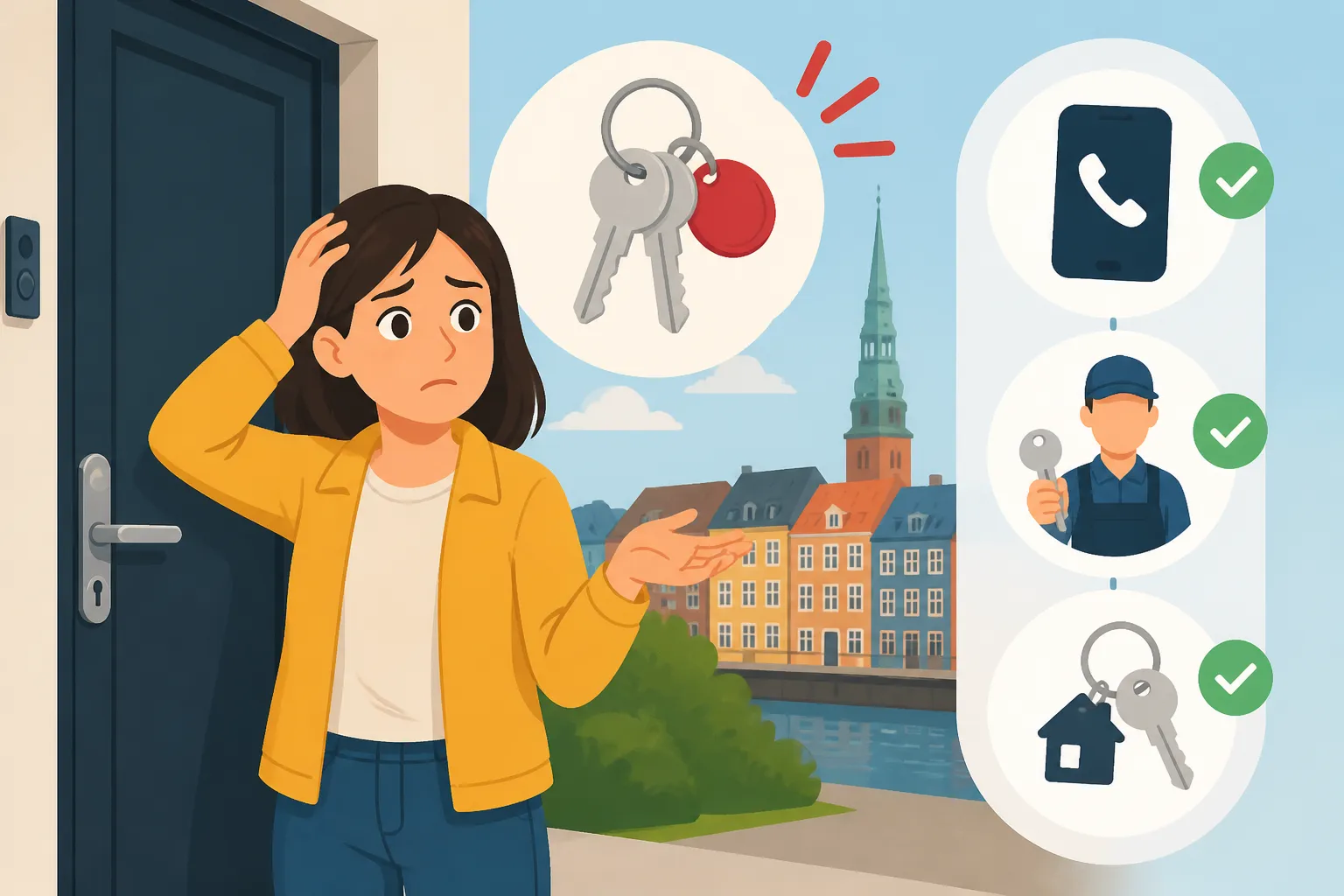
That heart-stopping moment when you reach for your keys – in your pocket, your bag, the usual spot – and they simply aren't there. For expats in Denmark, this isn't just a minor inconvenience; it can quickly escalate into a full-blown logistical and financial headache in a country where apartment security is paramount and key systems are surprisingly complex and expensive. This guide is here to walk you through exactly what to do when your house keys go missing, from the immediate panic to securing your home and understanding the costs involved.
Immediate Steps When Your Keys Go Missing
The initial wave of panic is completely normal, believe me. You start replaying your entire day, frantically patting down every surface and checking every pocket. Take a deep breath. Getting organized in this initial phase can save you a lot of grief later on.
Retracing Your Steps and Initial Search
Before you do anything drastic, take a moment to meticulously retrace your steps. Think about where you last definitely had your keys. Did you just unlock your bike? Were you at the supermarket? Maybe you left them in the changing room at the gym.
Start with the most obvious places. Check all your coat pockets, your backpack, any shopping bags you might be carrying. Have you checked underneath the car seat or in the bicycle basket? Sometimes, they've just slipped into an unexpected corner. If you've been on public transport, it's worth checking with the lost and found departments of the respective transport companies (DSB for trains, Movia for buses in Copenhagen, Midttrafik in Aarhus, etc.). While it might seem like a long shot, people often hand in lost items. Many city centers also have official lost and found offices ("hittegodskontor") managed by the police, but honestly, finding house keys there is like winning the lottery, especially if they aren't clearly labelled.
Assessing the Risk: Lost vs. Stolen
This distinction is absolutely critical, and it directly impacts your next steps and potential costs.
- Lost Keys: If you genuinely believe your keys have simply fallen out of your pocket or been misplaced somewhere without any suspicious circumstances, the immediate security risk is lower, though not non-existent. The main concern is getting back into your home and replacing the keys.
- Stolen Keys: If your bag was snatched, your wallet taken, or you suspect foul play, and your keys were with identifying information like your address or anything linking them directly to your home, then you are dealing with a much higher security risk. In this scenario, your priority shifts from merely replacing keys to securing your home against potential break-in. This situation warrants contacting the police immediately to file a report. While they might not actively search for your keys, a police report is vital for insurance claims and proving that you've taken due diligence. You should also consider alerting your neighbors, especially if you live in a building with shared access.
The core question here is: could someone who now has my keys know where I live? If the answer is yes, then you need to act fast and treat it as a potential security breach, not just a lost item.
Contacting Your Landlord or Housing Association
This is often the first and most important call you're going to make once you've established your keys are truly gone. In Denmark, most rental agreements and housing association rules stipulate that tenants are responsible for keys, and often the landlord or building management holds master keys or spare keys.
They will be your primary point of contact for gaining re-entry and arranging replacements. Many landlords or housing associations have an emergency phone number for situations like lockouts, often available 24/7. Check your rental contract, your building's notice board, or any welcome pack you received when you moved in. If you're renting through a specific agency, like those found on platforms like Spotahome, make sure you know their emergency contact details. They often have processes in place for these very situations.
Be prepared to explain the situation clearly: when and where you think you lost them, whether you suspect they were stolen, and whether you have any identifying information with them. Your landlord will guide you on whether they have a spare key, if they need to call a locksmith, or if a full lock change is necessary. Remember, communication is key here, and being proactive can prevent further complications. Your tenancy agreement, such as the widely used Typeformular A10: Understanding the Standard Danish Lease Agreement, will usually outline your responsibilities regarding keys and locks.
Getting Back Into Your Home
Okay, you've accepted they're gone, and you've made the necessary calls. Now, the immediate problem: how do you get back inside?
Emergency Locksmith Services (Låsesmed)
If your landlord doesn't have a spare key or can't assist immediately, calling a professional locksmith, or låsesmed, is your next step. Denmark has highly professional locksmiths, but they are not cheap, especially for emergency call-outs during evenings, weekends, or public holidays.
When searching for a locksmith, try to find one recommended by your landlord, building management, or local expat groups. You can search online for "låsesmed [your city]" (e.g., "låsesmed København"). Be aware that prices can vary significantly. Always ask for an estimated cost upfront, including any call-out fees and hourly rates.
Here’s what to expect:
- Proof of Residency: A legitimate locksmith will always ask for proof that you live at the address before they open your door. This usually means your passport or driving license with your CPR number and an official document showing your address (like a utility bill or rental contract). If you don't have these, they might require the police to verify your identity and residency, which adds time and complexity. Make sure to have your phone charged – perhaps with a local eSIM from a provider like Airalo if you’re new to Denmark and don’t have a local number yet – so you can easily call or show digital documents.
- Non-Destructive Entry: Most locksmiths will attempt to open your door without damaging the lock or door frame. This is usually successful unless you have a very old or complex locking system.
- Payment: Be prepared to pay on the spot. Many locksmiths accept MobilePay or Dankort, but carrying some cash might be wise, especially for smaller, independent services, though MobilePay and Cashless Denmark: Surviving Without Physical Cash is increasingly common.
Dealing with Master Keys and Building Access
Many Danish apartment buildings operate with a master key system (systemnøgle). This means that a single key can open your apartment door, the building's main entrance, the basement, the laundry room, and other communal areas. This system is convenient until you lose a key.
If you live in such a building, your landlord or housing association is almost certainly part of this system. They will either have a copy of your specific apartment key or access to the master key that can open your door. This is why contacting them first is so crucial. They might be able to let you in directly, saving you the locksmith fee.
However, if your keys were stolen, and they are part of a master key system, the security implications are much higher. A lost master key can compromise the security of the entire building. In such cases, your landlord might insist on not just replacing your apartment lock, but potentially parts of the building's communal locking system, or even changing out multiple locks across the entire building, which can be astronomically expensive. Understanding this complex system is part of why Renting in Denmark: Complete Guide for Expats (2027) emphasizes being aware of your lease terms.
Temporary Accommodation Options
If you can't get into your apartment immediately – perhaps it's late at night, a holiday, or you can't reach anyone – you'll need a place to stay.
- Friends or Family: The most obvious and cost-effective solution is to reach out to friends or family in Denmark. Even if it's just for one night, it offers a safe and familiar place to regroup.
- Hotel or Hostel: If friends aren't an option, a hotel or hostel is your next best bet. Book something online, but confirm that they accept foreign credit cards if you don't have a Danish one yet. Remember that these unexpected costs can add up quickly, so be sure to refer to guides like Money in Denmark: Banking, Payments, and Financial Setup for Expats to manage your finances.
- Emergency Accommodation: In very rare cases of extreme hardship or if you're stranded without funds, your municipality might have some limited emergency accommodation services, but these are typically reserved for homelessness or dire social situations and are not standard for a simple lost key scenario.
Replacing Your Keys and Ensuring Security
Once you're back inside, the immediate crisis has passed, but the long-term solution of replacing your keys and ensuring your home's security still needs addressing.
The Cost of Replacement and Potential Liabilities
This is where the financial sting often hits hardest for expats in Denmark. Replacing keys, especially those part of a master key system, is notoriously expensive.
- Individual Key Replacement: If you've just lost a single, standard apartment key, the cost might be a few hundred DKK per key. However, if your key is a special security key that can only be duplicated by a certified locksmith upon presentation of a "key card" (nøglekort), the cost can be higher, and the process longer.
- Lock Cylinder Replacement: If your keys were stolen, or if there's any risk that the person who has your keys knows your address, your landlord will almost certainly insist on replacing the entire lock cylinder. This is not just for your apartment door but potentially for all locks that your lost key could open (e.g., basement, main entrance). A new, high-security lock cylinder can easily run into several thousand DKK (think 3,000 – 8,000 DKK or more), plus the locksmith's labor.
- Who Pays? In almost all cases of lost or stolen keys, you, the tenant, are liable for the cost of replacement. Your rental contract will explicitly state this. This liability extends to the replacement of communal locks if your lost key compromised building security. It’s a common expat frustration that these costs are so high, but the Danish system places a premium on security and communal responsibility. This is why good documentation, such as The Move-In Inspection Indflytningssyn: Documenting Property Flaws, is important, though less so for keys.
Changing Locks: When and How
You don't always need to change the entire lock cylinder if you lose your keys, but it's crucial to understand when it's necessary and how the process works in Denmark.
- When It's Necessary: A full lock change is almost always required if:
- Your keys were stolen, and identifiable information (like your address or mailbox key) was with them.
- Your lost key is part of a master key system, and its disappearance compromises the security of multiple apartments or common areas.
- Your landlord or housing association deems it necessary for security reasons.
- The Process: You cannot simply call any locksmith to change your apartment lock without your landlord's consent. Because the landlord owns the property and the locking system, they must be involved.
- Contact Landlord: Inform them of the situation and your concerns.
- Landlord Arranges: The landlord or housing association will typically contact their preferred locksmith. This ensures that the new lock is compatible with the building's existing system (if any) and that they receive copies of the new keys for their records.
- Cost Responsibility: As mentioned, the cost will almost certainly fall to you.
It’s important to remember that Danes take security very seriously. While the costs can feel exorbitant, they reflect the quality of the locking systems and the communal security aspect, especially in apartment buildings. If you need to find similar services in the future, our guide on Finding English-Speaking Handymen: Finding Plumbers and Electricians offers great general advice for locating reliable tradespeople.
Preventive Measures: Key Finders and Spare Keys
While hindsight is 20/20, there are steps you can take to mitigate the risk of losing keys again or at least make the recovery process easier.
- Key Finders: Consider attaching a small Bluetooth tracker (like a Tile or Apple AirTag) to your key ring. These devices can help you locate keys within a certain range using your smartphone or even leverage a wider network if your keys are truly lost far from home.
- Trusted Spare Key: If permitted by your landlord, leave a spare key with a trusted friend, colleague, or neighbor who lives nearby. This is often the quickest and cheapest solution to a lockout. However, never hide a key outside your home (e.g., under a doormat or in a fake rock), as this is a huge security risk and could invalidate your insurance if your home is burgled.
- No Identifying Information: Never attach a tag with your full address to your keys. If they are lost or stolen with your address, it provides a direct link to your home. A phone number (without your name) or an email address might be acceptable if you prefer to be contacted, but be mindful of privacy.
- Regular Checks: Make a habit of checking for your keys when you leave and enter your home. A simple routine can prevent a lot of stress.
Insurance and Financial Considerations
Navigating the aftermath of lost keys in Denmark almost always involves thinking about insurance and your wallet. It's a key part of settling into the country and understanding your financial responsibilities as a resident.
Home Contents Insurance (Indboforsikring)
This is perhaps the most important piece of advice I can give any expat in Denmark: get home contents insurance, known as Indboforsikring. It's not mandatory, but it's an absolute lifesaver. Our dedicated guide, Indboforsikring: Why Home Contents Insurance is Crucial for Renters, delves into this in detail.
- Coverage for Lost Keys: Many Indboforsikring policies in Denmark offer coverage for lost or stolen keys, including the cost of replacing lock cylinders. The specific terms and conditions will vary between providers and policies, so it's vital to read the fine print or speak directly with your insurance company.
- Deductible (Selvrisiko): Be aware that most policies will have a deductible (known as selvrisiko). This is the amount you have to pay out of your own pocket before your insurance coverage kicks in. If the cost of replacing your keys or locks is less than your deductible, it might not be worth making a claim.
- Making a Claim: If you decide to claim, you'll need to provide documentation. This typically includes a police report if the keys were stolen, invoices from the locksmith, and possibly correspondence from your landlord.
Given the high cost of Danish lock systems, Indboforsikring can turn a potentially crippling expense into a manageable one. It’s an essential part of being prepared for unforeseen incidents in your Danish life.
Documenting the Incident
Good documentation is your best friend when dealing with insurance companies or disputes with landlords, especially in a country where official processes are well-structured.
- Police Report (if stolen): If you suspect your keys were stolen, file a police report immediately. Get a copy of the report, as your insurance company will require it.
- Communication Records: Keep a detailed record of all communication with your landlord, housing association, and locksmith. Note down dates, times, who you spoke to, and what was agreed upon. If possible, follow up phone calls with a brief email to create a paper trail.
- Invoices and Receipts: Collect all invoices and receipts from the locksmith. These will be essential for any insurance claim you make.
- Photos (if applicable): While less relevant for lost keys, if there was any damage (e.g., to the door if a locksmith had to drill), take photos.
Being thorough in your documentation will not only streamline any insurance claims but also provide clear evidence if there's any disagreement about liability for costs. You might even receive official communication about such matters via your digital post system like E-Boks vs. Mit.dk: Receiving Official Financial Mail from the State. Remember that for any official administrative process, especially involving your address, your The CPR Registration Rule: Why Your Address Matters is foundational.
Table: Key Actions for Lost vs. Stolen Keys
To help you navigate the process, here's a quick summary of the key actions to take depending on whether your keys are lost or stolen:
| Situation | Immediate Action | Landlord/Housing Assoc. | Locksmith (Låsesmed) | Insurance (Indboforsikring) | Security Risk | Potential Cost Impact |
|---|---|---|---|---|---|---|
| Lost Keys | Retrace steps, search thoroughly, check lost & found | Contact immediately | Call if landlord cannot help; non-emergency | Check policy for replacement coverage | Low to Moderate | Key replacement (your cost) |
| Stolen Keys (with ID) | File police report, retrace steps | Contact urgently | Call urgently (with landlord permission) | File claim ASAP | High (potential break-in) | Lock cylinder change (your cost) |
| Stolen Keys (no ID) | File police report (for record), retrace steps | Contact immediately | Call if landlord cannot help; non-emergency | Check policy for replacement coverage | Moderate | Key replacement (your cost) |
Note: Costs are approximate and depend heavily on the type of key, lock, and service required.
Disclaimer
The information provided in this guide is for general informational purposes only and does not constitute legal, financial, or insurance advice. While we strive to provide accurate and up-to-date information, rules and regulations in Denmark can change. Always consult with the relevant authorities, your landlord, insurance provider, or a legal professional for advice tailored to your specific situation.