Can You Fly a Drone in Residential Areas in Denmark?
So, you've just arrived in Denmark, or maybe you're a seasoned expat looking for a new hobby, and you've got a shiny new drone. The open skies, the beautiful Danish landscapes – it's tempting to want to capture it all from above. But then you look at those charming, cozy residential streets, or even just the park next to your apartment, and a big question mark pops up: "Can I actually fly my drone here?" Let me tell you, navigating drone regulations in Denmark, especially around residential areas, is a common headache for many foreigners, and for good reason. It's not as simple as just "flying wherever." This guide is going to walk you through the nuances, the rules, and the very real Danish approach to privacy and public space when it comes to drones.
The Short Answer: Generally, No, Not Without Strict Rules and Considerations
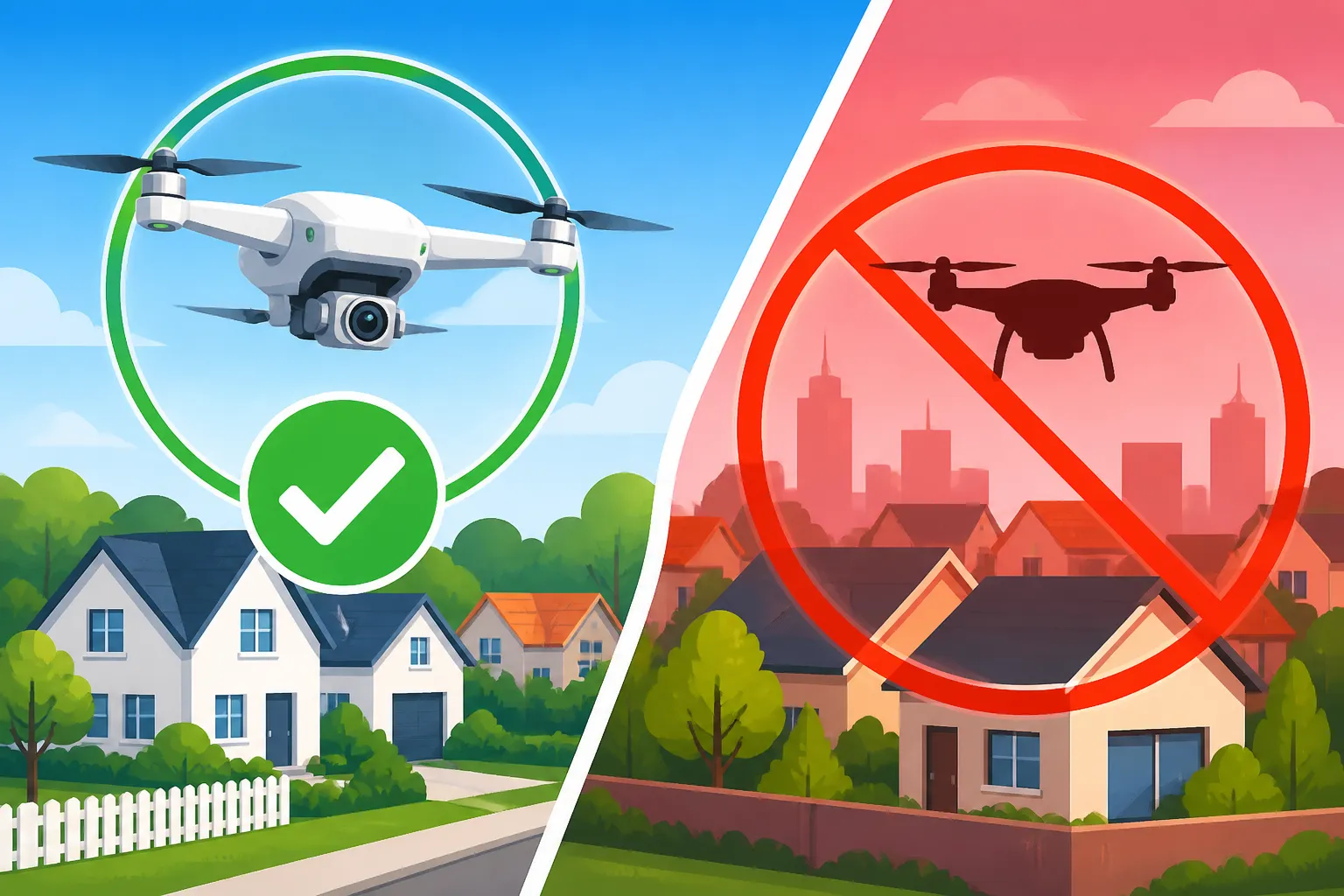
Before you even unpack your drone from its case, let's get straight to the point: flying a drone freely in Danish residential areas is, for the most part, a no-go for recreational pilots. Denmark, like the rest of the EU, adheres to strict regulations designed to protect public safety, personal privacy, and airspace integrity. Residential zones are inherently complex, full of people, homes, and a strong cultural emphasis on individual space.
Why Danish Residential Areas are Tricky for Drone Pilots
The core issue boils down to two things: density and privacy. Danish residential areas, whether it's a quaint village or a bustling city block in Copenhagen, are packed with private properties and, more importantly, people. Danes value their personal space and privacy immensely. The idea of a drone buzzing overhead, potentially recording or observing, can feel like a significant intrusion, even if you have no malicious intent. This cultural context often means that what might be a minor infringement elsewhere is taken very seriously here.
Imagine living in a cozy apartment you found on a platform like Spotahome, trying to enjoy your small balcony, and suddenly there's a drone hovering nearby. It's not just about what the drone can see, but the feeling of being observed. This societal expectation feeds directly into the regulations. You cannot simply fly over someone's house without their consent, let alone multiple houses, as that immediately enters the realm of privacy violation. Even flying near properties requires maintaining significant distance from individuals not involved in your operation. This becomes nearly impossible in most residential settings.
Distinguishing Recreational vs. Professional Use
Another crucial distinction in Denmark's drone landscape is whether you're flying for fun or for commercial purposes. The rules, while stemming from the same EU framework, become significantly more stringent for professional operations.
- Recreational Pilots (Open Category): Most expats starting with a drone will fall into the "Open" category, meaning you're flying for leisure, maintaining visual line of sight, and staying below 120 meters (approximately 400 feet). Even within this seemingly free category, there are subcategories (A1, A2, A3) that dictate how close you can fly to people. In residential areas, flying in subcategories A1 or A2 (which allow closer proximity to people or even over uninvolved people with lighter drones) is often technically difficult or practically impossible due to the sheer number of "uninvolved persons" and privacy considerations. Flying in an A3 subcategory, which demands no flight over uninvolved people and significant distance from residential, commercial, industrial or recreational areas, essentially rules out most urban or suburban residential zones.
- Professional Pilots (Specific/Certified Categories): If you're looking to use a drone for work – say, real estate photography, inspections, or filmmaking – you'll likely need to operate under the "Specific" category. This requires extensive training, operational authorisations from the Danish Civil Aviation and Railway Authority (Trafikstyrelsen), and usually detailed risk assessments. It's a whole different ball game, involving permits, insurance, and often pre-notifying local police and air traffic control. For a typical expat just wanting to capture some nice vacation footage, this level of regulation is usually overkill, but it highlights just how seriously Denmark takes drone operations.
Navigating the Specifics: Key Regulations for Urban & Residential Flight
Denmark has fully implemented the European Union Aviation Safety Agency (EASA) drone regulations, which means there's a common framework across all EU member states. However, each country still has some leeway to adapt these rules to local conditions, and Denmark leans towards the stricter side, particularly concerning urban and residential environments.
EU Drone Regulations and Danish Adaptations
The EASA framework categorizes drones and their operations, but for recreational flying in residential areas, the "Open" category is what you're likely dealing with.
- A1 Subcategory: This is for very light drones (under 250g) and allows flight over uninvolved people, but not over crowds. While a small drone might fit here, the privacy implications in a residential area still stand. Filming someone's garden or window, regardless of drone weight, is generally a no-go.
- A2 Subcategory: For drones up to 4 kg. This category requires you to fly at a safe distance from uninvolved people, with a minimum horizontal distance of 30 meters (or 5 meters in low-speed mode). In a typical residential street, maintaining this distance from every person, car, and house, while keeping line of sight and respecting privacy, is incredibly challenging.
- A3 Subcategory: For drones up to 25 kg. This is the most restrictive in the Open category, requiring flight only in areas where there are no uninvolved people present, and a minimum horizontal distance of 150 meters (approximately 500 feet) from residential, commercial, industrial, or recreational areas. This pretty much disqualifies any typical residential zone.
So, while the EU rules set a baseline, Denmark's strong emphasis on privacy and public order effectively means that any recreational drone flight in a densely populated residential area is fraught with peril. It's not just about avoiding hitting someone; it's about avoiding disturbing them or infringing on their sense of personal space. This is a crucial aspect of Social Integration: Making Friends and Understanding Danish Etiquette – knowing these unwritten rules.
Designated No-Fly Zones and Restricted Airspace
Beyond the general restrictions for residential areas, Denmark has very specific no-fly zones that are absolutely off-limits for drones. These are typically shown on official drone maps, and you must check these before every flight.
- Airports and Aerodromes: A strict 5-kilometer radius around airports like Copenhagen Airport (CPH) is a complete no-fly zone, and often extended zones with height restrictions exist further out. This covers a significant chunk of many city suburbs.
- Military Installations: Any military base, training ground, or other defense facility is a no-fly zone.
- Critical Infrastructure: Power plants, major industrial sites, ports, and certain government buildings fall under this.
- Prisons: Absolutely forbidden to fly near or over.
- Central Copenhagen and Other Major Cities: Large parts of central Copenhagen, especially around governmental buildings (like Christiansborg Palace, where the Danish Parliament sits) and royal residences, are permanent restricted zones. Similar, though sometimes smaller, zones can exist in other major cities like Aarhus, Odense, or Aalborg. These restrictions are in place for security and public safety.
To illustrate these zones, the official Danish Civil Aviation and Railway Authority (Trafikstyrelsen) provides an online map, often referred to as a "drone map" (Droneluftrum.dk or similar interactive services), where you can input your location and see current restrictions. Seriously, this map is your best friend if you're even contemplating flying a drone here. You'll need to stay connected to access this, perhaps with an eSIM from a provider like Airalo if you’re new to the country and haven’t sorted out a local phone plan yet. Checking these maps is not optional; it’s mandatory.
Privacy Concerns and the GDPR
This is where things can get particularly thorny. Denmark is part of the EU, which means the General Data Protection Regulation (GDPR) is in full effect. This powerful regulation governs how personal data is collected, processed, and stored. When you fly a drone with a camera, you are very likely collecting personal data, even if it's just incidental footage of people or identifiable properties.
- Filming Individuals: If your drone camera captures identifiable individuals, you are collecting personal data. Without explicit consent from those individuals, this is a violation of GDPR. In a residential area, it's virtually impossible to fly without inadvertently capturing people.
- Recording Private Property: Even if no people are visible, filming private property (gardens, balconies, inside windows) is a huge privacy infringement. Danes are particularly protective of their homes and private spaces. A drone hovering outside a window, even far away, would likely be seen as highly intrusive and potentially lead to a complaint.
- Noise Pollution: Drones, even small ones, make noise. While not strictly a GDPR issue, it's a significant nuisance in residential areas and can quickly lead to neighbors making complaints to the police or your landlord. Remember how serious Danes are about Quiet Hours and Apartment Rules: How to Avoid Neighbor Conflicts? The same applies here.
The consequences of violating privacy laws can be severe, including significant fines. It's not just a slap on the wrist. Many expats struggle with understanding the depth of Danish privacy expectations, especially if they come from countries with more relaxed norms. But trust me, it’s a big deal here.
Getting Permission: When and How You Might Fly in Residential Settings
Given all these restrictions, you might be wondering if it's ever possible to fly a drone in a residential area in Denmark. For recreational pilots, the answer is almost always "no" for a practical flight that accomplishes anything meaningful, unless it's your own private, isolated property and you're meticulously careful not to infringe on neighbors. For professional use, it can be possible, but it involves a lot of red tape.
The 'Specific' Category and Operational Authorisations
If your drone operation doesn't fit within the "Open" category's strict limitations – which it won't if you want to perform complex maneuvers, fly beyond visual line of sight, or operate in densely populated areas for commercial reasons – you enter the "Specific" category. This is predominantly for commercial operators.
- Risk Assessment: You'd need to conduct a thorough risk assessment of your proposed operation, detailing every potential hazard and how you plan to mitigate it.
- Operational Authorisation: This assessment is then submitted to the Danish Civil Aviation and Railway Authority (Trafikstyrelsen). If approved, they issue an operational authorisation, which specifies the conditions under which you can fly. This often includes requirements for specialized training, advanced technical equipment, and very specific flight plans.
- Pre-Notification: Even with an authorisation, you often need to pre-notify local police and air traffic control before each flight in certain areas.
So, while theoretically possible for commercial purposes, obtaining an operational authorisation for a residential area flight is a complex, time-consuming, and expensive process that is definitely not for the casual hobbyist. It requires expert knowledge of aviation safety and regulatory compliance.
Seeking Local Consent and Practicalities
Let's say, against all odds, you have a very specific, non-commercial reason to fly a drone in a very limited residential context – perhaps you own a detached house with a large, private garden, and you want to photograph just your own property. Even then, you need to be incredibly careful.
- Explicit Consent from Neighbors: You would need to get explicit, written consent from every single neighbor whose property or person might be captured, even incidentally, or whose peace might be disturbed by noise. This means knocking on doors, explaining your plans, and getting signatures. Good luck with that, especially in a culture where people cherish their privacy and might be suspicious of such requests.
- Strict Adherence to Flight Plan: Your flight would need to be meticulously planned to ensure no deviation into non-consenting airspace.
- No Public View: Ensure your flight path and camera angles do not capture public streets, parks, or common areas.
This level of effort for a simple recreational flight makes it practically unfeasible. It's much simpler and safer to find designated drone flying areas or wide-open, unpopulated spaces. When you're trying to figure out all these rules, remember that finding a place to live in Denmark, perhaps through platforms like Spotahome, often involves dealing with strict rules as well, though usually less about airspace and more about deposits and contracts.
Table: Overview of EU Drone Open Categories & Residential Flight Feasibility
| Category | Drone Weight | Proximity to Uninvolved People | Residential Area Feasibility (Recreational) | Notes |
|---|---|---|---|---|
| A1 | < 250g | Allowed to fly over | Very difficult / High risk | Smallest drones. Still, privacy concerns (GDPR) and noise make residential flight problematic. Cannot fly over crowds. |
| A2 | < 4kg | 30m horizontal from people | Extremely difficult / Very high risk | Requires advanced knowledge. Maintaining 30m distance in residential areas is practically impossible due to people, buildings, and general density. |
| A3 | < 25kg | 150m from residential/recreational areas | No, almost impossible | Effectively rules out all residential, commercial, industrial, or recreational areas. Requires flying in remote, unpopulated zones. |
| Specific | Any | Varies by authorisation | Possible (professional only) | Requires explicit authorisation from Trafikstyrelsen, detailed risk assessment, specialized training, and often local police/ATC notification. Not for hobbyists. |
Disclaimer: This table is a simplified overview. Always consult official Danish Civil Aviation and Railway Authority (Trafikstyrelsen) documentation and drone maps before any flight.
Consequences and Responsible Drone Piloting in Denmark
So, what happens if you decide to throw caution to the wind and launch your drone in a residential area without proper consideration or authorisation? The consequences in Denmark can range from a stern lecture to significant legal trouble.
What Happens if You Break the Rules
Denmark doesn't mess around with rules, especially when it comes to safety and privacy.
- Fines: The most common consequence for violating drone regulations is a hefty fine. These aren't just minor penalties; they can quickly run into thousands of Danish Kroner (DKK). For example, flying too close to an airport can result in fines of DKK 5,000 or more. Privacy violations can incur even larger fines under GDPR.
- Confiscation of Equipment: In more serious cases, particularly repeat offenses or flights in highly restricted zones, the police have the authority to confiscate your drone and associated equipment. Getting it back can be a lengthy and uncertain process.
- Legal Action: If your drone causes damage, injures someone, or severely violates privacy, you could face civil lawsuits or even criminal charges. Imagine trying to explain yourself to a Danish court – it's not a situation any expat wants to be in. Cases of severe privacy infringement, especially involving filming people without consent, are taken very seriously.
- Deportation/Visa Issues: While not directly linked to drone rules, any serious legal trouble can indirectly impact your residency status in Denmark, especially if it involves criminal charges. Remember, understanding broader administrative processes like Understanding CPR Registration and Your Healthcare Entitlement is key to a smooth life here, and legal issues can derail that.
It's truly not worth the risk. The friendly, orderly nature of Danish society relies on everyone respecting common rules and the privacy of others. Violating these norms can quickly sour your experience and create unnecessary headaches.
Best Practices for Expats and Tourists
As a veteran expat, my advice is always to err on the side of caution. When it comes to drones in Denmark, this means being extra vigilant and proactive.
- Always Check Official Drone Maps: Before every flight, use the official Danish drone map (Droneluftrum.dk or a similar service from Trafikstyrelsen) to confirm that your intended flight area is clear of restrictions. Even seemingly open fields can have underlying airspace limitations. You'll need reliable internet for this, so ensure your phone is sorted, maybe with a data plan from a provider like Airalo if you’re traveling.
- Prioritize Safety and Privacy: Assume that everyone values their privacy deeply. Keep your drone far away from people, buildings, and private property. If you can't guarantee this, don't fly there. This also applies to noise; if your drone is loud, choose very remote locations.
- Consider Alternative Locations: Denmark has plenty of stunning, unpopulated natural areas perfect for drone flying. Think vast agricultural fields (with landowner permission), remote coastal areas (away from beaches and people), or large, empty industrial zones on weekends (again, checking restrictions and safety). These are far better choices than trying to squeeze a flight into a residential neighborhood.
- Join a Local Drone Club: If you're serious about drone flying, consider joining a Danish drone club or association. They often have designated flying areas, can provide up-to-date information on local regulations, and can offer valuable insights and camaraderie. This is a great way to engage with a hobby while respecting local norms, similar to how joining local associations helps with Social Integration: Making Friends and Understanding Danish Etiquette.
- Educate Yourself Continuously: Regulations can change. Stay updated by checking the Trafikstyrelsen website regularly. As you explore different aspects of life here, from Renting in Denmark: Complete Guide for Expats (2027) to figuring out Public Transport in Denmark: Rejsekort, Trains, and Commuting, you'll notice that being informed is key to a smooth expat journey.
Navigating Danish bureaucracy and cultural norms can be challenging, but respecting regulations like those for drones is crucial for a harmonious life here. While it might seem like a lot of rules, they're in place for good reasons: safety, privacy, and maintaining the peaceful environment that many of us expats came to Denmark for.
Disclaimer
The information provided in this guide is intended for general informational purposes only and does not constitute legal advice. Drone regulations are subject to change and vary by specific location and circumstances. Always consult the official websites of the Danish Civil Aviation and Railway Authority (Trafik-, Bygge- og Boligstyrelsen / Trafikstyrelsen) and relevant local authorities for the most current and accurate information before operating a drone in Denmark. Compliance with all applicable laws and regulations is the sole responsibility of the drone operator.