Car Sharing Services in Copenhagen: GreenMobility and ShareNow
Ah, Copenhagen. The city of bikes, beautiful canals, and… eye-watering prices for pretty much everything, especially if you dare to dream of owning a car. You arrive here, excited about the hygge and the efficiency, only to realize that while public transport is fantastic, there are those moments. Those moments when you just need a set of wheels. Maybe you've got a flat-pack furniture pilgrimage to IKEA, a weekend escape to the Danish countryside calling your name, or perhaps you're simply trying to move a few boxes without wrestling them onto an S-train. This guide is for every expat who's felt that familiar pang of "I wish I had a car right now" and is looking for a flexible, cost-effective solution through car-sharing services like GreenMobility and ShareNow.
Why Car Sharing Makes Sense in Copenhagen for Expats
Let's be honest, the thought of owning a car in Denmark, particularly in Copenhagen, can feel like a luxurious pipe dream for many expats. It's not just the initial cost; it's the entire ecosystem designed to make car ownership a significant financial commitment. This is where car sharing steps in, offering a much-needed alternative that aligns perfectly with the Danish ethos of practicality and often, sustainability.
The High Cost of Car Ownership in Denmark
You’ve probably heard the rumors, and I’m here to confirm them: car ownership in Denmark is astoundingly expensive. We're not just talking about the sticker price of the car itself. When you buy a new car here, you're hit with a registration tax that can go up to 150% of the vehicle's value. Yes, you read that right – 150%! This immediately inflates the cost of even a modest family car to an astronomical sum compared to other countries. This is a deliberate policy to encourage public transport and cycling, and it certainly works.
Beyond the initial purchase, there are the ongoing expenses that continue to drain your wallet. Annual road tax (ejerafgift) varies based on the car's fuel efficiency, and it's not cheap. Then comes the insurance, which can be surprisingly high, especially if you're new to the country and don't have a Danish no-claims history. And let’s not forget about parking. In Copenhagen, finding a parking spot can feel like winning the lottery, and when you do find one, prepare to pay hourly rates that add up incredibly quickly. Residential parking permits help, but they still come with a significant annual fee. Add to this the cost of maintenance, repairs, and fuel (which is also taxed heavily), and you start to see why the average expat, especially those settling into a new apartment found on platforms like Spotahome, quickly dismisses the idea of car ownership.
Convenience for Occasional Use
Given the prohibitive costs, car sharing truly shines as the perfect solution for those occasional, but crucial, needs. Think about it: how often do you actually need a car for your daily commute in Copenhagen? Most likely, never, thanks to the incredibly efficient Public Transport in Denmark: Rejsekort, Trains, and Commuting and the ubiquitous cycling culture. But what about those times when public transport simply won't cut it?
Imagine you’ve just moved into your new place, maybe secured through a short-term rental while you find something permanent, and you need to furnish it. A trip to IKEA or one of the larger hardware stores outside the city center is inevitable. You can’t exactly haul a bookshelf onto the bus, can you? Or perhaps you've got visitors coming and want to take them on a scenic drive along the coast north of Copenhagen, or maybe even venture further afield to places like Møns Klint or the picturesque towns of Funen. Car sharing gives you that freedom and flexibility without the baggage of ownership. It’s perfect for grocery runs where you buy more than you can carry, or for ferrying elderly relatives or small children who might struggle with extensive walking or multiple bus changes. It’s that sweet spot between absolute car dependency and complete abstinence, giving you wheels when you genuinely need them.
GreenMobility: The Green and Go-To Option
When you ask Danes or long-term expats about car sharing in Copenhagen, GreenMobility is often the first name that comes to mind. These bright green electric cars have become a familiar sight on the city's streets, embodying a convenient and environmentally conscious way to get around. As an expat, understanding how to leverage this service can save you a lot of hassle and money.
How GreenMobility Works
Getting started with GreenMobility is relatively straightforward, designed for the digitally-savvy urban dweller. First things first, you’ll need to download their app, which is your gateway to the entire service. The registration process requires a valid driving license (more on that below), a payment method, and typically, your Understanding CPR Registration and Your Healthcare Entitlement to verify your identity. Once approved, you're ready to roll.
To find a car, you simply open the app, and it displays a map showing all available GreenMobility cars in your vicinity. These cars are free-floating within a designated "zone" that covers most of central Copenhagen and its immediate suburbs. You can reserve a car up to 30 minutes in advance, giving you time to walk to its location. Once you reach the car, you unlock it using the app – no keys needed! Inside, you’ll find the physical car key in the glove compartment, but for basic operations like starting the engine, it's all digital. When you're done, you park the car anywhere within the GreenMobility zone (following local parking regulations, of course), ensure it's locked, and end your trip through the app. The great thing is that GreenMobility takes care of all the charging – you just drive! However, if a car is low on battery, you might get a discount or bonus for picking it up and driving it to a charging station, which is a neat incentive for users.
Pricing and Packages
GreenMobility offers a flexible pricing structure that caters to different needs, which is a major plus for expats who might only need a car occasionally or for specific lengths of time. The standard rate is usually a per-minute charge, which is great for quick errands or short hops across town. For example, if you need to pop over to a specific part of the city for an appointment or to pick up an item, the per-minute rate ensures you only pay for the exact time you use the vehicle.
However, if you're planning something a bit more substantial, like that aforementioned IKEA run or a day trip to Frederiksborg Castle, their hourly or daily packages become incredibly cost-effective. You can pre-purchase packages for a certain number of hours or for a full 24-hour period, often at a significantly reduced rate compared to accumulating minute-by-minute charges. These packages typically include a certain amount of kilometers, with an additional small fee per kilometer if you exceed that limit. All parking, insurance, and charging costs are included in the price, which takes away a huge chunk of the financial burden you'd face with a private car. Always check the app for the most current pricing and any promotional offers, as these can change. Sometimes they have special deals for new users or off-peak hours.
Pros and Cons from an Expat Perspective
From an expat's point of view, GreenMobility truly has a lot going for it. The biggest "pro" is undoubtedly the flexibility and freedom it offers without the commitment and crushing cost of car ownership. You get instant access to a car when you need it, and you don't have to worry about maintenance, insurance, or finding a permanent parking spot outside your apartment, which can be a nightmare if you're living in a central area. The fact that the cars are electric also means you're contributing to Copenhagen's green initiatives, which feels good and aligns with the city’s vibe. The pricing, especially the packages, can be very reasonable for planned trips.
However, it's not without its quirks. One potential "con" is car availability. While Copenhagen has many GreenMobility cars, during peak hours or in certain residential areas, finding an available car exactly where and when you need it can sometimes be a challenge. You might have to walk a bit or wait for one to become free. Another minor inconvenience could be the charging levels; sometimes you find a car with a low battery, meaning you either need to brave the charging process yourself or pick another car. Lastly, while the zone covers a good part of Copenhagen, if you live or need to go just outside the main zone, it can be a bit tricky. You can drive outside the zone, but you must end your trip inside it, meaning longer trips require careful planning to ensure you can return the car within the designated area. And remember, you'll want a reliable mobile connection, perhaps via an eSIM from a provider like Airalo, to ensure you can always find and unlock your chosen vehicle.
ShareNow: Expanding Your Options
While GreenMobility might be the most visible player, ShareNow (formerly DriveNow, a joint venture between BMW and Daimler) offers another robust car-sharing option in Copenhagen, providing a different fleet and operational model that can be advantageous depending on your specific needs. Having choices in car-sharing really makes urban living more manageable.
How ShareNow Operates
ShareNow functions on a similar free-floating principle to GreenMobility, meaning you can pick up a car and drop it off anywhere within their designated operational zone in Copenhagen. However, you'll notice a key difference immediately: the cars themselves. ShareNow primarily features models from BMW and MINI, offering a slightly different driving experience, often perceived as a bit more premium. This can be a significant draw if you prefer driving a more comfortable or stylish vehicle for your journey.
The process is very familiar: download the app, register with your driver's license and payment details (again, a valid Driving in Denmark: Exchanging Your Foreign Driver’s License is essential), and then locate a car via the in-app map. Reserving a car, unlocking it, and ending your trip are all done through the smartphone app. A neat feature of ShareNow is that some of their cars are also electric, while others are fuel-powered. This gives you a choice, which can be useful if you're worried about finding a charging station on a longer trip or if you simply prefer the familiarity of a petrol engine. Just like GreenMobility, all parking and fueling/charging within the zone are handled by ShareNow, removing the logistical headache from your plate.
Understanding ShareNow's Fee Structure
ShareNow's pricing model is also based on per-minute rates, with options for hourly and daily packages, very much in line with other car-sharing services. The per-minute rate might vary slightly depending on the car model (e.g., a BMW might be a tad more expensive per minute than a MINI). It's crucial to check the current rates in the app before you start your trip, as these can fluctuate based on demand and promotions.
For longer trips or planned excursions, their packages offer better value. You can buy packages for a few hours, a day, or even longer, which typically include a set number of kilometers. Beyond that, a per-kilometer charge applies. One thing to pay attention to with ShareNow, similar to GreenMobility, is making sure you understand the boundaries of the operational zone. While you can drive outside the zone, you must terminate your rental within it. They also have specific rules around airport fees if you pick up or drop off at Copenhagen Airport (CPH), so always factor that in if you're using it for travel to or from the airport. Compared to the massive costs of Buying and Registering a Car: The 150% Vehicle Registration Tax, both GreenMobility and ShareNow offer transparent and predictable costs.
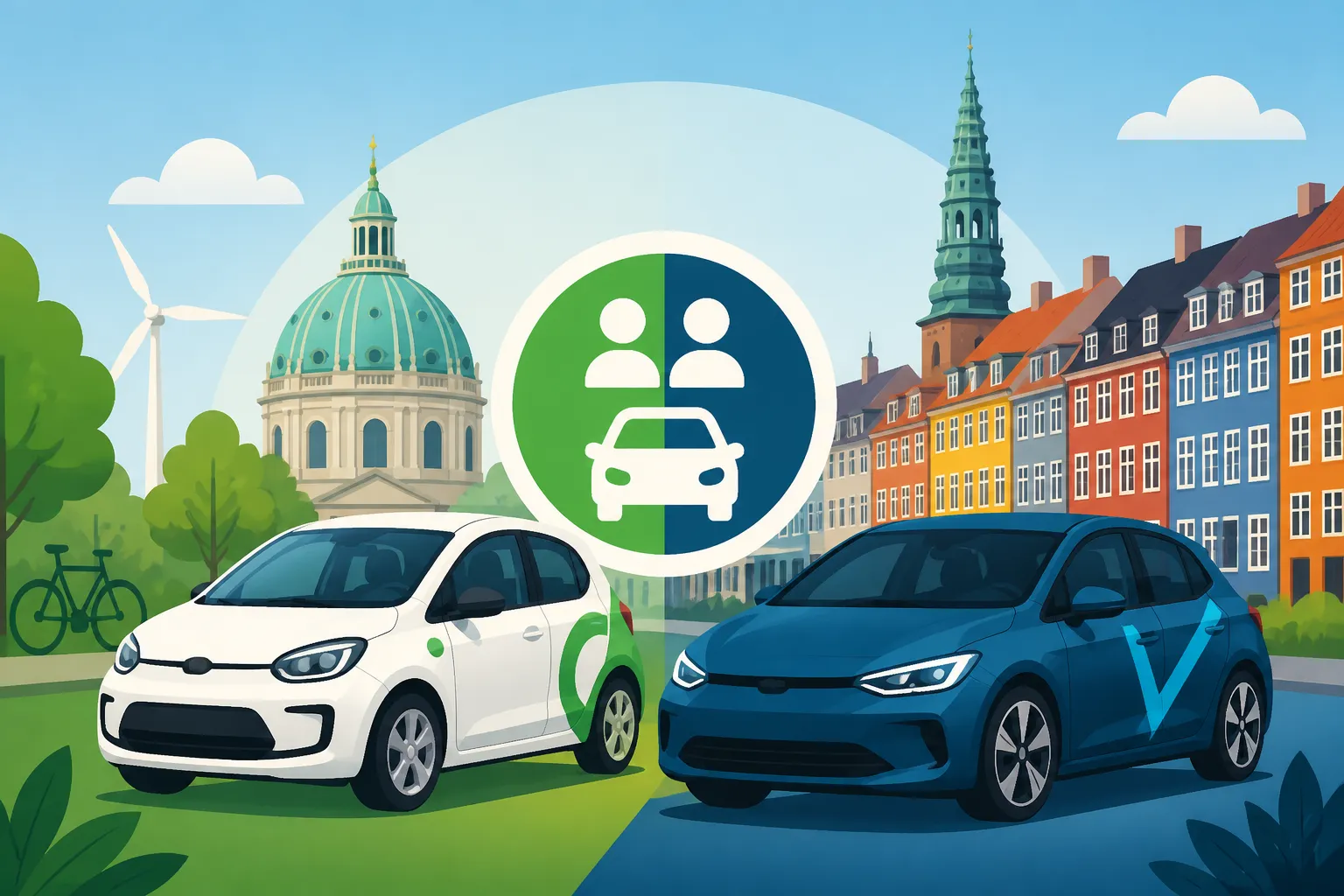
Comparing GreenMobility and ShareNow
Deciding between GreenMobility and ShareNow often comes down to personal preference, specific trip needs, and car availability at a given moment. Both offer excellent services, but their subtle differences can sway your choice.
Here's a quick comparison to help you weigh your options:
| Feature | GreenMobility | ShareNow |
|---|---|---|
| Fleet Type | Exclusively electric (mostly small city cars) | Mix of electric and petrol (BMW/MINI models) |
| Operational Zone | Extensive coverage across Copenhagen & suburbs | Similar, but always check specific boundaries |
| Pricing Model | Per-minute, hourly, daily packages | Per-minute, hourly, daily packages, often premium |
| Included Costs | Parking, charging, insurance | Parking, fuel/charging, insurance |
| App Usability | Highly user-friendly, clean interface | User-friendly, well-integrated |
| Availability | High density of cars, generally easy to find | Good density, can vary by car model |
| Perk | Eco-friendly, often more budget-friendly rates | More premium car models, choice of fuel type |
For many expats, GreenMobility might be the default choice due to its slightly lower price point and widespread availability of electric vehicles, perfectly aligning with Copenhagen's sustainable image. However, if you prefer the driving experience of a BMW or MINI, or need the flexibility of a petrol car for a longer trip without worrying about charging points (though they still handle fueling), ShareNow could be your preferred option. Many users simply have both apps on their phone and pick whichever car is closest or best suited for their immediate needs, which is a smart move in a city with varied transport options.
Practical Tips for Using Car Sharing as an Expat
Navigating the nuances of car sharing as a foreigner in Denmark can throw up a few unexpected challenges. From understanding local driving rules to deciphering parking signs, a little preparation goes a long way to ensure a smooth and stress-free experience.
Registration Requirements and Foreign Licenses
This is a critical point for new arrivals. To register with GreenMobility, ShareNow, or any other car-sharing service in Denmark, you will need a valid driver's license. If you're from an EU/EEA country, your license is usually immediately valid and accepted. However, if your license is from a non-EU/EEA country, things get a bit more complicated. You typically have a grace period (often 180 days after establishing residency, i.e., getting your CPR number) during which you can use your foreign license. After this period, you are generally required to exchange it for a Danish license or, in some cases, retake parts of the driving test.
Crucially, car-sharing companies often have their own internal policies. Some might accept foreign non-EU licenses for the entire 180-day grace period, while others might require you to have already started the exchange process or obtained an international driving permit. It's vital to check directly with GreenMobility and ShareNow's support pages or FAQ sections regarding their specific requirements for foreign licenses before you attempt to register. Don’t assume your home country license is automatically accepted indefinitely, as this could lead to a suspended account or worse, driving illegally. Having your CPR Registration Rule: Why Your Address Matters sorted is also usually a prerequisite for the registration process, as it's used for identity verification.
Navigating Parking Rules
Ah, parking in Copenhagen. This is perhaps where most car-sharing users, expats included, can run into trouble if they're not careful. While car-sharing services cover the cost of parking within their designated zones, you are still responsible for adhering to local parking regulations. This means understanding where you can and cannot park. Avoid parking in spaces reserved for residents with special permits, handicapped spots, loading zones, or areas with clear "no parking" signs (stands with red circles and crosses are common).
Furthermore, while you can end your trip almost anywhere within the zone, be mindful of how you park. Ensure the car isn't blocking driveways, pedestrian paths, or bicycle lanes. The city is very strict about this. A car illegally parked can result in a hefty fine, and guess who gets to pay that? You do, as the last user of the vehicle, even if the car-sharing company handles the initial ticket. Always take a moment to double-check your parking spot before ending your trip, and when in doubt, find another spot. It's a small precaution that can save you significant money and stress.
Staying Connected on the Go
In today's digital world, your smartphone is your lifeline, especially when using car-sharing services. You rely on it to locate, reserve, unlock, and end your trip with the car. This means having a reliable mobile data connection is absolutely non-negotiable. Imagine finding the perfect car, walking to it, only for your data to run out just as you try to unlock it. Not fun, right?
For new expats or tourists, securing a local SIM card or, even easier, an eSIM, is a smart move. An eSIM from a provider like Airalo offers instant connectivity without needing a physical SIM card, meaning you can get online as soon as you land. This ensures you always have access to the car-sharing apps, navigation tools (like Google Maps, which is indispensable in Denmark), and any other essential apps you might need on your journey. Plus, having local data means you can also use other handy apps like Rejseplanen for public transport planning, or simply stay in touch with friends and family. Don't underestimate the power of seamless connectivity when you're relying on app-based services to get around.
Planning Longer Trips and Alternatives
While car sharing is fantastic for short-to-medium trips within and around Copenhagen, it's not always the most economical or practical solution for every scenario. If you're planning a multi-day road trip across Denmark or into neighboring countries, the daily rates of car-sharing services can start to add up quickly, sometimes exceeding the cost of a traditional rental car.
For longer excursions (e.g., several days), consider a conventional car rental company like Hertz, Avis, or Europcar. These typically offer better rates for extended periods, unlimited mileage, and a wider selection of vehicles, including larger cars or those suitable for off-road adventures, which aren't usually available in free-floating car-sharing fleets. Moreover, traditional rentals often allow you to pick up and drop off in different locations (though sometimes with an extra fee), which adds flexibility for one-way journeys. Always compare the total cost, including insurance, fuel/mileage, and any fees, before committing. Car sharing is for spontaneous, short-term needs; traditional rental cars are often better for planned, longer-duration travel.
Disclaimer
Please note that the information provided in this guide is intended for general informational purposes only and is subject to change. While we strive to keep our content accurate and up-to-date, rules and regulations regarding car sharing services, driving licenses, and local parking in Denmark can evolve. Always consult the official websites of GreenMobility and ShareNow, as well as relevant Danish authorities (like Færdselsstyrelsen for driving licenses), for the most current and specific information. Your personal circumstances may also affect the applicability of certain rules.