Navigating Menopause Treatment (HRT) with a Danish GP
Moving to a new country is stressful enough without your hormones deciding to stage a full-blown rebellion the moment you land at Kastrup. I remember sitting in my dimly lit living room in Aarhus, sweating through my wool sweater despite the October chill, wondering if my Danish doctor would actually help me or just tell me to cycle more and eat more rye bread. This guide solves the mystery of accessing Hormone Replacement Therapy (HRT) in Denmark and provides a roadmap for navigating the conversation with your local GP.
Understanding the Role of Your Danish GP in Menopause Care
In the Danish healthcare system, your General Practitioner (GP), or egen læge, is the absolute gatekeeper for everything. Unlike some countries where you might bypass a primary doctor to see a menopause specialist or a gynecologist directly, Denmark requires you to start at the GP’s office. This can be a source of major frustration for many of us who are used to more direct access. When I first arrived, I didn't realize that my The Yellow Health Card (Sundhedskort): Your Key to Danish Healthcare wasn't just a piece of plastic; it was my ticket to an integrated but very strictly controlled system.
The Gatekeeper Mentality and Your Rights
Your GP is responsible for your initial assessment. In Denmark, there is a strong cultural emphasis on evidence-based, conservative treatment. This means some doctors might be hesitant to prescribe HRT immediately if they feel your symptoms are "manageable" or if you haven't tried lifestyle changes first. You have to be prepared for a conversation that feels a bit more like a negotiation than a simple request for a prescription. It is vital to understand Finding Medical Care in Denmark: GPs, Specialists, and Referrals so you know how to navigate this hierarchy.
I found that being extremely specific about how symptoms were affecting my work and daily life in Denmark was the only way to move the needle. If you tell a Danish GP you "feel a bit tired," they might suggest a walk in the forest. If you tell them you are experiencing cognitive fog that is jeopardizing your performance in a Danish-speaking office environment, they tend to listen much more closely.
Choosing the Right Doctor for Menopause
Not all GPs are created equal when it comes to women's health. When you first register for your CPR number, you are assigned a doctor near your home. However, many expats don't realize they can choose a different one if there is space. If you find that your current doctor is dismissive of perimenopause or menopause symptoms, you might want to look into How to Choose and Change Your General Practitioner (GP) in Denmark.
Many women in the expat community have spent months "waiting it out" because they didn't want to seem difficult. Don't do that. Your Healthcare in Denmark for Foreign Residents: Complete System Guide (2027) covers menopause just as it covers any other medical condition. If your GP isn't a good fit for this specific life stage, it is perfectly acceptable to find someone who is more specialized in Women’s Health: Routine Screenings, Gynecology, and Contraception.
The Consultation: How to Advocate for Yourself in the Clinic
Danish medical appointments are famously short—usually about 10 to 15 minutes. This is not the time for a long, rambling history of your health. You need to go in with a "menopause manifesto." I learned the hard way that if I didn't lead with my most debilitating symptom, the appointment would be over before we even got to the topic of HRT.
Preparing Your Symptom Log
Before you book your appointment through the Min Læge app, start a log. Note down the frequency of hot flashes, the severity of insomnia, and—crucially—any mood changes or "brain fog." In Denmark, doctors rely heavily on the overgangsalder (menopause) guidelines set by the Danish College of General Practitioners. Having a written record shows that you are informed and that your symptoms are persistent.
If you are currently in the gap where you are waiting for your residency papers, you might not have access to the public system yet. In these cases, having Expat Health Insurance: Coverage Before You Get Your CPR Number is a lifesaver. Brands like SafetyWing or Cigna Global can often provide the coverage needed to see a private doctor while your CPR registration is processing. SafetyWing is particularly popular among digital nomads, but for comprehensive menopause care, Cigna Global often offers more robust outpatient options that cover specialist consultations.
The Language of Menopause in Denmark
While most Danish doctors speak excellent English, using the local terminology can sometimes help bridge the cultural gap. Here are a few terms you might hear:
- Overgangsalder: Menopause / The change of life.
- Hormonbehandling: Hormone treatment (HRT).
- Hedeture: Hot flashes.
- Svedture: Night sweats.
- Østrogen: Estrogen.
- Gestagen: Progestogen.
If the GP agrees that treatment is necessary, they will often start with a "trial period" of three months. This is standard practice. They want to see how your body reacts to the lowest possible dose before committing to long-term therapy. During this time, it is important to understand Understanding CPR Registration and Your Healthcare Entitlement so you know that these follow-up appointments are fully covered by your tax-funded insurance.
Types of HRT Available and the Referral Process
Once you’ve successfully navigated the GP consultation, the next step is actually getting the medication or getting a referral to a specialist. In Denmark, HRT usually comes in several forms: patches (plastre), gels, or oral tablets. The Danish system generally prefers transdermal options (patches and gels) because they carry a lower risk of blood clots, which is a big focus for Danish medical practitioners.
Getting a Referral to a Gynecologist
If your case is complex—for example, if you have a history of endometriosis, breast cancer in the family, or if the standard GP-prescribed HRT isn't working—you should ask for a henvisning (referral) to a gynecologist (gynækolog).
Wait times for public gynecologists can be quite long, sometimes ranging from three to six months in cities like Copenhagen or Aarhus. This is where Private Health Insurance (Sygeforsikring "danmark"): Is It Worth It? becomes a relevant topic. While "danmark" doesn't pay for the consultation itself, they provide subsidies for the medication. If you have international private insurance through Cigna Global, you might be able to bypass the public waitlist and see a private specialist within days. SafetyWing can also be a bridge if you are still navigating your initial move and need urgent private care for acute symptoms.
Picking Up Prescriptions at the Apotek
Once your doctor issues a prescription, it is sent to a central digital server. You don't get a paper slip. You simply go to any apotek in the country, hand over your Yellow Card, and they pull up your files. It’s incredibly efficient. However, you should be aware of how costs are handled.
In Denmark, you pay for your medication out of pocket up to a certain yearly threshold, after which the government starts to subsidize the cost. You can track this through the Medicinkortet app. For more details on this, I highly recommend reading Pharmacies in Denmark: Apotek Rules, Prescriptions, and Subsidies.
| Feature | Public GP Route | Private Specialist Route |
|---|---|---|
| Access | Requires Yellow Card (CPR) | Requires Private Pay or International Insurance |
| Cost | Free Consultation, Subsidized Meds | High Consultation Fee (~1500 DKK+), Full Price Meds |
| Wait Time | 1-2 weeks for GP, months for Specialist | 1-7 days |
| Flexibility | Limited to assigned GP | Choice of any private specialist |
| Prescription | Digital (Medicinkortet) | Digital or Paper |
Long-term Management and Adjusting Your Treatment
Menopause isn't a "one and done" medical event. Your needs will change as you move from perimenopause into post-menopause. In Denmark, the philosophy is often to use HRT for the shortest duration necessary at the lowest effective dose. This can sometimes clash with the more modern "HRT for life" approach seen in the US or UK.
Annual Reviews and Blood Work
You will likely be called in for an annual review. During this check-up, your GP will check your blood pressure and may perform blood tests to monitor your cholesterol and glucose levels, though routine hormone level testing (FSH/LH) is not common in Denmark once you are over 45, as doctors treat based on symptoms rather than numbers. This is a common point of contention for expats who want to "see the data."
If you feel you need more comprehensive testing, you might find yourself looking for Finding an English-Speaking Doctor: Directories and Local Strategies who understands the specific expectations of international patients. Some private clinics in Copenhagen cater specifically to the expat community and are more willing to perform frequent hormone panels.
Mental Health and Menopause
It's also important to acknowledge that menopause often brings mental health challenges, such as increased anxiety or depression. The Danish system is very supportive of Mental Health in Denmark: Accessing Psychologists and Therapy for Expats, but again, it requires that initial GP referral. If you find your mood is plummeting alongside your estrogen levels, make sure to mention this specifically. Do not let a doctor tell you it's "just stress" from moving to a new country. It is a biological shift that deserves medical attention.
For those of us who have lived through the "brain fog" years while trying to learn the Danish language, the struggle is real. I found that once my HRT was balanced, my ability to retain those pesky Danish "soft d" sounds improved significantly. It’s hard to integrate when your brain feels like it’s made of cotton wool.
Navigating the Costs of Menopause Care in Denmark
One of the best things about the Danish system is that once you are "in," the financial burden of chronic care is manageable. However, the initial phase can be confusing. Between the public subsidies and the potential for private insurance, you need to know where your money is going.
The Subsidy System (Tilskud)
When you buy HRT at the apotek, the price you pay depends on how much you have already spent on reimbursable medicine in the current "subsidy year."
- 0 – 1,075 DKK: You pay 100% of the cost.
- 1,075 – 1,749 DKK: You pay 50% of the cost.
- 1,749 – 3,790 DKK: You pay 25% of the cost.
- Over 3,790 DKK: You pay 15% of the cost.
This system ensures that those with high medical needs are protected. Most HRT patches cost between 200 and 400 DKK for a month's supply, so you will likely hit the subsidy brackets fairly quickly if you are also taking other medications.
The Role of Private International Insurance
If you are a high-earner or if your employer provides it, international insurance like Cigna Global can be a game-changer. These policies often cover the full cost of private gynecologists, meaning you don't have to wait months to see someone who specializes in bio-identical hormones or the latest HRT delivery systems. For those who are between jobs or just arriving, SafetyWing offers a more budget-friendly approach to health coverage, though it is primarily focused on unexpected illnesses rather than long-term hormone management.
Cigna Global, however, is often the preferred choice for expats who want a "gold standard" of care that mirrors what they might be used to in London, New York, or Dubai. Having that private backup can provide immense peace of mind when the public system's "wait and see" approach feels too slow for the severity of your symptoms.
Common Obstacles and How to Overcome Them
Despite the high quality of Danish healthcare, the system can feel rigid. Many women have given up because they felt "gaslit" by a GP who didn't understand the impact of perimenopause.
- The "You're Too Young" Myth: If you are in your early 40s and experiencing symptoms, some GPs might dismiss it. If this happens, ask for a blood test to check for other issues (like thyroid problems) and insist on a follow-up in three months if symptoms persist.
- The Weight Gain Conversation: Danish doctors are very direct about BMI. If you have gained "menopause weight," be prepared for them to bring it up. Use this as a chance to explain how the lack of sleep (from night sweats) is making it impossible to maintain your usual fitness routine.
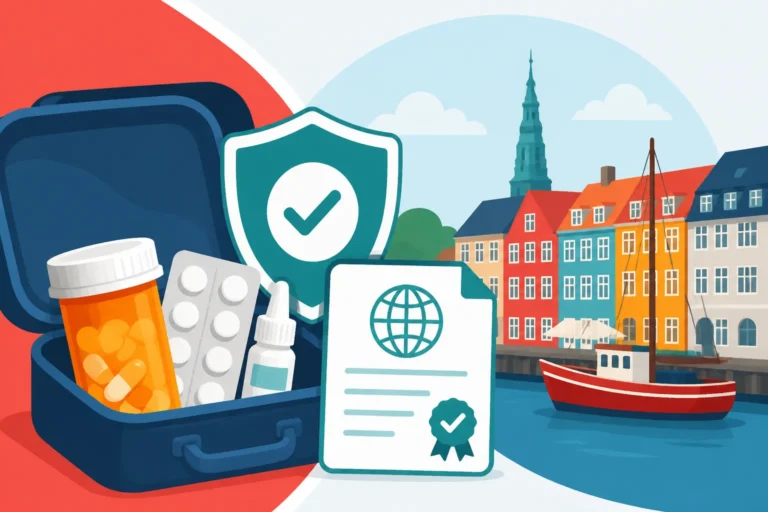
- Availability of Specific Brands: Not every brand of HRT available in your home country will be available in Denmark. Your doctor will prescribe the Danish equivalent. If you are moving here, bring a three-month supply and a letter from your current doctor to make the transition easier for your new Danish GP.
Ultimately, navigating menopause in Denmark is about persistence and understanding the system's quirks. Once I stopped fighting the "gatekeeper" model and started working within it—using my symptom logs, my Yellow Card, and occasionally my private insurance for a second opinion—I finally got the relief I needed. Denmark is a wonderful place to age, but you have to be your own loudest advocate to ensure you get the care you deserve.
Disclaimer
This article is for informational purposes only and does not constitute medical advice. Healthcare regulations and subsidy thresholds in Denmark can change. Always consult with a qualified medical professional (your Danish GP or a specialist) regarding your health and any medications. For the most up-to-date information on Danish healthcare laws, please refer to the official portal at Sundhed.dk.