Splitting the Bill in Denmark: MobilePay Etiquette for Dinner Checks
You have just finished a delicious meal at a cozy cafe in Vesterbro or a trendy spot in Aarhus, and the bill arrives. In many countries, this triggers a frantic search for cash or a request for the waiter to split the bill five ways—a request often met with a sigh in Denmark. This guide explains how to navigate the social and technical nuances of splitting dinner checks using MobilePay to ensure you remain a savvy, respected member of your social circle.
The Cultural Landscape of Splitting the Bill in Denmark
When you first move to Denmark, the ease with which Danes handle money can be intimidating. There is a deeply ingrained culture of efficiency and a lack of ceremony around debt that can feel blunt to newcomers. Unlike some cultures where fighting over who gets to pay the whole bill is a sign of generosity, Danes generally prefer a clean, fair split. This stems from a societal value of equality; no one wants to be a burden, and no one wants to "show off" by overpaying.
The Cashless Norm and the Waiter's Perspective
Denmark is one of the most digitized societies on the planet. If you walk into a restaurant and try to pay your share with a 500 DKK note, you might find the staff struggling to find change, or even looking at you with genuine confusion. More importantly, many Danish restaurants have a policy against "splitting the bill at the terminal." This means they will not allow a group of six people to each swipe their card for a specific amount.
The reason for this isn't just laziness. It’s about the speed of service and the way the Danish tax system integrates with point-of-sale software. Every transaction generates a digital footprint, and manual splitting takes up valuable time that could be spent serving other tables. To understand the broader context of this digital shift, you should read about MobilePay and Cashless Denmark: Surviving Without Physical Cash. The expectation is that one person pays the entire bill on their card, and everyone else settles with that person instantly.
Janteloven and Money Etiquette
You might have heard of Janteloven, the unspoken social code that emphasizes the collective over the individual. In the context of a dinner check, this means that nitpicking over who had the extra side of fries is often seen as "un-Danish." While it is perfectly acceptable to calculate your exact share if there is a massive discrepancy (like one person drinking expensive wine while another has tap water), the default is often a "flat split."
If you are out with close friends or colleagues, the math is usually quick and dirty. Total divided by the number of heads. If you are worried about the currency exchange or high transaction fees from your home bank during these outings, using a service like Wise to hold a DKK balance can save you a significant amount of money compared to traditional credit cards.
Mastering the MobilePay Workflow
MobilePay is the undisputed king of peer-to-peer transfers in Denmark. It is so ubiquitous that "to MobilePay" (at mobilepaye) has become a verb in the Danish language. If you don't have it yet, you are essentially locked out of the social economy. However, getting it set up requires a Danish CPR number, a Danish phone number, and a Danish bank account.
Setting Up for Success
For many expats, the first few weeks are a struggle because you are waiting for your administrative paperwork to clear. If you are in this "limbo" period, you might wonder Can I Open a Danish Bank Account Before Getting My CPR Number? to speed up the process. Once you have your account, you link it to the MobilePay app.
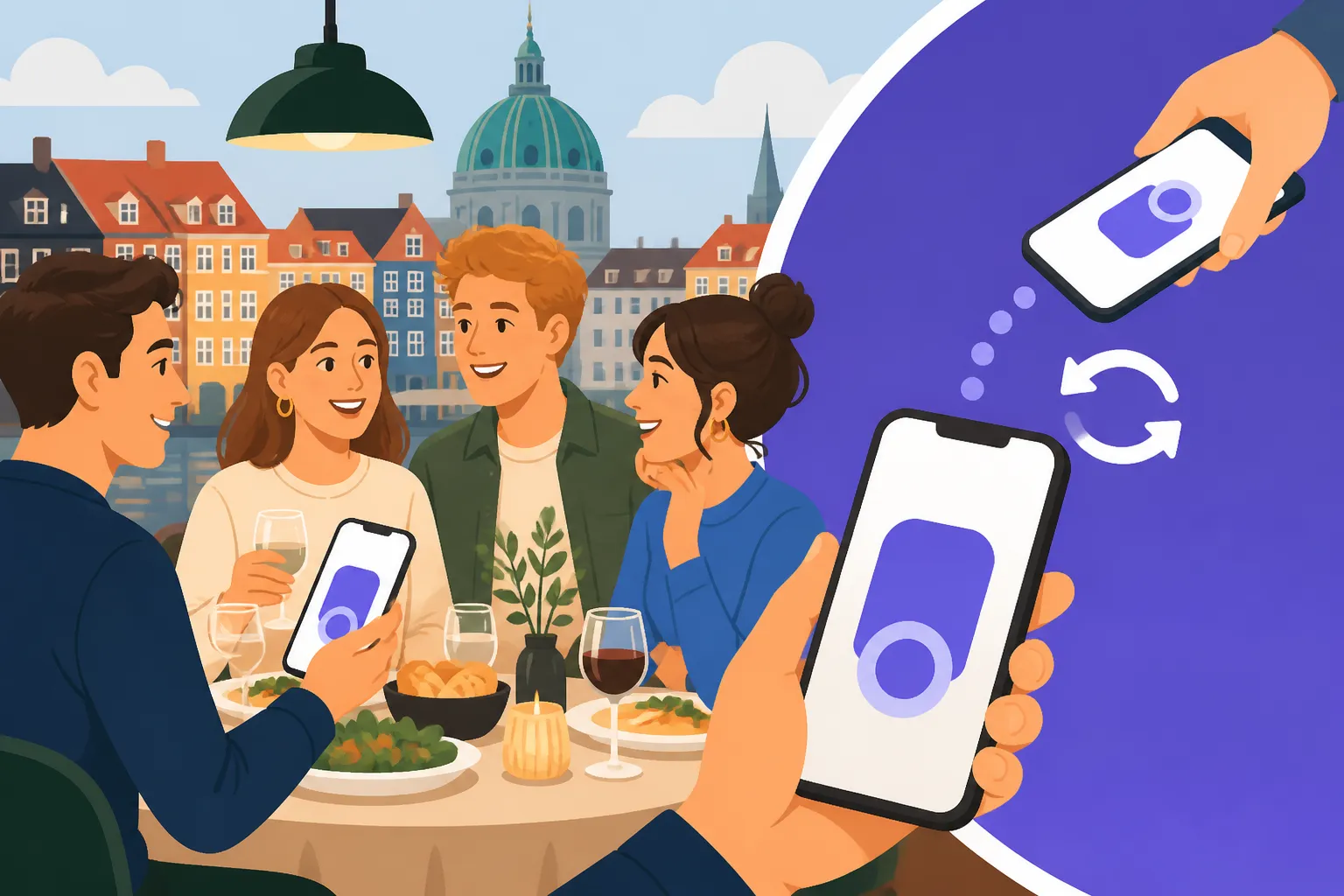
The beauty of the system is its simplicity. You don't need to know someone's bank account details; you just need their phone number. In a restaurant setting, the person who paid the bill will usually say, "I'll send a request," or they will simply tell the group the total and wait for the notifications to roll in. If you are using a digital-first bank, you might want to compare your options in our guide on Traditional Banks vs. Digital Banks (Lunar): Which is Best for Expats? to see which integrates best with your spending habits.
The Request Feature vs. Direct Sending
There are two ways to settle up. The most common in a group setting is the "Request" (Anmod) feature. The person who paid creates a "Box" or simply sends individual requests to the phone numbers of the attendees. This is considered polite because it saves the others from having to do the math themselves.
As a veteran expat, my advice is to pay the request immediately. Leaving a MobilePay request "hanging" for more than 24 hours is considered a minor social faux pas. It implies you are disorganized or, worse, stingy. If you are still waiting for your Danish credentials and cannot use the app yet, check out our troubleshooting guide on Can You Use MobilePay with an International Phone Number? to see if there are any workarounds for your specific situation.
| Action | Etiquette Level | Description |
|---|---|---|
| Immediate Payment | High | Paying the request before leaving the restaurant or immediately upon getting home. |
| The "Flat Split" | Standard | Dividing the bill equally regardless of minor differences in food cost. |
| Itemized Splitting | Occasional | Only necessary if one person's bill is significantly higher (e.g., expensive steaks vs. salad). |
| The "Box" Feature | High | Excellent for recurring groups or weekend trips to track multiple expenses. |
| Delayed Payment | Low | Waiting more than two days to settle a small debt. Avoid this. |
Social Nuances and Tipping Etiquette
Tipping in Denmark is a frequent source of confusion for expats, especially those from the US or the UK. Because service staff in Denmark earn a living wage and have comprehensive benefits, the "guilt-tipping" culture does not exist here. However, this affects how you split the bill.
To Tip or Not to Tip?
In a standard Danish restaurant, the price on the menu includes VAT (moms) and service. If the service was exceptional, it is common to round up. For example, if the bill is 965 DKK, you might tell the waiter to charge 1,000 DKK. When you are splitting this with friends, make sure the person paying knows if you want to include a tip. For a deeper dive into this, see Tipping in Denmark: Is Service Included and Should You Leave Extra?.
When the person who paid sends the MobilePay request, they will usually include the tipped amount in the total calculation. If you are the one paying, a quick "Is everyone okay with rounding up for the waiter?" is all the communication you need. Most Danes will agree without a second thought. If you are managing your global finances and need to keep track of these expenses for tax purposes, companies like Wise or specialized firms like Taxes for Expats can help you categorize these outgoings, especially if you are self-employed and some of these dinners are business-related.
The "I'll Get the Next One" Fallacy
In some cultures, it’s common for one person to pay for the whole meal with the understanding that someone else will "get the next one." In Denmark, this is rare unless you are in a very close, long-term relationship or a specific business context. Because Eating Out in Denmark: Why Restaurant Taxes Make Dining Expensive, dinner for four can easily cross the 2,000 DKK mark. Relying on "the next one" creates an imbalance that most Danes find uncomfortable.
Stick to the split. It keeps the friendship clean and prevents any "social debt" from accumulating. If you are an EU citizen and still getting used to the costs here, you might be interested in how your home country's banking compares by reading Wise vs. Revolut in Denmark: Why They Cannot Replace a Danish Bank.
Logistics: When MobilePay Isn't an Option
Despite its dominance, there are times when MobilePay isn't the solution. Perhaps you are a new arrival, or your phone battery died, or you’re out with a visitor who doesn't have a Danish bank account.
Alternatives for Newcomers and Tourists
If you cannot use MobilePay, you must communicate this before the bill arrives. It is incredibly awkward to wait until the end of the night to announce you can't pay the person back digitally. In these cases, you can offer to pay your share directly to the restaurant with your card (if the waiter allows it) or use an international transfer service.
Wise is a lifesaver here. You can send DKK to a Danish bank account with very low fees and near-instant delivery. It is much more acceptable than asking for someone’s IBAN and sending a traditional wire transfer, which might take days and incur "receiving fees" for your friend. Always aim for the solution that creates the least amount of work for the person who fronted the money.
Managing Large Groups and Shared "Boxes"
For larger groups—say, a birthday dinner or a "Julefrokost"—MobilePay has a "Box" feature. This allows one person to create a shared digital pot. Everyone can see who has paid and how much is in the pot. This transparency is very Danish; it removes the "nagging" element from the person organizing the event.
If you're organizing a larger event, you should also be aware of the digital tools available to you. Beyond just payments, managing your daily life involves several platforms. You can learn more about these in our guide on Best Apps for Daily Life in Denmark: MobilePay, Rejseplanen, and e-Boks. If you are an American expat working in Denmark, remember that while these social splits are simple, your overall income and spending may still need to be reported accurately to the IRS; this is where Taxes for Expats provides essential support to ensure you don't get hit with double taxation.
Common Pitfalls to Avoid
Many expats stumble in social settings by overcomplicating things. Here are a few "pro-tips" to keep your reputation intact:
- Don't haggle over the small stuff: If your meal was 185 DKK and your friend's was 195 DKK, just split it 190 each. The 5 DKK difference isn't worth the time it takes to type the numbers.
- Be mindful of "Aconto" payments: Sometimes in very large groups, people will pay an "estimated" amount upfront. Ensure you settle the final difference as soon as the bill is finalized.
- Check your limits: MobilePay has daily and yearly transfer limits based on your verification level (MitID). If you are paying for a very expensive group dinner, make sure you haven't hit your daily limit, or you might be unable to pay the bill at the table!
- Confirm the number: Before you send money to a new contact, double-check the phone number. Sending 1,000 DKK to a stranger is a headache to reverse and requires contacting your bank.
By following these simple rules, you’ll find that dining out in Denmark is a stress-free experience. The system is designed for speed and fairness, allowing you to focus on the "hygge" rather than the math. Whether you are using Wise to manage your initial DKK expenses or consulting with Taxes for Expats to handle your year-end filings, staying on top of the digital economy is the key to a successful life in Denmark.
Disclaimer
The information provided in this guide is for informational purposes only and does not constitute financial, legal, or tax advice. Regulations regarding digital payments, banking requirements, and tax liabilities in Denmark are subject to change. Always consult with official government sources or a professional advisor for your specific situation.