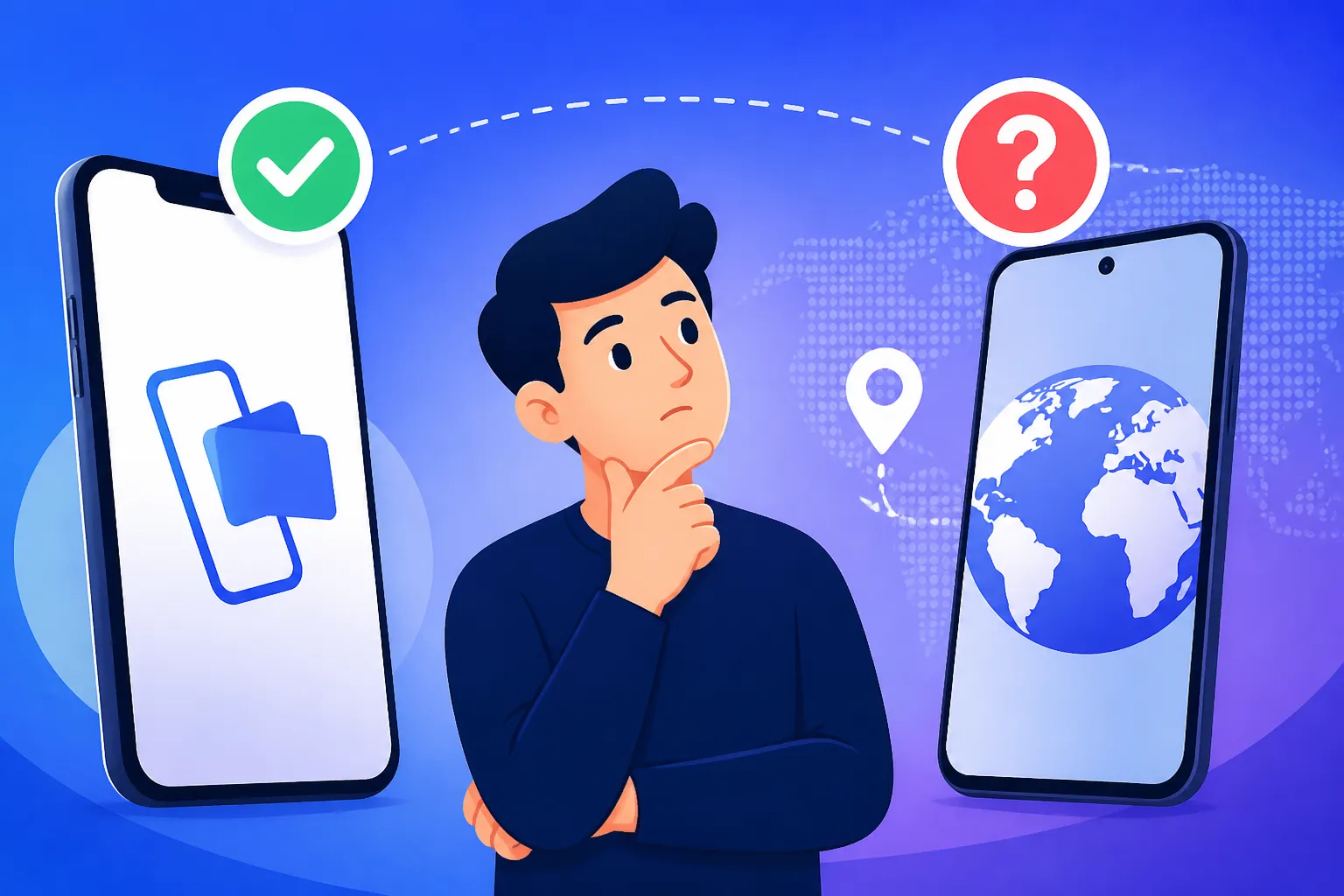
Can You Use MobilePay with an International Phone Number?
Moving to Denmark is a whirlwind of beautiful bike rides and crisp Nordic air, but it also comes with a crushing digital brick wall the moment you try to buy a coffee at a flea market. If you have tried to download MobilePay using your foreign phone number, you have likely encountered the frustrating "not supported" error that stops your integration into Danish society dead in its tracks. This guide explains why that happens and how to actually navigate the financial setup required to live like a local.
The Reality of MobilePay's Integration with the Danish System
When you first land in Copenhagen or Aarhus, you’ll notice something immediately: nobody carries cash, and everyone "MobilePays" each other. It is the lifeblood of Danish commerce, used for everything from splitting a pizza with friends to paying for a vintage chair on a sidewalk. The question of whether you can use a non-Danish number is the first major hurdle most expats face. While the app has expanded slightly to allow certain Nordic numbers (like those from Finland), the hard truth for the vast majority of international residents—including those from the US, UK, Canada, and most of Europe—is that you cannot use an international phone number to register for a Danish MobilePay account.
This restriction isn't just a technical glitch or a lack of updates from the developers. It is a fundamental design choice rooted in how Denmark’s digital infrastructure is built. In Denmark, your digital identity is a three-legged stool: your CPR number (civil registration number), your MitID (digital signature), and your Danish bank account. These are all tied together with your Danish phone number. MobilePay acts as a bridge between these entities. Because the app must verify your identity through the Danish banking system to prevent money laundering and fraud, it requires a local connection that foreign telecom providers simply cannot offer.
I remember my first week in Denmark, standing at a local "Loppemarked" (flea market), clutching a beautiful ceramic vase. The seller looked at me with a mix of pity and confusion when I pulled out a 200-krone note. "Do you have MobilePay?" she asked. When I told her I couldn't get it to work with my UK number, the transaction felt like I was trying to trade sea shells for gold. It is a specific kind of social exclusion that makes you feel like a permanent tourist rather than a resident. To move past this, you have to understand that Opening a Bank Account in Denmark: Document Checklist and Delays is actually the first step toward getting that elusive "swipe" functionality on your phone.
Why the CPR Number and MitID are the Real Gatekeepers
The reason your international number fails isn't just the country code. It is the fact that MobilePay is deeply integrated with Using MitID for Banking: Security, Device Registration, and App Setup. When you set up MobilePay, the app doesn't just want your phone number; it wants to verify that you are a legal resident with a verified Danish bank account. Since 2026 standards for financial security in the EU have tightened, Denmark has doubled down on its closed-loop system.
Without a Danish phone number, you cannot receive the necessary SMS verifications that bridge your MitID to the MobilePay app. Furthermore, most Danish banks require a local number to even set up your Traditional Banks vs. Digital Banks (Lunar): Which is Best for Expats? profile. This creates a domino effect. You need the number to get the bank, and you need the bank to get the app. If you are still waiting for your residence permit, the frustration is doubled because you are essentially locked out of the "easy" way to pay for everything while you wait.
The Danish Phone Number: A Practical Requirement
For many expats, the initial instinct is to keep their home phone number for "WhatsApp and family." While this is fine for social calls, it is a nightmare for Danish administration. In Denmark, your phone number is almost as important as your address. From receiving hospital appointments via SMS to getting a notification that your package is in a "Pakkeboks," a +45 number is mandatory.
If you are trying to bypass the system with a "virtual" number or a VOIP service, be warned: MobilePay’s security protocols are incredibly sophisticated. They can often detect when a number is not tied to a physical SIM card issued by a Danish provider like YouSee, Telia, or Telenor. To save yourself the headache, the very first thing you should do after getting off the plane is go to a local supermarket or a telecom shop and grab a prepaid Danish SIM. This small step is the key that unlocks the rest of your financial life in the Nordics.
Step-by-Step Setup: The Path to MobilePay for Newcomers
So, if you cannot use your international number, what is the actual roadmap? You cannot simply "fix" the international number issue; you must replace it within the app's ecosystem. The process is a rite of passage for every expat. It starts with physical presence and ends with digital integration.
First, you need to secure a Danish phone number. You don't necessarily need a long-term contract; a prepaid SIM (Taletid) will work as long as it can receive SMS and is registered in your name. Once you have that number, you must update your contact information with your Danish bank. This is a crucial step that many forget. MobilePay "talks" to your bank, and if the phone number on your bank account is your old US or French number, the verification will fail. You must ensure that your bank has your +45 number on file as your primary contact.
Securing Your Danish Phone Number First
When you arrive, the Cost of Living in Denmark 2026: Budgets for Singles and Families will likely shock you, but mobile phone plans are surprisingly affordable. You can get a basic plan with plenty of data for around 100 DKK per month. Once you have this SIM card in your phone, you are ready to begin the administrative journey.
I highly recommend keeping your foreign SIM in a dual-SIM phone or an old handset, as you will likely still need it for "Two-Factor Authentication" for your home-country banks. However, for everything Danish, the +45 number is your new identity. Once the SIM is active, your next stop is the bank portal to ensure your Setting Up Your NemKonto: How to Link It to Receive Salary and SU is fully updated with this local number. Only after these pieces are in place will the MobilePay app allow you to proceed past the registration screen.
The MitID Hurdle and Banking Connections
The most common point of failure for expats is the MitID verification. Even with a Danish number, if your MitID isn't fully "activated" for third-party app signatures, MobilePay will loop you back to the start. You must ensure that your MitID app is functioning and that you have given it permission to share data with "service providers."
Once the app recognizes your Danish bank account, it will ask you to link a card. This is where you want to use The Dankort: Denmark’s National Debit Card and Why You Want One. While MobilePay accepts Visa and Mastercard, having the local Dankort integrated often makes for smoother transactions at smaller merchants who might have different fee structures for international card networks. Once the card is linked and verified via MitID, the +45 number becomes your "alias." People no longer need your bank details to pay you; they just need your phone number.
| Feature | MobilePay (Danish Number) | Apple Pay / Google Pay | Wise (International) |
|---|---|---|---|
| P2P Transfers | Instant (The Gold Standard) | Possible (if both have it) | 1-2 Days for DKK |
| Flea Markets | Essential / Only Option | Rarely Accepted | Not Accepted |
| Supermarkets | Accepted | Accepted | Accepted |
| Split Bill Feature | Built-in / Automatic | Manual Calculation | Manual |
| Trust Factor | Extremely High (Danish) | Medium | Low for Locals |
Alternatives and Workarounds for International Users
If you are a tourist or a short-term worker who cannot get a CPR number and therefore cannot get a Danish bank account, you are in a difficult spot. Without a Danish bank account, you cannot have MobilePay, regardless of what phone number you use. In this scenario, you need to rely on other digital tools to survive the cashless society.
While you are in the waiting period for your paperwork, you will likely need a way to manage your money without the high fees of traditional banks. This is where services like Wise become invaluable. While Wise cannot give you a MobilePay account, it does provide you with a way to hold Danish Krone (DKK) and spend it using a physical or digital card without getting slaughtered by exchange rates. It is the perfect bridge while you wait for your Lunar Bank Review: Free Accounts for Expats and Students to be approved.
Using Wise and Digital Wallets in the Meantime
Until you have the "Holy Trinity" (CPR, MitID, Danish Bank), you should set up Apple Pay or Google Pay with your Wise card. Most Danish terminals—from the Netto supermarket to the 7-Eleven at the train station—accept contactless payments. This solves 90% of your commercial needs. The only thing it doesn't solve is the social aspect: sending 50 DKK to a friend for a coffee.
In those cases, you’ll have to be "that person" who asks for their IBAN and does a manual bank transfer, or simply offers to buy the next round. It's a bit clunky, but as a veteran expat, I can tell you that people understand the "MobilePay Struggle" for newcomers. They have all been through the administrative gauntlet themselves. Just be upfront about it, and most Danes will be patient while you wait for your yellow card to arrive in the mail.
Managing Taxes for Expats and Financial Reporting
As you begin to move money between your home country and Denmark, or as you start receiving a Danish salary, you need to think about the broader financial picture. Using an international number and foreign accounts can sometimes complicate your tax filings. This is where a service like Taxes for Expats becomes essential. They specialize in helping people navigate the dual-reporting requirements that come with living in a high-tax country like Denmark while maintaining financial ties elsewhere.
When you eventually get MobilePay and start using it for everything, remember that even these small P2P transfers are technically visible to the authorities if they ever conduct an audit. Keeping your digital house in order from day one—using Wise for transfers and Taxes for Expats for your annual filings—will save you from a massive headache when the Danish tax authority (SKAT) sends you your annual assessment. You might even find yourself in a position where you need to know How to Pay Your SKAT bill Using MobilePay in 2026, which is an strangely satisfying milestone of integration.
MobilePay Etiquette and Survival without a Danish Number
The "No MobilePay" phase of expat life is often dubbed the "Social Dark Ages." You will find that dinner parties end with one person paying the whole bill and everyone else saying, "I'll MobilePay you." When you can't join in, you feel like a burden. To survive this, you need to be proactive.
One tip is to carry a little bit of cash as a backup, though be warned: many shops in Copenhagen are now "Cash-Free" (Kontantløs), particularly in the evenings. A better strategy is to use the "Rejsekort" for transport and keep your Wise card topped up. For social situations, offer to pay the bill yourself on your international card and have your Danish friends MobilePay you once you finally get your account set up, or simply ask them for their bank details to send an instant transfer.
Dealing with Splitting the Bill
The Danish "Split the bill" culture is precise. If a bill is 453 DKK for four people, everyone will pay exactly 113.25 DKK. Without MobilePay, you can't easily do this. If you are waiting for your number, I recommend using apps like Splitwise to track debts with your new Danish friends. This keeps things transparent and prevents any "Janteloven" awkwardness regarding money.
Once you do get your Danish number and MobilePay, the app has a "Box" feature that is incredible for shared households or recurring friend groups. You can create a digital pot of money that everyone contributes to. This level of financial transparency is very "Danish" and helps you settle into the culture of trust that defines the country. It’s a far cry from the frustration of being locked out of the app just a few weeks prior.
Buying Second-Hand and Flea Market Survival
If you are moving into a new apartment and need furniture, "DBA" (the Danish version of eBay/Craigslist) is your best friend. However, DBA is almost entirely fueled by MobilePay. Sellers often won't even accept cash because they don't want to carry it to a bank.
If you see a "Must-Have" item on DBA and you still don't have a Danish number, your only real option is to bring a friend who does have MobilePay and pay them back via a bank transfer or a coffee. This is a great way to bond with your new colleagues—nothing says "Welcome to Denmark" like asking someone to help you buy a second-hand IKEA couch because you’re still trapped in administrative limbo. It’s all part of the journey, and once you finally hear that "Cha-ching!" sound of your first MobilePay notification, you’ll know you’ve finally truly arrived.
Disclaimer
The information provided in this guide is for informational purposes only and does not constitute financial, legal, or tax advice. While we strive to keep the details regarding Danish banking, MitID, and MobilePay regulations up to date for 2026, the Danish administrative system is subject to change. Always consult official sources such as Borger.dk, your specific banking institution, or a qualified tax professional like Taxes for Expats to ensure compliance with current laws and requirements.