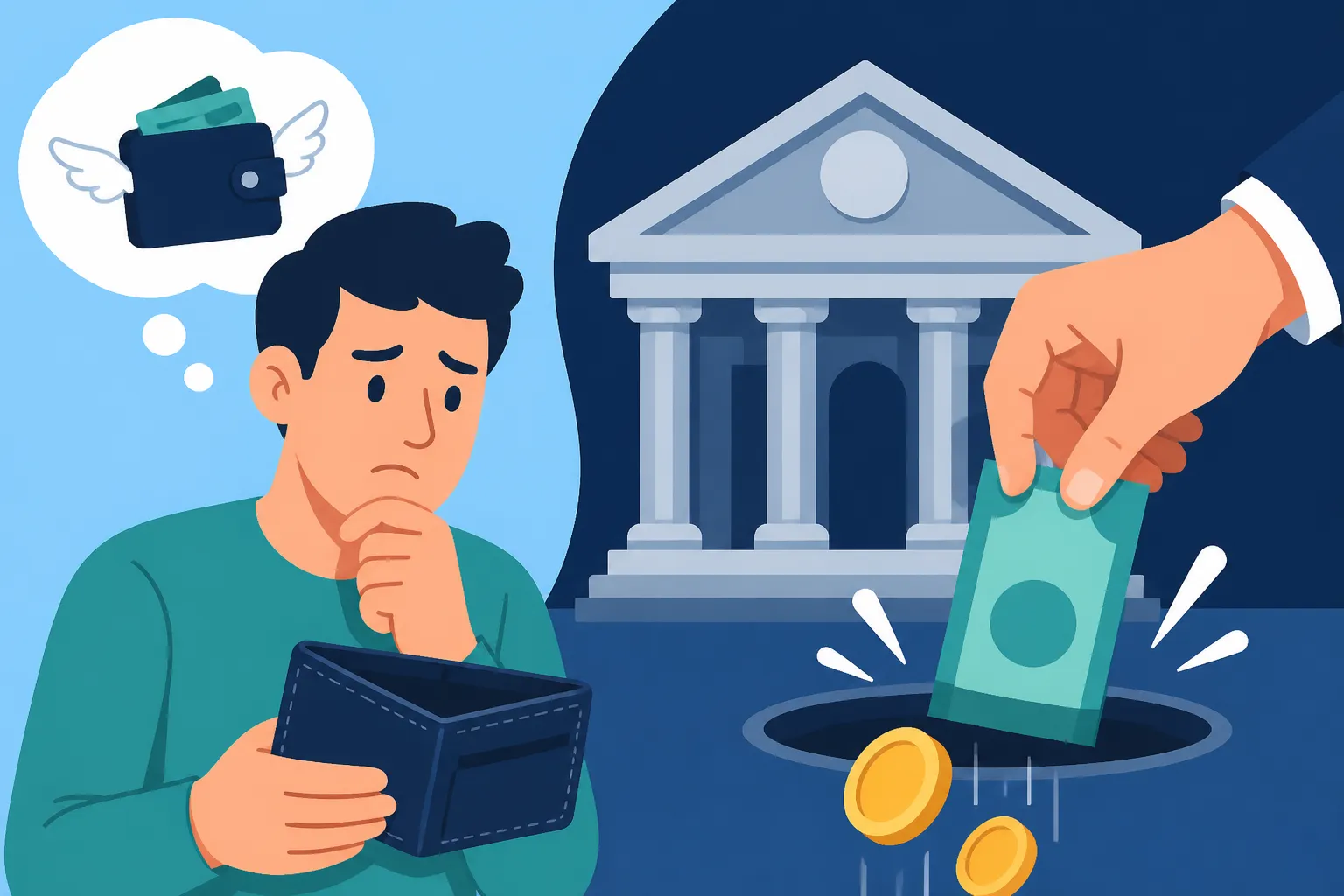
Why Danish Banks Charge Monthly Fees for Basic Checking Accounts
You move to Copenhagen or Aarhus expecting a high-tech, cashless utopia, only to find that your new Danish bank wants to charge you 40, 60, or even 100 DKK every month just to keep your money. It feels like a step backward, especially if you come from a country where "free for life" checking is the standard. This guide dives deep into the regulatory, cultural, and economic reasons behind these fees and shows you how to navigate the system without losing your mind—or your hard-earned Danish Kroner.
The Cultural Shift From Free Banking to Subscription Models
When I first arrived in Denmark years ago, the banking landscape was significantly different. Back then, you could walk into a branch, show your papers, and get a basic account with very few strings attached. However, the last decade has seen a massive shift in how Danish financial institutions view the "retail customer." You are no longer just a person with a wallet; you are a user of a highly integrated, highly regulated digital infrastructure. To the banks, providing a "basic" account is anything but basic.
The primary driver for these monthly fees is the death of interest rate margins. For a long time, banks made their money on the "spread"—the difference between the interest they paid you on your savings and the interest they charged others for loans. When the European Central Bank and the Danish National Bank pushed interest rates into negative territory for several years, that model collapsed. Banks couldn't make money by simply holding your cash; in fact, it cost them money to hold it. To keep their doors open and their shareholders happy, they pivoted to a service-based model. This means you are essentially paying a subscription fee for the "privilege" of having a place to deposit your salary.
Furthermore, Denmark is one of the most digitized societies on earth. Your bank account is the foundation for your NemKonto and MitID: The Core of Danish Digital Finance (2027), which connects you to every government service, from healthcare to tax refunds. Maintaining the security protocols, API integrations, and digital infrastructure required to keep this system running is incredibly expensive. When you pay that monthly fee, you aren't just paying for a plastic card; you are paying for the secure digital pipeline that allows you to live a modern life in Denmark.
The Cost of Compliance and Anti-Money Laundering Measures
If you’ve already started the process of Opening a Bank Account in Denmark: Document Checklist and Delays, you know how invasive the questions can feel. They want your employment contract, your passport, your rental agreement, and sometimes even proof of where your savings came from three years ago. This isn't because the clerk at the desk is nosy; it’s because the Danish financial sector has been under intense scrutiny following several high-profile money laundering scandals in the Nordics.
In response, the Danish Financial Supervisory Authority (Finanstilsynet) has mandated incredibly strict "Know Your Customer" (KYC) and Anti-Money Laundering (AML) protocols. Every single person who opens an account must be manually vetted, and their transactions must be monitored by sophisticated (and expensive) software.
For an expat, the cost to the bank is even higher. Non-residents or new arrivals represent a "higher risk" profile in the eyes of compliance algorithms simply because there is no local history to track. The bank has to spend more man-hours verifying your foreign documents and ensuring you aren't a "politically exposed person" elsewhere. These administrative costs are passed directly to you through those monthly fees. It is frustrating, but understanding that the bank sees you as a "compliance cost" helps explain why they aren't exactly rolling out the red carpet for free.
Breaking Down the Typical Fee Structure
When you look at your first quarterly statement, the terminology can be confusing. Danish banks rarely just charge one "fee." Instead, they bundle services into packages. You might see terms like Kontogebyr (account fee) or Kortgebyr (card fee).
Quarterly Management Fees vs. Annual Card Fees
Most traditional banks like Danske Bank or Nordea will charge a "base" fee every three months. This often covers the maintenance of your Setting Up Your NemKonto: How to Link It to Receive Salary and SU and access to the mobile banking app. On top of this, you will often pay an annual fee for your physical debit card. If you want a specialized card, like The Dankort: Denmark’s National Debit Card and Why You Want One, there may be additional costs involved because the Dankort is a national system with its own processing infrastructure.
The Hidden Costs of International Life
For us expats, the real sting comes when we try to move money across borders. Danish banks are notoriously expensive for international transfers, often hiding high margins in the exchange rate. This is where using a service like Wise becomes essential. While you need a Danish bank for your salary and local bills, using Wise to send money home or pay off a mortgage in your home country will save you significantly more than the 40 DKK monthly bank fee. It is wise to keep the Danish account for local "Nem" transactions and using a specialist for anything involving a currency conversion.
Comparing Danish Banking Options for Expats
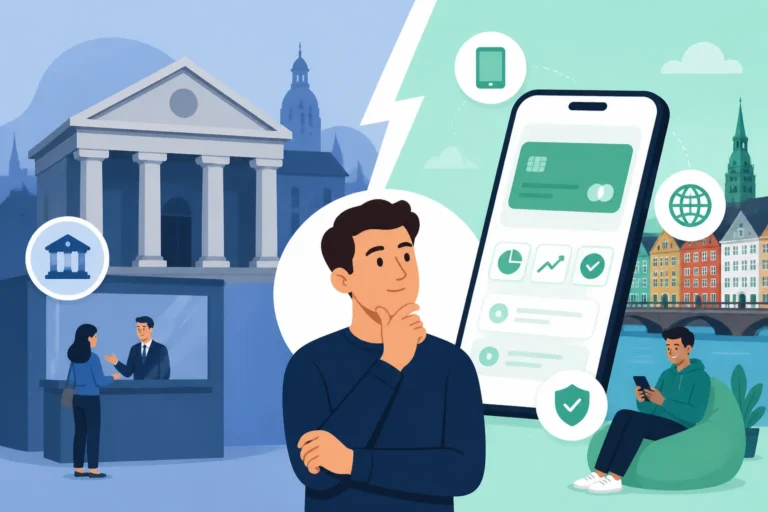
Not all banks are created equal. Some cater to high-net-worth individuals, while others are trying to attract a younger, more tech-savvy crowd. As an expat, your choice often depends on how quickly you need an account and whether you have a CPR number yet.
| Bank Type | Typical Monthly Fee | Pros | Cons |
|---|---|---|---|
| Traditional (Danske/Nordea) | 40 – 120 DKK | Full service, physical branches, mortgage options | Slow onboarding, high fees for "basic" users |
| Digital-First (Lunar) | 0 – 39 DKK | Fast signup via app, English support, modern UI | No physical branches, some features behind paywall |
| Challenger (Wise/Revolut) | 0 DKK | Best for FX, instant setup, great apps | Cannot be a NemKonto easily, limited local features |
If you are looking for the path of least resistance, Traditional Banks vs. Digital Banks (Lunar): Which is Best for Expats? is a vital comparison to read. Many newcomers find that a digital-first bank like Lunar is the only way to get an account within days rather than weeks. However, keep in mind that even the "free" tiers of digital banks often lack the full suite of insurance or credit products you might eventually want.
How to Minimize Your Banking Costs in Denmark
While it is difficult to avoid fees entirely in the current economic climate, there are strategies to reduce the impact on your budget. The "veteran" move is to look at your banking as part of a larger financial ecosystem.
Leveraging Student Status and Youth Accounts
If you are under 26 or a student, almost every bank in Denmark will waive the monthly fees. This is part of a long-term strategy to hook customers early. If you fall into this category, make sure to provide proof of your enrollment or age immediately. For those slightly older, you can sometimes negotiate fees if you move your Danish Pension System: Folkepension, ATP, and Employer Contributions or your home insurance to the same institution. Danish banks love "Total-kunder" (total customers) and will often drop the 40 DKK monthly fee if you are spending thousands on other products.
The Role of Digital Wallets and Third-Party Services
If you find the monthly fee for a physical card too high, some banks offer a "digital-only" version for a lower price. Since Denmark is so cashless, you can often get by using Apple Pay or Google Pay for months without ever touching a physical card. Additionally, ensure you are correctly Understanding Your Danish Payslip (Lønseddel): Deductions Decoded to see if your employer offers any banking perks. Some large corporations have deals with specific banks that provide "Expat Packages" with waived fees for the first year.
Moving Beyond the Monthly Fee: Essential Financial Setup
Once you've swallowed the pill of the monthly fee, you need to ensure the rest of your financial house is in order. Banking in Denmark is inextricably linked to your tax status. Every year, you will need to deal with your Preliminary Tax Assessment (Forskudsopgørelse): Avoiding Tax Debt. The bank automatically reports your year-end balances to SKAT (the tax authority), which is a level of transparency that surprises many Americans or Brits.
If you have complex tax needs—perhaps you still own property abroad or have investments in your home country—you might want to consult with Taxes for Expats. They specialize in the unique overlap of Danish and international tax law, ensuring that the transparency of the Danish banking system doesn't lead to an accidental audit back home. Managing your Taxes in Denmark Explained: A-Skat, AM-bidrag, and Marginal Rates is much easier when your bank and your tax advisor are on the same page.
Finally, don't let the fees discourage you from using the system's benefits. For example, once you have your account, you can easily access Lunar Bank Review: Free Accounts for Expats and Students or start looking into Investing in Denmark: Aktiesparekonto, Taxes, and Broker Options. The entry cost is high, and the monthly "rent" for your account is annoying, but the level of financial integration you gain in return is what makes the Danish system one of the most efficient in the world.
Why the Banks Won't Lower Fees Anytime Soon
It is tempting to think that as interest rates rise, the fees will disappear. Unfortunately, that is unlikely. Banks have found that the subscription model provides a stable, predictable revenue stream that isn't tied to the volatility of the markets. Furthermore, the cost of regulatory compliance is only increasing. With new EU directives regarding data privacy and cybersecurity, the "cost" of maintaining your digital identity is only going up.
As a veteran expat, my advice is to stop looking for "free" and start looking for "value." If a bank charges 60 DKK a month but has an English-speaking advisor who answers the phone in two minutes and helps you with your mortgage, that is 60 DKK well spent. If you are paying 40 DKK for a bank that has no English support and a terrible app, it’s time to move.
Practical Steps Before You Sign the Contract
Before you agree to a fee-bearing account, ask the following questions of your potential bank:
- Is there a "Basiskonto" (Basic Account) that meets the legal requirement for a NemKonto at a lower rate?
- Are there fees for withdrawing cash from "foreign" (other bank's) ATMs?
- What is the fee for a "closed" account if I decide to leave Denmark? (Some banks charge to send your remaining balance abroad).
- Can I get a discount if I link my Traditional Banks vs. Digital Banks (Lunar): Which is Best for Expats? logic and show them I have steady employment?
Living in Denmark requires a shift in mindset. You pay for the infrastructure, whether it's through the high taxes that fund the world-class healthcare or the 40 DKK monthly fee that keeps the digital banking grid secure. Once you accept that "free" usually means you are the product, paying a transparent fee for a robust service feels a little less like a robbery and more like a membership to a very exclusive, very organized club.
Disclaimer
The information provided in this guide is for informational purposes only and does not constitute professional financial, legal, or tax advice. Banking regulations and fee structures in Denmark are subject to frequent changes. Always consult directly with a financial institution or a qualified professional before making significant financial decisions.