The Role of the Pharmacist (Farmaceut) in Patient Counseling
Navigating a new healthcare system is one of the most daunting tasks for any expat, especially when you are standing at a counter trying to explain a specific symptom in a language you haven't mastered yet. I remember my first winter in Copenhagen, shivering in an Apotek and feeling completely overwhelmed by the different labels and the direct questioning from the staff. This guide solves that confusion by explaining exactly what to expect from a Danish pharmacist (Farmaceut), how they differ from what you might be used to back home, and why their counseling is a vital part of your health journey in Denmark.
The Professional Expertise of the Danish Farmaceut
In many countries, a pharmacist is seen as someone who simply dispenses what the doctor ordered, but in Denmark, the Farmaceut is a highly respected clinical expert. To become a pharmacist here, one must complete a five-year Master of Science in Pharmacy, often at the University of Copenhagen or the University of Southern Denmark. This means when you are speaking to the person behind the counter, you are speaking to someone with deep knowledge of biochemistry, pharmacology, and clinical therapeutics.
The Danish system relies heavily on the pharmacist to act as a final "safety check." In practice, pharmacists can notice a potential interaction between two medications prescribed by different specialists that had been overlooked. They are not just checking the name on the bottle; they are reviewing your digital medical record to ensure that the medication is appropriate for you.
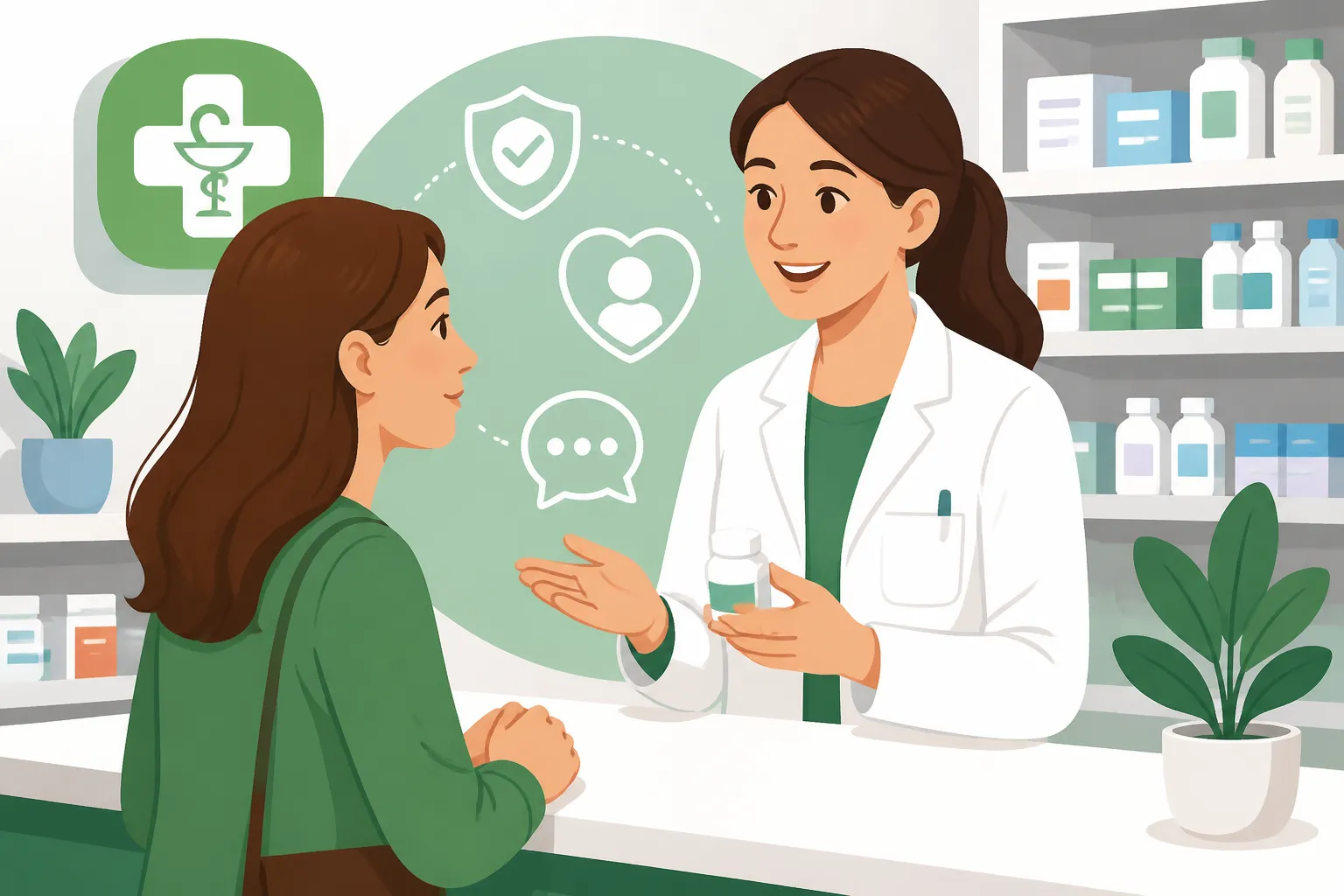
For many expats, the initial interaction can feel a bit intrusive. You might just want your hay fever pills and go, but the pharmacist will likely ask if you’ve used them before or if you know how to administer them. This is part of their legal obligation for patient counseling. They want to ensure you don't leave the store with a product you don't know how to use safely. If you are still in your first few months and don't have your CPR number yet, navigating these conversations while relying on Expat Health Insurance: Coverage Before You Get Your CPR Number is essential, as the pharmacist will need to handle your transaction differently than they would for someone with a yellow card.
Distinguishing Between Pharmacists and Pharmacy Assistants
When you walk into an Apotek, you will encounter both Farmaceuter (Pharmacists) and Farmakonomer (Pharmacists' Assistants or Pharmaconomists). While both are highly trained, their roles differ slightly. A Farmakonom has a three-year specialized education focused on the practicalities of pharmacy, counseling, and health promotion.
In daily life, a Farmakonom will often be the one who serves you at the counter for common ailments. However, for complex clinical questions or specific pharmaceutical preparations, a Farmaceut will step in. Both roles are authorized to provide patient counseling, and in Denmark, the quality of advice is exceptionally high regardless of which professional you speak to. The transparency of the system means they will always tell you if they need to double-check something with the prescribing doctor.
Why the Counseling is So Detailed
The Danish approach to medicine is conservative. You won't find the same "aggressive" over-the-counter culture here as you might in the US or UK. The pharmacist’s role is often to moderate expectations. They might suggest a natural remedy or a simpler lifestyle change before jumping to a heavy medication.
During your counseling session, they will often discuss:
- Potential side effects and how to mitigate them.
- The best time of day to take the medication for maximum absorption.
- How the medication interacts with food, alcohol, or other supplements.
- How to store the medicine, especially given the humidity levels in some older Danish apartments.
Navigating the Digital Pharmacy Landscape
Denmark is one of the most digitized countries in the world, and this extends directly into the pharmacy. Your paper prescription is a thing of the past. Everything is linked to your CPR number and your The Yellow Health Card (Sundhedskort): Your Key to Danish Healthcare. When your doctor sends a prescription, it goes into a "cloud" called the FMK (Fælles Medicinkort).
When you arrive at the pharmacy, you simply scan your card, and the pharmacist pulls up your file. This digital integration allows for a seamless counseling experience. The pharmacist can see every medication you have filled in the last two years, allowing them to provide holistic advice. If you’ve moved recently, you might wonder how this works; rest assured that your digital records follow you, even if you are still Finding Medical Care in Denmark: GPs, Specialists, and Referrals in a new city.
Managing Your Prescriptions with the Medicinkortet App
Newcomers are strongly advised to downloading the "Medicinkortet" app immediately. It allows you to see exactly what prescriptions are active, how many refills you have left, and the status of your medication. The pharmacist can also help you set this up if you're struggling with the interface.
Having this app on your phone is a game-changer when you're standing in front of the pharmacist. You can show them exactly what you've taken previously, which helps bridge any language gaps. If you are covered by a private provider like Cigna Global or SafetyWing, you can also use the app to keep a history of your medications for reimbursement purposes, as these companies often require detailed documentation of prescribed treatments.
Using the app alongside the advice from your pharmacist ensures that you never run out of essential meds. It also helps you understand The Role of the GP: Why You Cannot Go Directly to a Specialist, as you’ll see that the pharmacist cannot simply "renew" a prescription for you; you must always have the GP's authorization in the system.
Understanding Medicine Subsidies and Generic Alternatives
One of the most complex parts of the pharmacist's role is explaining the subsidy system (Tilskud). In Denmark, the more medication you buy in a year, the higher the percentage the state covers. The pharmacist is tasked with managing this calculation in real-time.
When you are at the counter, the pharmacist will almost always ask: "Do you want the cheapest version?" This can be confusing for newcomers. In Denmark, when a patent expires, several companies produce the same medication. The pharmacist is legally required to offer you the cheapest generic version available that day. They will explain that the active ingredient is identical, even if the packaging looks different.
If you are Using the Medicinkortet App: Managing Your Prescriptions Digitally, you can actually see the price fluctuations. The pharmacist’s counseling here is crucial because they help you understand How Medication Subsidies (Tilskud) Are Calculated at the Apotek, ensuring you aren't overpaying for a brand name when a generic is available.
Practical Scenarios for Expats in the Apotek
To help you visualize how this works, let's look at a few common scenarios. Imagine you have a persistent cough. In some countries, you’d grab three different syrups off a shelf. In Denmark, most effective cough medicines require a prescription. The pharmacist will ask you several questions: Is it a dry cough? Is it productive? Do you have a fever? Based on your answers, they might refer you to Finding an English-Speaking Doctor: Directories and Local Strategies instead of selling you a useless syrup.
Another scenario involves pain relief. You might be used to buying 50-packs of Ibuprofen at the grocery store. In Denmark, you can only buy small packs of low-dose painkillers in supermarkets. For anything stronger or in larger quantities, you must talk to the pharmacist. They will counsel you on the risks of long-term use and ensure you aren't doubling up on paracetamol and ibuprofen in a way that could damage your liver or stomach.
| Feature | Apotek (Pharmacy) | Supermarket (Netto/Rema 1000) |
|---|---|---|
| Staff Expertise | Master's/Bachelor's in Pharmacy | General Retail Staff |
| Product Range | Full range of Rx and OTC | Very limited OTC (low dose) |
| Counseling | Mandatory and detailed | None |
| Availability | Restricted hours (some 24h) | Long supermarket hours |
| Subsidies | State subsidies applied | No subsidies available |
| Age Limit | Usually 15+ for OTC | Strictly 18+ for painkillers |
Finding an Apotek and English-Speaking Service
Most pharmacies in Denmark have at least one person on staff who speaks excellent English. If you are in a major city like Copenhagen, Aarhus, or Odense, the level of English is typically near-native. Don't be afraid to ask, "Can we speak English?" before you start describing your symptoms.
If you need urgent medication outside of normal hours, you'll need to find a "Vagtapotek" (Emergency Pharmacy). These are open 24/7, but be aware there is an extra fee (gebyr) for service during night hours or public holidays. The pharmacist there provides the same level of counseling, which is vital if you're dealing with a sudden illness that has you Sickness Benefit (Sygedagpenge): Your Rights When Off Work Due to Illness and unable to work.
For those traveling or just arriving, check if your insurance, such as SafetyWing, covers these out-of-hours fees. Similarly, if you have a premium plan with Cigna Global, you may have access to a 24/7 medical concierge who can help translate your needs before you even step into the pharmacy.
Over-the-Counter vs. Prescription Rules
The distinction between what is Over-the-Counter (OTC) and what is prescription-only can be a major source of "culture shock." For instance, many allergy medications or high-dose Vitamin D supplements that are OTC in other countries require a doctor's visit here.
The pharmacist is your best ally in navigating Over-the-Counter (OTC) Medication: Supermarket vs. Apotek Regulations. They can tell you exactly what you can buy right now and what requires you to call your GP. If you have brought medication from home, the pharmacist can also help you identify the Danish equivalent. This is particularly helpful for chronic conditions, though you should always ensure your Pharmacies in Denmark: Apotek Rules, Prescriptions, and Subsidies knowledge is up to date regarding what can be imported.
The Role of the Pharmacist in Preventative Care
Beyond just handing out pills, the Danish pharmacist is increasingly involved in preventative health. Many pharmacies now offer services like:
- Blood pressure monitoring.
- Inhalation technique checks for asthma patients.
- Medication reviews for the elderly or those on five or more medications.
- Vaccinations (during flu season or for travel).
This shift towards clinical service means the pharmacist is a key pillar in the Danish healthcare system. They are there to reduce the burden on GPs and hospitals. If you are feeling "under the weather" but don't think it's an emergency, the Apotek is often the best first stop. The pharmacist will provide a "triage" service, giving you immediate advice or telling you clearly when it's time to call the doctor.
If you are a student or a young professional, don't overlook the pharmacist's role in sexual health and contraception advice. They provide a discreet and professional environment for these discussions, often being more accessible than a GP appointment. This level of accessibility is one of the reasons the Danish system works so well, despite the high taxes we all pay.
Navigating Conversations as a Non-Danish Speaker
While the language barrier can be intimidating, the pharmacists are used to it. Denmark is a hub for international researchers and workers, and the medical community is very accommodating. My tip is to always have the name of the active ingredient (the generic name) written down, rather than the brand name from your home country. For example, ask for "Paracetamol" instead of "Tylenol" or "Panadol."
If you find yourself in a situation where the pharmacist is using technical terms in Danish, politely ask them to slow down or use the English equivalent. They would much rather spend an extra five minutes explaining it clearly than have you leave the store with a misunderstanding. This is the heart of patient counseling in Denmark: it is a collaborative process between the health professional and the patient.
For those who are in Denmark on a temporary basis or as digital nomads, using a service like SafetyWing can provide peace of mind while you learn the local system. If you plan to be here long-term, Cigna Global offers more comprehensive modules that might include "outpatient" benefits, which cover the costs of the very medications the pharmacist is counseling you on. Regardless of your insurance status, the advice you receive at the Apotek remains free and is one of the highest quality services you will encounter in your expat life.
Disclaimer
This article is for informational purposes only and does not constitute medical or legal advice. Healthcare regulations and pharmacy practices in Denmark are subject to change. Always consult with a qualified healthcare professional or a licensed pharmacist in Denmark regarding your specific medical needs and the use of any medication. While every effort has been made to ensure accuracy as of 2026, you should verify current rules with the Danish Medicines Agency (Lægemiddelstyrelsen).