How to Opt Out of Organ Donation Registries via Borger.dk
Navigating the Danish digital landscape can feel like a labyrinth of vowels and security prompts, especially when dealing with sensitive personal choices. I remember sitting in my kitchen in Aarhus, staring at the screen for forty minutes, terrified I was about to accidentally sign away my medical rights because my Danish was still at the "rødgrød med fløde" level. This guide solves the specific challenge of accessing and updating the Organ Donor Register via Borger.dk, ensuring your personal convictions are legally recorded.
The Cultural and Legal Shift in Danish Organ Donation
For years, Denmark operated on an "opt-in" basis, where you had to actively register to become a donor. However, the conversation has shifted dramatically in recent times toward a model of presumed consent. This means that, eventually, every resident over the age of 18 could be considered a donor unless they explicitly state otherwise. For an expat, this transition is crucial. You might come from a country where the default is "no," but in Denmark, the system assumes "yes" or is moving rapidly toward that social contract.
This is why understanding how to use the digital portals is not just a matter of administrative curiosity; it is about bodily autonomy. The Danish system is incredibly efficient, but it relies on you, the resident, to manage your own data. If you have strong religious, ethical, or personal reasons for wanting to opt out, the state provides the tools to do so, but they will not do it for you. You must engage with the Healthcare in Denmark for Foreign Residents: Complete System Guide (2027) to realize just how much of your life is tied to your digital identity.
The Danish approach to healthcare is built on trust and transparency. They expect you to be an active participant in your health journey. When you receive your CPR number, you aren't just getting a tax ID; you are being integrated into a massive, interconnected database. This is why Understanding CPR Registration and Your Healthcare Entitlement is the first hurdle every foreigner must clear before they can even think about organ registries.
Accessing the Organ Donor Register via Borger.dk
To change your status, you don't go to a physical office or mail in a paper form. Everything happens through Borger.dk or Sundhed.dk. These are the twin pillars of Danish digital life. To enter these portals, you need MitID, the national digital ID system. If you are still waiting for your MitID, or if you have been locked out, you are essentially "digitally invisible" to the health system. Many expats get frustrated because they wanted to update their records but couldn't get past the login screen. If you find yourself in this boat, check out What to Do If You Lose Your MitID Access and Are Locked Out to get back on track.
Once you have your MitID ready, the process of opting out is relatively straightforward, provided you know where to look. You will navigate to the "Sundhed og sygdom" (Health and Illness) section. From there, you look for "Organdonation." The portal will redirect you to the actual registry, which is hosted on the Sundhed.dk infrastructure.
It is important to remember that while you are navigating these public systems, your immediate health coverage is vital. If you are a new arrival and haven't yet secured your yellow card, you might consider bridge coverage from providers like SafetyWing, which caters specifically to the "in-between" phase of expat life. Having that safety net allows you to focus on these long-term administrative tasks without the stress of being uninsured in a foreign country.
Step-by-Step: How to Register Your Choice Digitally
Once you are logged into the Organ Donor Register (Organdonorregistret), you are presented with several choices. The system is surprisingly nuanced; it isn't just a "yes" or "no" toggle. You can choose "Fuld tilladelse" (Full permission), which means any of your organs can be used. You can choose "Begrænset tilladelse" (Limited permission), where you check specific boxes for what can be taken. Finally, there is the option to opt out entirely: "Forbud mod donation" (Prohibition against donation).
Choosing the Opt-Out Option
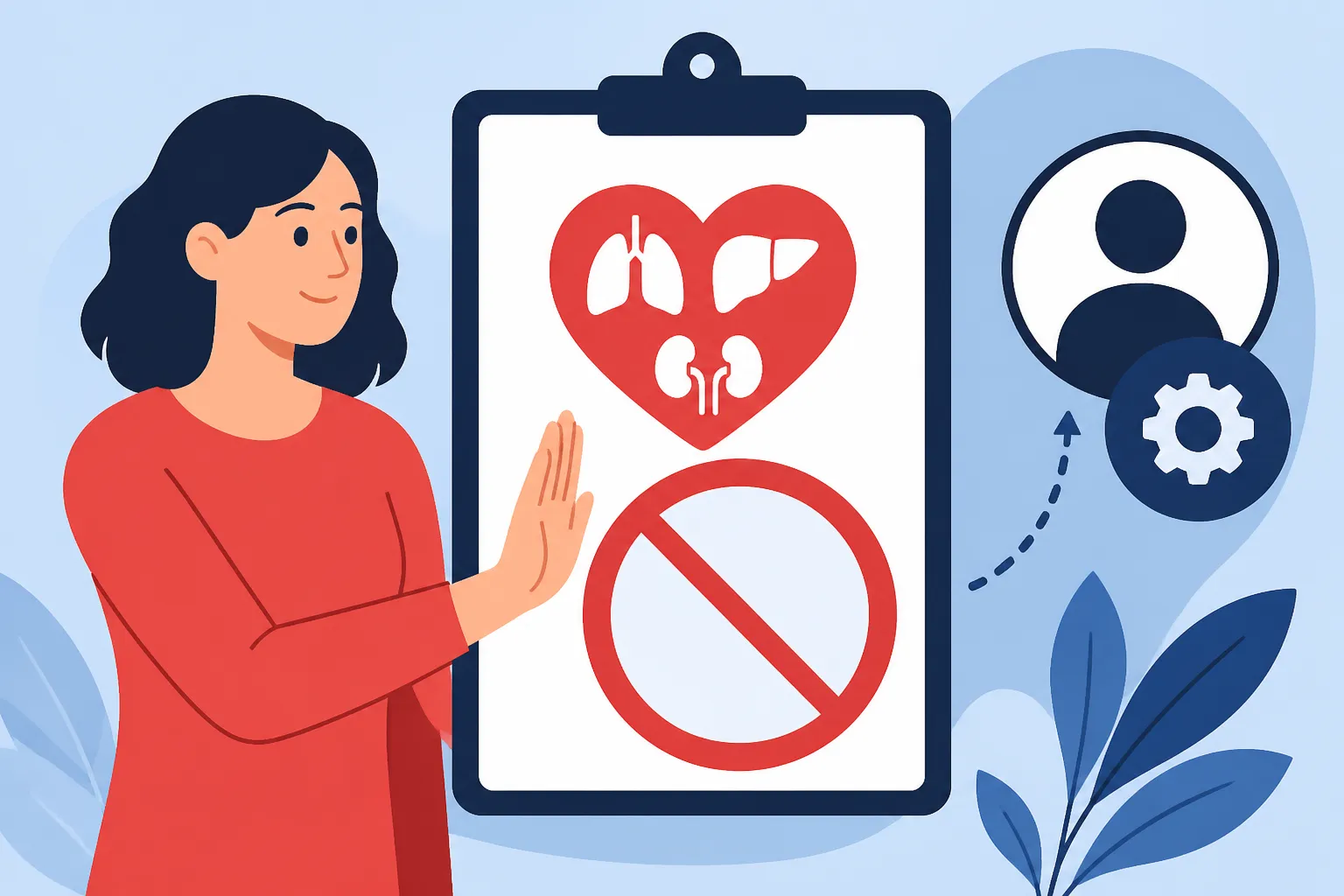
If your goal is to opt out, you must select the "Forbud" option. After selecting this, you will be asked to confirm your choice. The system will then save this to your CPR profile. From that moment on, if a medical emergency occurs, the doctors will see a "no" next to your name in the central database. This registry is checked immediately by hospital staff in relevant scenarios.
The Role of Family Consent
Even if you register a "no" or a "yes" on Borger.dk, there is a secondary checkbox regarding your relatives. You can decide whether your family has the final say (pårørendes accept). This is a deeply personal choice. Some expats prefer to leave the final decision to their family, while others want their digital registration to be the absolute final word. If you want to ensure your "no" is never challenged, you can specify that your decision does not require family confirmation.
Updating Your Status
One of the best things about the Danish system is that nothing is permanent. If you change your mind three years from now, you simply log back in and change the toggle. There is no fee, no waiting period, and no bureaucrat to argue with. It is a pure expression of your current wishes. During your first few months, you'll be using The Yellow Health Card (Sundhedskort): Your Key to Danish Healthcare for everything from the library to the doctor, and your organ donor status is quietly tethered to that card's data.
| Option in Register | Danish Term | What it Means |
|---|---|---|
| Full Permission | Fuld tilladelse | All organs and tissue can be used for transplantation. |
| Limited Permission | Begrænset tilladelse | Only specific organs you select can be used. |
| Opt-Out / Prohibit | Forbud | No organs or tissue can be used under any circumstances. |
| Don't Know | Ved ikke | You haven't decided; family will be asked to make the choice. |
What to Do If You Don't Have a MitID Yet
Many new expats, particularly those from outside the EU, face a "waiting period" where they have moved to Denmark but don't yet have the full digital suite. If you are in this phase, you cannot access Borger.dk. This can be nerve-wracking if you are passionate about your organ donation status. In these cases, you can actually fill out a physical paper form and mail it to the Danish Health Data Authority (Sundhedsdatastyrelsen). However, this is becoming increasingly rare and is often slower to process.
During this transition, ensure you are covered by Expat Health Insurance: Coverage Before You Get Your CPR Number. Companies like Cigna Global are often used by expats who want a higher tier of private service or who need to satisfy visa requirements before the Danish state system kicks in. Having a private policy doesn't change your organ donation status, but it ensures you have access to representatives who can help you navigate the system in English while you wait for your Sundhed.dk and MitID: Navigating Denmark’s Digital Health Portals access to be finalized.
If you are an EU citizen, your path is slightly different, and you might be relying on different documentation initially. It is wise reading up on Healthcare for EU/EEA Citizens: Using the Blue EHIC Card in Denmark to see how your home country's rights mesh with the Danish system. But regardless of where you are from, the First 90 Days: Health Insurance Requirements for Non-EU Expats are strict, and your digital registration for things like organ donation usually has to wait until the CPR number is issued.
The Ethical Conversation: Why Your Family Still Matters
In Denmark, the "Relative's Veto" is a significant part of the medical culture. Even if the law moves toward presumed consent, Danish doctors are historically very hesitant to proceed with organ harvesting if the family is vehemently opposed. This is why the digital registration is only half the battle.
Families should be part of these conversations early on. Tell them what you have recorded on Borger.dk. If you have opted out, they need to know so they can advocate for you in a hospital setting. The digital system is a safeguard, but the human element remains. If you are managing your family's health in a new country, you might also be looking into Family Health In Denmark: Pregnancy, Maternity, and Pediatric Care, where these types of ethical "what-if" conversations often begin.
For those who choose to remain in the system, it is often seen as a final act of "Samfundssind" (community spirit), a very Danish concept of contributing to the collective good. But if that doesn't align with your values, the system respects that—as long as you've done the digital paperwork.
Common Frustrations and Troubleshooting the Portal
The Borger.dk portal is available in English, but the deeper you go into specific registries like the Organ Donor Register, the more likely you are to encounter Danish-only text. If your browser's auto-translate fails, look for keywords like "Registrér," "Ændre," or "Slet" (Register, Change, Delete).
A common issue I hear about is the "session timeout." The Danish government portals are incredibly secure, which means if you walk away to grab a coffee while deciding which organs to select, you will likely be logged out and have to start the MitID process all over again. It is best to have your decision made before you log in.
Another point of confusion is the difference between organ donation and donating your body to science. These are two separate registries. The one on Borger.dk/Sundhed.dk is specifically for transplantation to save lives. If you wish to donate your body to a university for medical research, that requires a separate agreement with a specific university's anatomical institute (usually in Copenhagen, Aarhus, or Odense).
Final Thoughts on Digital Autonomy in Denmark
Living in Denmark means embracing a "digital-first" lifestyle. Whether you are opting out of organ donation or simply trying to figure out How to Choose and Change Your General Practitioner (GP) in Denmark, the effort you put into understanding these portals pays off in peace of mind.
Don't let the language barrier or the complexity of MitID stop you from recording your wishes. The Danish health system is one of the best in the world, but its efficiency depends on the accuracy of the data you provide. By taking ten minutes today to navigate Borger.dk, you ensure that your personal, religious, or ethical boundaries are respected by the state, regardless of future legislative changes.
Disclaimer
This article is for informational purposes only and does not constitute legal or medical advice. The Danish healthcare system and digital portals (Borger.dk, Sundhed.dk, MitID) are subject to frequent updates. While we strive to provide the most current information, readers should always verify procedures directly with the relevant Danish authorities or legal counsel. Organ donation policies and "presumed consent" legislation can vary based on current political mandates in Denmark. Additionally, insurance recommendations are based on typical expat needs; always read the fine print of any policy from providers like SafetyWing or Cigna Global to ensure it meets your specific circumstances.