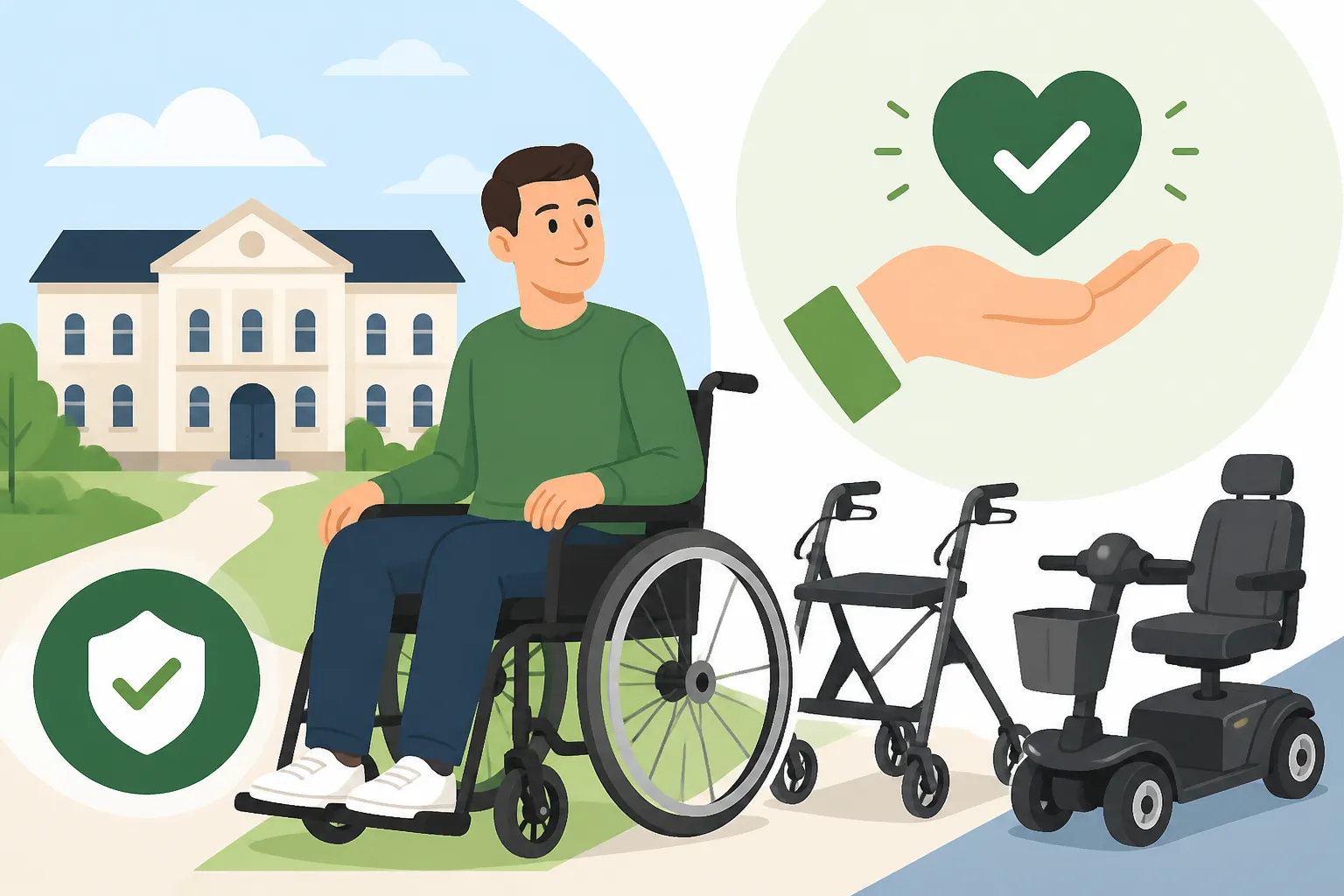
Getting a Wheelchair or Mobility Aid Subsidized by the Municipality
Navigating Denmark’s charming but notoriously uneven cobblestone streets is a challenge for anyone, but when you or a loved one faces a mobility impairment, those picturesque paths become significant physical barriers. I remember the overwhelming confusion when a friend first needed a specialized chair; we were lost between hospital discharge papers and municipal websites that felt like a maze. This guide explains exactly how to navigate the Danish system to get a wheelchair or mobility aid subsidized by your municipality, ensuring you don't have to face the financial burden alone.
The Legal Foundation of Mobility Support in Denmark
In Denmark, the support you receive for mobility aids is not a matter of charity; it is a right enshrined in the Social Services Act, specifically known as Serviceloven. Under Section 112 of this act, the municipality (kommune) is required to provide assistance for aids that can significantly alleviate the permanent consequences of a decreased physical or mental functional capacity. The "permanent" part is the most critical word for an expat to understand because it dictates which "bucket" of the healthcare system you fall into.
If your need for a wheelchair or walker is temporary—for instance, if you are recovering from a hip replacement or a broken leg—the responsibility usually lies with the regional hospital system. They provide what are known as "treatment aids" (behandlingsredskaber) on a short-term loan basis. However, if your condition is chronic or long-term, you move into the territory of the municipality's "assistive technology" (hjælpemidler). This distinction is vital because the application portals and the departments you interact with are entirely different.
To even begin this process, you must be a resident with a CPR number. If you are still in your initial relocation phase, you might find that Understanding CPR Registration and Your Healthcare Entitlement is the first hurdle to clear. Without that yellow card, the municipality generally cannot open a case for you. For those who are in the "waiting period" before their registration is finalized, private options like SafetyWing can provide a necessary safety net for unexpected medical needs, though municipal aid remains the gold standard for long-term equipment.
The Application Journey: From GP to Visitation
The process of getting a subsidized aid starts with a "visitation" (visitationen). This isn't a social visit; it’s a formal assessment by a professional, usually an occupational therapist (ergoterapeut) or a physiotherapist employed by the municipality. Before you contact the municipality, your first stop should always be your General Practitioner. You need a medical foundation for your claim. Your doctor will document your functional limitations, which serves as the "evidence" the municipality uses to justify the expense.
Once you have spoken with your doctor, you apply through the digital portal Borger.dk. If you find the digital landscape confusing, Sundhed.dk and MitID: Navigating Denmark’s Digital Health Portals offers a deep dive into how to manage these applications. After you submit your application, a therapist from the municipality’s "Hjælpemiddelhuset" (The House of Assistive Aids) will contact you. In most cases, they will schedule a home visit. They need to see how you live—whether your doorways are wide enough for a specific wheelchair model or if you need a ramp installed at your front door.
During this assessment, be incredibly honest about your daily struggles. Danes value "self-reliance" (selvhjulpenhed), and the therapist’s goal is to find the aid that allows you to do as much as possible on your own. If you downplay your difficulties out of pride, you might end up with a rollator when you actually need a powered wheelchair. This is also a good time to discuss Physiotherapy in Denmark: Getting GP Referrals and Managing Costs, as physical therapy often goes hand-in-hand with learning to use new mobility equipment.
Understanding the Financials: Loans vs. Grants
A common misconception among foreigners is that the municipality "gives" you a wheelchair. In reality, most mobility aids in Denmark are provided as a "loan" (udlån). This means the municipality pays for the equipment, maintains it, and owns it. If your condition improves or you no longer need the aid, you are required to return it to the municipal warehouse so it can be refurbished and given to someone else. This system keeps the high-quality equipment circulating without constant new costs to the taxpayer.
There are, however, scenarios involving "personal aids" where you might receive a grant (bevilgning) to purchase your own. This usually applies to things like orthopedic shoes or very specific, custom-molded wheelchair inserts. In these cases, the municipality will tell you the price of the "best and cheapest" model that meets your needs. If you want a more expensive, "designer" version, you can usually choose to pay the difference yourself. This is known as the "Free Choice of Aid" (Frit valg af hjælpemiddel).
| Type of Aid | Ownership | Cost to Resident | Maintenance Responsibility |
|---|---|---|---|
| Standard Manual Wheelchair | Municipal Loan | 0 DKK | Municipality |
| Electric Mobility Scooter | Municipal Loan | 0 DKK | Municipality |
| Custom Orthopedic Shoes | Personal Grant | Small Co-pay | Resident |
| Rollator (Walker) | Municipal Loan | 0 DKK | Municipality |
| Home Ceiling Hoist | Municipal Property | 0 DKK | Municipality |
If you are dealing with a chronic condition that requires extensive equipment and perhaps even modifications to your home, the costs of "extras" can add up. While the municipality covers the basics, some expats prefer the extra layer of security provided by comprehensive plans like Cigna Global, which can sometimes cover alternative treatments or specialized private consultations that the public system might have a longer wait for. Speaking of wait times, it is worth checking Waiting Times in Danish Public Hospitals and Patient Rights to understand the broader context of the system’s pace.
Navigating the Waiting Period and Urgent Needs
The biggest frustration for many is the processing time. Depending on your municipality—whether you are in Copenhagen, Aarhus, or a smaller town like Roskilde—it can take anywhere from a few weeks to several months to get a final decision and delivery of the aid. During this time, you might feel stranded.
If your need is urgent and the municipality is moving too slowly, you have a few options. First, you can look into "re-cycling" centers or second-hand markets like DBA (Den Blå Avis), where people often sell used rollators or basic wheelchairs for a few hundred kroner. While you won't get the municipal subsidy for these, they can serve as a stop-gap. Second, check your insurance. If you have international coverage through SafetyWing, they can be a lifesaver for acute injuries that require immediate equipment before the Danish bureaucracy kicks in.
For those with complex needs involving both mobility and long-term illness, it is important to look at the bigger picture of your benefits. If your mobility issues are preventing you from working, you should read about Sickness Benefit (Sygedagpenge): Your Rights When Off Work Due to Illness to ensure your income is protected while your aid application is pending. Furthermore, if your mobility impairment is linked to a wider disability, Neurodiversity Support: ADHD and Autism Diagnosis for Adults might offer insights into how the Danish system handles multi-faceted disability support.
When the Answer is No: Appeals and Private Options
Not every application is approved. The municipality might decide that your impairment isn't "permanent" enough or that a less expensive intervention (like more physiotherapy) is the correct path. If you receive a rejection, don't panic. You have the right to appeal the decision within four weeks. The appeal (klage) should be sent directly to the municipality, who will then re-evaluate the case. If they stick to their rejection, the case is sent to the Board of Appeal (Ankestyrelsen).
If you find yourself outside the "permanent" criteria but still struggling, or if you simply want a higher level of equipment than the municipality is willing to fund, private health insurance becomes your best friend. Many expats opt for Private Health Insurance (Sygeforsikring "danmark"): Is It Worth It?, although "danmark" is more focused on medicine and dental subsidies rather than heavy hardware like wheelchairs. For high-end mobility equipment coverage, a more robust international policy like Cigna Global is often more appropriate.
Finally, remember that your mobility aid is part of a larger healthcare ecosystem. If you are struggling with the mental toll of losing your mobility, Mental Health in Denmark: Accessing Psychologists and Therapy for Expats is a crucial resource. The transition to using a wheelchair or walker is as much a mental journey as a physical one, and the Danish system, while bureaucratic, is designed to support both aspects of your well-being.
Important Considerations for Expats and Tourists
If you are a tourist or a short-term visitor in Denmark and you break a leg or experience a flare-up of a condition, the rules are different. You generally won't have access to municipal subsidies. In these cases, you will rely heavily on the Healthcare for EU/EEA Citizens: Using the Blue EHIC Card in Denmark or your private travel insurance. SafetyWing is particularly popular among digital nomads and short-term visitors for this reason, as it handles the "emergency" side of mobility issues that the Danish municipality simply isn't set up to cover for non-residents.
For those who are here long-term, once you have your aid, make sure you understand the rules for taking it abroad. Since the municipality owns the wheelchair, you often need to notify them if you are leaving the country for an extended period with "their" equipment. They usually provide a travel certificate to ensure you don't have issues at customs or with airlines.
Ultimately, the Danish system is built on the principle of dignity. Whether it’s a high-tech electric wheelchair or a simple sturdy cane, the goal of the "Kommune" is to keep you active in society. It takes patience and a fair amount of digital paperwork, but once you are in the system, the quality of care and equipment is world-class.
Medical Disclaimer
This article is for informational purposes only and does not constitute legal or medical advice. The Danish healthcare system and municipal regulations are subject to change, and specific eligibility requirements for mobility aids may vary between municipalities (kommuner). Always consult with your General Practitioner (GP) and your local municipality's "Hjælpemiddelenhed" for the most up-to-date and personalized guidance. If you are experiencing a medical emergency, please call 112 immediately.