Eye Care in Denmark: Opticians, Glasses, and Ophthalmology Referrals
One of the most disorienting moments I faced after moving to Copenhagen was realizing that my squinting at the Metro map wasn't just due to the sleek, minimalist typography, but because my prescription had changed. I quickly learned that navigating eye care here involves a confusing split between high-end retail boutiques and a strictly regulated public medical system. This guide clarifies exactly how to access opticians, secure ophthalmology referrals, and manage the high costs of Danish eyewear.
Understanding the Two Pillars of Danish Eye Care
When you first arrive in Denmark, the distinction between an optician and an ophthalmologist is not always clear, especially if you come from a country where these services are often bundled together in a single clinic. In Denmark, the system is bifurcated. On one hand, you have the commercial high street, filled with stylish frames and quick eye tests. On the other, you have the clinical medical system, which is strictly for health-related issues and requires a specific path of entry.
The Retail Optician Experience
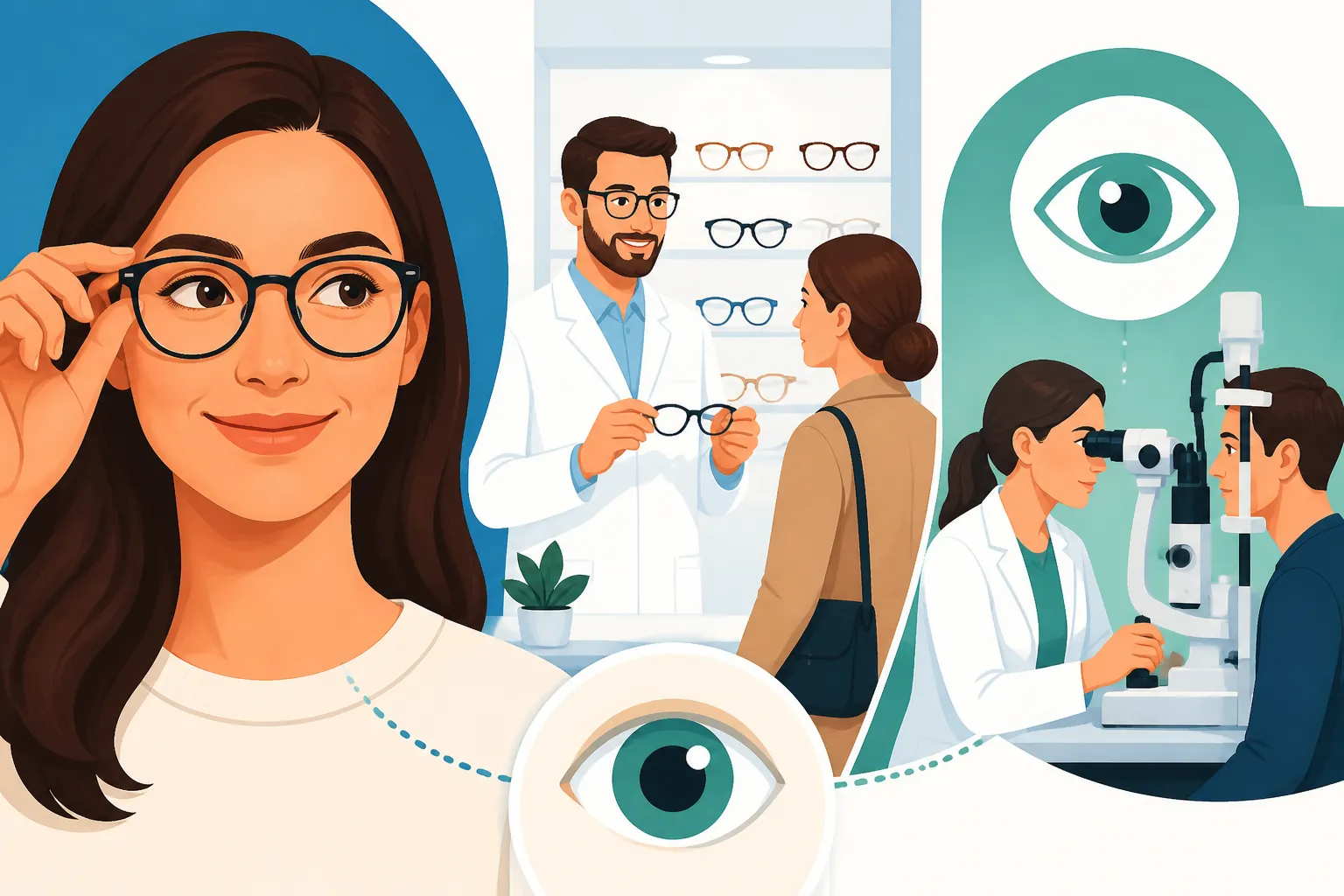
The retail optician, or "Optiker," is where 90% of your vision needs will be met. These are commercial businesses like Louis Nielsen, Synoptik, or Profil Optik. Think of them as the primary gateway for anyone who just needs to see better. They are incredibly accessible, usually found on every major "Gågade" (pedestrian street) in the country. You do not need a referral to walk into one of these shops. In fact, they are often the most welcoming part of the Danish healthcare landscape because they are private businesses.
However, it is vital to remember that these professionals are primarily trained in refraction—measuring your vision and fitting lenses. While many modern Danish opticians use advanced retinal cameras and can spot the early signs of glaucoma or cataracts, they are not medical doctors. If they see something concerning, they won't treat it themselves; instead, they will advise you to see a specialist. For those who are still waiting on their residency paperwork, Expat Health Insurance: Coverage Before You Get Your CPR Number is a crucial bridge, as private opticians will expect payment upfront regardless of your status.
The Medical Ophthalmologist
The "Øjenlæge," or ophthalmologist, is a medical doctor specializing in eye diseases and surgery. Unlike the optician, their services are fully covered by the public system if you have a CPR number. You go to them for infections, sudden vision loss, chronic conditions like diabetes-related eye issues, or if you need surgery.
Accessing an ophthalmologist is one of the unique quirks of the Danish system. For most medical specialists, you need a referral from your GP. However, eye doctors (along with ENT specialists) are an exception in many regions. You can often contact them directly to book an appointment. But here is the catch: because they are free under the public system, the waiting lists can be astronomical. Waits of several months for a routine check-up, even for something like a persistent "floater" in the field of vision, are not unusual. This is why many expats choose to supplement their public coverage with providers like Cigna Global, which allows for faster access to private specialists without the grueling wait.
Getting Your Eyes Tested in Denmark
The process of getting an eye test is straightforward but carries different costs depending on what you are looking for. If you are simply looking for a new pair of glasses, the process is very commercial. If you are worried about the health of your eyes, the process is clinical.
Commercial Eye Exams and Costs
Most major chains offer eye tests (Synsprøve) for a nominal fee, often ranging from 150 DKK to 500 DKK. Frequently, if you end up buying glasses from the shop, they will waive the fee for the test. The exam is usually very high-tech. When I went for my first test in Aarhus, the optician used equipment that felt like it belonged on a spaceship. They will check your visual acuity, your ability to focus, and often perform a pressure test to check for signs of glaucoma.
If you are a student or a digital nomad just passing through, you might find that services like SafetyWing are excellent for handling unexpected medical issues, though keep in mind that routine eye exams for glasses are rarely covered by travel-based insurance. You should expect to pay out of pocket for the "fashion" side of eye care.
The Role of the General Practitioner
If you wake up with a bright red, itchy eye or sudden pain, your first stop should not be the optician or the eye doctor, but your own GP. They are the gatekeepers of Healthcare in Denmark for Foreign Residents: Complete System Guide (2027) and can handle basic infections or prescribe antibiotic drops.
Your GP will assess whether your issue is a simple "conjunctivitis" (øjenbetændelse) or something that requires the specialized equipment of an ophthalmologist. If it is the latter, they will issue a referral. Once that referral is in the system, you can see any eye doctor you want, but you will still be subject to their waiting lists. For many, this is where Finding an English-Speaking Doctor: Directories and Local Strategies becomes helpful, as explaining complex eye symptoms is much easier in your native tongue.
Waiting Times and Patient Rights
The wait for a public eye doctor in major cities like Copenhagen or Aarhus can be frustratingly long. It is not uncommon to be told the first available appointment is three to six months away. However, Denmark has "Patient Rights" regarding waiting times. If the public system cannot treat you within a certain timeframe (usually 30 days for serious conditions), you may have the right to be referred to a private clinic at the state's expense.
To navigate this, I highly recommend checking Waiting Times in Danish Public Hospitals and Patient Rights to understand your leverage. If you have private insurance through your employer or a company like Cigna Global, you can often bypass these queues entirely by visiting a private ophthalmology clinic, which usually has appointments available within days.
The Financial Reality of Glasses and Contacts
Let's not sugarcoat it: glasses in Denmark are expensive. Between the high VAT (moms) and the Danish preference for high-end Scandinavian design, you can easily spend 5,000 DKK to 8,000 DKK on a single pair of spectacles.
Why Prices Are So High
In Denmark, glasses are viewed as both a medical necessity and a fashion statement. Most shops carry brands like Lindberg or Orgreen, which are beautiful but come with a heavy price tag. Furthermore, the lenses themselves are often high-index and multi-coated as standard, which drives up the base price.
Unlike some other European countries, the "Yellow Card" provides almost zero subsidy for adult eyewear. Unless you have a very specific medical condition (like extreme myopia or keratoconus), you are expected to foot the bill yourself. This is a common shock for new arrivals who are used to The Yellow Health Card (Sundhedskort): Your Key to Danish Healthcare covering everything.
Using Private Insurance and Subsidies
To mitigate these costs, many long-term residents join "Sygeforsikring 'danmark'." This is a private, member-owned insurance group that provides "reimbursements" rather than direct coverage. If you are a member of "Group 1" or "Group 2," you can get a few hundred kroner back on your glasses or contact lenses every year. It’s not much, but over time it pays for the membership itself.
If you are weighing your options, reading Private Health Insurance (Sygeforsikring "danmark"): Is It Worth It? will give you a breakdown of the tiers. Additionally, some employer-provided insurance policies include a "Brille-tilskud" (glasses subsidy), which can be quite generous. Always check your work contract before heading to the optician.
| Service Type | Provider | Cost (Estimated) | Referral Needed? |
|---|---|---|---|
| Basic Eye Test | Retail Optician | 0 – 500 DKK | No |
| Medical Consultation | Ophthalmologist | Free (with CPR) | No (usually) |
| Designer Frames | Optician Shop | 2,000 – 6,000 DKK | No |
| Basic Lenses | Optician Shop | 1,000 – 3,000 DKK | No |
| Emergency Eye Care | Hospital/Lægevagten | Free (with CPR) | Yes (call 1813) |
Specialized Care and Eye Emergencies
When things go wrong beyond needing a new prescription, the Danish system moves from the high street to the hospital. Managing a chronic condition or an acute injury requires knowing who to call and when.
Chronic Conditions and Ongoing Monitoring
If you suffer from a condition like Glaucoma or Macular Degeneration, your care will be managed by a specialist. Once you are "in the system," the eye doctor will schedule your follow-ups automatically. You can usually see your history and test results online. I found it incredibly helpful to use How to View Your Medical Records and Lab Results on Sundhed.dk to keep track of my eye pressure readings over the years. This digital transparency is one of the best features of the Danish system.
For those with diabetes, the public health system is very proactive. You will be invited for regular retinal screenings to ensure there is no damage to the blood vessels in your eyes. These screenings are free and mandatory for maintaining your overall health profile in the national database.
Dealing with Eye Emergencies
If you get a chemical in your eye, a foreign object stuck, or experience a sudden "curtain" falling over your vision, do not wait for an optician to open. You must access emergency care. In the Capital Region, this means calling 1813. In other parts of Denmark, you call your local Lægevagten.
The dispatchers are trained to assess if you need to go to the "Øjenlægevagten" (Emergency Eye Clinic). In Copenhagen, this is often located at Rigshospitalet or Glostrup. If the situation is life-threatening or involves severe trauma, the rule remains the same: call 112. For a deeper look at the protocols, see Emergency Medical Care in Denmark: Calling 112, Lægevagten, and ERs.
SafetyWing is particularly useful here for tourists or those in their first month, as it covers emergency medical evacuations and urgent care before your local Danish rights kick in. Newcomers often struggle with hospital bills because they assume the "Yellow Card" coverage started the day they landed; it doesn't.
Pediatric Eye Care and School Screenings
Denmark is excellent at preventative care for children. If you are moving here with a family, you will find that eye care for your little ones is much more subsidized and proactive than it is for adults.
Mandatory Health Screenings
Children in Denmark undergo several mandatory health checks where vision is a key component. These start with the "Sundhedsplejerske" (health visitor) and continue with the GP at ages 4 and 5. By the time they start "Folkeskole" (public school), the school nurse will also perform periodic screenings.
If a teacher or school nurse suspects a child has a vision issue, the path to a specialist is much faster than it is for adults. Children are prioritized in the public ophthalmology queue because early intervention for things like "lazy eye" (amblyopia) is critical.
Subsidies for Children's Glasses
Unlike adults, children under the age of 18 can often receive a subsidy for their glasses from the municipality (Kommune). The rules vary slightly depending on where you live, but generally, if a child is prescribed glasses by an ophthalmologist, the state will cover a portion of the cost. It won't usually cover the most expensive designer frames, but it will ensure the child has functional, high-quality lenses.
For parents, this is a massive relief. It is worth noting that while Dental Care in Denmark: Costs, Subsidies, and Private Insurance Options is entirely free for children, eye care follows this "partial subsidy" model. You might still pay 500-1,000 DKK for a sturdy pair of frames that can survive the playground.
Practical Tips for the Expat Eye Patient
After five years of living here and three different pairs of Danish-made glasses, I’ve picked up a few "pro-tips" that the official guides won't tell you.
Buy Your Contacts Online
While the service at a Danish optician is top-notch, their markups on contact lenses are significant. Most Danes get their initial fitting and prescription at a shop like Synoptik but then order their monthly or daily supplies from online retailers like Lensway or Alensa. You can save up to 50% this way. Just make sure you get a copy of your "Brillerecept" (prescription) after your eye test; you are legally entitled to it, even if you don't buy anything from that shop.
The "Free" Eye Test Trap
Be wary of "Gratis Synsprøve" signs. Often, these are only free if you buy glasses. If you just want the prescription to shop elsewhere, they will charge you a "Receptgebyr." Always ask upfront: "Er synsprøven gratis, selvom jeg ikke køber briller?" (Is the eye test free, even if I don't buy glasses?).
Use Your Insurance for "The Gap"
If you are a non-EU expat, there is a "dead zone" between your arrival and the moment your CPR number is activated and your Yellow Card arrives in the mail. During this time, you are essentially a tourist in the eyes of the healthcare system. Having a policy from SafetyWing or Cigna Global is not just a recommendation; it is a financial shield. If you have an eye emergency during those first three weeks without insurance, a single trip to the specialist could cost you more than your first month's rent in Vesterbro.
Opt for "danmark" Early
If you plan to stay in Denmark for more than a year, join Sygeforsikring "danmark" as soon as you get your CPR. They have a "waiting period" for certain benefits, and you cannot join if you already have a diagnosed, serious eye condition. Joining while you are healthy is the "Danish way" of future-proofing your finances against the inevitable 6,000 DKK bill for your next pair of glasses.
Disclaimer
The information provided in this guide is for educational and informational purposes only. While every effort has been made to ensure the accuracy of the details regarding the Danish healthcare system as of 2026, rules and regulations can change. This content does not constitute professional medical advice, diagnosis, or treatment. Always seek the advice of your physician, ophthalmologist, or other qualified health provider with any questions you may have regarding a medical condition. Reliance on any information provided in this article is solely at your own risk.