Overstaying in the Schengen Area: Penalties and Exit Bans
Oh, the infamous Schengen overstay! It's one of those silent anxieties that can plague any non-EU citizen traveling or living in Denmark, especially when visas expire or plans go awry. Many arrive with the best intentions, but life here, with its slow administrative wheels and sometimes confusing rules, can make simply leaving on time feel like an Olympic sport. This guide is here to walk you through the absolute essentials of understanding the consequences of overstaying your welcome in the Schengen Area, what penalties you could face, and the long-lasting impact an exit ban can have on your future travels.
The Schengen Zone and Its Rules: A Quick Refresher (But Seriously, Read This!)
Let's be honest, the Schengen Area can feel like a labyrinth of rules, especially if you're not from the EU. Many expats, even seasoned travelers, sometimes misunderstand the core principle, leading to unintentional overstays that can have incredibly stressful and far-reaching consequences. It's not just about Denmark; it's about a bloc of 27 European countries that operate as a single territory for international travel purposes. Crossing an internal border from Germany to Denmark, for example, is like crossing state lines in the US – no passport check. But entering or leaving this entire zone is a different story.
Understanding the 90/180 Day Rule
This is the golden rule, the one that catches most people out, and it's deceptively simple on the surface: "90 days in any 180-day period." What does that actually mean? It doesn't mean you get 90 days, leave, and then immediately get another 90 days. Nope, not at all. It means that if you look back at any rolling 180-day period, your total stay within the Schengen Area cannot exceed 90 days.
Imagine you spent 60 days in Denmark, went back home for a month, and then came back for another 40 days in France. You've now used 100 days within a relatively short 180-day span, putting you over the limit. This calculation can be a real headache to track, particularly for those who frequently travel in and out of the zone for business or leisure. It requires you to be meticulously aware of every single entry and exit stamp in your passport. If you're a non-EU citizen, the moment you enter, that 180-day clock starts ticking, and every day you spend inside the Schengen Area counts towards your 90-day allowance. For a deeper dive into the mechanics, take a look at our guide on The 90/180 Day Schengen Rule for Non-EU Visitors in Denmark. It's more complex than you might initially think.
Who the Rules Apply To (and Who They Don't)
This 90/180-day rule specifically applies to non-EU/EEA citizens who are visa-exempt (meaning they don't need a short-stay visa for tourism or business) or those who hold a short-stay Schengen visa. If you're from a country like the United States, Canada, Australia, or many South American nations, you can enter for up to 90 days without a visa. If you're from a country that does require a Schengen visa, that visa will specify the exact number of days you're permitted to stay, which will be within that 90-day maximum.
Who doesn't this rule apply to? Primarily, citizens of the EU/EEA and Switzerland, as they have the right to free movement. If you're fortunate enough to hold a residence permit for a Schengen country (like Denmark, for example, with your Danish Visas and Residence Permits: The Complete Expat Guide (2027)), then you're generally exempt from the 90/180-day rule for that specific country and for travel within the Schengen Area. However, if your Danish residence permit expires, or if you're just visiting on a national (D-type) visa that permits a longer stay in Denmark only, the moment you step outside Denmark into another Schengen country, you might still be subject to certain aspects of the 90/180-day rule, depending on the specifics of your national visa. It can be a real minefield, and that's why clarity is so important. When in doubt, always consult the official guidelines or seek legal counsel. Our article on Schengen Visas and Limitations provides more clarity on these distinctions.
The Harsh Reality: What Happens When You Overstay
Let's not sugarcoat it: overstaying your Schengen visa or visa-free period in Denmark is a serious offense. This isn't like forgetting to return a library book. The Danish authorities, like those across the Schengen Area, take immigration rules very, very seriously. Many expats arrive here, enchanted by the hygge, and perhaps get a bit complacent, or simply underestimate the administrative hurdles. But when it comes to visa compliance, ignorance is absolutely not bliss.
Immediate Consequences: From Fines to Deportation
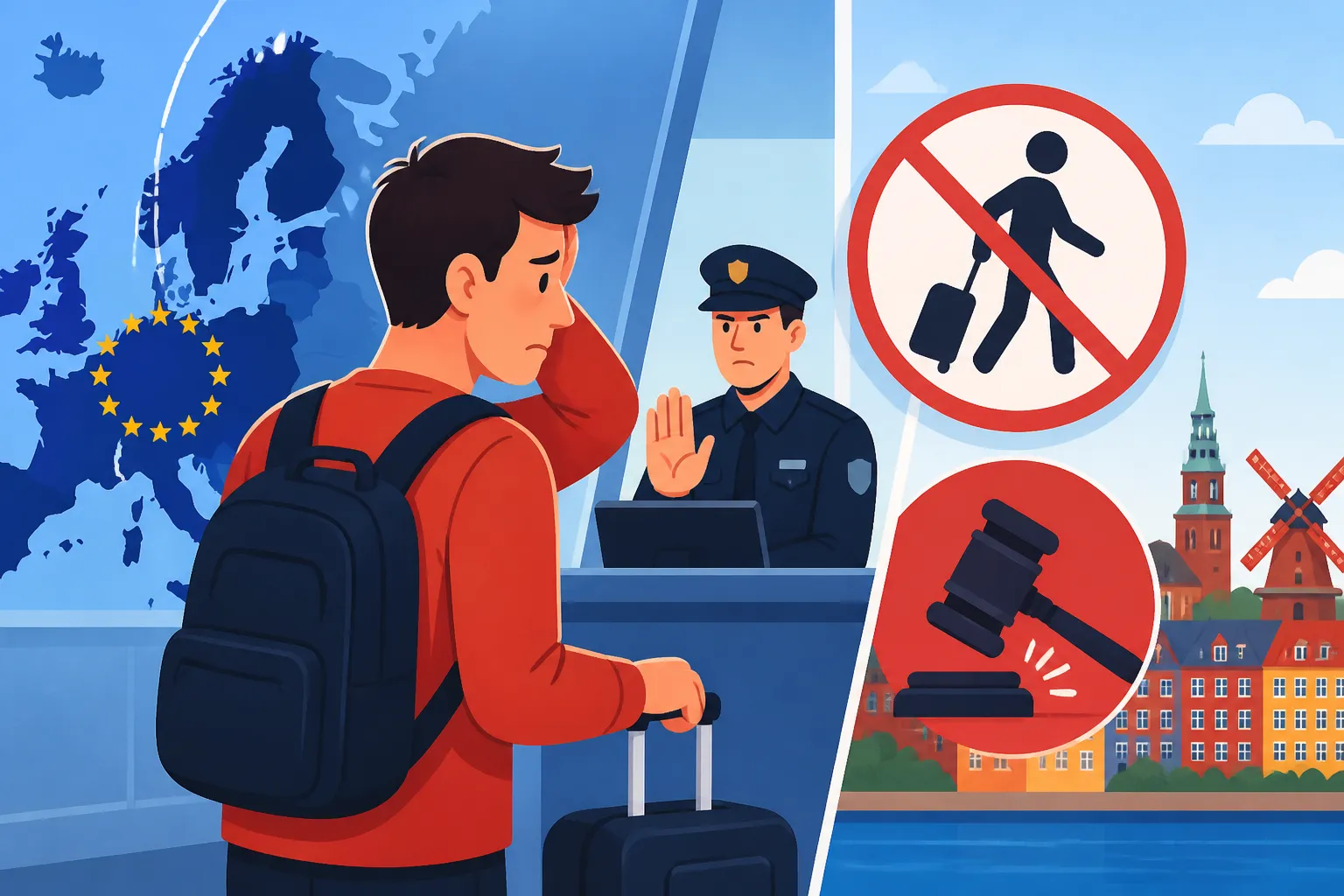
The moment you overstay, even by a single day, you are considered an irregular migrant. The longer you overstay, the more severe the consequences become. When you finally try to leave Denmark (or any Schengen country), either at the airport or a land border, the border police will notice. They are meticulous.
Here’s what you can realistically expect:
- Fines: These are almost a certainty. In Denmark, fines for overstaying can be substantial. They are typically calculated based on the length of your overstay. While the exact amounts can vary and are subject to change, expect them to be in the thousands of Danish kroner. For instance, a short overstay might incur a fine of a few thousand DKK, but this can quickly escalate the longer you remain illegally. These aren't just slaps on the wrist; they are meant to be a deterrent.
- Detention: Yes, this is a real possibility. Depending on the length of the overstay, the circumstances, and the discretion of the border authorities, you could be detained. This means being held in a facility until arrangements can be made for your deportation. It's a terrifying and isolating experience, especially if you don't speak Danish and are suddenly navigating a complex legal situation without immediate access to support.
- Immediate Deportation: You will be removed from the country. This isn't a suggestion; it's a mandatory action. You'll likely be put on the next available flight back to your home country, and you'll often have to bear the cost of that flight yourself. If you cannot pay, it might be arranged, but the debt will remain, potentially impacting your ability to get future visas.
The administrative process can be slow and unforgiving. Some newcomers are caught off guard, suddenly facing an official process that can feel overwhelming and impersonal. They often validate the frustration of dealing with authorities who, while doing their job, might not have much empathy for individual circumstances.
The Dreaded Entry Ban: A Long-Term Nightmare
Perhaps the most crippling consequence of an overstay is the entry ban. This isn't just about being told off; it's about being officially blacklisted from the entire Schengen Area for a significant period.
- What is an Entry Ban? An entry ban (often referred to as a "re-entry ban") is a formal decision that prohibits you from entering any Schengen country, typically for a period of several years. This decision is recorded in the Schengen Information System (SIS), a shared database used by all member states. This means that if Denmark issues you an entry ban, you won't be able to enter Germany, France, Italy, or any other Schengen country either. It’s a collective punishment, reflecting the idea of the Schengen zone as a single borderless entity.
- Duration of the Ban: The length of an entry ban is typically tied to the severity and length of your overstay.
- Short overstays (e.g., a few days to a few weeks): Might result in a 6-month or 1-year ban.
- Longer overstays (e.g., several months to a year): Often lead to a 2-year or 5-year ban.
- Egregious cases (e.g., multiple overstays, attempts to hide, engaging in illegal work): Could result in bans of 5 years, 10 years, or even longer.
- Impact on Future Travel: This is where the long-term nightmare truly begins. An entry ban makes it virtually impossible to visit friends or family, attend conferences, or even transit through a Schengen airport for years to come. Even if you want to apply for a legitimate work or student visa in the future, that ban will be a giant red flag on your record. It sends a clear message that you disregarded the rules, and immigration authorities are extremely wary of repeat offenders.
This isn't just about Danish authorities; it's about all 27 Schengen countries knowing you violated the rules. The frustration of dealing with a system that feels inflexible and unforgiving is real, and it’s a lesson many expats learn the hard way.
How Authorities Catch Overstayers in Denmark
You might think, "Oh, I'll just keep a low profile and slip out." But trust me, that's a gamble you absolutely do not want to take in Denmark. The country is highly digitalized and administratively efficient. While you might not see constant border patrols everywhere, the systems in place are designed to catch discrepancies.
Border Controls and Exit Checks
This is the most common point of detection. When you depart from a Danish airport, ferry port, or train station connecting to a non-Schengen country, you'll go through passport control.
- Exit Stamps: The border officer will scrutinize your passport. They'll look at your entry stamp and calculate your stay against your last exit stamp. If you've overstayed, it will be immediately apparent.
- Digital Systems: Beyond the physical stamps, all border movements are recorded electronically in the Schengen Information System (SIS) and national databases. This means that even if a stamp is faint or missing, your entry and exit dates are logged. These systems automatically flag individuals who have exceeded their permitted stay. The information is shared across all Schengen member states, making it incredibly difficult to "slip out" of another country without being detected. They're not just looking at Danish entries, but all Schengen entries.
- Targeted Checks: While Denmark is generally relaxed internally, authorities can and do conduct random checks. If you're on a public transport route crossing into Germany or Sweden, for instance, you might encounter border police who will ask for your passport.
It's a misconception to think that because there are no internal border checks, you're invisible. The system is designed for transparency, and your movements are tracked.
Beyond the Border: Other Ways You Might Be Flagged
It’s not just at the border where overstays are detected. Denmark’s highly integrated administrative systems mean that discrepancies can pop up in other areas of your life.
- Municipality Interactions: If you have a CPR number in Denmark, your registered address and status are linked to various municipal services. When your permit expires, you should deregister. If you don't, or if you continue interacting with public services without a valid residence status, it can flag you. For example, if you're trying to Change Your Doctor Online via Borger.dk or update your address, your lack of legal status might be revealed.
- Police Stops: While not common for routine checks on foreigners, if you are stopped by police for any reason (e.g., a traffic violation, a public disturbance), they will ask for your ID. A quick check of your passport will reveal your overstay.
- Attempting to Renew a Non-Schengen Visa: If you were in Denmark on a national visa (e.g., a student or work permit) and for some reason let it expire and overstayed, any attempt to rectify your status or apply for a different type of permit (even if it's a Student Visas in Denmark: Applications, Part-time Work, and Post-Grad or Family Reunification (Familiesammenføring) in Denmark: Rules and Realities) will expose the overstay. The Danish Agency for International Recruitment and Integration (SIRI) or the Danish Immigration Service (Udlændingestyrelsen) will have all your previous visa and residence permit history. Our articles on Navigating SIRI: Processing Times, Biometrics, and Appeals and The Role of the Danish Immigration Service (Udlændingestyrelsen) vs. SIRI explain how these agencies operate.
- Banking: Even seemingly innocuous things like your bank account can flag issues. Banks are required to conduct due diligence. While it might not happen immediately, if your legal status in Denmark expires, it can eventually lead to complications with your bank account, especially if you have an expired CPR number. You might find yourself in a situation where you can no longer use your NemKonto, as explained in What Happens to Your Bank Account When Your Work Visa Expires?.
The key takeaway here is that Denmark is a transparent society, and authorities have various mechanisms to identify those who are not compliant with immigration regulations. It's truly not worth trying to outwit the system; the consequences are too severe.
The Lingering Impact: Life After an Overstay
An overstay isn't just a temporary inconvenience; it casts a long, dark shadow over your future. The immediate penalties are bad enough, but the long-term repercussions can genuinely derail your life plans, whether they involve returning to Denmark, visiting other EU countries, or even just applying for visas to non-Schengen destinations. This is why avoiding an overstay is paramount.
Future Visa Applications and the Black Mark
This is perhaps the most painful consequence. Once you have an overstay on your record, you are immediately considered a higher risk by immigration authorities, not just in Denmark, but across the entire Schengen Area and potentially beyond.
- Schengen Visa Applications: If you ever try to apply for another Schengen visa (even a short-stay tourist visa) in the future, your previous overstay will be prominently displayed in the SIS database. Visa officers are trained to look for this. It becomes a massive red flag. You'll likely face immediate rejection unless you can present an exceptionally compelling case (which is rare) and prove a significant change in circumstances or provide irrefutable evidence of force majeure (more on that later). The burden of proof is entirely on you to convince them you won't overstay again.
- Work and Student Visas: Dreaming of coming back to Denmark for a job or to study? Forget about it for a good long while. An overstay on your record will significantly jeopardize your chances of obtaining a The Pay Limit Scheme: Meeting the 2026 Salary Requirements visa, a The Positive List Scheme: Applying Based on Labor Shortages visa, or even a Student Visas in Denmark: Applications, Part-time Work, and Post-Grad visa. Immigration authorities prioritize those who respect their laws. Why would they grant a long-term permit to someone who has already demonstrated non-compliance?
- Other Countries: While the entry ban specifically applies to the Schengen Area, other countries outside of Europe often share intelligence or can access information about previous immigration violations. If you apply for a visa to, say, the US, UK, or Canada, they might ask about previous visa rejections or deportations from other countries. Your overstay could negatively impact your eligibility for those visas too.
It’s a black mark that doesn't just fade away with time; it’s there, officially, in the system. Trying to navigate this without expert help can be a monumental challenge. If you ever find yourself in this predicament, our article on Deportation and Visa Rejection Appeals: Using an Immigration Lawyer might be a crucial read.
Challenges with Re-entry and Travel Beyond Schengen
Even if you serve your entry ban and the official period is over, the difficulties might not magically disappear.
- Schengen Re-entry Doubts: Even after a ban expires, you might still face intense scrutiny upon your next attempt to enter the Schengen Area. Border officers might ask extensive questions, demand proof of ties to your home country, and require detailed itineraries. They want to be absolutely sure you won't overstay again. There's no guarantee of entry even after the ban is lifted.
- Visa Application Difficulties Elsewhere: As mentioned, the shadow of an overstay can extend beyond Schengen. For some, even applying for visas to completely unrelated countries can become more complex, as you might need to disclose the previous violation.
- Psychological Impact: Beyond the logistical hurdles, there's the very real psychological toll. The constant worry, the anxiety of border crossings, and the feeling of being an undesirable traveler can be incredibly draining. Many who've gone through this describe a deep sense of frustration and regret.
Accounts describe expats who, years after an overstay, still struggled. One friend who unintentionally overstayed by a couple of weeks due to a sudden family emergency back home faced a 2-year ban. Even after it expired, his subsequent visa applications to different EU countries (for legitimate reasons, like a work conference) were met with suspicion and took weeks longer to process. It taught him the hard way that the system remembers.
What to Do If You've Overstayed or Are About to
Okay, so you've realized you've overstayed, or you're dangerously close to it. Panicking won't help, but inaction will absolutely make things worse. This is a critical moment where your choices will determine the severity of the consequences. The first rule is: do not try to hide. The second rule is: seek professional help immediately.
Proactive Steps: Self-Reporting and Seeking Advice
The absolute best thing you can do is to address the situation head-on, as difficult as that may sound.
- Contact the Danish Immigration Service (Udlændingestyrelsen) or SIRI: While it might feel like you're turning yourself in, it's always better to be proactive than to be discovered. Explain your situation honestly and ask for guidance. They might be able to advise you on the quickest and least punitive way to exit the country. They might even be able to provide documentation that helps mitigate the severity of a potential ban, especially if your overstay was very short and due to unforeseen circumstances. Our articles Navigating SIRI: Processing Times, Biometrics, and Appeals and The Role of the Danish Immigration Service (Udlændingestyrelsen) vs. SIRI detail how these agencies function and how to contact them.
- Seek Legal Counsel Immediately: This isn't the time to rely on internet forums or anecdotal advice from other expats. An immigration lawyer specializing in Danish law will be your best asset. They can:
- Assess your specific situation (length of overstay, reason, nationality).
- Advise you on the likely penalties and the best course of action.
- Help you prepare any necessary documentation.
- Potentially negotiate with authorities on your behalf or represent you in any proceedings.
- Advise on options like applying for an extension in exceptional circumstances, though this is rare and usually only for compelling humanitarian reasons or force majeure.
- Even if the outcome is still a ban, a lawyer can help ensure the process is as smooth as possible and that your rights are protected.
- Consider connecting with an expert via Using an Immigration Consultant vs. Doing the SIRI Application Yourself to ensure you have the right support.
Being transparent and showing good faith can sometimes (though not always) lead to slightly less severe penalties than if you are caught trying to sneak out or conceal your overstay. Remember, Denmark is big on honesty and compliance.
Preparing for Departure: Documents and Communication
If you know you have to leave, whether voluntarily or under an order, make sure you're as prepared as possible.
- Gather All Relevant Documents: This includes your passport, any expired visas or residence permits, and any documentation that explains your overstay (e.g., medical certificates if you were ill, flight cancellation notices, official letters). If any of these documents are not in English or Danish, you will absolutely need certified translations. This is where services like RushTranslate or Translayte can be incredibly helpful. They provide certified translations accepted by official bodies, which can be crucial for presenting your case clearly and professionally. Don’t underestimate the importance of clear, legible, and officially translated paperwork.
- Be Ready for an Interview: When you leave, you will likely be interviewed by border authorities. Be truthful, concise, and polite. Avoid arguing or becoming emotional. State the facts of your overstay and any mitigating circumstances.
- Understand the Appeals Process (if applicable): In some cases, if you receive a deportation order or an entry ban, you might have the right to appeal the decision. A lawyer can advise you on whether an appeal is viable in your situation. However, be aware that appealing from outside the country can be complex. Sometimes, withdrawing an appeal and leaving can be a more pragmatic approach to mitigate future problems, as discussed in Withdrawing an Appeal: What Happens if You Leave Denmark Early?.
- Financial Preparedness: Be prepared to pay any fines immediately. If you cannot, it complicates your departure and subsequent travel. Make sure you have access to funds.
It’s a tough road, but facing it directly with professional help is the only way to navigate this incredibly stressful situation with any hope of mitigating the damage.
Special Circumstances and Misconceptions
Life in Denmark, and indeed anywhere, can throw curveballs. Sometimes, circumstances genuinely prevent you from leaving on time. Other times, misinformation leads people down the wrong path. It's crucial to distinguish between genuine unavoidable situations and wishful thinking.
Force Majeure: When Life Throws a Curveball
There are very rare instances where an overstay might be tolerated or result in lesser penalties due to truly unavoidable circumstances, often referred to as force majeure.
- Serious Illness or Accident: If you or an immediate family member (e.g., spouse, child) suffers a severe illness or accident that physically prevents you from traveling, and this can be officially documented by a Danish doctor, this might be considered. You would need a clear Lægeerklæring (Doctor’s Note) or hospital records. These would need to be translated if not in Danish/English, and again, services like RushTranslate or Translayte would be essential for official recognition. For advice on dealing with medical emergencies, refer to Emergency Medical Care in Denmark: Calling 112, Lægevagten, and ERs.
- Natural Disasters or Unforeseen Events: Extreme weather conditions, political unrest in your home country, or major disruptions to international travel (like a volcanic ash cloud or a global pandemic that led to widespread flight cancellations and border closures) could be grounds for leniency. You would need official documentation from airlines, embassies, or government advisories.
- Loss of Passport/Travel Documents: If your passport is stolen or lost, and replacing it takes longer than your permitted stay, this could be a mitigating factor. You would need a police report and documentation from your embassy confirming the process of obtaining new travel documents.
In any of these force majeure situations, the key is immediate notification and exhaustive documentation. You must inform the Danish Immigration Service or SIRI as soon as possible, explain your situation, and provide all available evidence. Do not wait until your departure date. While these circumstances might mitigate the penalty, they rarely negate the fact of an overstay entirely, and you'll still be expected to leave as soon as it's safe and possible.
The Myth of the "Visa Run" and Other Bad Advice
There are many hopeful whispers among expats about "hacks" or loopholes. Let me be unequivocally clear: most of these are myths and attempting them will only make your situation worse.
- The "Visa Run" (Leaving and Immediately Re-entering): This is perhaps the most dangerous and commonly believed myth. The idea is that if you're approaching your 90-day limit, you can simply pop over to a non-Schengen country (like the UK, Ireland, or a Balkan nation) for a day or two and then re-enter the Schengen Area, thereby "resetting" your 90-day clock. This does NOT work. The 90/180-day rule is a rolling period. Leaving for a day or two does not erase the previous days you spent in Schengen. It only temporarily pauses your presence in the zone. When you return, the 180-day clock still looks back. Border officials are highly aware of this tactic and will see right through it. They are looking for genuine reasons for your travel, and repetitive "visa runs" are a huge red flag that will almost certainly lead to a refusal of entry and potentially an entry ban. The spirit of the Schengen agreement is not to allow continuous, indefinite stays for non-residents. For those curious about short-term stays, our guide on Digital Nomad and Short-Term Stays: Schengen Visas and Limitations clarifies the legal framework.
- "They won't notice if I just stay a little longer": This is pure fantasy in modern, digitalized Denmark. As explained, every entry and exit is recorded. It will be noticed, whether at the border or through other administrative channels.
- "If I don't get an exit stamp, they won't know": This is also incorrect. While an exit stamp provides physical proof, the electronic records of your entry are still there. If there's an entry record but no corresponding exit record within the permitted timeframe, that's a problem. Border control can still access your travel history.
- "I'm invited by a Dane, so it's fine": While having a formal Short-term Visa Invitations: How to Host Family Members from Non-EU Countries can help with visa applications, it does not grant you special dispensation to overstay. The Danish host might vouch for you, but they cannot override immigration law. Similarly, if you're considering being a Can I Be a Digital Nomad in Denmark on a Tourist Visa?, remember that even digital nomads are bound by these strict rules.
Always seek official information from SIRI, the Danish Immigration Service, or a qualified immigration lawyer. Do not put your future travel freedom at risk based on rumors or poorly informed advice. The penalties are simply too severe to take such chances.
Summary of Potential Overstay Penalties
To give you a clearer picture, here's a table summarizing the common repercussions you might face if you overstay your permitted period in the Schengen Area, particularly in Denmark:
| Consequence | Description | Severity |
|---|---|---|
| Fines | Monetary penalties, often escalating with the length of the overstay. Can range from thousands to tens of thousands of DKK. | High |
| Deportation | Mandatory removal from the Schengen Area to your home country. You often bear the cost of the flight. | Very High |
| Entry Ban (Schengen Area) | Prohibits entry into ALL 27 Schengen countries. Duration typically 6 months to 5 years (or more) depending on the severity of the overstay. | Critical |
| Detention | Being held in an immigration detention facility until deportation can be arranged. | Very High |
| Future Visa Rejections | Significantly reduces chances of obtaining any future Schengen visas (tourist, work, study) for many years. | Critical |
| Difficulty with Other Visas | May negatively impact applications for visas to non-Schengen countries (e.g., US, UK, Canada) if asked about past immigration violations. | High |
| Loss of Reputation | Permanent mark in international immigration databases, leading to increased scrutiny at borders globally. | High |
This table is a stark reminder of why it is absolutely imperative to keep track of your visa status and adhere strictly to the 90/180-day rule. The Danish authorities are fair but firm, and they expect compliance.
Disclaimer
The information provided in this guide is intended for general informational purposes only and does not constitute legal advice. While we strive to offer accurate and up-to-date information, immigration laws and regulations in Denmark and the Schengen Area are complex and subject to change. It is crucial to consult with the official Danish authorities (such as SIRI or the Danish Immigration Service) or a qualified immigration lawyer for advice tailored to your specific situation. Relying solely on the information presented here may not be sufficient for your individual needs. We strongly recommend seeking professional legal counsel for any immigration-related matters to ensure compliance and protect your rights.