Family Reunification (Familiesammenføring) in Denmark: Rules and Realities
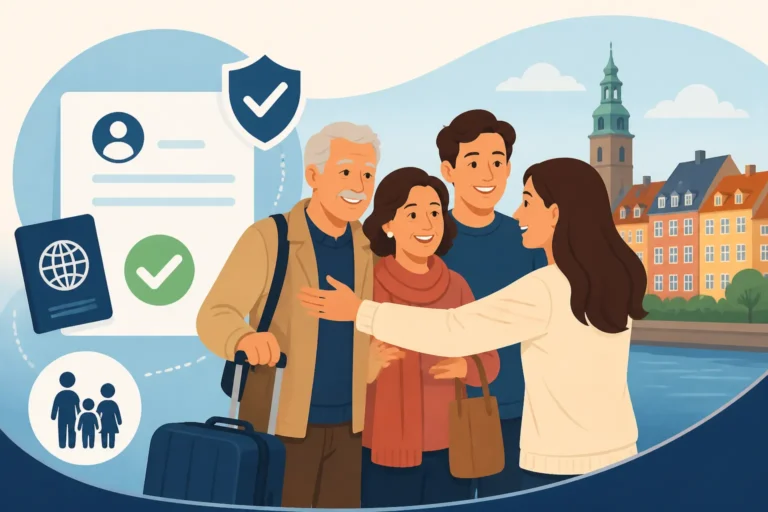
Oh, the sheer emotional rollercoaster of families trying to reunite in Denmark! It's one of the most heart-wrenching and administratively complex journeys many expats face. The feeling of being separated from loved ones, navigating a maze of bureaucratic hurdles, and constantly fearing rejection can be utterly draining. This guide is here to walk you through the often daunting process of family reunification, known as familiesammenføring, in Denmark, sharing the realities and rules you need to understand to bring your family together.
Understanding the Foundation: Who Can Apply for Family Reunification in Denmark?
Let's be honest, the starting point for family reunification in Denmark isn't always straightforward. It’s not just about wanting your family here; it’s about who is already here and under what conditions. The Danish system, overseen primarily by the Danish Agency for International Recruitment and Integration (SIRI) and sometimes the Danish Immigration Service (Udlændingestyrelsen), has very specific criteria for who can sponsor a family member and who qualifies as a family member in the first place. This can feel like trying to solve a complicated puzzle, especially when your heart is just longing for your loved ones.
The 'Anchor Person' Requirement: Who Is Sponsoring?
At the core of any family reunification application is the "anchor person" (referent in Danish). This is the individual already residing in Denmark who wants to bring their family members to live with them. The status of this anchor person is absolutely critical, as it dictates which set of rules your family's application will fall under. It's not a one-size-fits-all scenario, and the nuances can be incredibly frustrating.
For instance, if you're a Danish citizen, you might think it's easier, but you'll often face a specific set of national rules that can be quite demanding, particularly concerning the "connection to Denmark" requirement, which we'll delve into later. If you're a permanent resident, you generally have a strong basis, but still need to meet various criteria. However, if you're in Denmark on a temporary residence permit – say, a work permit under the Pay Limit Scheme or the Positive List – your ability to sponsor family depends entirely on the type of permit you hold. Many work permits do allow for accompanying family, but it's crucial to check the specific conditions attached to your permit. For example, if you're here on a student visa, bringing a spouse might be possible, but typically only if you can prove significant financial means and a long-term plan, which is often a tall order for a student. It’s a constant reminder that your own immigration status is the very foundation upon which your family’s future here is built, and any instability in your status can ripple through to your loved ones.
Defining 'Family': Spouse, Cohabiting Partner, Children
When the Danish authorities talk about "family" for reunification purposes, they have very clear, and sometimes narrow, definitions. It’s not simply who you consider family in your heart, but who fits into their predefined categories. This can be a source of immense stress for those whose family structures don't perfectly align with Danish legal definitions.
Spouses are generally straightforward: you must be legally married, and the marriage must be valid according to Danish law. This means being of legal age, and the marriage must not be one of convenience or forced. If you were married abroad, you’ll need official, legalized documentation, often requiring an apostille stamp and translation, which can be a process in itself. For specific guidance on getting your foreign documents ready for official use in Denmark, you might find our guide on Apostille Stamps: Document Preparation for Danish Visa Applications quite helpful.
Cohabiting partners are a bit more complex. Denmark does recognize long-term, stable cohabiting relationships, but they're not taken lightly. You’ll typically need to prove that you’ve lived together at a shared address, in a marriage-like relationship, for a continuous period – often 1.5 to 2 years, though this can vary. This isn’t just about having the same mailing address; it’s about demonstrating a genuine, joint household with shared finances, responsibilities, and emotional commitment. Proving this often involves bank statements, utility bills in both names, joint rental contracts, and even testimonials. For a deeper dive into what it takes to prove an unmarried partnership, consider checking out our article on Proving Cohabitation (Samliv) for Unmarried Partners.
For children, the general rule is that they must be under 15 years old to apply for family reunification with their parents in Denmark. If they are older, the bar becomes significantly higher, usually requiring them to have lived with the parent in another country immediately prior to the application, or to prove very strong ties to the parent and Denmark, with no other family members they could reasonably live with. The aim is to reunite minor children with their primary caregivers, but once a child reaches a certain age, they are often expected to apply under their own merit or other schemes, rather than as a dependent for family reunification. This can be devastating for families with older children who want to join their parents in Denmark.
Beyond Immediate Family: Special Cases and Exceptions
While the focus is heavily on spouses/partners and minor children, there are extremely limited scenarios where other family members might qualify for reunification. However, let me manage your expectations upfront: these are truly exceptional cases and the bar is incredibly high. It’s not something you should count on.
For example, bringing elderly parents or other dependent adult relatives to Denmark is notoriously difficult. Danish immigration policy is designed to prevent Denmark from becoming a primary destination for family members who are not financially self-sufficient or directly part of the core nuclear family unit. To even be considered, you would generally need to prove that the parent or relative has absolutely no other family in their home country who can care for them, that they are entirely dependent on you, and that their life would be at risk or severely compromised without your care. This is typically invoked under severe humanitarian grounds or specific international conventions, and it's not a routine application. You're talking about situations of extreme vulnerability and dependency, not just a desire to live closer to your parents. It's a tough pill to swallow for many expats, as it goes against common family values in many cultures, where caring for aging parents is a given.
Children with severe illnesses might sometimes get special consideration, or if there's an urgent need for medical treatment that cannot be provided in their home country, but again, these are not standard routes and require robust documentation and often legal assistance to navigate. The underlying principle is to ensure that family reunification does not create a burden on public services, and that family ties are genuinely strong and cannot be maintained elsewhere.
The Infamous 24-Year Rule and Other Age-Related Hurdles
Ah, the 24-year rule. For many couples hoping to start a new life together in Denmark, this rule feels less like a protective measure and more like a frustrating, arbitrary barrier. It's probably one of the most talked-about and controversial aspects of Danish family reunification policy, and for good reason – it impacts countless genuine relationships.
The 24-Year Rule: Marriage and Cohabitation
So, what exactly is the 24-year rule? Simply put, for family reunification based on marriage or cohabitation under Danish national rules, both the anchor person in Denmark and the applying spouse or cohabiting partner must be at least 24 years old. This rule applies to Danish citizens, permanent residents, and most temporary permit holders when sponsoring a spouse or partner. It’s a blanket requirement designed to prevent forced or arranged marriages and to encourage self-sufficiency before couples settle in Denmark.
The intention might be noble on paper, but in practice, it causes immense heartbreak and logistical nightmares for genuinely loving couples who simply happen to be younger than 24. Imagine being 22, married to the love of your life, and having to wait two more years, often living in separate countries, just because of an arbitrary age cutoff. It disregards individual maturity, financial stability, and the authenticity of a relationship. For young professionals or students who meet all other criteria, including financial self-sufficiency, this rule can feel incredibly unfair and discriminatory. It forces couples into long-distance relationships, often during critical career-building years, or compels them to live in another EU country for a period to bypass the Danish national rules, which we'll discuss later. If you’re wondering more about its ongoing status, we have a detailed piece: Is the 24-Year Rule Still Active for Danish Family Reunification?. It's a rule that encapsulates much of the frustration felt by young expat couples in Denmark.
Age Limits for Children's Applications
Beyond the 24-year rule for partners, age also plays a significant role in applications for children. Generally, a child seeking family reunification with a parent in Denmark must be under 15 years old at the time of application. The reasoning here is fairly consistent with international norms, aiming to protect and reunite minor children with their parents.
However, the moment a child turns 15, the path becomes significantly more difficult. While applications for children between 15 and 18 years old can be made, they often require exceptional circumstances and proof that the child has lived with the parent in another country, often for a long time, immediately before the application. The authorities are much more inclined to reunite very young children than teenagers who might have already established independent lives or strong ties in another country. For children over 18, family reunification is almost impossible unless they have a severe disability rendering them completely dependent on the parents for care, or other extremely unique humanitarian grounds. This approach can put parents in an agonizing position if they have children spanning different age groups, some of whom might just miss the cutoff, forcing difficult choices or further separation within the family.
Overcoming Age Barriers: Exemption Clauses (Rare)
It's tempting to look for loopholes or exceptions to these age-related rules, especially if you're caught in their crosshairs. While truly wanting to offer hope, I must be realistic: exemption clauses for the 24-year rule and other age barriers are extremely rare and apply only in the most severe and exceptional circumstances. We're talking about situations where Denmark's adherence to international human rights conventions (like the European Convention on Human Rights, ECHR, Article 8 concerning the right to private and family life) might be violated if the application were denied.
This could include situations where one spouse has a severe, life-threatening illness requiring constant care that can only be provided by the other spouse, and there are no other viable options. Or perhaps a situation where the couple has lived together for a substantial period in a country outside Denmark, demonstrating a long-standing, genuine relationship that predates the desire to move to Denmark, making the 24-year rule seem disproportionate. However, even in these scenarios, SIRI and Udlændingestyrelsen will scrutinize every detail, and the burden of proof rests heavily on the applicant to demonstrate the truly exceptional nature of their case. Simply being genuinely in love and financially stable, while important, is often not enough to bypass the 24-year rule. It requires a compelling, often tragic, set of circumstances that few people hope to experience. Most couples who are under 24 and wish to reunite either wait it out, or explore the possibility of moving to another EU country first to apply under EU freedom of movement rules, which bypass the Danish national criteria entirely.
Financial Requirements: Proving You Can Support Your Family
One of the most significant pillars (or sometimes, millstones) of Danish family reunification applications is the financial requirement. Denmark wants to ensure that newcomers will not become a burden on the welfare system. While understandable, the requirements can be steep and often feel prohibitive, especially when you’re already stretching your budget to make ends meet in an expensive country like Denmark.
The Bank Guarantee (Sikkerhedsstillelse): A Major Hurdle
For most non-EU citizens applying for family reunification under Danish national rules, you'll likely encounter the bank guarantee, or sikkerhedsstillelse. This is a substantial financial deposit that the anchor person must make into a blocked bank account. As of early 2026, this amount hovers around DKK 100,000, though it's important to always check the latest figures on SIRI's website as they can change. This isn't a fee; it's collateral.
The purpose of this guarantee is to ensure that if your family member receives social benefits (like cash assistance from the municipality, kontanthjælp) within the first seven years of their residence in Denmark, these costs can be covered by your deposit. It’s a way for the state to mitigate potential financial risks. For many, coming up with DKK 100,000 – especially after relocating and setting up a new life – is a monumental task. It can drain savings, prevent house purchases, or simply be an insurmountable barrier. The money is usually returned after seven years, provided your family member hasn't received public assistance, but seven years is a long time for such a significant sum to be tied up. If the family member does receive assistance, the amount is deducted from the guarantee. This requirement alone can deter many families, highlighting Denmark's strong emphasis on economic self-sufficiency. We delve deeper into this specific rule in our article The Financial Collateral Rule for Family Reunification Explained.
Self-Sufficiency and Income Requirements
Beyond the bank guarantee, the anchor person must also demonstrate overall financial self-sufficiency. This means you, as the sponsor, must not have received certain types of public benefits from the municipality, such as kontanthjælp (cash assistance) or integrationsydelse (integration benefit), in the three years prior to the application decision. This is a critical point; even a short period of receiving such benefits can lead to a rejection, no matter how strong the rest of your application.
Furthermore, you need to prove a stable and sufficient income to support your family. While there isn't always a strictly defined minimum income threshold that applies across the board for all types of permits, SIRI will assess your income to ensure it’s enough to cover your family's living expenses without relying on public funds. They look for consistent employment, typically a permanent position, with a salary that clearly demonstrates your ability to financially sustain yourself and your incoming family member. This means regular payslips, employment contracts, and tax statements will be heavily scrutinized. If your job is unstable, or your income fluctuates significantly, it can weaken your application. For those already struggling with the high cost of living in Denmark, this adds another layer of pressure, making sure every krone counts towards proving financial stability.
Exemption from Financial Requirements: The EU/EEA Route and Special Rules
There are, thankfully, pathways where these stringent financial requirements, particularly the bank guarantee, can be circumvented. The most common and significant exemption applies to EU/EEA citizens and their family members applying under EU freedom of movement rules. If you are an EU/EEA citizen exercising your right to free movement in Denmark (e.g., as a worker, student, or self-sufficient person), your non-EU family members generally do not have to meet the Danish national requirements for the bank guarantee or the income tests for social benefits. Instead, the focus is on the EU citizen's overall economic self-sufficiency to avoid becoming a burden on the host state's social assistance system, which is a much less stringent threshold than the DKK 100,000 guarantee.
Outside of the EU/EEA rules, exemptions for non-EU citizens from these financial requirements are incredibly rare. They are usually only considered under extreme humanitarian circumstances where denial would contravene Denmark's international obligations, such as severe illness of the anchor person where the family member is the only possible caregiver, or similar situations of profound vulnerability. It’s important to understand that these are not routine waivers; they are granted in genuinely exceptional and compelling cases that go far beyond typical financial constraints. For the vast majority of non-EU applicants, preparing for the bank guarantee and proving stable income is a non-negotiable part of the journey.
The Housing Requirement: Having a Place to Live
Finding decent housing in Denmark can be a challenge on its own, let alone finding a place that satisfies strict immigration requirements for family reunification. SIRI isn't just looking for any roof over your head; they're looking for adequate and independent housing that can comfortably accommodate everyone. This ensures that the reunited family doesn't end up in overcrowded or unsuitable living conditions.
Adequate Housing: What Does SIRI Look For?
When it comes to housing, SIRI has specific expectations. They want to see that you have a permanent and independent dwelling that is appropriate for the size of your household. This isn't about luxury; it's about basic standards of living. Generally, the rule of thumb is that the dwelling should have at least 20 square meters of living space per person, though this can vary slightly based on the municipality and the specific type of housing. More importantly, it must have a sufficient number of rooms. A common requirement is that there should be at least one room per two persons, and ideally, separate bedrooms for adults and children, depending on their age and gender.
The type of documentation you’ll need to provide is crucial. This typically includes:
- Your lease agreement (if renting), which must be valid, clearly state your name, the address, and the size of the dwelling.
- Ownership documents (if you own the property), such as the deed or property registration.
- Utility bills that correspond to the address, proving active residency.
- Sometimes, even a floor plan or photos of the interior can be requested to confirm the layout and adequacy.
It's not just about space; it’s about stability. An informal sublet or a temporary arrangement like an Airbnb will not cut it. SIRI needs to see a long-term, legitimate housing solution that ensures your family will be properly housed upon arrival. This can be particularly stressful in cities like Copenhagen or Aarhus where housing can be scarce and expensive, forcing many to secure a new, larger apartment before their family even arrives, often incurring additional costs and stress.
The Importance of a Separate Household
Another critical aspect of the housing requirement is the concept of a "separate household." Denmark's family reunification rules are designed for core family units to establish their own independent lives. This generally means that the family must live in a dwelling that is not shared with other independent households.
What does this translate to? It means you typically cannot live in a situation where you share a kitchen and bathroom facilities with someone who is not part of your immediate family unit. For example, living in an apartment where you rent a room and share communal spaces with other tenants who are not your family members will usually be deemed insufficient. The dwelling must be self-contained enough for your family to function as an independent household. This rule aims to prevent overcrowding and ensure privacy, but it can be challenging for those coming from cultures where multi-generational living or shared living arrangements are common and practical. If you're planning to live in a larger shared house, you'd need to demonstrate that your family unit has clearly defined, private living quarters within that space, and exclusive access to certain facilities, which can be difficult to prove.
Exceptions for Housing: The EU/EEA Angle
Just like with the financial requirements, the housing rules are often less stringent for EU/EEA citizens and their family members applying under EU freedom of movement directives. If you are an EU citizen exercising your treaty rights in Denmark, your non-EU family members generally do not face the same detailed scrutiny regarding the precise square footage or the explicit separate household rule imposed by Danish national law.
Under EU law, the requirement is simply that the EU citizen (the anchor person) has "sufficient resources" and "comprehensive sickness insurance" for themselves and their family members, so as not to become a burden on the social assistance system. While having adequate housing is still an implicit expectation, the detailed, prescriptive rules of the Danish national law (like the 20 sq.m. per person) are typically not applied. This offers a significant advantage to EU citizens, again underscoring the dual-track system for family reunification in Denmark. However, even under EU rules, proof of a stable address is still required for registration with the municipality and to obtain a residence certificate.
Integration and Connection to Denmark: The Lasting Ties
Denmark places a strong emphasis on integration. For many family reunification applications, particularly those involving Danish citizens or individuals with a strong international background, proving a genuine "connection to Denmark" is a crucial, and sometimes ambiguous, requirement. This often feels like a subjective test, trying to prove your loyalty or belonging to a country that has so many unique unwritten rules.
The "Connection to Denmark" Requirement (Tilknytningskrav)
The tilknytningskrav, or "connection to Denmark" requirement, is primarily applied when the anchor person is a Danish citizen or someone who has spent a significant period living abroad before returning to Denmark. The underlying principle is to ensure that the family's ties are genuinely stronger to Denmark than to any other country. It's designed to prevent "paper marriages" or situations where the primary intention is simply to gain access to Denmark for reasons other than establishing a genuine family life within Danish society.
This requirement often means the Danish anchor person must demonstrate a strong personal and social connection to Denmark. This can include:
- Language skills: Being fluent in Danish.
- Education: Having completed Danish schooling or higher education.
- Employment: Having stable employment in Denmark.
- Social network: Having a significant social circle, participating in Danish clubs or associations, and generally being well-integrated into Danish society.
If the Danish anchor person has lived abroad for an extended period, they might need to prove that they intend to re-integrate into Denmark and that their ties to Denmark are now stronger than to the country where they previously resided. This can feel like a deep personal inquiry, where you’re asked to quantify your feelings of belonging, which is naturally a difficult thing to do. It’s not enough to be a Danish citizen; you must be an active and connected Danish citizen in the eyes of the immigration authorities.
Language Requirements and Integration Measures
While Danish language proficiency isn't always a direct, mandatory requirement for the initial approval of every family reunification permit, particularly for spouses of certain work permit holders, it plays an increasingly important role in the overall assessment and for future steps, like obtaining permanent residency or citizenship. The Danish government strongly believes that language is key to successful integration, and demonstrating a commitment to learning Danish is almost always viewed favorably.
Many family reunification permits come with a condition that the family member participates in language classes or other integration activities. Neglecting these can impact future permit extensions or applications for permanent residency. The municipality often offers free Danish language courses through local Sprogcentre, and enrolling in these and actively participating is a good way to show your commitment. For comprehensive advice on navigating language acquisition, our guide on Learning Danish: Sprogcenter, FVU, and the Importance of the Language is an invaluable resource. Beyond language, active participation in society, whether through volunteering, joining local clubs, or simply engaging with your community, helps demonstrate a willingness to integrate and build lasting ties in Denmark.
Past Criminal Records and Public Order Concerns
This is a non-negotiable area: any past criminal records for either the anchor person or the applying family member can severely jeopardize a family reunification application. Denmark maintains strict standards regarding public order and security. If either individual has a history of serious criminal offenses, the application will almost certainly be denied.
Even less serious offenses, depending on their nature and recency, can cause significant delays or lead to rejection. This also extends to concerns about public order or national security. Applicants will be thoroughly vetted, and any information suggesting a risk to Danish society will be taken very seriously. It’s vital to be entirely transparent about any past interactions with law enforcement, as concealing information will almost certainly lead to rejection and could have further negative consequences for future applications. The Danish authorities have access to international databases and will conduct their own background checks, so honesty is truly the only policy here.
The Application Process: Navigating SIRI and Udlændingestyrelsen
The journey through the application process itself can feel like scaling Mount Everest. It's a bureaucratic beast, demanding meticulous attention to detail, endless patience, and a willingness to gather what might seem like an absurd amount of documentation. Expect forms, waiting, and more forms.
Gathering Your Documents: The Mountain of Paperwork
This is where the real work begins. SIRI provides detailed checklists for each type of family reunification, and I cannot stress this enough: follow them precisely. These lists are comprehensive and demand specific types of official documentation. You'll need:
- Passports for everyone involved, valid for a significant period beyond the intended permit.
- Original marriage certificates or proof of cohabitation.
- Original birth certificates for children.
- Proof of the anchor person's income and employment (employment contracts, payslips, tax statements).
- Your housing contract or ownership documents.
- Proof of your bank guarantee (if applicable).
- Photos that meet specific passport photo standards.
Crucially, any documents not in Danish or English must be officially translated. This isn't a job for Google Translate or your bilingual cousin. These translations must be done by authorized translators and often need to be certified or legalized. This is where services like RushTranslate or Translayte can be incredibly helpful, ensuring your documents meet the rigorous standards required by Danish authorities. The cost and time associated with getting these translations done correctly should be factored into your planning. It’s an investment in the legitimacy of your application, and cutting corners here is a false economy. Remember, every document needs to be legible, complete, and accurately reflect the information.
Submitting the Application and Biometrics
Once your mountain of paperwork is compiled and translated, the application can usually be submitted online via SIRI's portal. This is a relief for many, as it allows for digital submission and tracking. However, the online submission is just one step. After submitting, you'll inevitably be required to provide biometric data – fingerprints and a digital photo.
For applicants already in Denmark, this usually means booking an appointment at a local police station. For family members applying from outside Denmark, they will typically need to visit a Danish embassy or consulate in their home country or a nearby country that offers this service. Booking these appointments can sometimes take weeks or even months, so it’s essential to do it as soon as you receive the notification. This step is non-negotiable for the issuance of a residence card. For a complete guide on this, check out our article on Submitting Biometrics for SIRI: Booking Appointments and Police Stations. It’s a physical manifestation of your journey into the Danish system.
Processing Times, Appeals, and What to Expect
Now for the part that tries the patience of saints: processing times. SIRI and Udlændingestyrelsen are known for their lengthy processing times, and family reunification applications are no exception. While they publish target processing times on their website, these are often just estimates, and individual cases can take much longer due to their complexity, the need for additional documentation, or administrative backlogs. It’s not uncommon for decisions to take several months, sometimes even over a year, leaving families in agonizing limbo. Keeping track of these wait times can be frustrating, and for more context, our guide on SIRI Processing Times 2026: Why Fast-Track is Faster might offer some insights into the general system.
During this period, you might be called for an interview. This is especially common for family reunification cases, particularly for spouses or partners, where the authorities want to ensure the relationship is genuine and not a marriage of convenience. These interviews can be nerve-wracking, as they delve into the details of your relationship, how you met, shared experiences, future plans, and even your daily routines. Being consistent and honest in your answers is paramount. Our article The "Immigration Service" Interview: Preparing for Family Reunification offers specific advice on what to expect.
If, after all this, your application is rejected, it’s a devastating blow. However, a rejection is not always the absolute end. You typically have the right to appeal the decision to the Immigration Appeals Board (Udlændingenævnet). This involves submitting a written appeal, often with new information or arguments, within a specified timeframe. The appeals process itself can add many more months to the waiting period and often benefits from legal assistance from an immigration lawyer. If you find yourself in this unfortunate situation, understanding your rights and options for challenging a decision is vital. Our guide, Deportation and Visa Rejection Appeals: Using an Immigration Lawyer, can provide clarity on this complex process. The entire process, from application to decision, requires immense emotional resilience.
Special Considerations for EU/EEA Citizens and Their Families
If you are an EU/EEA citizen (or Swiss citizen) already residing in Denmark, or planning to move here, the rules for bringing your family can be significantly different and often less restrictive than those applied under Danish national immigration law. This is due to the principle of free movement within the European Union, which takes precedence over certain national rules. This dual system can be confusing, but it's important to understand which rules apply to you, as it can make a world of difference.
The EU Freedom of Movement Rules: A Different Path
For EU/EEA citizens, the ability to bring family members to Denmark is governed by EU law, specifically the Free Movement Directive (Directive 2004/38/EC), rather than Denmark's stricter national immigration laws. This means that if you, as an EU citizen, are exercising your right to free movement in Denmark (e.g., as a worker, self-employed person, student, or someone with sufficient resources to support yourself), your non-EU family members generally have the right to join you.
The key differences under EU rules are significant:
- No 24-year rule: The infamous 24-year rule for spouses/partners does not apply. If both partners are legally married and the relationship is genuine, age is not a barrier.
- No bank guarantee: The DKK 100,000 sikkerhedsstillelse is typically not required. The EU citizen simply needs to demonstrate "sufficient resources" for themselves and their family so as not to become a burden on the Danish social assistance system, which is a lower and more flexible threshold.
- Less rigid housing requirements: While adequate housing is still an expectation, the specific square meter rules or explicit separate household demands of Danish national law are often not applied.
- Broader definition of family: In some cases, other dependent family members (like parents) might have an easier path under EU rules, provided they are truly dependent.
This pathway offers a welcome relief for many families, but it's crucial that the EU citizen genuinely meets the criteria for exercising free movement rights. This usually means proving employment, self-employment, student status, or having enough financial means and comprehensive health insurance for everyone.
Registering for a Residence Certificate (Bevis for Registrering)
For non-EU family members of EU/EEA citizens, the process doesn't involve applying for a residence permit in the same way as under national rules. Instead, they apply for a residence card (opholdskort) which confirms their right of residence in Denmark as a family member of an EU citizen exercising free movement. This process typically starts with the EU citizen registering their own right of residence at the municipality (if they haven't already) and then applying for a residence card for their family member at SIRI.
The application for the residence card will require proof of the relationship (marriage certificate, birth certificate), proof that the EU citizen is exercising their free movement rights (employment contract, student enrollment, bank statements), and comprehensive sickness insurance for all family members. Once granted, the residence card essentially confirms their right to live and work in Denmark alongside the EU citizen. This process is generally more streamlined and less invasive than the national family reunification application. For a thorough walkthrough of this, you might find our article EU/EEA Citizens: Registering for a Residence Certificate (Bevis for Registrering) very helpful.
The "Reverse Integration" Rule: When Danes Bring Non-EU Spouses Back
Here's a particularly interesting and often misunderstood nuance for Danish citizens. If a Dane has moved to another EU country, established a genuine family life there (e.g., married a non-EU citizen and lived with them), and then decides to move back to Denmark with their non-EU spouse, they can sometimes invoke the "reverse integration" rule (also known as the "returnee" or "deliberate use of EU law" principle).
In such cases, Denmark might be obliged to apply EU freedom of movement rules, rather than its stricter national rules, to the non-EU spouse's application for residence. This means that the 24-year rule, the bank guarantee, and the stricter housing requirements of Danish national law would likely be bypassed. The logic is that a Dane who has exercised their EU right to free movement should not be penalized by their home country's stricter rules upon their return. However, this is not a simple workaround; it requires genuine establishment of family life in another EU country before returning. It's not enough to just go to Sweden for a week, get married, and come back. The family must have genuinely lived and integrated into that other EU country for a period, demonstrating a true exercise of free movement. Proving this genuine establishment of family life is key, and the Danish authorities will scrutinize the duration and authenticity of the stay abroad. This is a complex area, and anyone considering this route should seek expert legal advice to ensure they meet all the conditions.
Key Requirements for Family Reunification: Danish National Rules vs. EU Rules
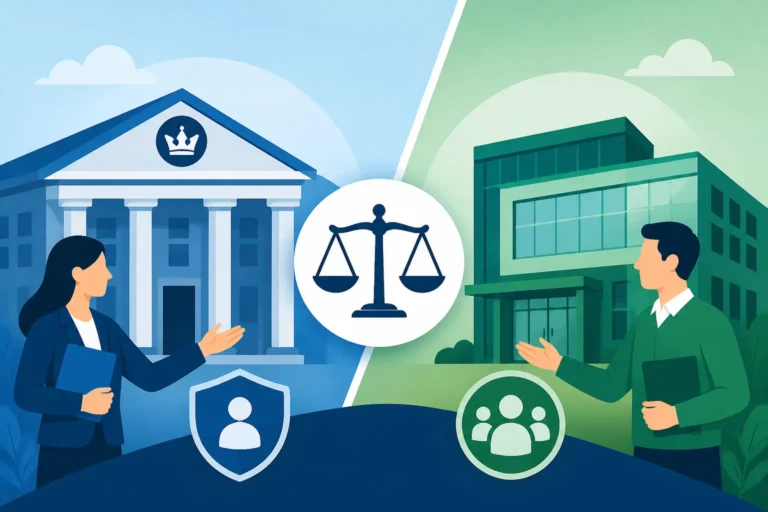
To help you get a clearer picture, here's a comparative overview of the typical requirements for family reunification under Danish national law versus EU freedom of movement rules. Remember, specific situations can vary, and this table provides a general guide.
| Requirement | Danish National Rules (Non-EU anchor person or Danish citizen not exercising EU rights) | EU Freedom of Movement Rules (EU/EEA anchor person exercising EU rights) |
|---|---|---|
| Anchor Person Status | Danish citizen, permanent resident, or specific temporary permit holder | EU/EEA citizen exercising treaty rights (worker, student, self-sufficient) |
| Applying Spouse/Partner Age | Both spouses/partners must be 24 years old (24-year rule) | No specific age requirement (must be legally married/in genuine partnership) |
| Financial Guarantee | Required (approx. DKK 100,000) | Not required |
| Anchor Person's Income | Must not have received certain public benefits for 3 years; stable & sufficient income | EU citizen must have "sufficient resources" to avoid burdening social assistance |
| Housing | Specific requirements (e.g., 20 sqm per person, separate household) | Adequate housing implicitly expected, but less prescriptive rules |
| Children's Age Limit | Generally under 15 years old (exceptions for 15-18 with strong ties) | Generally under 21 years old (or dependent regardless of age) |
| "Connection to Denmark" | Often required, especially for Danish citizens returning from abroad | Not a direct requirement, focus on EU citizen exercising rights |
| Language Requirements | Commitment to language learning often expected; mandatory for PR/citizenship | Not a direct requirement for residence card, but good for integration |
| Criminal Record | Any serious offenses for either party will lead to rejection | Any serious offenses for either party will lead to rejection |
| Application Type | Residence Permit application (SIRI/Udlændingestyrelsen) | Residence Card application (SIRI) |
| Processing Time | Often several months to over a year | Generally faster than national rules |
Disclaimer
The information provided in this guide is for general informational purposes only and does not constitute legal advice. Immigration laws and regulations in Denmark are complex and subject to change. It is highly recommended to consult with SIRI, Udlændingestyrelsen, or an immigration lawyer for advice tailored to your specific situation before making any decisions related to family reunification.