What Happens to Your Bank Account When Your Work Visa Expires?
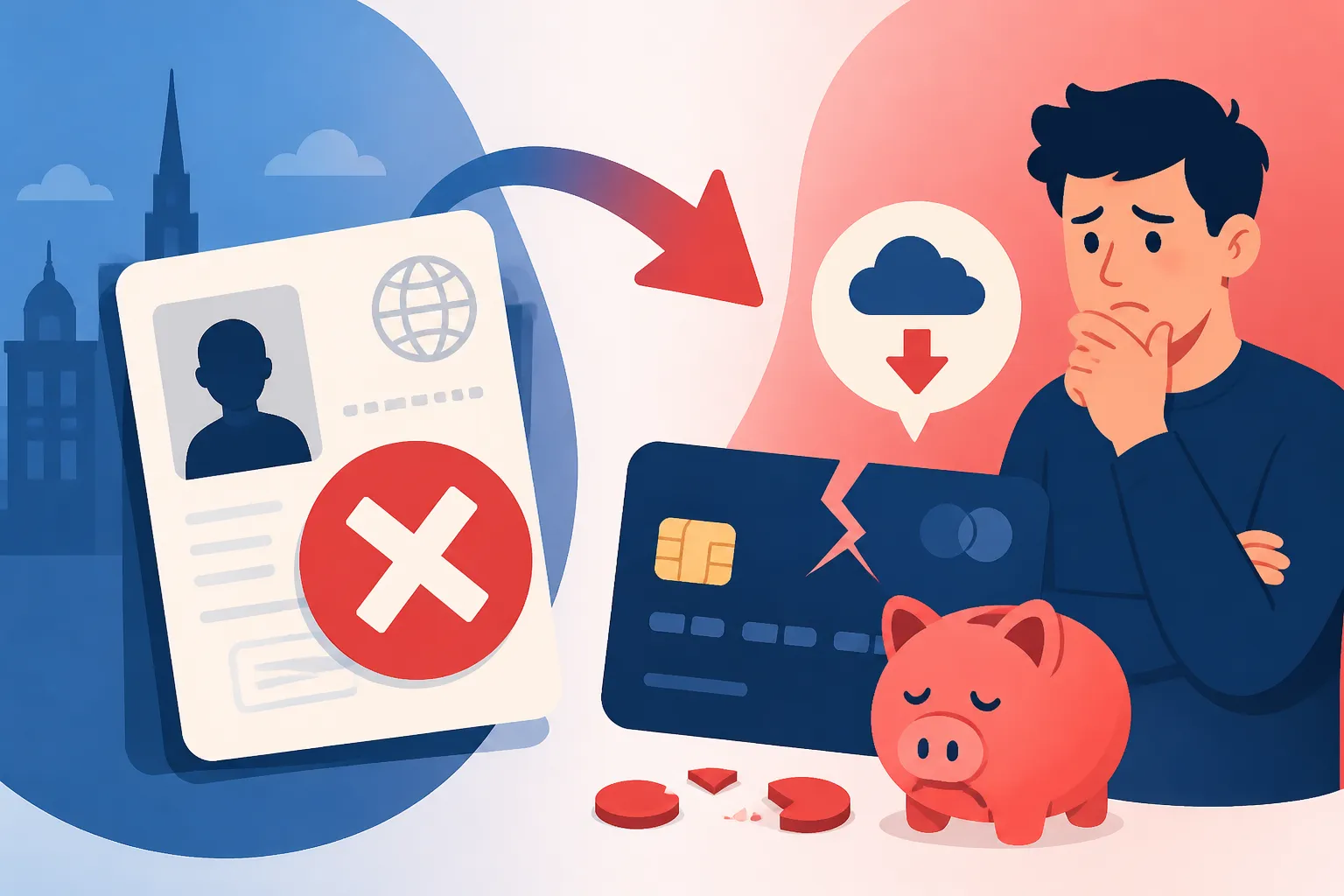
The transition from a secure work visa to the uncertainty of an expiration date is one of the most stressful periods an expat can face in Denmark. You aren't just losing your right to work; you are potentially losing your digital identity and access to your hard-earned savings. This guide explores exactly what happens to your Danish bank account when your residency ends, how the CPR system interacts with your finances, and the steps you must take to protect your money before the system flags you as "departed."
The Legal Reality: Banks and the CPR System
In Denmark, your financial life is tethered to your CPR number. This ten-digit code is the "skeleton key" that opens doors to everything from healthcare to mobile phone contracts. When your work visa expires and you do not have a pending application for an extension, your status in the Civil Registration System (CPR) eventually changes. This change is not always instantaneous, but once it occurs, it triggers a ripple effect across the Danish administrative landscape.
The Connection Between Your Residence Permit and Your Bank Account
Danish banks are legally required to maintain "know your customer" (KYC) data that is current and accurate. Part of this data includes your legal right to reside in the country. When you first underwent the process of Opening a Bank Account in Denmark: Document Checklist and Delays, you provided proof of your residence permit. Once that permit expires, the bank's compliance department is technically looking at a customer who no longer meets the original criteria for a standard "resident" account.
From a veteran expat’s perspective, the "system" is incredibly efficient. The moment you go to the municipality (Kommune) to register your departure or your visa naturally reaches its end date without a renewal, your CPR status is updated. Most major Danish banks receive automated updates from the CPR registry. They won't necessarily freeze your account at midnight on the day your visa expires, but they will eventually send a digital notification via Netbank or MitID asking for updated documentation of your right to stay.
When Does the Bank Actually Know Your Visa Expired?
There is often a "grace period" of sorts, not because the bank is being generous, but because of administrative lag. However, you should not rely on this. Some expats report being able to use their accounts for months after leaving, while others find their MitID access restricted within weeks of their CPR being deactivated. The bank's primary concern is Anti-Money Laundering (AML) regulations. A non-resident account is considered higher risk than a resident account. If the bank cannot verify your current address or legal status, they have the right—and often the obligation—to restrict your account to prevent unauthorized use.
Common Bank Policies on Account Closures
Every bank in Denmark, from the giants like Danske Bank and Nordea to the digital challengers like Lunar, has a slightly different approach to non-resident customers. However, the general trend in recent years has been toward stricter enforcement. If you are no longer a resident, many banks will eventually move to close your account because the cost of compliance for a non-EU resident is often higher than the profit they make from your monthly fees.
Notice Periods and Communication from the Bank
Typically, a bank will not close your account without warning. You will likely receive a letter in your e-Boks or Netbank inbox stating that they have noticed your change in residency status. They will usually give you a deadline (often 30 to 60 days) to provide a new residence permit or to settle your affairs and close the account yourself. If you ignore these messages, you risk the account being "locked," meaning you can see the balance but cannot make transfers or use your Dankort.
If you are transitioning between banks, you might want to look into Traditional Banks vs. Digital Banks (Lunar): Which is Best for Expats? to see if a more flexible provider might be willing to keep your account active for a longer period while you sort out your visa situation.
Keeping an Account Open After Leaving Denmark
It is possible to maintain a Danish bank account as a non-resident, but it is rarely easy. You will often need to prove a "legitimate interest" in keeping the account. This could include:
- Owning property in Denmark that requires mortgage payments or utility settlements.
- Expecting a significant tax refund or the payout of your Feriepenge (Holiday Pay): How to Claim It Through Borger.dk.
- Receiving a Danish pension in the future.
If you cannot prove a strong connection, the bank may simply say "no" and ask you to move your funds elsewhere. This is where services like Wise become invaluable, as they allow you to hold a DKK-denominated balance without the strict residency requirements of a traditional Danish retail bank.
Practical Steps Before Your Visa Expires
You must be proactive. Waiting for the bank to contact you is a recipe for a frozen account at the exact moment you need to pay for a flight or a moving truck.
Moving Your Money Safely
If you know your visa is expiring and you are leaving the country, start moving the bulk of your savings early. Transferring large sums of money out of Denmark can sometimes trigger fraud alerts if done suddenly. By using a specialist provider like Wise, you can often get much better exchange rates than a traditional bank while ensuring your funds are accessible in your next destination.
Dealing with Your NemKonto and Digital Post
Your bank account is likely registered as your "NemKonto" (Easy Account), which is the account where all public payments from the Danish state are sent. This is crucial for receiving your final salary, deposit returns, and tax refunds. Even if you close your main account, you must ensure you have a way to receive these payments. Many expats forget that you can actually assign a foreign bank account as your NemKonto, though it requires a bit more paperwork and a physical signature sent to the NemKonto secretariat.
For a smoother transition, refer to the guide on Closing Down Your NemKonto and Bank Setup Before Leaving Denmark to ensure you don't leave any loose ends that could result in the state holding onto your money indefinitely.
| Feature | Resident Status | Non-Resident Status |
|---|---|---|
| MitID Access | Fully functional and linked to CPR | May be revoked or restricted |
| Dankort Usage | Standard | Often cancelled upon departure |
| Monthly Fees | Standard (20-60 DKK) | May increase or account may be closed |
| NemKonto | Automatic | Must be manually updated to foreign IBAN |
| Tax Refunds | Sent to NemKonto | Requires active NemKonto (even if foreign) |
Long-term Financial Obligations After Departure
Leaving Denmark doesn't mean your financial relationship with the country ends the moment you cross the border. There are several "tails" to the Danish system that require an active or accessible financial setup.
Final Tax Settlements and SKAT
The Danish tax year runs from January to December, but the final assessment (Årsopgørelse) doesn't come out until March of the following year. If you leave in July, you might be owed a significant refund for the overpayment of taxes during the first half of the year. To ensure this money reaches you, you need to have a clear plan for your Preliminary Tax Assessment (Forskudsopgørelse): Avoiding Tax Debt and your final filing.
If your tax situation is complex—perhaps you have assets in multiple countries or you are moving to the US—consulting with a firm like Taxes for Expats can prevent you from being double-taxed or missing out on deductions you are entitled to as a departing resident. They can help navigate the nuances of the "Exit Tax" or the final tax clearance (Skattekvittering) required when you leave.
Cashing Out Your Pension
One of the most significant financial assets you'll leave behind is your pension. Depending on your contract, you may have been contributing 10-15% of your salary to a private or labor-market pension. You should read up on Leaving Denmark: Can You Cash Out Your Danish Pension? because, in many cases, you can take a lump-sum payout when you leave the country permanently, though it is subject to a high flat-tax rate (usually around 60%).
Navigating the "Limited Tax Liability" Phase
If you leave but still have income from Denmark (like a final bonus or holiday pay), you move into a state of "limited tax liability." During this phase, you are still "in the system," but your rights are different.
Understanding Your Final Payslip
Your final payslip will likely be a mess of deductions, including the AM-bidrag (Labor Market Contribution): The Mandatory 8% Flat Tax and various pension contributions. You need to ensure your bank account stays open long enough to receive this final payment. If your account closes before the employer hits "send," the money will bounce back, and you will have to navigate a nightmare of manual bank transfers and proof of identity from abroad.
Maintaining MitID Access
MitID is your lifeline to Borger.dk and SKAT. Even after your visa expires, you may need to log in to check your The Annual Tax Assessment Notice (Årsopgørelse): Claiming Deductions. Expats should ensure their MitID is app-based and that they have a "backup" way to log in (like a code token) before they leave. Once your Danish phone number is cancelled, receiving SMS codes for banking or government logins becomes impossible.
To understand how to read your final documents, it helps to review Understanding Your Danish Payslip (Lønseddel): Deductions Decoded so you know exactly how much to expect in that final transfer.
Frequently Asked Questions (FAQ) for the Departing Expat
Can I keep my Danish credit card?
Generally, no. Most Danish banks will cancel your credit line and your Dankort as soon as they register that you are no longer resident. They may offer you a basic Visa Electron or Mastercard Debit, but even those are at the bank's discretion.
What happens to my debt or loans?
If you have a personal loan or a car loan, the bank will usually demand full repayment upon your departure unless you can provide significant collateral or a guarantee that satisfies their risk department. Do not simply leave the country without addressing these, as it can lead to being registered in the RKI (debtor register), which will haunt you if you ever return to Europe.
How do I receive my rental deposit back?
This is a major pain point. Landlords often take 6-8 weeks to return a deposit. If your Danish bank account is closed by then, you must provide them with an IBAN and SWIFT/BIC for a foreign account. Be aware that the landlord may pass the international transfer fees on to you. Using a Wise account with a DKK balance can sometimes trick the landlord's system into thinking it's a domestic transfer, saving you money.
Do I need to tell the bank I am leaving?
Yes. While the system is automated, it is always better to be the one to initiate the conversation. It allows you to negotiate keeping the account open for a specific window (e.g., three months) to catch final payments like your Feriepenge (Holiday Pay): How to Claim It Through Borger.dk.
If you find yourself in a position where you are struggling to communicate with your bank from abroad, remember that you have rights. However, those rights are much easier to exercise while you are still physically in Denmark and have a valid MitID. Plan your exit as meticulously as you planned your arrival, and your bank account will be a tool for your transition rather than a hurdle.
Disclaimer
This guide is for informational purposes only and does not constitute legal or financial advice. Banking regulations and immigration laws in Denmark are subject to frequent changes. Always consult with your bank directly and speak with a qualified tax professional regarding your specific situation before making major financial decisions.