Over-the-Counter (OTC) Medication: Supermarket vs. Apotek Regulations
Standing in front of a locked glass cabinet in a supermarket while nursing a pounding headache is a common rite of passage for many newcomers in Denmark. I spent my first winter here wandering through Netto aisles, confused about why I couldn't find basic allergy medication on the open shelves. This guide breaks down the nuances of Danish over-the-counter (OTC) regulations so you can navigate supermarkets and pharmacies with confidence.
The Divided System: Where to Buy What
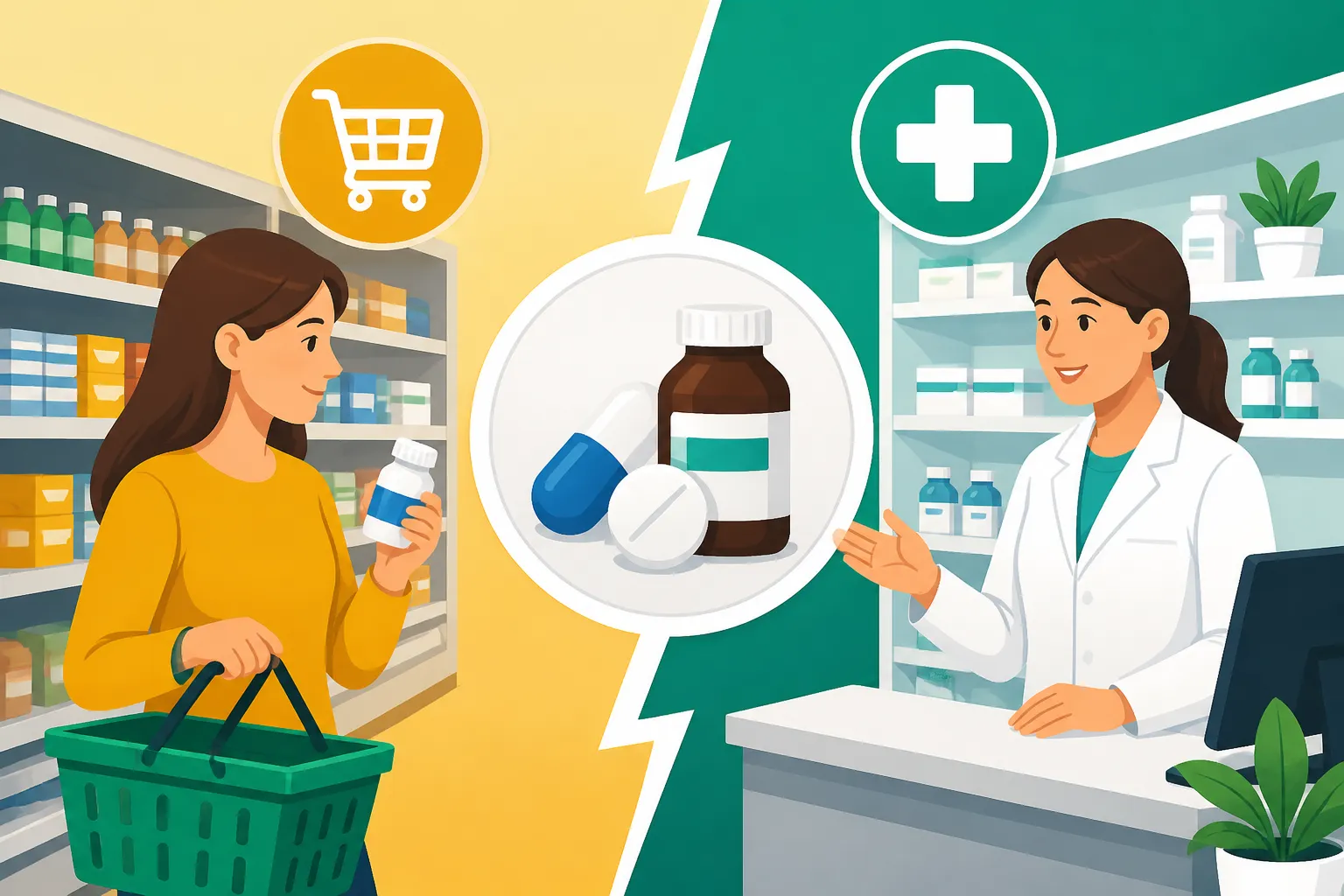
In Denmark, the sale of medicine is strictly regulated by the Danish Medicines Agency (Lægemiddelstyrelsen). For an expat coming from a country where you can buy a 100-pack of ibuprofen at a gas station, the Danish approach can feel incredibly restrictive. The system is essentially split into two tiers: items that can be sold in "non-pharmacy" outlets like supermarkets and kiosks, and items that are exclusive to the official Pharmacies in Denmark: Apotek Rules, Prescriptions, and Subsidies. Understanding this distinction is the first step toward managing your health here without unnecessary frustration.
Understanding Håndkøbsmedicin
The term you will see everywhere is "håndkøbsmedicin," which literally translates to "over-the-counter medicine." However, just because something is categorized as håndkøb does not mean it is available in every shop. The Danish government maintains a list of medications that are deemed safe enough to be sold outside of a pharmacy, but even these are subject to strict quantity and age restrictions. Usually, these include very low-dose painkillers, certain cough drops, and basic nasal sprays.
When you walk into a shop like Rema 1000 or Føtex, you won't find these medications on the open shelves next to the toothpaste. They are almost always kept behind the service counter or in a locked cabinet. You have to ask the cashier for them specifically. This is a deliberate hurdle designed to prevent impulsive over-consumption and to ensure that a staff member can, at least theoretically, monitor the age of the purchaser. It’s a small cultural shift, but one that requires you to know exactly what you’re looking for before you reach the front of the queue.
The Role of the Danish Medicines Agency
The Danish Medicines Agency is the gatekeeper of all things pharmaceutical in the country. They decide not only what can be sold but also how it is packaged. You might notice that Danish medicine packaging looks remarkably uniform. This is by design to ensure clarity and safety. The agency also dictates that non-pharmacy outlets can only sell one pack of a specific type of medicine per customer per day. If you need two packs of paracetamol, the supermarket cashier is legally obligated to refuse the second pack.
This regulation often catches expats off guard. If you are planning a long trip or have a family of four all coming down with the flu, the "one pack rule" becomes a major logistical hurdle. Households with several sick people may find themselves visiting multiple shops just to get enough supplies. It’s important to remember that these rules apply to the person, not the transaction. While it might seem like "nanny-state" behavior, it is deeply rooted in the Danish public health philosophy of minimizing medication risks across the population.
Why Pack Sizes Matter
One of the most striking differences you’ll encounter is the size of the packs. In a supermarket, you will rarely find a pack of painkillers containing more than 10 or 20 tablets. This is a safety measure intended to reduce the risk of accidental or intentional overdose. Larger packs are almost exclusively reserved for the Apotek, and even then, they might require a prescription depending on the dosage. The small pack sizes mean you will be visiting the shop more frequently during a bout of illness, which is something to budget for both in terms of time and money.
Furthermore, the price per pill in these small supermarket packs is significantly higher than what you might be used to in the US or UK. Because you are paying for the convenience of buying medicine alongside your milk and rye bread, you pay a premium. If you have a chronic need for OTC meds, it is always more cost-effective to head to a dedicated pharmacy. For those who are still in their first few months and haven't yet received their CPR number, having Expat Health Insurance: Coverage Before You Get Your CPR Number can be a lifesaver, as it helps bridge the gap before you enter the subsidized public system.
Supermarket Sales: The Convenience and the Limits
For most minor ailments, the local supermarket is your first port of call. Most major chains like Netto, Coop 365, and Meny carry a basic selection of OTC drugs. However, the "convenience" comes with a very specific set of limitations that you need to be aware of. The selection is curated for "acute" relief rather than long-term treatment. If you are looking for anything specialized—say, a specific brand of eye drops or a high-strength antihistamine—the supermarket will likely let you down.
Common Supermarket Meds for Pain and Fever
In the pain relief category, you will primarily find paracetamol (branded as Panodil, Pamol, or Pinex) and low-dose ibuprofen (branded as Ipren). Aspirin is also available, often under the name Kodimagnyl, which typically includes a small amount of caffeine. These are the workhorses of the Danish medicine cabinet. When you ask the cashier for "smertestillende" (painkillers), these are what they will offer. It is worth noting that the strength of ibuprofen available in supermarkets is capped at 200mg per tablet.
If you are dealing with a fever, these same medications are your primary defense. However, don't expect to find the "multi-symptom" cold and flu liquids that are popular in other countries. Denmark takes a very "single-active-ingredient" approach. If you have a cough, a fever, and a stuffed nose, you will likely need to buy three separate products. This can be confusing at first, but it allows for much tighter control over what you are actually putting into your body.
The ID Requirement and Age Restrictions
To buy any form of medication in a Danish supermarket, you must be at least 18 years old. This is non-negotiable. Even for something as seemingly benign as a pack of throat lozenges that contain a mild anesthetic, you may be asked for identification. As an expat, it is wise to carry your The Yellow Health Card (Sundhedskort): Your Key to Danish Healthcare or a valid photo ID like a passport or residence card. It is common to see many frustrated teenagers and even adults who look young being turned away because they didn't have ID for a pack of Panodil.
The staff at these counters are trained to follow these rules strictly because the fines for the supermarket are substantial. They aren't trying to be difficult; they are simply following a protocol that is deeply ingrained in the retail culture. If you are a parent sending your teenager to the shop for medicine, be aware that they will be rejected. This is one of those small cultural details that reinforces the idea that medicine is a serious commodity in Denmark, not just another grocery item.
Why the Selection is Limited
The limited selection in supermarkets is partly due to licensing. To sell a wider variety of medicines, a shop needs a more advanced license and staff with specific training. Most supermarkets find it more profitable to stick to the basics. You won't find things like hydrocortisone cream or certain types of medicated shampoos in the grocery aisle. For those, you must seek out a professional.
This is where having a comprehensive plan like Cigna Global can be beneficial, especially if you prefer to have access to private consultations where you can get advice on which OTC products are actually effective for your specific condition. While the public system is excellent, the "DIY" nature of supermarket medicine can leave you guessing. If you find yourself needing more than just a basic painkiller, it’s a sign that it’s time to move from the supermarket to the Apotek.
| Feature | Supermarket / Kiosk | Official Apotek (Pharmacy) |
|---|---|---|
| Availability | Behind the counter/Locked cabinet | Behind the counter & Professional shelves |
| Max Pack Size | Usually 10-20 tablets | Variable (Larger packs available) |
| Selection | Very basic (Paracetamol, 200mg Ibuprofen) | Full range of OTC and all prescriptions |
| Advice | None (Cashiers are not medical staff) | High (Pharmacists are highly trained) |
| Price | Generally higher per pill | Generally lower for larger quantities |
| Age Limit | 18+ (Strictly enforced) | 15+ for some items, 18+ for others |
| Subsidies | Never applicable | Applicable if linked to your CPR number |
The Apotek Experience: Expert Guidance and Restricted Access
The Danish Apotek is a place of high professional standards. Unlike some countries where the pharmacy is just a back corner of a massive drug store selling toys and makeup, a Danish Apotek is focused almost entirely on health. When you step into an Apotek in Aarhus or Copenhagen, you’ll likely need to take a number from a ticket machine. This ensures that every customer gets dedicated time with a pharmaconomist or a pharmacist.
Finding an Apotek and Late-Night Access
Apoteks are generally open during standard business hours, but every major city has at least one "Døgnapotek" or "Lægevagtsapotek" that is open 24/7 or has extended evening hours. In Copenhagen, the Steno Apotek near the Central Station is a famous landmark for anyone needing medicine at 3 AM. Be prepared to pay a "gebyr" (fee) for service during out-of-hours times. It’s a small price to pay when you’re in urgent need.
If you find yourself in an emergency situation outside of pharmacy hours, it is vital to know the difference between an urgent need for meds and a medical emergency. For the latter, you should be Emergency Medical Care in Denmark: Calling 112, Lægevagten, and ERs to ensure you get the right level of intervention. The Apotek staff are wonderful, but they cannot diagnose you; they can only guide you on the products available.
Professional Advice and Consultation
One of the best things about the Danish system is the level of expertise behind the counter. Pharmacists in Denmark undergo years of rigorous education. If you describe your symptoms, they will often provide better advice than a quick Google search. They can tell you if a specific cough syrup will interact with your current medications or if a skin rash looks like something that requires a GP referral.
This professional gatekeeping is why many items are restricted to the Apotek. They want to ensure that if you are buying something "stronger," you are doing so with professional oversight. For expats, this is the best place to ask for the Danish equivalent of a brand you used back home. Don't just look for the brand name; show them the active ingredient. They can look up the Danish version in their system in seconds.
Restricted OTC Meds and Higher Dosages
There are several medications in Denmark that are "håndkøb" (non-prescription) but are "apoteksforbeholdt," meaning they can only be sold at the pharmacy. This includes things like 400mg Ibuprofen in larger packs, certain allergy medications, and stronger nasal sprays. If you go to a supermarket and can't find what you need, it's almost certainly because it’s restricted to the Apotek.
A classic example of this is the Why You Cannot Buy Ibuprofen 400mg Without a Prescription rule that applies in certain contexts. While 200mg is easy to find, the higher doses are treated with much more caution. This is often frustrating for those of us who grew up with 400mg or 800mg tablets as the norm, but the Danish system prioritizes liver and kidney health by encouraging the lowest effective dose.
Managing Costs and Subsidies for OTC Meds
Medicine in Denmark can be expensive, but the system is designed to protect those with high recurring costs. Even some OTC medications can be subsidized if your doctor writes a prescription for them. This is a "hack" that many expats don't realize. If you have a chronic condition that requires daily antihistamines, don't just buy them at the supermarket. Get a prescription, and the costs will start counting toward your annual subsidy threshold.
The Central Database and Your Medicine Card
Every time you buy a prescription medication—and some specific OTC ones—the transaction is recorded in a central database linked to your CPR number. You can view this yourself Using the Medicinkortet App: Managing Your Prescriptions Digitally. This digital integration is one of the perks of living in a highly digitized society like Denmark. It means that no matter which Apotek you visit, they know exactly what you’ve bought and how much you’ve spent this year.
This system is particularly useful for tracking your "CTR balance" (Central Tilskudsregister). Once your spending on eligible medicine hits a certain limit, the government starts covering a percentage of the cost. The more you spend, the higher the percentage they cover. For those with significant health needs, How Medication Subsidies (Tilskud) Are Calculated at the Apotek is a crucial topic to understand to avoid overpaying.
Private Insurance and OTC Benefits
While the public system is robust, private insurance like Cigna Global or SafetyWing can provide additional peace of mind, especially for those who travel frequently or want access to a broader range of specialists. Some private plans offer reimbursement for OTC medications if they are recommended by a doctor, which can help offset the high cost of Danish pharmacy prices.
New arrivals should look into Expat Health Insurance: Coverage Before You Get Your CPR Number. The "waiting period" for your yellow card can take several weeks, and during that time, you are responsible for the full cost of any medicine you need. Having a private plan ensures that a sudden flu or a minor injury doesn't result in a massive out-of-pocket expense before you're officially in the Danish system.
The Ibuprofen and Paracetamol Price Gap
You will notice a significant price difference between brand-name products like Panodil and the generic versions (often just called Paracetamol "Name of Manufacturer"). Always ask for the "billigste" (cheapest) version at the Apotek. By law, they are required to ask if you want the cheapest generic equivalent. In a supermarket, you often only have one choice, which is usually the most expensive brand-name option.
This is another reason why the Apotek is superior for budgeting. If you’re buying a pack of 20 paracetamol, the generic version at the pharmacy might be half the price of the brand-name version at the supermarket. Over a year, these small savings add up, especially if you’re a student or a family on a budget.
Specific Restrictions: What You Can't Simply "Pick Up"
Denmark has some unique bans and restrictions that catch many expats off guard. Products that are sold over the counter in the US, UK, or even Germany might be strictly prescription-only here, or even banned from import entirely. Being aware of these can save you a lot of trouble at the border or at the pharmacy counter.
The Melatonin and Supplement Rule
If you struggle with sleep, you might be used to buying melatonin gummies at a local drugstore. In Denmark, melatonin is classified as a medicine, not a food supplement. This means Getting Melatonin in Denmark: Prescription Rules and Import Bans are very strict. You generally cannot buy it OTC; you need a prescription from your GP.
Similarly, many high-dose vitamins or herbal supplements that are common elsewhere are regulated more like medicine here. The Danish Veterinary and Food Administration (Fødevarestyrelsen) sets upper limits for vitamin content in supplements sold in shops. If you’re looking for "mega-dose" Vitamin D or Vitamin C, you might find the Danish versions surprisingly "weak" compared to what you’re used to.
Allergy Relief and Antihistamines
During the Danish "pollensæson" (pollen season), which can be brutal due to the abundance of birch and grass, you’ll need antihistamines. While you can find very small packs of Cetirizin in supermarkets, they are expensive. The more effective nasal sprays containing corticosteroids used to be prescription-only but have recently become available as "apoteksforbeholdt" (pharmacy only) OTC items.
If your allergies are severe, it is always better to consult your GP. They can provide a prescription for larger quantities, which triggers the subsidy system. If you try to manage a severe hay fever season solely with supermarket-bought 10-packs, you will end up spending hundreds of kroner more than necessary.
Importing Medicine for Personal Use
A common mistake expats make is having family members mail them "standard" OTC meds from home. If you are caught importing medicine from outside the EU/EEA via mail, it will be confiscated by customs (Told), and you may face a fine. The rules for bringing medicine in your luggage are slightly more relaxed, but for anything other than basic painkillers, you should have a doctor's note or a copy of the original prescription.
This is why it's so important to find the local equivalent. Most things you need are available here; they just have different names and are sold in different places. Instead of trying to bypass the system, take a few minutes to learn the Danish names for your essentials. It makes life much easier and keeps you on the right side of the law.
Practical Tips for the Danish Pharmacy System
Navigating the health system as an expat requires a bit of strategy. From knowing which app to download to understanding when to skip the supermarket, these tips are based on years of living through the "Danish winter" and the occasional "Danish flu."
Use the Apps to Your Advantage
Denmark is a digital-first country. I highly recommend downloading the "Apoteket" app and the "Medicinkortet" app as soon as you have your MitID. These apps allow you to see which pharmacies have your prescription in stock, how much your medicine will cost, and even the history of what you have been prescribed.
The "Apoteket" app is particularly useful because it shows you the nearest "Døgnapotek" and their current opening hours. It saves you from biking across town in the rain only to find a "Closed" sign. This level of transparency is one of the best parts of the Danish medical infrastructure.
Building a Relationship with Your GP
In Denmark, your General Practitioner (GP) is the center of your medical universe. Even for OTC-related issues, a quick message to your doctor via the "Min Læge" app can result in a prescription that saves you money. If you have a recurring minor ailment, don't just keep buying the expensive supermarket version.
Talk to your doctor about it. They can often add a "permanent" prescription to your digital medicine card, allowing you to pick up larger, subsidized quantities at the Apotek whenever you need them. This is how the system is intended to work, moving people away from expensive, unmonitored OTC use toward professional, subsidized care.
What to Keep in Your Home First Aid Kit
Since you can't just run out and buy a massive bottle of aspirin at 10 PM on a Sunday easily, it pays to be prepared. Every Danish household should have a basic kit. I recommend keeping a pack of Panodil (paracetamol) and Ipren (ibuprofen) on hand, along with some "Næsespray" (nasal spray) and "Håndsprit" (hand sanitizer).
If you have children, the rules are even more specific regarding liquid dosages and suppositories. Make sure you stock up on these at an Apotek, as supermarkets often carry very little for pediatric needs. Being prepared means you won't have to navigate the Emergency vs. Out-of-Hours Care: When to Call Lægevagten (1813) just because you ran out of basic fever reducers for your toddler at midnight.
Healthcare for Newcomers: Bridging the Gap
If you have just arrived and are still waiting for your CPR number, the pharmacy system can feel like a fortress. You won't have a yellow card to scan, and you won't be in the subsidy system yet. This is the most vulnerable time for an expat's wallet.
The Pre-CPR Period
During your first few weeks, you are essentially a "tourist" in the eyes of the healthcare system. You can still buy anything that is sold OTC, but you will pay the full retail price. If you need a prescription, a Danish doctor can still write you one, but again, there are no subsidies.
This is where SafetyWing is incredibly helpful. Their travel and expat insurance is designed for people in transition. If you get sick before your Danish health insurance kicks in, having a policy that understands the needs of digital nomads and expats can save you from the high costs of "private" patient status in Denmark.
Transitioning to the Yellow Card
Once your Understanding CPR Registration and Your Healthcare Entitlement is complete, your life becomes much simpler. You will receive your yellow health card in the mail, which is your "key" to the pharmacy. From that point on, you scan your card at the Apotek, and the system automatically calculates your subsidies and updates your medical records.
It’s a moment of relief when you finally feel "integrated" into the system. You no longer have to explain your status to the pharmacist; you just scan, pay (the subsidized price), and go. It’s one of those small milestones that makes Denmark feel like home. Until then, keep your receipts and stay informed—the Danish system is efficient, but it rewards those who know the rules.
Disclaimer
This guide is for informational purposes only and does not constitute medical or legal advice. Regulations regarding medication and healthcare in Denmark can change, and you should always consult the Danish Medicines Agency (Lægemiddelstyrelsen) or a qualified healthcare professional for the most up-to-date information. If you are experiencing a medical emergency, call 112 immediately.