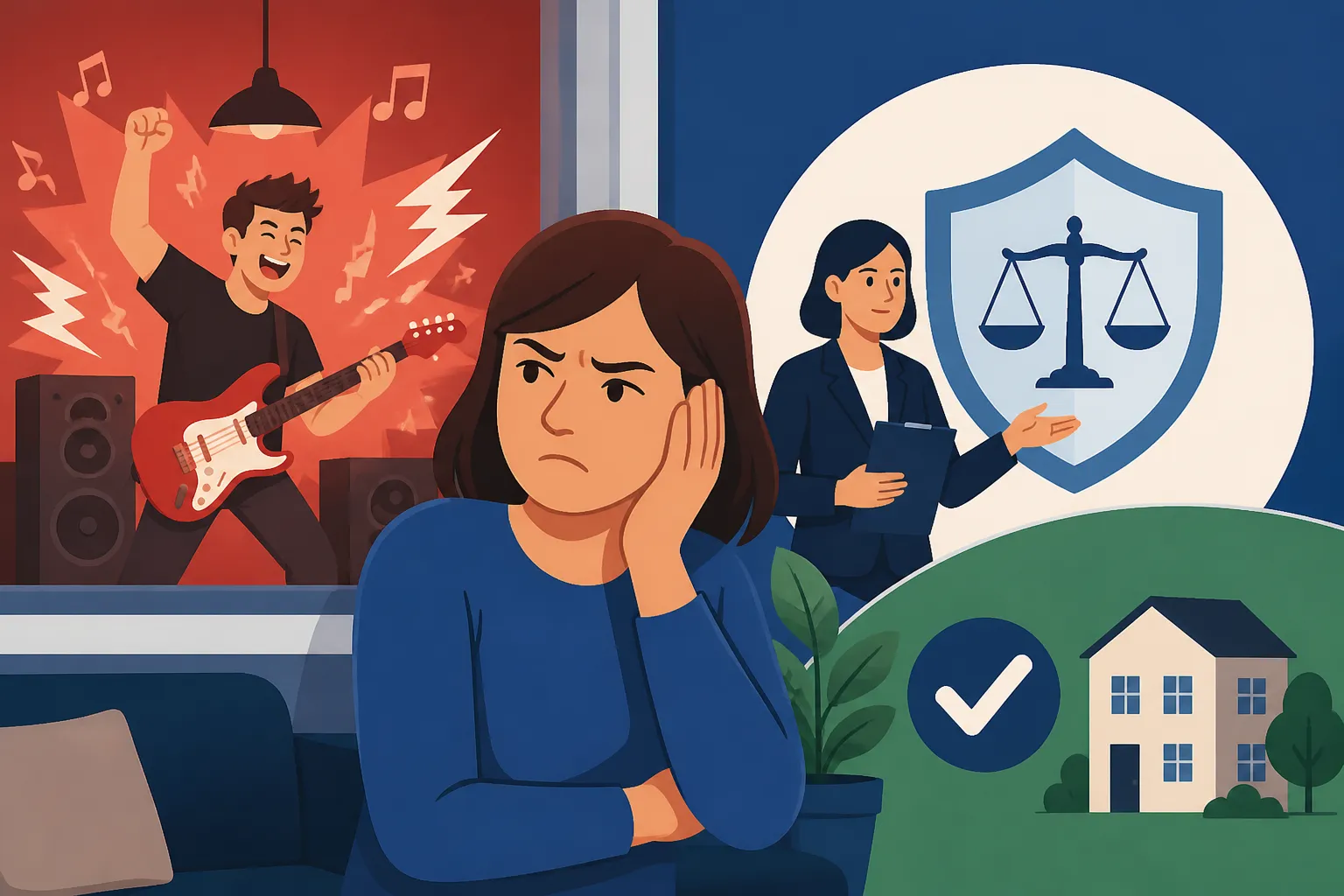
Noise Complaints: How to Deal with Loud Neighbors Legally
Ah, the sound of silence in Denmark – a lovely ideal, isn't it? But then reality hits, sometimes quite literally, through thin walls or a particularly enthusiastic neighbor. Dealing with noise complaints in a foreign country can be incredibly frustrating. You’re navigating new cultural norms, perhaps a language barrier, and definitely a legal system that’s different from home. This guide is here to help you understand the Danish way of handling noisy neighbors, from friendly chats to official complaints, so you can find some peace in your Danish home.
Understanding Danish Noise Regulations and Expectations
Let’s be honest, when many of us expats arrive in Denmark, we envision a land of hygge, quiet contemplation, and respectful neighbors. And often, that's what we find! But just like anywhere else, Denmark has its share of loud parties, barking dogs, endless renovations, or simply folks who live a bit differently. The trick is understanding what's considered "normal" noise and when it crosses the line into a legal nuisance.
The Unspoken Rules of Hygge vs. Reality
One of the first hurdles many foreigners face is the Danish approach to conflict. Danes are generally very direct in communication but can also be highly conflict-avoidant when it comes to personal confrontation, especially with neighbors. This can lead to a passive-aggressive dance where a neighbor might quietly stew about your noise for weeks before leaving a cryptic note. On the flip side, you might feel uncomfortable approaching a neighbor directly for fear of being impolite or misunderstanding the local customs. It’s a delicate balance. The ideal of hygge often implies a serene home life, but it doesn't always translate to absolute silence from your surroundings, especially in city apartments or areas with shared walls. People do live their lives, and sometimes that involves noise – children playing, social gatherings, or even just daily routines.
Common Noise Sources and Typical Quiet Hours
So, what kinds of noise are we talking about? It runs the gamut:
- Parties and Social Gatherings: Especially on weekends or holidays, Danes enjoy a good party. Music, laughter, and conversation can easily carry.
- Renovation and DIY Projects: Many Danes are quite handy, and renovations, from drilling to hammering, are common.
- Children and Pets: The joyful (and sometimes less joyful) sounds of kids playing, crying, or pets barking are a fact of life in many neighborhoods.
- Household Appliances: Loud washing machines or dishwashers, especially in older buildings, can be a constant hum.
When it comes to quiet hours, there isn't one universal law enforced by the government across Denmark that dictates precise times for all noise. Instead, these are typically established at a municipal level, within apartment building rules, or through your lease agreement. However, common decency and most house rules suggest:
| Time Period | Weekdays (Monday – Friday) | Weekends & Public Holidays |
|---|---|---|
| Quiet Hours | 10:00 PM – 7:00 AM | 11:00 PM – 9:00 AM |
| Renovation/Loud Work | 8:00 AM – 6:00 PM | 10:00 AM – 4:00 PM |
| General Low Noise | 7:00 AM – 10:00 PM | 9:00 AM – 11:00 PM |
It's crucial to remember that these are general guidelines. Always check your specific Typeformular A10: Understanding the Standard Danish Lease Agreement or the internal house rules (husorden) for your building or housing association. These documents will often explicitly state the expectations for Quiet Hours and Apartment Rules: How to Avoid Neighbor Conflicts. Ignoring them, whether you're the noise maker or the noise sufferer, can complicate matters.
Legal Framework: When Noise Becomes a Nuisance
In Denmark, noise needs to be more than just "annoying" to be considered a legal nuisance (gene). It usually needs to be continuous, excessive, and demonstrably disruptive to your daily life or sleep. The legal system doesn't operate on subjective feelings; it requires objective evidence that the noise is unreasonable. This isn't about someone walking loudly in their apartment above you once in a while, but rather persistent, recurring, or extremely loud disturbances that significantly impact your peace and enjoyment of your home.
The legal framework is primarily based on general civil law principles, the Danish Tenant Act (Lejeloven), and local municipal bylaws. For tenants, your lease agreement and the building's house rules form a critical part of this framework. If a neighbor’s noise consistently violates these established rules, or if it constitutes a significant nuisance that affects your health or well-being, then you have grounds for a formal complaint. However, proving this often requires careful documentation and a structured approach, which we'll dive into next.
Taking the First Steps: Direct Communication and Documentation
Before you jump into official channels, remember the Danish preference for direct, yet polite, resolution. It might feel uncomfortable, but it’s almost always the best first step. And while you’re doing that, start collecting evidence – it’s absolutely essential for any escalation.
The Power of the Friendly Knock
It sounds simple, but knocking on your neighbor's door with a smile and a polite inquiry can often resolve the issue immediately. Many people aren't even aware their noise is bothering others, especially in new buildings where sound insulation might be different from their previous home.
For instance, imagine your upstairs neighbor regularly plays loud music late at night. Instead of fuming, try this: at a reasonable hour, perhaps the next day, approach them. "Hej! Sorry to bother you, but I just wanted to gently mention that sometimes the music from your apartment can be quite loud late in the evening. I can hear it quite clearly in my bedroom. Would you mind perhaps turning it down a bit after 10 PM?" Frame it as a small request, not an accusation. Danes generally appreciate directness combined with politeness. This personal touch often resolves issues before they fester. If you don't speak Danish, a simple "Hello, I live downstairs/next door, your music/noise is quite loud, could you please turn it down?" in English might be enough. Most Danes are proficient in English.
Gathering Evidence: The Noise Log
If the friendly knock doesn't work, or if you don't feel comfortable approaching your neighbor, the next crucial step is meticulous documentation. This isn't just a suggestion; it’s an absolute necessity if you ever want to involve your landlord, housing association, or legal aid.
Your noise log should include:
- Date and Time: Be precise. E.g., "August 15, 2026, 11:30 PM – 1:15 AM."
- Type of Noise: Describe it clearly. "Loud bass music with thumping sounds," "dog barking continuously," "argument with shouting," "heavy drilling and hammering."
- Duration: How long did it last?
- Impact: How did it affect you? "Unable to sleep," "couldn't hear TV," "child woke up crying."
- Attempts to Communicate: Did you knock? Send a message? Note this down.
Think of it like building a case. One isolated incident is unlikely to be taken seriously, but a consistent pattern over weeks or months, clearly documented, becomes hard to ignore. Some people even record the noise with their phone, carefully noting the date and time. While direct audio/video recordings of someone inside their private home can be legally tricky regarding privacy, a recording of the sound emanating from their apartment into your common areas or your own apartment can serve as supporting evidence, especially if it corroborates your written log. Just be mindful of privacy laws if you plan to share such recordings.
Initial Written Communication: The Gentle Reminder
If the direct conversation didn't yield lasting results, or if you prefer to have a written record from the start, a polite, written note is the next step. This note should be factual, non-accusatory, and refer to specific incidents from your noise log.
For example:
"Dear neighbor,
I'm writing to you regarding the noise from your apartment. On [Date] between [Time] and [Time], there was [describe noise, e.g., loud music/shouting] which was quite disruptive. While I understand that some noise is unavoidable, this particular instance made it difficult for me to [explain impact, e.g., sleep/focus]. I would greatly appreciate it if you could be mindful of the noise levels, especially during quiet hours (as outlined in our building's husorden).
Thank you for your understanding.
Sincerely,
[Your Name]
[Your Apartment Number]"
Keep a copy of this note for your records. If the problem persists, you'll have a documented attempt at resolution. This written communication can also be a gentle way to remind a neighbor of the building's specific Quiet Hours and Apartment Rules: How to Avoid Neighbor Conflicts, which many landlords include in their tenant information.
Escalation: Involving Landlords, Housing Associations, and Legal Avenues
When direct approaches fail, it's time to involve the relevant authorities. For most expats, this means your landlord or the housing association. Knowing when to call the police is also crucial, as they have a specific, limited role in noise complaints.
Contacting Your Landlord or Housing Association
This is your primary avenue for resolution if you're renting. Your landlord or the housing association (if you live in an andelsbolig or ejerlejlighed within an association) has a responsibility to ensure all residents adhere to the lease agreement and the building's house rules (husorden).
- Prepare Your Case: Before contacting them, make sure your noise log is impeccable. You’ll also want copies of any written communication you’ve had with your neighbor. The more detailed your evidence, the more seriously they will take your complaint.
- Formal Complaint: Submit a formal written complaint to your landlord or housing association. This is best done via email so you have a digital record, or even better, via registered mail (anbefalet brev) if it's a very serious ongoing issue. Clearly state the problem, refer to your documentation, and request their intervention.
- Landlord's Action: A responsible landlord will usually start by sending a written warning to the noisy tenant, reminding them of the house rules. If the problem continues, they might issue a second, more severe warning, possibly threatening eviction. Eviction for noise is a serious step and usually requires multiple documented warnings and a persistent breach of contract.
For those living in an apartment managed by a housing association, the process is similar. You would typically contact the board (bestyrelse) of the association. They have the authority to enforce house rules among owner-residents and co-op members. Your lease agreement (Renting in Denmark: Complete Guide for Expats (2027)) will specify who to contact.
The Role of the Police (Politiet): When to Call Them
It's a common misconception that the police are the first port of call for noise complaints. In Denmark, the police are not a general noise complaint hotline. They typically only intervene in situations that involve a breach of public order, illegal activity, or an immediate threat to safety.
When to call the police (on 114 for non-emergencies, or 112 for emergencies):
- Extremely Loud and Disruptive Parties: If a party is so loud that it's disturbing the entire neighborhood late at night, and your direct attempts have failed, the police might respond, especially if there are multiple complaints from different residents. They will usually ask them to turn down the music.
- Illegal Activity: If the noise is connected to suspected illegal activities (e.g., drug dealing, domestic violence).
- Threats or Physical Altercations: If the noise escalates into a direct threat or physical fight.
- Repeated, Persistent Disturbances: If a neighbor is causing such extreme, persistent noise (e.g., screaming, loud banging) that it clearly goes beyond a simple inconvenience and constitutes a severe disturbance to public peace, especially after quiet hours.
They won't get involved in day-to-day disputes or minor annoyances. Calling 114 is for situations that need immediate attention but are not life-threatening. For example, a really wild party at 3 AM. If you call, be prepared to give specific details and be aware that they prioritize serious crimes and emergencies, so their response time to a noise complaint might vary.
Mediation and Formal Complaints
If your landlord or housing association isn't responsive, or if the problem persists despite their intervention, you might need to consider more formal avenues.
- Mediation: In some municipalities, there might be local mediation services available to help neighbors resolve disputes. This is usually a voluntary process where a neutral third party helps facilitate communication.
- Rent Control Board (Huslejenævnet): For rental properties, if your landlord fails to address a significant nuisance from another tenant, you can potentially take the matter to the Huslejenævnet. This board handles disputes between landlords and tenants. However, they primarily deal with issues related to rent, maintenance, and deposit returns. Proving a noise nuisance through them is possible, but usually only if the landlord has demonstrably failed their duty to ensure peaceful enjoyment of the property. This process can be lengthy and requires very strong documentation. Learning How to Submit a Dispute to the Huslejenævnet (Rent Control Board) is an important step if you reach this point.
- Cooperative and Owner Associations: For andelsbolig or ejerlejlighed residents, the association's general meeting (generalforsamling) can sometimes be the platform for discussing severe neighbor issues, though usually, the board handles daily complaints.
Seeking Further Resolution and Last Resorts
When all immediate and formal complaints through landlords or associations have been exhausted, and the noise continues to disrupt your life, you might need to seek external legal assistance or consider your options carefully.
Leveraging Tenant Organizations (LLO)
If you're a renter and finding yourself up against a wall with an unresponsive landlord or a persistent noise issue, becoming a member of Tenant Rights and LLO (Lejernes Landsorganisation) Protection (the Danish Tenants' Union) can be invaluable. LLO provides legal advice and support to its members regarding all aspects of tenancy, including disputes over noise and a landlord's responsibility to maintain peaceful living conditions.
For a modest annual fee, LLO can help you:
- Draft formal letters to your landlord.
- Advise on whether your case is strong enough to take to the Rent Control Board.
- Represent you in certain legal proceedings.
- Clarify your rights and the landlord's obligations under the Danish Tenant Act.
Their expertise can be a real game-changer, especially for expats who might not be familiar with the nuances of Danish rental law. They are particularly skilled at Joining LLO (Tenants' Union): How to Fight Unfair Rent Increases and other disputes.
The Rent Control Board (Huslejenævnet) and Courts
As mentioned, the Huslejenævnet is primarily for landlord-tenant disputes. If the noise is from a neighbor who is also a tenant in your building, and your landlord has not acted appropriately despite repeated, documented complaints, you might have grounds to argue that the landlord is failing in their obligation to provide a peaceful tenancy. This can potentially lead to a rent reduction or, in extreme cases, the ability to break your lease early. But again, you need irrefutable evidence that the noise constitutes a significant and persistent breach.
Civil court is the absolute last resort and is generally advised against unless all other avenues have been exhausted and the financial stakes are very high. Litigation in Denmark is time-consuming, expensive, and can be emotionally draining. You would need robust legal representation and a very strong case with extensive documentation. Before even considering court, you should consult with a lawyer specializing in housing law or get advice from LLO. They will be able to assess the strength of your case and the likelihood of a successful outcome, weighing it against the costs and potential stress.
Considering Alternatives: When Moving Becomes an Option
Sometimes, despite your best efforts, a resolution might not be possible. Maybe the building has poor sound insulation (a common issue in older apartments), or the neighbor genuinely cannot or will not change their habits, and the legal process is too slow or too complex for the level of nuisance you are experiencing. In these unfortunate situations, the most pragmatic solution for your mental health and well-being might be to consider moving.
Documenting the noise issues and your attempts to resolve them can sometimes be helpful if you need to break your lease early, depending on the severity and explicit breaches of the lease or tenant law. When you do decide to move, ensuring you get your deposit back is another important step, and good documentation of the original condition of your property and any issues (like noise) can be vital, especially during The Move-Out Inspection (Fraflytningssyn): Getting Your Deposit Back. While moving isn't "dealing with" the noise legally, it's a realistic option many expats ultimately consider to regain their peace.
Navigating noise complaints in Denmark requires patience, a systematic approach, and a good understanding of both cultural expectations and legal procedures. Remember to always prioritize polite, direct communication first, meticulously document everything, and know when to escalate to the appropriate authorities like your landlord, housing association, or LLO. Peace and quiet might be closer than you think.
Disclaimer
The information provided in this guide is for general informational purposes only and does not constitute legal advice. While we strive to provide accurate and up-to-date information, laws and regulations can change. It is always recommended to consult with a qualified legal professional or a tenant's union like LLO for advice specific to your individual situation.