How to Find a Cleaning Person (Rengøring) Legally in Denmark
Alright, let's talk about something that often becomes a real head-scratcher for us expats in Denmark: finding reliable, legal, and understandable help with cleaning. You arrive in this lovely country, probably feeling overwhelmed with the CPR number, NemKonto, and all the bureaucratic hurdles, and suddenly you realize that your precious free time is evaporating into a cloud of laundry, dusting, and floor scrubbing. It’s easy to feel guilty or think it’s an unnecessary luxury, but trust me, eventually, many of us reach a point where we desperately need an extra pair of hands, and navigating how to find that help legally in Denmark is its own special kind of puzzle. This guide is here to untangle that for you, explaining everything from cultural norms to legal obligations.
The Expat's Dilemma: Why Cleaning Help Becomes Essential (and Complex) in Denmark
When you first move here, you're often swept up in the magic of Copenhagen's canals or Aarhus's charming Latin Quarter, thinking you'll manage everything. But then life kicks in, and between a demanding job, trying to learn Danish at the sprogskole, and attempting to build a social life, the housework starts to pile up. For many of us, hiring someone to clean our homes wasn't a big deal back where we came from, but Denmark has its own unique landscape, both culturally and legally, that makes this a rather different experience.
The Danish DIY Mentality and Your Busy Schedule
Danes are incredibly self-reliant, and there's a strong cultural emphasis on doing things yourself. The idea of having someone come in to clean your home isn't as universally common or openly discussed as it might be in some other countries. This isn't to say it doesn't happen, far from it, but it's often viewed through a more private lens. You might not hear your Danish colleagues openly discussing their cleaning help, which can make it feel like you're somehow "failing" if you need it. Forget that! Your time is valuable, especially when you're trying to adjust to an entirely new country, and sometimes, outsourcing certain tasks is just plain smart self-care. We all have different needs and capacities, and if investing in a clean home gives you back valuable hours to spend with family, learning Danish, or simply relaxing, then it's a perfectly valid choice. Plus, if you're living in a typical Danish apartment, you might also be dealing with a shared laundry room or specific rules about noise, adding another layer of complexity to daily chores.
Overcoming the Sticker Shock of Professional Services
Let's be brutally honest: Denmark is an expensive country. And that applies to services, too. When you start looking into professional cleaning help, the prices might make your eyes water. Many expats initially recoil at the hourly rates, which can seem astronomical compared to what they're used to paying back home. This sticker shock is real, and it often pushes people towards considering the "black economy" – a temptation we'll discuss in detail later, and one you should absolutely resist.
What you're paying for in Denmark, however, isn't just someone wielding a mop. You're paying for a service that adheres to Danish labor laws, pays fair wages, includes insurance, and contributes to the highly-taxed, but ultimately robust, welfare system we all benefit from. Think of it as part of the total cost of living here, similar to understanding how your Taxes in Denmark Explained: A-Skat, AM-bidrag, and Marginal Rates contribute to society. When you budget for your life here, whether you're in Copenhagen, Aarhus, or a smaller town, remember that services come at a premium because wages are high and worker rights are strong.
Language Barriers and Specific Cleaning Expectations
Another layer of complexity can be the language barrier. While many Danes speak excellent English, the person doing your cleaning might not. This can make communicating specific instructions or nuances about your home a real challenge. Do you want eco-friendly products used? Are there specific surfaces that require special care? How do you explain the difference between a thorough scrub and a light tidy-up? These are all things you’ll need to convey, and if you're not yet fluent in Danish, it can add stress.
Moreover, every culture has its own unspoken rules about cleanliness. What constitutes "clean" can vary. Some might expect windows to be sparkling every visit, others might prioritize skirting boards. A professional company will often have a standard checklist, but a private individual might rely on their own understanding, which could lead to misunderstandings if not clarified upfront. This is where clear communication becomes absolutely paramount to a successful working relationship, much like navigating Danish Work Culture: Flat Hierarchies, Hygge, and Direct Communication in a professional setting.
The Critical Choice: Navigating the Legal "White" vs. "Black" Cleaning Economy
This is perhaps the most important section of this guide. In Denmark, there's a very clear distinction between legal work (referred to as the "white economy" or hvid arbejde) and illegal work (the "black economy" or sort arbejde). As an expat, it's absolutely crucial that you understand this difference and always choose the legal route when hiring any service, including cleaning. The consequences of not doing so can be severe, not just for the person you hire, but for you as well.
Understanding "Hvid Arbejde" (White Work) and Its Benefits
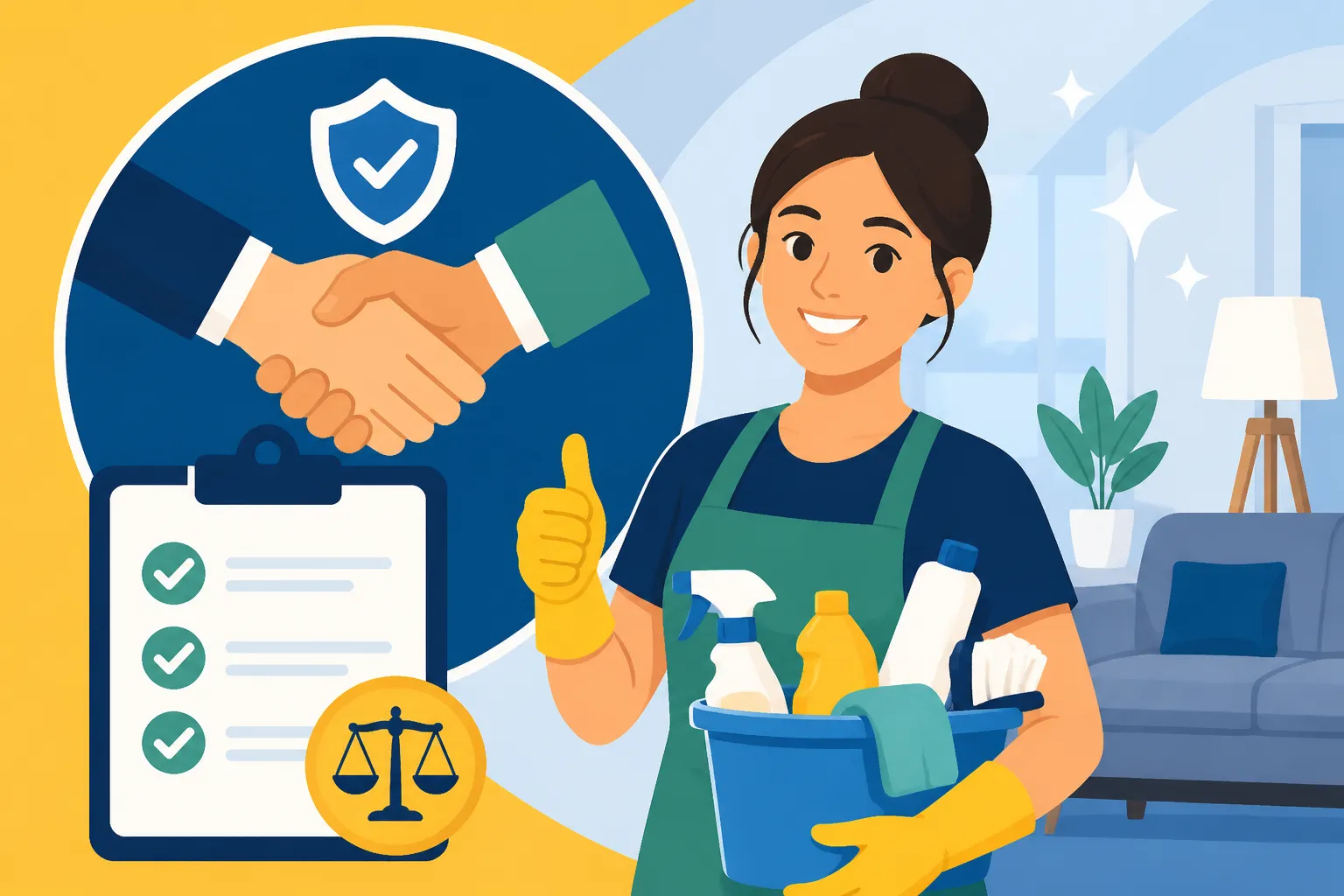
When you hire someone "white," it means everything is above board. The cleaner or cleaning company is registered with the Danish authorities, they pay taxes (including VAT if applicable), and they comply with labor laws. This sounds like a no-brainer, but the higher cost often tempts people to look for cheaper alternatives. However, choosing hvid arbejde offers significant benefits:
- Legal Protection: If something goes wrong – damage to your property, an accident involving the cleaner, or a dispute over services – you have legal recourse. The company or individual will have liability insurance, protecting both parties.
- Tax Deductions (Servicefradrag): Here’s a big one! As a private individual, you can deduct a portion of the labor costs for certain services, including cleaning, directly from your taxes. This "service deduction" (also known as the håndværkerfradrag or BoligJobordning) reduces your taxable income, effectively making the service cheaper than it initially appears. You report these expenses to SKAT (the Danish Tax Agency) via your årsopgørelse. This is a legal incentive to encourage people to use legal services. Knowing how to claim these deductions requires understanding the Danish tax system, similar to keeping track of your Understanding SKAT: Forskudsopgørelse vs. Årsopgørelse Explained.
- Peace of Mind: You won't have to worry about getting caught by the authorities, facing fines, or contributing to an unethical system. It’s a huge relief to know you’re doing things correctly.
- Supporting the System: By paying legally, you're contributing to the Danish welfare model, which benefits everyone living here, including expats.
The Serious Risks of Engaging in "Sort Arbejde" (Black Work)
Engaging in sort arbejde means paying someone "under the table" – usually in cash – without reporting it to the tax authorities. While it might seem like a way to save money, the risks far outweigh any perceived benefits:
- Financial Penalties: If caught by SKAT, both you and the cleaner can face substantial fines. These fines can be many times the amount of the unpaid tax, and they are not a slap on the wrist. SKAT takes tax evasion very seriously.
- No Legal Protection: This is huge. If the cleaner accidentally breaks an expensive item in your home, steals something, or injures themselves on your property, you have absolutely no legal recourse. Their insurance won't cover it (because they’re not legally working), and your own home contents insurance (Indboforsikring) might even deny a claim if it involves illegal work. You could be personally liable for damages or medical costs.
- Ethical Implications: Sort arbejde undermines the Danish welfare state, contributes to unfair competition, and exploits workers who are often vulnerable. It's a practice that goes against the very fabric of Danish society.
- Reputational Damage: Getting caught can have serious implications for your reputation and could even affect future visa renewals or citizenship applications, as it demonstrates a disregard for Danish law.
Your Responsibilities as a Client When Hiring Legally
Even when hiring "white," you have certain responsibilities. If you hire a private individual directly, you are essentially an employer, and you need to ensure they are properly registered and paying their own taxes. This usually means verifying their CVR number (for self-employed individuals) or ensuring they declare their income correctly. For most expats, the easiest and safest route is to use a professional cleaning company. They handle all the paperwork, taxes, and insurance, shielding you from many of these direct employer responsibilities.
When receiving an invoice, make sure it clearly itemizes the labor costs separately from materials, as only labor costs are eligible for the service deduction. Always insist on a proper invoice, never just a handwritten receipt. This invoice is your proof for tax purposes and for any potential disputes. This process is similar to what a freelancer would need to understand regarding Freelancer Taxes: Moms (VAT) Registration and B-Income Deadlines.
Here's a quick comparison to help you visualize:
| Feature | Legal "White Economy" Cleaning | Illegal "Black Economy" Cleaning |
|---|---|---|
| Cost | Higher upfront, but potential tax deductions | Lower upfront cash payment |
| Legality | Fully compliant with Danish tax and labor laws | Illegal, tax evasion |
| Legal Protection | Insurance covers damages, accidents; contracts are enforceable | No legal recourse for damages, theft, or accidents; contracts unenforceable |
| Tax Benefits | Eligible for "servicefradrag" (tax deduction) | None; potential fines for tax evasion |
| Peace of Mind | High, no fear of legal repercussions | Low, constant worry about being caught |
| Worker Rights | Cleaner receives fair wage, pension, proper working conditions | Cleaner is exploited, no worker rights |
| Societal Impact | Contributes to Danish welfare system, fair competition | Undermines welfare system, unfair competition, exploitation |
| Payment Method | Bank transfer, invoice, MobilePay (reported) | Cash, undeclared |
Your Go-To Resources for Finding Trustworthy Cleaning Services
Now that we're clear on how to hire legally, let's look at where to find those reputable cleaning services. You have a few solid options, each with its own pros and cons.
Professional Cleaning Companies (Rengøringsfirmaer) and Agencies
This is often the most straightforward and secure option for expats. Professional cleaning companies in Denmark are fully registered, insured, and handle all the administrative hassle. They employ their staff legally, pay taxes, and have established quality control measures.
- Benefits:
- Reliability: Companies usually have backup staff if your regular cleaner is sick or on holiday.
- Insurance: They carry liability insurance, protecting your property in case of damage.
- Quality Standards: Most have set cleaning protocols and supervisors to ensure consistent quality.
- Invoice & Tax Deduction: You’ll always receive a proper invoice, making it easy to claim your service deduction with SKAT.
- No Direct Employment Headaches: You are a client, not an employer.
- Drawbacks:
- Cost: Generally the most expensive option.
- Less Personal: You might not always have the same cleaner, leading to less personalized service.
To find these, a simple Google search for "rengøringsfirma + [your city]" (e.g., "rengøringsfirma København") will bring up many options. Look for companies with good reviews, clear pricing, and a professional website. Some popular companies operate across Denmark, while others are local specialists. Many will offer a free, no-obligation quote after a brief discussion about your needs or a quick visit to your home.
Leveraging Online Platforms and Local Networks
Beyond traditional companies, a growing number of online platforms act as intermediaries, connecting clients with vetted, self-employed cleaners. These platforms often aim to simplify the process while ensuring legality.
- Online Platforms: Websites like Hilfr and Happy Helper are popular choices in Denmark. They typically:
- Connect you with individual cleaners: These cleaners are often self-employed (registered with CVR) or employed by the platform itself.
- Handle payment and taxes: The platform usually processes payments and ensures that the cleaner declares their income correctly, simplifying things for you.
- Offer insurance: Many platforms include insurance for damages.
- Provide ratings and reviews: You can choose cleaners based on their ratings and feedback from other users.
- Flexibility: You can often book, reschedule, and manage services online.
- Local Networks and Social Media: Facebook groups for expats in your city (e.g., "Expats in Copenhagen") can be a goldmine for recommendations. People often post looking for or offering cleaning services.
- Crucial Caveat: While a good source for recommendations, always, always verify the legality if you hire someone recommended this way. Ask if they have a CVR number (if self-employed), if they provide an invoice, and how they handle taxes. Don't just take someone's word for it if they offer a suspiciously low cash price. This is similar to the care you'd take when Finding an English-Speaking Handyman: Finding Plumbers and Electricians – always verify their credentials and ensure they provide legal services.
The Power of Personal Recommendations (and What to Ask)
Word-of-mouth is still incredibly powerful, and often, the best cleaners are found through personal recommendations. If a friend, colleague, or neighbor has a cleaner they trust and love, that's a great starting point.
- What to Ask Your Referrer:
- "Do they provide an invoice?" (Crucial for your servicefradrag and proof of legal work)
- "Are they insured?"
- "How do you communicate with them?" (Especially if language is a concern)
- "What's their pricing structure?"
- "How long have you been using them?"
- What to Ask the Cleaner Directly:
- Confirm they are registered and provide an invoice.
- Discuss payment methods (bank transfer is standard for legal work).
- Clarify what is included in their service (e.g., specific rooms, types of cleaning, use of their own supplies or yours).
- Discuss preferred communication methods.
Remember, even with a personal recommendation, you still have the responsibility to ensure the arrangement is legal. Don't be shy about asking direct questions about invoices and registration; reputable cleaners will expect it and be happy to provide the necessary information.
Sealing the Deal: Contracts, Communication, and Cost Transparency
Once you've found a potential cleaning service or individual, the next step is to formalize the arrangement. This isn't just about being "Danish" – it's about protecting yourself, the cleaner, and ensuring everyone's expectations are aligned.
What to Look for in a Cleaning Agreement (Aftale)
Even if you're hiring a private individual, having a simple written agreement or email outlining the terms is a good idea. For professional companies, you will always get a formal contract. This agreement should cover:
- Scope of Work: What exactly will be cleaned? Which rooms? Which tasks (dusting, vacuuming, mopping, bathroom, kitchen, windows, etc.)? How often will it occur (weekly, bi-weekly, monthly)?
- Pricing: The agreed-upon hourly rate or fixed price per cleaning session.
- Payment Terms: When and how payment should be made (e.g., via bank transfer after each cleaning, monthly invoice).
- Cancellation Policy: What happens if you need to cancel or reschedule? What notice period is required?
- Key Access: How will the cleaner access your home? If you're providing a key, what are the security arrangements?
- Insurance/Liability: Confirmation of liability insurance for the cleaning service.
- Supplies: Will the cleaner bring their own equipment and cleaning products, or are you expected to provide them? Clarify this upfront, as it can affect the price.
- Notice Period for Termination: How much notice is required if either party wishes to end the agreement?
Having these details in writing prevents misunderstandings down the line, much like how formal contracts govern most aspects of Money in Denmark: Banking, Payments, and Financial Setup for Expats and other services.
Decoding Pricing Structures and Potential Tax Deductions
Cleaning services typically charge either an hourly rate or a fixed rate per session/task.
- Hourly Rates: This is common, especially for initial cleanings or if the scope of work might vary. Make sure you understand how time is tracked.
- Fixed Rates: Some companies or individuals offer a fixed price for a standard cleaning of a specific apartment size or set of tasks. This provides more predictability for your budget.
As mentioned earlier, remember the servicefradrag (service deduction). For 2026, the deduction amount and eligible services can change, so always check the latest information on SKAT's website. Generally, you can deduct the labor portion of expenses for household services. You’ll enter this information when you complete your Understanding SKAT: Forskudsopgørelse vs. Årsopgørelse Explained in March of the following year. It's an incentive designed to keep services in the legal economy and can significantly reduce the effective cost of your cleaning. This deduction is a key part of your Budgeting in Copenhagen vs. Odense: Where Your Money Goes strategy if you plan to hire help. Always save your invoices! You might also receive official communications regarding this via your digital postbox, like E-Boks vs. Mit.dk: Receiving Official Financial Mail from the State.
Fostering Clear Communication for a Sustainable Partnership
Even with a contract, ongoing communication is vital.
- Feedback: Don't be afraid to give constructive feedback. If something isn't cleaned to your satisfaction or you have a new request, communicate it clearly and politely. Danes appreciate directness, as long as it's respectful.
- Changes: If your needs change (e.g., you need to reschedule, you want an extra task done, or you have a specific event coming up), inform your cleaner or company well in advance.
- Expectations: Be realistic. A professional cleaning service will perform standard tasks; they are not typically there to organize your clutter or do heavy-duty decluttering unless specifically agreed upon and priced.
Hiring a cleaning person in Denmark can genuinely improve your quality of life, giving you back precious time and reducing stress. By understanding the legal framework, exploring reliable options, and setting clear expectations, you can easily integrate this service into your expat life and enjoy a sparkling home without any worries.
Disclaimer
Please note that while I strive to provide accurate and up-to-date information based on current knowledge and general expat experiences in Denmark, laws and regulations, particularly those concerning taxation and labor, can change. This guide is for informational purposes only and does not constitute legal or financial advice. Always consult official Danish government sources (like SKAT or Borger.dk) or seek professional legal or financial counsel for specific situations.