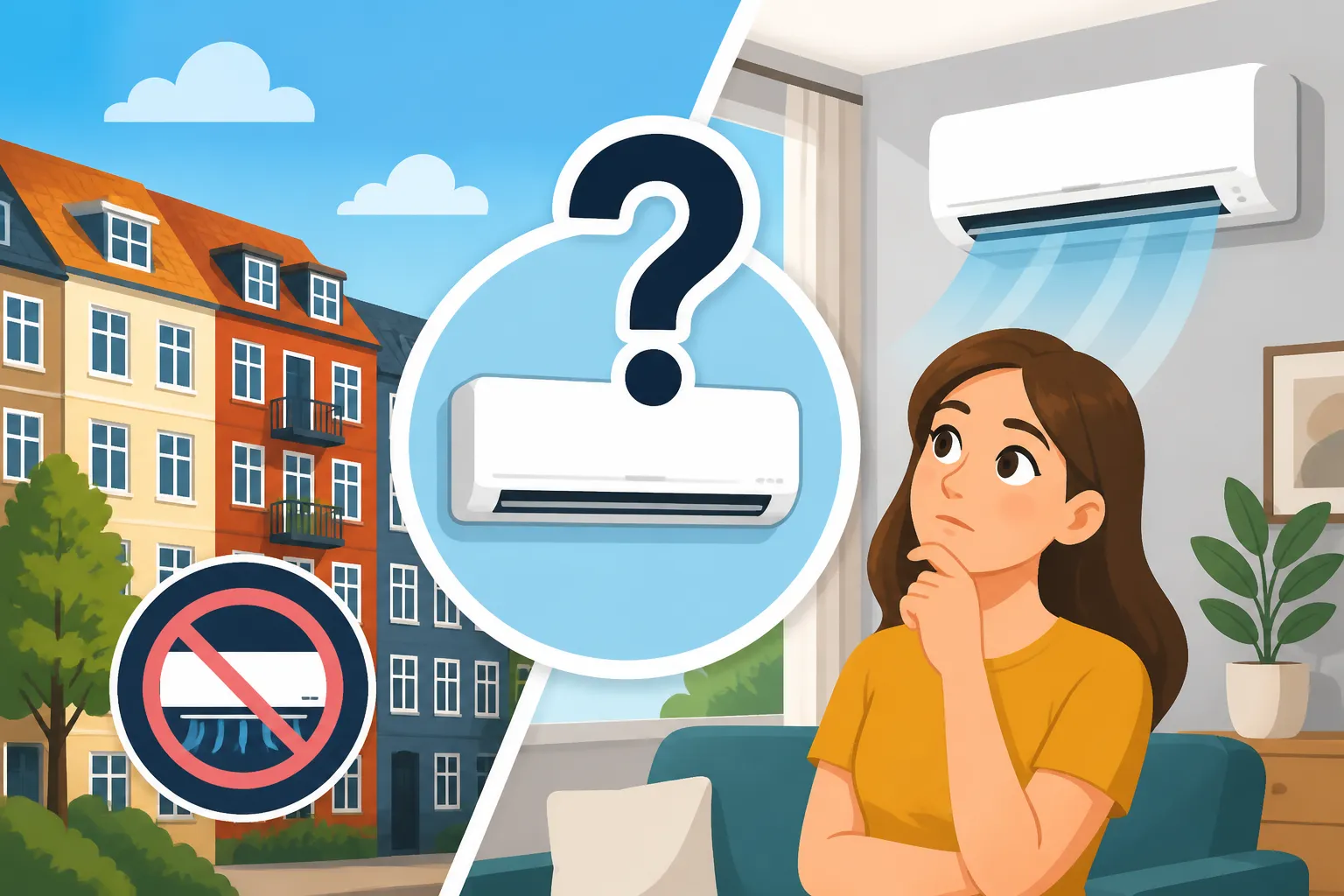
Are Air Conditioners Common in Danish Apartments?
Ah, the Danish summer! It often starts with that blissful, mild sunshine, making you wonder what all the fuss about the cold was about. Then, a heatwave hits, and suddenly your perfectly insulated apartment, designed to keep the brutal Nordic winter out, becomes a stifling oven. You start desperately Googling "air conditioning Denmark," only to find very little. Let me tell you, as someone who’s sweated through more than a few unexpected heatwaves here, you're not alone in that frustration. This guide will walk you through why air conditioners are rare in Danish apartments and, more importantly, what you can actually do to keep cool.
Why You Rarely See Traditional Air Conditioning in Danish Homes
It’s one of those things that really throws new expats for a loop. You come from a country where AC is standard, only to find it almost non-existent in Danish residential buildings. There are several deeply rooted reasons for this, blending climate, culture, and construction practices.
The Climate Conundrum: Historically Mild Summers
For decades, the Danish climate was characterized by short, relatively mild summers. Average temperatures rarely soared above 20-22°C (68-72°F), and heatwaves were infrequent. Buildings were designed primarily to withstand long, cold, dark winters, focusing heavily on insulation to keep the warmth in. This meant thick walls, triple-glazed windows, and efficient heating systems. The idea of actively cooling a home simply wasn't a widespread concern or necessity.
However, we're seeing changes. Recent summers have brought more frequent and intense heatwaves, with temperatures sometimes creeping into the high 20s or even low 30s (°C), lasting for several days. What was once considered a "hot summer day" is becoming more common, making the lack of cooling systems a real issue for comfort, especially for those of us not accustomed to it.
Building Practices and Energy Efficiency
Danish building codes are stringent, with a strong emphasis on energy efficiency and sustainability. The focus is almost exclusively on minimizing heat loss in winter, which paradoxically means homes are very good at retaining heat in the summer. Modern apartments, while beautifully designed and often filled with natural light, often become solar traps during extended sunny periods. Older buildings, particularly those on upper floors, can be even worse, as their heavy materials absorb and radiate heat long into the night.
Installing central air conditioning in existing buildings is a massive undertaking, often requiring significant structural changes, extensive ductwork, and powerful electrical upgrades. Given the relatively short period of uncomfortable heat each year, the cost-benefit analysis has traditionally not favored such investments for residential properties. This is why you'll find that businesses and public buildings might have AC, but homes generally do not.
High Energy Costs and Environmental Awareness
Denmark has some of the highest electricity prices in Europe, driven by a combination of taxes, levies, and a strong commitment to green energy initiatives. Running a power-hungry appliance like an air conditioner for extended periods would translate into eye-watering electricity bills. Most Danes are acutely aware of their energy consumption, and the idea of blasting cold air into a well-insulated home, only to have it escape through open windows, goes against the ingrained ethos of efficiency and environmental responsibility.
There’s also a cultural aspect. Rather than hermetically sealing themselves inside with AC, Danes typically opt for natural ventilation – opening windows, especially at night or in the early morning, to create a cross-breeze. This preference for fresh air over conditioned air is deeply embedded in the local lifestyle. If you're looking for general advice on managing your utility bills, our guide on Utilities Setup: Electricity, Water, Heating, and Internet might be a good read.
Surviving the Heat: Practical Alternatives for Your Danish Apartment
So, if traditional AC is out of the picture, what’s an expat to do when the mercury rises? You've got options, ranging from low-tech solutions to more involved, but still temporary, devices.
Portable Air Conditioners: A Common Expat Debate
This is often the first thought for many expats, and understandably so. Portable AC units offer immediate, localized cooling, which can be a lifesaver in a stuffy bedroom. They are widely available in electronics stores and online, especially as summer approaches.
The Reality Check:
- Cost: Expect to pay anywhere from DKK 2,500 to DKK 6,000 or more for a decent unit.
- Installation (of sorts): These aren't just plug-and-play. They require an exhaust hose to vent hot air outside. This means finding a way to seal it in a window or door opening. You can buy "window kits," but they are rarely a perfect fit for standard Danish windows, which are designed for insulation, not AC exhaust. You’ll often end up with a makeshift setup involving tape and cardboard.
- Noise: This is a big one. Portable AC units are notoriously loud. Imagine trying to sleep with a small jet engine humming next to you. Your neighbors will also hear it, and given Danish sensitivities to noise, this can sometimes lead to complaints, especially in older apartment buildings with thin walls. Our guide on Quiet Hours and Apartment Rules: How to Avoid Neighbor Conflicts covers this exact topic.
- Drainage: They collect condensation, so you'll need to regularly empty a water tank or set up continuous drainage.
- Energy Consumption: They are power hungry. Expect to see a noticeable jump in your electricity bill if you run one frequently. When considering the Cost of Living in Denmark 2026: Budgets for Singles and Families, remember to factor in potential energy spikes from such appliances.
Despite the drawbacks, a portable AC can make a significant difference for those truly struggling with the heat, particularly in a small, enclosed space like a bedroom. Just be prepared for the noise and the slightly awkward window setup.
Fans: Low-Tech, High-Impact Solutions
Before you splash out on a portable AC, reconsider the humble fan. They don't cool the air, but they create a wind-chill effect that makes you feel cooler by evaporating sweat.
- Standing and Tower Fans: These are ubiquitous in Danish homes during summer. They're affordable, relatively quiet, and easy to move. Place one strategically to create a cross-breeze or point it directly at yourself for immediate relief. You can often find decent ones at larger supermarkets or hardware stores like Bilka or Harald Nyborg. For general shopping insights, check out Supermarkets in Denmark: Netto, Rema 1000, and Føtex Compared.
- Ceiling Fans: While not as common as in warmer climates, some newer apartments or those with high ceilings might have them. They're excellent for circulating air throughout a room. Installing one if not already present, however, is a modification that would likely require landlord permission.
Pro-Tip: Fill a bowl with ice and place it in front of a fan. The air blowing over the ice will be slightly cooled, providing a temporary localized chill.
External Sun Shades and Blinds
Blocking the sun's rays before they hit your windows is one of the most effective ways to prevent heat buildup.
- External Blinds/Awnings: These are fantastic, but almost impossible to install in a rented apartment without landlord permission, as they permanently alter the building's exterior.
- Blackout Curtains: For inside, invest in thick, light-colored blackout curtains or thermal blinds. Keep them closed during the hottest parts of the day, especially on south or west-facing windows. This can significantly reduce the amount of radiant heat entering your apartment.
Night Ventilation and Cross-Breezes
This is the classic Danish strategy, and it works surprisingly well if you get the timing right.
- Open Windows at Night: As soon as the sun sets and the outside temperature drops (which it often does significantly in Denmark, even after a hot day), open as many windows as safely possible. Create a cross-breeze by opening windows on opposite sides of your apartment. This flushes out the hot air accumulated during the day and brings in cooler night air.
- Close Up in the Morning: Crucially, close everything up (windows and curtains) before the sun gets strong in the morning. Trap that cool air inside. This strategy is also key to Managing Humidity and Mold (Skimmelsvamp) During Danish Winters by ensuring proper air circulation.
Other Small Victories
- Window Films: DIY reflective or UV-blocking films can be applied to windows to reduce heat gain. Check with your landlord first, as some films might damage the glass or leave residue upon removal, impacting your The Move-Out Inspection (Fraflytningssyn): Getting Your Deposit Back.
- Minimize Heat-Generating Appliances: Avoid using your oven, stove, dishwasher, or clothes dryer during the hottest parts of the day. Every appliance generates some heat.
- Cold Showers and Damp Towels: Simple but effective. A cool shower before bed, or a damp cloth on your forehead, can offer surprising relief.
Navigating Landlord Expectations and Rental Agreements
This is a critical section, because while you might be desperate for relief, making unauthorized changes to your apartment can lead to trouble with your landlord.
Modifications and Your Lease (Typeformular A10)
Most standard Danish lease agreements, often based on the Typeformular A10: Understanding the Standard Danish Lease Agreement, are very clear about what tenants can and cannot modify in the apartment. Permanent installations like split-unit air conditioners (the ones with an outdoor compressor unit) are almost universally forbidden. These require drilling into walls, altering the exterior façade, and complex electrical work, all of which are a big no-no unless explicitly approved by the landlord and potentially the building association (and that's extremely rare).
Even for portable units, while they aren't "installations" in the traditional sense, any potential damage caused by the exhaust hose setup (e.g., condensation damage to window frames, or damage from a poorly sealed window unit) could be your responsibility. Always err on the side of caution and check your lease for clauses about modifications or external apparatus. If you're ever unsure, sending a polite email to your landlord asking for permission or clarification is always the best approach.
Noise and Neighborhood Harmony
Danes value their peace and quiet, especially in apartment buildings. As mentioned, portable AC units can be quite noisy. Running one with the exhaust hose sticking out of a window can create a persistent hum that might disturb your neighbors, particularly during quiet hours (typically after 10 PM or 11 PM).
Before you commit to a noisy portable unit, consider your neighbors. A polite conversation, perhaps offering an explanation during a heatwave, might preempt complaints. However, if the noise is genuinely disruptive, your landlord or building association might ask you to cease using it, particularly at night. Remember, a harmonious living environment is highly valued here.
Seeking Apartments with Integrated Cooling: A Rare Find
You might be wondering if it’s possible to find an apartment that does have built-in cooling. The short answer is yes, but it's very much the exception rather than the rule.
New Builds and Luxury Living
Integrated cooling systems, often disguised as advanced ventilation, are primarily found in high-end, newly constructed apartment buildings, particularly in larger cities like Copenhagen or Aarhus. These are often luxury developments targeting a specific market, and the cooling might be part of a sophisticated climate control system rather than a standalone AC unit. These types of apartments typically come with a much higher price tag to reflect the premium features.
When searching for rentals, especially on platforms like Spotahome or through local real estate agents, don't expect to see "air conditioning" listed as a standard amenity. If you do, it will likely be highlighted as a unique selling point. It’s worth checking the specifics – sometimes it’s merely advanced ventilation that cycles in cooler air, rather than active refrigeration. If you're hunting for a place, be mindful of scams; our post on BoligPortal vs. Facebook: How to Spot Rental Scams in Denmark has useful tips.
Understanding "Ventilation" vs. "Cooling"
It's crucial to understand the distinction in Denmark. Many modern buildings boast excellent "ventilation systems" (ventilationssystem). These systems continuously exchange indoor air with outdoor air, filtering it and sometimes recovering heat in winter. While they ensure fresh air circulation, they do not actively cool the air in the same way an air conditioner does. In summer, they might bring in slightly cooler air from outside, but if the outside air itself is hot, the ventilation won't make your apartment significantly colder.
If an apartment listing mentions "mechanical ventilation" or "comfortable indoor climate," it's highly unlikely to mean active cooling. Only if it explicitly states "air conditioning" (klimaanlæg or aircondition) should you assume it has true cooling capabilities, and even then, confirm what type of system it is.
Table: Comparing Your Danish Apartment Cooling Options
| Cooling Option | Pros | Cons | Landlord Approval Required? | Cost (Unit/Energy) | Noise Level | Effectiveness |
|---|---|---|---|---|---|---|
| Traditional Central AC | Whole-home cooling, quiet operation | Virtually non-existent in rentals, major installation, very high cost | Yes (highly unlikely) | Very high (installation & energy) | Low | Very high |
| Portable AC Unit | Immediate relief, easy to move, no install | Loud, bulky, requires exhaust hose/window kit, high energy use | No (but inform if concerns) | Medium (unit), High (energy) | High | Medium to High (for one room) |
| Electric Fan | Affordable, portable, low energy use | Only circulates air (no cooling), less effective in extreme heat | No | Low (unit & energy) | Low-Medium | Low-Medium (wind-chill effect) |
| Blackout Curtains/Blinds | Blocks sun, low cost, passive | No active cooling, can make room dark | No | Low (purchase) | None | Medium (prevents heat gain) |
| Night Ventilation | Free, natural, effective if done correctly | Requires outside temps to drop, security concerns if windows open | No | Free | None | Medium-High (if outside air is cool enough) |
| External Shades/Awnings | Very effective at blocking sun | Permanent installation, often forbidden in rentals | Yes (highly unlikely) | High (installation) | None | Very high (prevents heat gain) |
Staying connected is key for finding information and managing your cooling solutions, especially if you're exploring options online or coordinating with landlords. Services like Airalo can help ensure you have reliable data access while you get settled, which is crucial for those moments when you're furiously searching for the nearest electronics store during a heatwave!
Disclaimer
The information provided in this guide is for general informational purposes only and does not constitute legal, financial, or medical advice. While we strive to provide accurate and up-to-date information, local regulations, prices, and availability can change. Always consult with relevant professionals (e.g., landlord, real estate agent, local authorities) for specific advice tailored to your situation. We are not responsible for any actions taken based on the information presented herein.