Private Health Insurance (Sygeforsikring “danmark”): Is It Worth It?
Most expats arrive in Denmark thinking the public system covers everything from head to toe. I clearly remember the shock of my first dental bill in Frederiksberg, realizing the state wasn't picking up the tab like I expected. This guide explains why Sygeforsikring "danmark" is so popular and whether you actually need it to survive financially.
Understanding the Danish Healthcare Dualism
When you first receive The Yellow Health Card (Sundhedskort): Your Key to Danish Healthcare, you feel a sense of security. You can walk into a GP's office, get a blood test, or even have a baby without ever seeing a bill. This is the bedrock of the Danish welfare state, and it works remarkably well for acute issues and general medicine. However, the system is not universal in the way many foreigners assume. There are significant "out-of-pocket" areas that can quickly drain your bank account if you aren't prepared for the reality of Danish pricing.
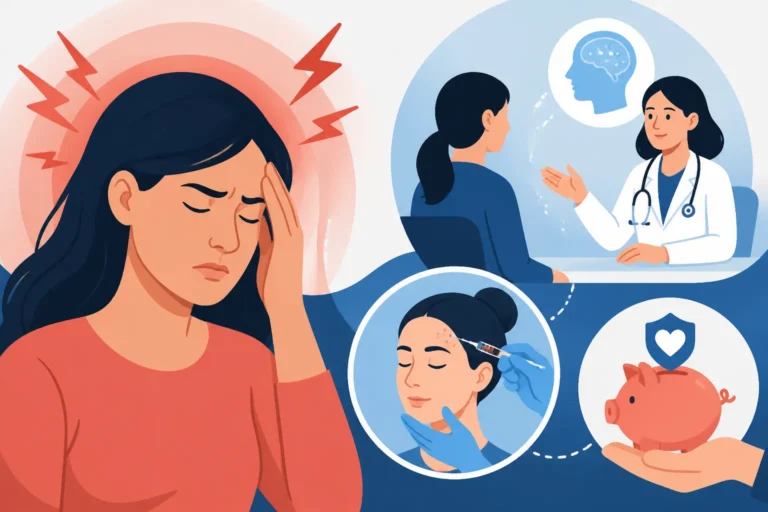
The public system generally excludes or only partially subsidizes adult dental care, physiotherapy, psychology, chiropractic work, and prescription medications. If you have perfect teeth and never get a sports injury, you might never notice these gaps. But for the average resident, these costs add up. This is where the concept of private supplemental insurance comes in. It’s not about skipping the queue for a heart transplant; it’s about making sure a root canal doesn't cost you an entire month’s rent.
Public vs. Private: Where the Yellow Card Ends
The Yellow Card is your ticket to the "free" side of the system, but it has boundaries. For example, if you need to see a specialist for a skin condition or a persistent cough, you usually need a referral from your GP to keep it free. Without that referral, or if you choose to go to a private clinic to avoid waiting times, you are on your own financially. While the public hospitals are top-tier, they are often stretched thin, leading to waitlists for non-life-threatening procedures.
This creates a two-tier experience. You have the public path, which is high quality but occasionally slow, and the private path, which is fast but expensive. Most Danes navigate this by using the public system for the "big stuff" (surgeries, cancer treatment, emergency care) and relying on supplemental insurance like Sygeforsikring "danmark" to soften the blow of the day-to-day maintenance of the human body.
The Specific Gaps in Public Coverage
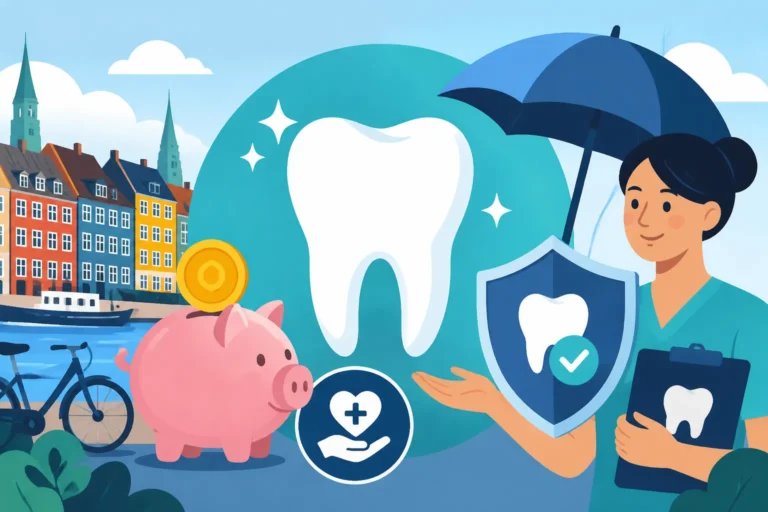
Dental care is the most glaring gap. Once you turn 22 (as of recent law updates), the state stops paying for your checkups. You can read more about the specifics of Dental Subsidies in Denmark: What the Yellow Card Actually Covers to see just how little the government contributes to your oral health. Beyond teeth, there is the "Medicine Threshold." You pay 100% of your prescription costs until you hit a certain yearly limit, at which point the state starts chipping in.
Physiotherapy is another area where the public system only pays a percentage, even with a doctor's referral. If you are recovering from an ACL tear or dealing with chronic back pain, those weekly sessions at 300-500 DKK a pop become a major line item in your budget. Sygeforsikring "danmark" was essentially built to fill these specific holes, operating as a non-profit, member-owned cooperative rather than a traditional for-profit insurance giant.
What Exactly is Sygeforsikring "danmark"?
If you ask a Dane if they have health insurance, they will likely say "Yes, I'm in 'danmark'." It is so ubiquitous that it’s often treated as an extension of the state, even though it is a private entity. It functions as a reimbursement club. You pay the full price at the dentist or pharmacy, and then "danmark" automatically deposits a portion of that cost back into your NemKonto. It is a unique Danish institution that has existed for decades, based on the principle of mutual aid.
Unlike international insurance providers like Cigna Global, which might manage your entire medical journey, "danmark" is a passive financial partner. They don't tell you which doctor to see or provide a network of hospitals. Instead, they provide a menu of subsidies. If you buy a pair of prescription glasses, they give you a fixed amount back. If you get a vaccine for a tropical vacation, they reimburse a percentage. It is predictable, transparent, and integrated into the digital infrastructure of the country.
The Group System: Groups 1, 2, and 5
Understanding the membership tiers is the first hurdle for any expat. You will be asked to choose between different groups, and the choice depends entirely on your current health and your predicted needs. What Does 'Group 1' vs 'Group 2' Health Insurance Mean? is a common question, and the answer lies in the "Specialist" access. Group 2 allows you to see specialists without a GP referral while still getting a subsidy, whereas Group 5—the most popular—focuses on basic subsidies for dental and medicine.
Group 1 is the middle ground, often chosen by people who know they will have significant dental work or frequent needs for things like podiatry. Group 5 is the "standard" choice for young, healthy expats who just want coverage for their twice-yearly dental cleanings and the occasional prescription. There is also a "Passive" membership, which I highly recommend if you are unsure. It costs very little per year and allows you to "bank" your eligibility so you can switch to an active group later without a new health screening.
Basic Coverage Levels and Reimbursements
The reimbursements are not meant to make healthcare free; they are meant to make it affordable. For a standard dental checkup, you might get 150-200 DKK back. For a more expensive procedure like a crown or a bridge, the subsidy can be several thousand kroner. This is why the timing of your membership matters. If you join today and need a crown tomorrow, you’ll be glad you have the coverage, but you must be aware of the "waiting periods" for certain expensive treatments.
One of the best features of "danmark" is how it handles prescriptions. Because it is linked to your CPR number, the pharmacy knows you are a member the moment they scan your card. The subsidy is often applied or recorded automatically. You can track all of this through their app or website. For many, the simple peace of mind knowing that How Medication Subsidies (Tilskud) Are Calculated at the Apotek will be supplemented by "danmark" is worth the quarterly membership fee alone.
The Financial Breakdown: Is it Worth the Premium?
To decide if it’s "worth it," you have to do some Danish math. The membership fee for Group 5 is roughly 400 DKK per quarter. That’s about 1,600 DKK per year. If you go to the dentist twice a year for a cleaning and an X-ray, you might receive 400-500 DKK back. If you buy one pair of glasses every two years, you get another several hundred kroner. If you take any regular medication, the savings continue to grow. For most people, the membership pays for itself if you have even a moderate amount of medical activity.
However, if you are 25, have teeth made of vibranium, and haven't seen a doctor in five years, you are technically losing money in the short term. But here is the "expat reality" catch: you aren't just paying for the current year; you are paying for your future self. In Denmark, you can only join "danmark" when you are healthy. Once you are diagnosed with a chronic condition or have a history of back issues, they may reject your application or exclude those conditions from coverage.
Dental Care: The Biggest Selling Point
For most of us, the dentist is the primary reason we sign up. When I finally went, the bill was staggering. If you look at How Much Does a Routine Dental Checkup Cost in Denmark?, you'll see that a simple visit can easily cross the 1,000 DKK mark once you add in cleaning and bitewing X-rays.
"danmark" members get a significant percentage of this back. For students or those on a tight budget, this reimbursement often means the difference between getting a filling and "waiting until it hurts." Because the dental subsidies are so consistent, "danmark" essentially functions as a pre-paid dental plan with the added benefit of medical coverage for other areas of your life.
Subsidies for Glasses, Contact Lenses, and Physiotherapy
If you wear glasses, "danmark" is a no-brainer. They offer a subsidy for frames and lenses every two years. In a country where designer frames can cost 4,000 DKK, getting 500-1,000 DKK back is a welcome relief. The same applies to contact lenses, though the subsidy structure is slightly different. It’s these "lifestyle" medical costs that the public system ignores but that "danmark" recognizes as essential.
Then there’s the physical side of life. Whether it’s a repetitive strain injury from office work or a football injury, Physiotherapy in Denmark: Getting GP Referrals and Managing Costs is a topic most expats will face eventually. "danmark" provides a subsidy for each session. If you need 10 sessions to fix a shoulder issue, the insurance can cover a substantial portion of the total cost, often making it cheaper than a single night out in Copenhagen.
| Expense Category | Typical Public Cost | "danmark" Reimbursement (Approx) |
|---|---|---|
| Dental Checkup | 500 – 800 DKK | 150 – 300 DKK |
| Prescription Meds | 100% (until threshold) | 25% – 50% of your share |
| Physiotherapy | 300 – 500 DKK | 50 – 150 DKK per session |
| New Glasses | 2,000 – 5,000 DKK | 400 – 1,000 DKK (every 2 years) |
| Travel Vaccines | 400 – 1,200 DKK | 50% reimbursement |
Who Should Join and When to Apply?
The golden rule of Sygeforsikring "danmark" is: Join while you are healthy. This is the part that trips up most foreigners. In many countries, you buy insurance because you are sick. In Denmark, "danmark" is a club for people who might get sick later. When you apply, you have to fill out a health declaration. If you already have a chronic illness, a history of mental health struggles, or recurring physical pain, they can—and often do—deny your application.
Some applicants wait until they needed a 15,000 DKK dental implant to try and join, only to be rejected because their dental records showed "pre-existing" issues. It feels harsh, but it's how they keep the premiums low for the millions of members. The best time to apply is the moment you get your CPR number and are still in a period of relatively good health.
The "Health Declaration" and Pre-existing Conditions
The health declaration is a series of questions about your medical history over the last several years. They will ask about hospitalizations, regular medications, and any ongoing treatments. It is vital to be honest. If you claim to be healthy but then try to get reimbursed for a condition that clearly predates your membership, they can cancel your policy and refuse future claims.
You might wonder, Does Sygeforsikring "danmark" Cover Pre-existing Conditions? The short answer is usually no. They may accept you as a member but "exempt" certain body parts or conditions. For example, if you have a chronic knee issue, they might say "We will cover everything except your knees." This is why getting in early—especially before you hit your 30s or 40s—is the smartest financial move you can make in Denmark.
The Passive Membership Strategy
If you are a student or a young professional and the 400 DKK per quarter feels like too much, look into "Passivt medlemskab." This costs only a few hundred kroner per year. It doesn't give you any subsidies right now, but it keeps your "foot in the door." As long as you are a passive member, you can switch to an active group (like Group 5) at any time without having to fill out a new health declaration.
This is the ultimate "safety net" for expats. You might be healthy now, but five years from now, you might develop a condition that would make it impossible to join "danmark." If you were a passive member that whole time, you just "activate" your membership, and you're covered. It’s a way of protecting your future eligibility against the unpredictability of health.
Comparing Sygeforsikring "danmark" with Global Alternatives
It is important to distinguish between "danmark" and international private medical insurance (IPMI) like Cigna Global or SafetyWing. "danmark" is a supplemental reimbursement scheme for the public system. It doesn't pay for you to have a private room in a luxury hospital or fly you home for surgery. It is designed for people who are fully integrated into the Danish system and just want help with the out-of-pocket costs.
If you are a high-earning executive or someone who wants the absolute fastest access to specialists and private hospitals, you might consider Cigna Global in addition to "danmark." Cigna provides that traditional "private healthcare" experience where you bypass the public system entirely for many things. For digital nomads or those in the "waiting period" before their CPR number arrives, companies like SafetyWing are essential, as "danmark" requires a CPR number to join.
SafetyWing for Digital Nomads and the 90-day Gap
When you first arrive in Denmark, there is often a gap of several weeks or even months before your CPR registration is finalized. During this time, you are in a healthcare limbo. You aren't fully covered by the Danish state (unless it's an emergency), and you can't join "danmark" yet. This is exactly when Buying Insubuy Expat Health Insurance for the 90-Day Waiting Period or a SafetyWing policy becomes a lifesaver.
SafetyWing is built for the transition. It covers you globally and can act as your primary insurance while you wait for the Danish bureaucracy to process your paperwork. Once you have your Yellow Card and your MitID, you can then transition to the local system and join "danmark." Think of SafetyWing as the bridge and "danmark" as the long-term pavement.
Cigna Global for Comprehensive Specialist Access
For some expats, the public system’s wait times for non-urgent specialists (like dermatologists or ENTs) are frustrating. If you want the ability to book a specialist appointment next week rather than next month, Cigna Global offers plans that include private clinic access in Denmark. This is a level of service that "danmark" doesn't provide.
While "danmark" helps you pay for the specialist, Cigna Global helps you find and see them immediately. If you have the budget, having both isn't uncommon among the international community. You use "danmark" for your dental and meds, and you use Cigna for "fast-track" medical needs and private hospital comfort.
Practical Tips for Navigating the System
Once you’re a member, using "danmark" is remarkably easy, but there are a few "pro-tips" that make it smoother. First, always make sure your dentist and pharmacy have your CPR number correctly. Most of them are set up to report your expenses to "danmark" automatically. A few days after your appointment, you’ll get a notification that a "refusion" (reimbursement) is on its way.
If you go to a physiotherapist or a chiropractor, you might need to upload a photo of your receipt through the "danmark" app. It’s a simple process that takes about 30 seconds. The money is usually in your bank account within a week. It’s this efficiency that makes the system feel less like insurance and more like a high-yield savings account for your health.
How the Reimbursement Process Works
The digital integration in Denmark is world-class. When you use your Yellow Card at a pharmacy, the system logs the transaction. If you are a member of "danmark," that data is shared (with your permission), and the calculation happens behind the scenes. You don't have to fill out complex claim forms for every little pill or checkup.
However, keep an eye on your "E-boks" or the "danmark" app. Occasionally, a provider might not have the automatic reporting set up. In those cases, you just take a clear photo of the invoice and submit it. It’s also worth noting that you can change your "Group" membership once a year. If you know you have a year of heavy dental work coming up, you can move from Group 5 to Group 1, then move back down once the work is done.
Managing Your Membership Digitally
The "Sygeforsikring 'danmark'" app is your best friend. It shows you exactly how much you’ve been reimbursed this year, what your current coverage level is, and even gives you a digital version of your membership card. It also lists the "subsidies" in great detail, which is helpful when you’re trying to decide if you can afford that new pair of glasses this month.
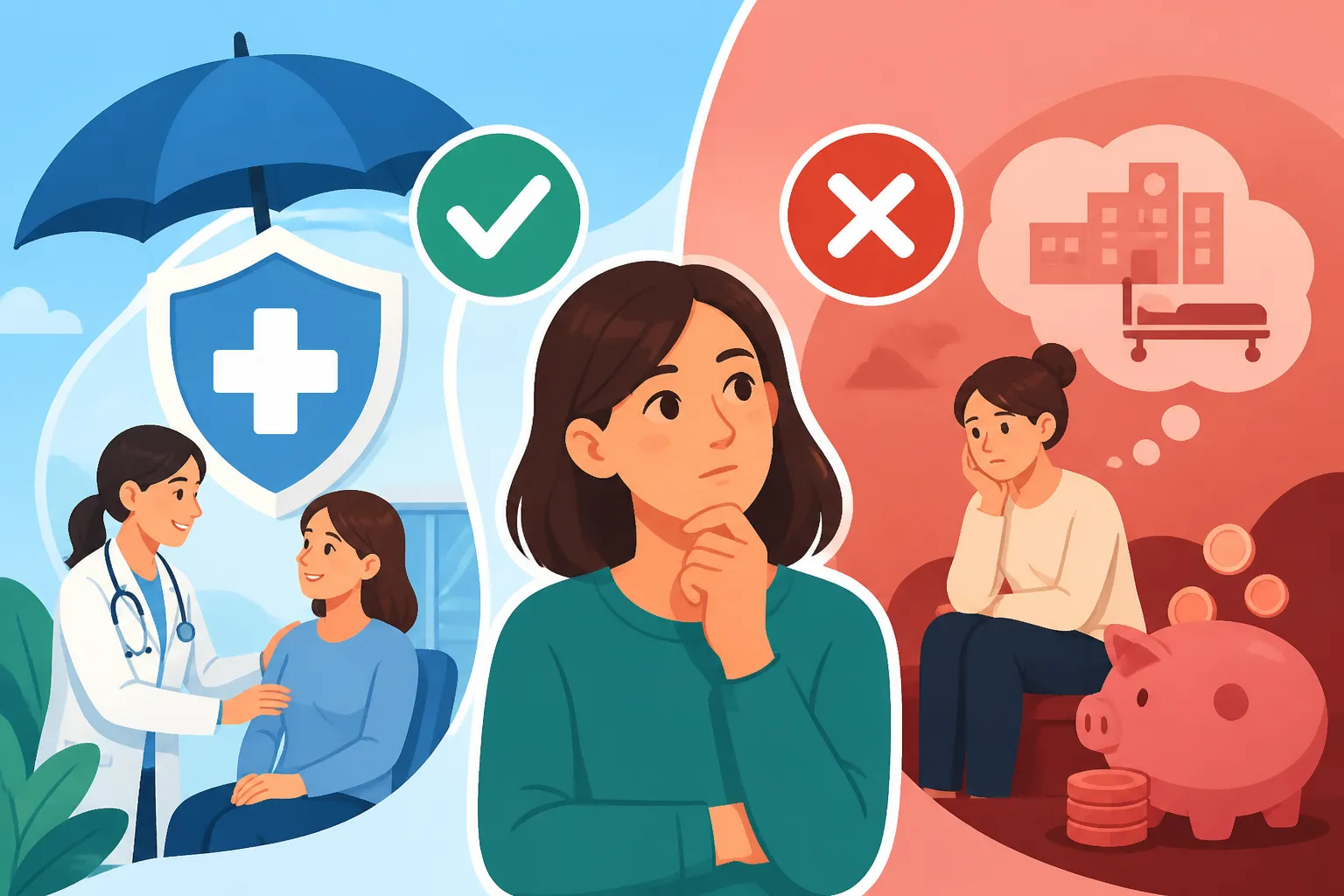
In the end, is Sygeforsikring "danmark" worth it? For 90% of expats, the answer is a resounding yes. It turns the unpredictable and high costs of Danish private care into a manageable, subsidized expense. It integrates perfectly with the Danish lifestyle and provides a level of financial predictability that the public system alone cannot offer. Don't wait until your tooth starts aching to think about it—by then, it might be too late to join the club.
Disclaimer
The information provided in this guide is for informational purposes only and does not constitute professional medical or financial advice. Healthcare laws, insurance premiums, and reimbursement rates in Denmark are subject to change. Always consult directly with Sygeforsikring "danmark" or a qualified insurance advisor before making decisions regarding your healthcare coverage. The author is an expat sharing personal experiences and research, not a licensed insurance broker.