Saving for Your Children: Børneopsparing Accounts Explained
Moving to Denmark with a family is a logistical whirlwind, but the financial future of your children shouldn't be left to chance. Between high taxes and the rising costs of housing, many expats worry about how to provide a nest egg for their children’s early adulthood. This guide explains the Børneopsparing account, a tax-advantaged savings vehicle that helps you build wealth for your kids legally and efficiently.
Understanding the Børneopsparing Concept
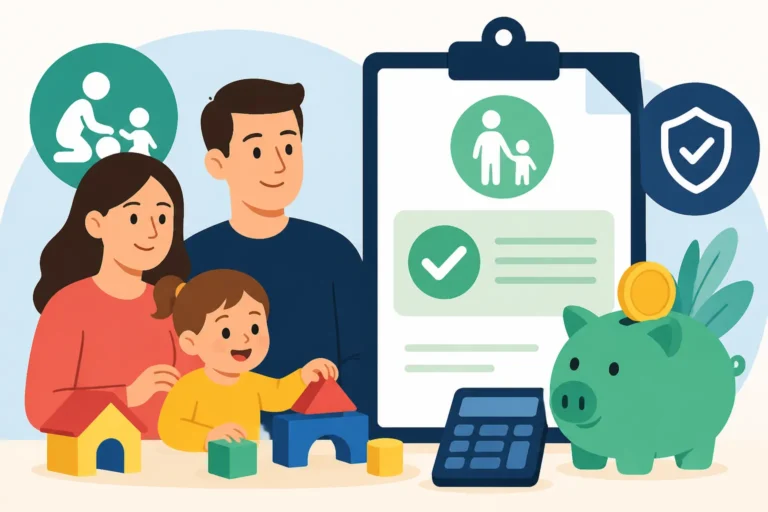
When I first arrived in Denmark, I was overwhelmed by the sheer number of specialized bank accounts available. However, the Børneopsparing stood out immediately as a "must-have." Unlike a standard savings account where you pay tax on the interest earned, this specific account is government-regulated to provide a completely tax-free environment for your child’s future capital. It is designed to give young adults a financial "kickstart" when they turn 18 or 21, helping them pay for a deposit on an apartment or university materials.
The beauty of the Børneopsparing lies in its simplicity and its protection. Because it is a regulated product, the terms are fairly consistent across the Money in Denmark: Banking, Payments, and Financial Setup for Expats landscape. Only one Børneopsparing account can be opened per child, ensuring that the tax benefits are distributed fairly. It is a long-term commitment; the money is typically locked until the child reaches at least 14 years of age, though most parents choose to keep it locked until 18 or 21 to maximize the compound interest.
As an expat, you might wonder if you are even eligible. The good news is that as long as the child has a CPR number and resides in Denmark, they are generally eligible for this account. If you are still in the process of Opening a Bank Account in Denmark: Document Checklist and Delays, you should prioritize getting your own accounts in order before approaching the bank to set up your child’s Børneopsparing.
Who Can Open and Contribute to the Account
In most cases, it is the parents or grandparents who open the account. However, Denmark is quite flexible here; great-grandparents or even foster parents can often initiate the process. The "owner" of the account is always the child, but the "guardian" (usually you) manages the investment strategy until the child reaches the age of maturity. This is a crucial distinction because it protects the funds from being used by the parents for household expenses.
When you decide to start contributing, you might find yourself needing to move money from a foreign account. Many parents use Wise to transfer funds from their home country into a Danish account specifically to top up a child’s Børneopsparing. Using Wise allows you to avoid the hefty exchange rate markups often charged by traditional Danish banks when receiving international transfers. Once the money is in your Danish account, you can easily set up an automatic monthly transfer.
It is also worth noting that the funds in this account do not affect your child's eligibility for the State Educational Grant (SU): How International Students Qualify later in life. The Danish system is designed to reward this type of responsible saving rather than penalizing it. This makes it a far superior choice compared to simply keeping cash in a drawer or a standard sub-account in your name.
The Lifecycle of the Account
A Børneopsparing must be opened before the end of the year in which the child turns 14. However, the earlier you start, the better. If you start when the child is a newborn, you have nearly two decades of tax-free growth. The account has a minimum "binding period" of seven years, meaning you can't just dip into it if you have a tight month. This forced discipline is actually a blessing for many expat families who are still adjusting to the Cost of Living in Denmark 2026: Budgets for Singles and Families.
You have the power to decide when the account matures. Most banks offer a choice between age 18 and 21. I personally recommend age 21. Let’s be honest: an 18-year-old might be tempted to spend a large windfall on a "gap year" trip, whereas a 21-year-old might be more focused on the costs of a master’s degree or a down payment on a home. You can extend the maturity date later, but you cannot shorten it once it is set without significant penalties and loss of tax benefits.
The Financial Rules and Yearly Limits
The Danish government is generous with the tax-free status, but they do set strict boundaries on how much you can contribute. As of 2026, the annual limit is 6,000 DKK. If you try to deposit 6,001 DKK, the bank’s system will simply reject the transfer. This limit is per child, not per parent. Over the lifetime of the account, the maximum total contribution is 72,000 DKK. While this might not seem like a fortune given the Taxes in Denmark Explained: A-Skat, AM-bidrag, and Marginal Rates, the real magic happens through the "tax-free" interest and investment returns.
Because the interest and capital gains within the account are not taxed, the effective yield is much higher than a regular investment account. In a standard account, you might lose 27% to 42% of your gains to SKAT. In a Børneopsparing, you keep 100%. This is particularly beneficial if you choose to invest the funds in stocks or investment "pools" rather than letting it sit as cash. Over 18 to 21 years, the difference between a taxed and a tax-free account can amount to tens of thousands of kroner.
If you are an American expat, you need to be particularly careful. The US IRS does not recognize the Danish tax-free status of these accounts. I highly recommend consulting with a specialist like Taxes for Expats to ensure you are reporting these accounts correctly on your FBAR and Form 8938. While the Danish government won't tax the growth, the US might, and Taxes for Expats can help you navigate the complex PFIC (Passive Foreign Investment Company) rules that often apply to Danish investment pools.
Managing the 6,000 DKK Annual Cap
Many parents choose to link the contributions to the Child and Youth Benefit (Børne- og ungeydelse): Does SKAT Pay Expats?, often called "børnepenge." Since this benefit is paid out quarterly, you can set up an automatic transfer of 1,500 DKK every three months to hit the 6,000 DKK annual cap perfectly. This "set it and forget it" approach ensures you never miss a year of tax-free growth.
If you miss a year, you cannot "catch up" the following year. The 6,000 DKK limit is a strict annual ceiling. This is why it is vital to have your NemKonto and MitID: The Core of Danish Digital Finance (2027) fully functional so you can monitor the account through your online banking portal. If you find yourself with extra cash at the end of the year, checking your Børneopsparing balance should be your first priority before the December 31st deadline.
For families with multiple children, the logistics can get tricky. Using a service like Wise to manage different currency "jars" can help you earmark specific funds for each child’s account if you are receiving support or inheritance from family members abroad. It keeps your bookkeeping clean and ensures that each child receives their fair share of the annual contribution limit without accidentally overfunding one and underfunding another.
Tax Advantages and the "Hidden" Benefit
The most obvious benefit is the exemption from capital gains tax. However, there is a secondary benefit that many expats overlook: the account does not count towards your own wealth for certain social benefit calculations. In Denmark, some municipal supports are means-tested. Because the Børneopsparing is legally owned by the child, the balance generally doesn't count as part of the parents' liquid assets.
Furthermore, the tax-free status applies to both interest on cash and returns on stocks. If you are comparing this to an Aktiesparekonto (Equity Savings Account): Lower Tax for Investments, remember that the Aktiesparekonto still carries a 17% tax rate. The Børneopsparing is one of the very few truly 0% tax environments in the entire Danish financial system. This makes it the most efficient way to save for a minor, bar none.
Investing the Funds: Cash vs. Stocks
In the past, Danish banks offered decent interest rates on cash Børneopsparing accounts. Those days are largely gone. If you leave the money as cash, inflation will likely eat away at its purchasing power over 20 years. Most Traditional Banks vs. Digital Banks (Lunar): Which is Best for Expats? now offer the option to invest the account balance into "Puljeinvest" (investment pools) or a self-directed share account.
Investing in a pool is the "easy mode." The bank manages a diversified portfolio of stocks and bonds based on your risk tolerance. While they charge a small management fee, it is often worth it for the peace of mind. If you are more financially savvy, you can opt for a "depot" where you choose individual stocks or ETFs. However, be aware that not all ETFs are "positive list" approved by SKAT, although inside a Børneopsparing, the tax-free nature usually simplifies this significantly.
For those using Taxes for Expats, keep detailed records of these investments. Even though the Danish side is tax-free, the specific types of mutual funds held within a Danish bank "pool" can trigger complex reporting requirements in other jurisdictions. Always ask your bank for a yearly summary of the underlying assets if you have tax liabilities outside of Denmark.
| Feature | Børneopsparing (Regulated) | Regular Savings Account | Aktiesparekonto (Child-owned) |
|---|---|---|---|
| Tax Rate | 0% (Tax-Free) | 27% – 42% (Capital Gains) | 17% (Flat Tax) |
| Annual Limit | 6,000 DKK | No Limit | ~110,000 DKK (Total) |
| Lifetime Limit | 72,000 DKK | No Limit | No Limit |
| Access | Locked until age 18-21 | Anytime | Anytime |
| Ownership | Child | Parent or Child | Child |
The Risk of Inflation
One of the biggest mistakes I see expats make is being "too safe" with their children’s money. Because the money is locked for 15+ years, you have the luxury of time to ride out market volatility. Putting the 72,000 DKK total contribution into a cash account might result in 85,000 DKK at maturity. Putting it into a broad stock market index could potentially result in 150,000 DKK or more.
When you discuss options with your bank advisor, ask about the "equity ratio" of their pools. For a child under 10, a high equity ratio (80-100%) is usually appropriate. As the child nears the maturity age of 18 or 21, you can ask the bank to shift the funds into a more conservative bond-heavy pool to protect the gains. This strategy is similar to how the Danish Pension System: Folkepension, ATP, and Employer Contributions manages lifecycle funds.
Transferring Funds for Investment
If you are a global family, you might have grandparents in the UK or US who want to contribute. Instead of having them send small monthly amounts—which would get eaten by bank fees—I suggest they use Wise to send a lump sum of 6,000 DKK once a year. You can then move this into the Børneopsparing in one go. Using Wise ensures that the maximum amount of the gift actually reaches the investment account rather than being lost to intermediary bank fees.
Remember that while grandparents can contribute, the total must still stay under the 6,000 DKK annual limit. It is your job as the parent to coordinate this. If Grandma sends 4,000 DKK and you accidentally contribute 3,000 DKK, you will have to deal with the bank’s administrative headache of reversing the over-payment.
The Expat Reality: What Happens if You Leave Denmark?
This is the question that keeps most of us up at night. What if you get a dream job in Singapore or decide to move back to your home country when the child is 10? The Børneopsparing is a Danish product, and its tax-free status is tied to the Danish tax code. If you and the child move out of Denmark (and thus stop being tax residents), the account generally remains open, but the tax-free status may be jeopardized depending on the tax treaty between Denmark and your new country.
In most cases, the account will continue to exist in the Danish bank. You can still contribute up to the limits, but you will no longer be "saving" in a way that is recognized by your new tax authority. Furthermore, if you are no longer a Danish resident, the bank might charge higher "non-resident" fees. It is essential to notify your bank before you move to understand their specific policy on maintaining a Børneopsparing for non-residents.
If you do leave, services like Wise become even more important for managing the remaining contributions. You will need a way to send DKK to the account without maintaining a full-service (and expensive) Danish checking account. Taxes for Expats can also be a lifesaver here, as they can advise on how to treat the "exit" from the Danish system and whether it's better to keep the account or close it and reinvest the funds elsewhere.
Closing the Account Early
Technically, you can close a Børneopsparing before it matures, but it is a "nuclear option." You will lose the tax-free status on all interest earned from day one, and the bank will likely charge a significant "break fee." This should only be done in cases of extreme financial hardship. If you are just moving countries, it is usually better to leave the money where it is and let it grow, even if you stop making new contributions.
Before making any drastic moves, check the Preliminary Tax Assessment (Forskudsopgørelse): Avoiding Tax Debt rules for your final year in Denmark. Closing a large Børneopsparing and suddenly having all that interest become taxable could lead to a nasty surprise in your final Danish tax settlement. Always consult with a professional if the account balance is substantial.
Summary of Best Practices
To make the most of this opportunity, start as early as possible. Even small monthly amounts add up. Use the "børnepenge" as your primary funding source, and always opt for stock-based investments if the child is young. Keep your Wise account ready for international gifts to the account, and ensure you stay within the 6,000 DKK annual limit.
The Børneopsparing is one of the most generous parts of the Danish social fabric for families. It rewards long-term thinking and provides a tangible benefit for children of expats who might otherwise struggle to build local wealth. By understanding the rules and using the right tools, you can ensure your child leaves the nest with a solid financial foundation.
Disclaimer
This guide is for informational purposes only and does not constitute professional financial or tax advice. Tax laws and bank regulations in Denmark are subject to change, and the specific terms of a Børneopsparing can vary between financial institutions. Always consult with a qualified financial advisor or tax professional regarding your specific situation, especially if you have tax obligations in multiple countries.