Where to Live in Denmark: Copenhagen, Aarhus, Odense, and Aalborg
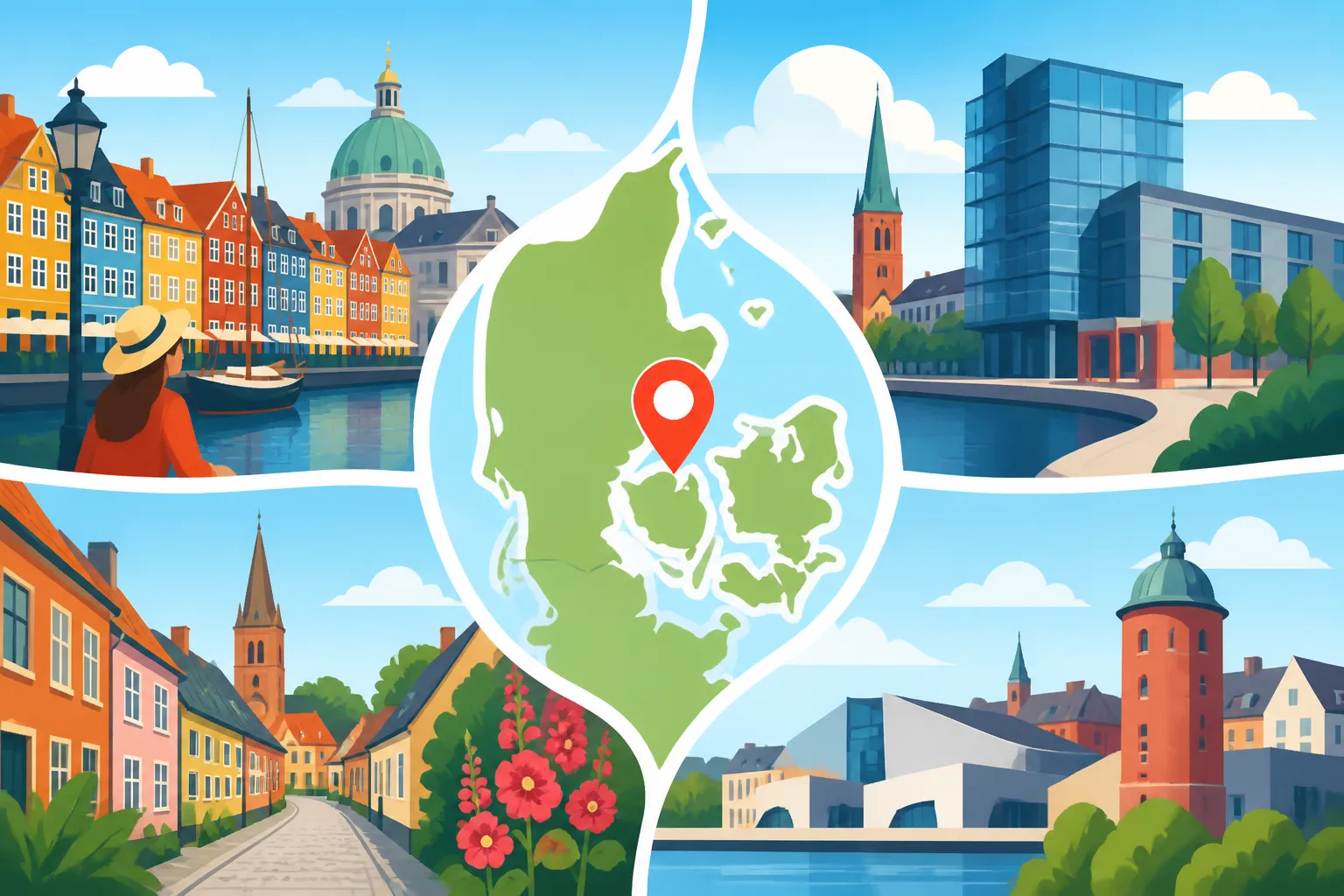
Moving to Denmark is a dream for many, but the reality of choosing where to settle often feels like an impossible puzzle. You are likely balancing the need for a high-paying job against the eye-watering rental prices of the capital, all while wondering if you will ever truly "fit in" outside of the major expat bubbles. This guide meticulously breaks down the four largest Danish cities to help you find your perfect home.
The Danish Housing Landscape: More Than Just Four Walls
If you have spent even ten minutes looking at rental listings, you already know that the market here is aggressive. Relocating within Denmark is often more demanding than newcomers expect. The demand for housing in major urban centers vastly outstrips the supply, leading to a culture where you often have to sign a lease within minutes of seeing an apartment—or even before you arrive in the country.
The Rental Market Crisis and Scams
The rental market in Denmark is governed by strict laws, yet it remains one of the most stressful hurdles for newcomers. In cities like Copenhagen and Aarhus, the competition is so fierce that many foreigners feel forced into "temporary" solutions that end up being expensive and unstable. Many newcomers have fallen for "too good to be true" listings on social media, only to lose thousands of kroner to scammers.
This is why many veterans now recommend using verified platforms like Spotahome to secure a place before they even land. Having a confirmed roof over your head takes the desperation out of the equation, allowing you to avoid the heartbreak of BoligPortal vs. Facebook: How to Spot Rental Scams in Denmark while you focus on your new job or studies. It gives you a legitimate contract, which is the golden ticket to your administrative life in Denmark.
Understanding the Danish Neighborhood Vibe
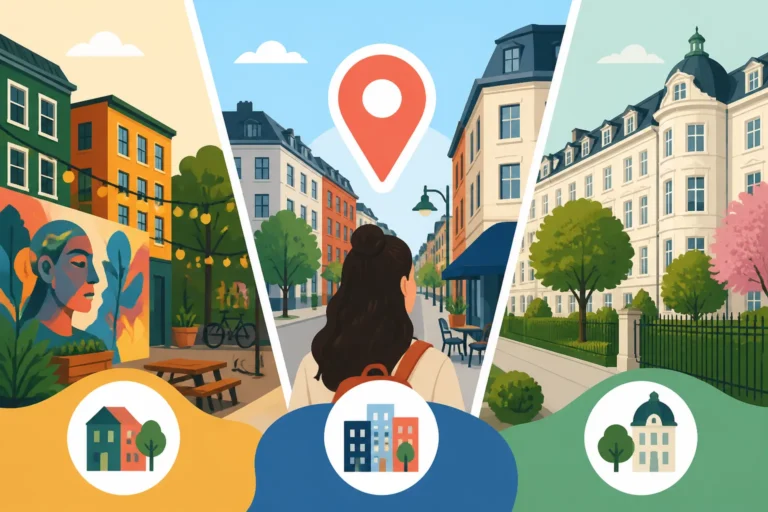
Danish cities are not just collections of buildings; they are clusters of very distinct "quarters" or neighborhoods, each with its own social rules. The concept of "Hygge" is built into the urban planning, with plenty of green spaces, bike lanes, and communal areas. However, the vibe changes significantly as you move from the sleek, modern waterfronts to the cobbled, historic centers.
When deciding where to live, you have to look past the aesthetics. You need to consider how a neighborhood functions on a rainy Tuesday in November. Is there a local Netto nearby? How far is the nearest S-train or light rail station? Understanding these micro-climates is essential for long-term happiness. You aren't just renting an apartment; you are choosing which community will help you survive the long Nordic winters.
Copenhagen: The Cosmopolitan Heart
Copenhagen is the obvious choice for most expats, and for good reason. It is the economic engine of the country, the seat of the government, and the most internationally connected city. However, it is also the most expensive and crowded. Living here means embracing a fast-paced (by Danish standards) lifestyle where your bicycle is your most prized possession and your rent will likely take a massive bite out of your salary.
Central Neighborhoods: Vesterbro, Nørrebro, and Østerbro
Copenhagen’s "bro" districts are where the soul of the city lies. Vesterbro, once a gritty meatpacking district, is now the height of cool, filled with trendy cafes and young families. Nørrebro is the most diverse neighborhood in the country, a melting pot of cultures, incredible street food, and a vibrant student life. Østerbro, on the other hand, is the more polished, "grown-up" sibling, offering wide boulevards and proximity to the famous Fælledparken.
Choosing between these three often comes down to your personal stage of life. If you want to be in the middle of the action and don't mind a bit of noise, Nørrebro is unbeatable. If you want a quieter, more family-oriented atmosphere with better parking options, Østerbro is the place. For a deep dive into these specifics, check out our Neighborhood Guide: Nørrebro vs. Vesterbro vs. Østerbro. Regardless of where you land, ensure you have a reliable data connection to navigate these winding streets; it is a good idea to grab a digital SIM from Airalo the moment you land so you can use Google Maps without hunting for public Wi-Fi.
Amager and the New Developments
If the historic charm of the center feels too cramped, many expats are looking toward Amager and the new developments in Ørestad or Nordhavn. These areas offer modern apartments with floor-to-ceiling windows, underfloor heating, and elevators—luxuries often missing in the 19th-century buildings of the inner city. Amager is also home to "the island" vibe, with the beach at Amager Strandpark just a short metro ride away.
The downside to these new areas can be a lack of "soul." Ørestad, for example, is architecturally stunning but can feel a bit windy and sterile compared to the cozy streets of the center. However, the connectivity is incredible. You can be at the airport in six minutes or the city center in ten. If you are relocating with a high-paying tech job, Spotahome often has great listings in these modern hubs that cater specifically to international professionals who need a turn-key solution.
Aarhus: The City of Smiles and Academic Excellence
Aarhus is often called the "world's smallest big city." It offers almost everything Copenhagen does—top-tier restaurants, a thriving cultural scene, and major international companies—but at a slightly more manageable scale. It is a city defined by its university, which brings a youthful, energetic vibe to the historic streets.
The Latin Quarter and Central Life
The Latin Quarter (Latinerkvarteret) is the oldest part of Aarhus and arguably its most charming. With its narrow cobblestone streets and colorful houses, it feels like a postcard come to life. Living here puts you within walking distance of the Aarhus Cathedral, the bustling harbor, and the endless stream of boutique shops and cafes. It is the heart of the city’s social life, but apartments here are rare and often quite small.
For those working at the University or the large hospital, the central area is highly desirable but competitive. You will find that Living in Aarhus: Is It Cheaper Than Copenhagen for Students? is a common question, and the answer is usually yes—but only slightly. The "academic" nature of the city means that small studio apartments are in high demand year-round. Having an Airalo eSIM active helps when you are out exploring these neighborhoods, as you can instantly check local transport apps or look up the history of the buildings you are passing.
The Waterfront and Aarhus Ø
Aarhus Ø is the city's newest district, built on reclaimed land in the harbor. It is an architectural playground, featuring the famous "Iceberg" (Isbjerget) building. This area is perfect for those who want to live by the sea and enjoy modern amenities. It’s a bit of a trek from the old center on foot, but the city’s expanding light rail and excellent bike paths make it very accessible.
The vibe in Aarhus Ø is distinctively upscale and quiet. It attracts a mix of wealthy retirees and successful young professionals. While it lacks the "old-world" Danish charm, it offers a sense of space and light that is hard to find elsewhere in the city. If you’re looking for a fresh start in a place that feels like the future of Denmark, this is it. Many expats find that booking a place in Aarhus Ø via Spotahome is a smoother experience because the buildings are newer and the rental processes are often more standardized than in the older, private-landlord-dominated Latin Quarter.
Odense: The Fairy Tale City and Tech Hub
Located on the island of Funen, Odense is the birthplace of Hans Christian Andersen. For a long time, it was seen as a sleepy provincial town, but in the last decade, it has transformed into a global hub for robotics and drone technology. It offers a much lower cost of living than Copenhagen or Aarhus while maintaining a very high quality of life.
Fairy Tale Roots and the Vestergade Charm
The center of Odense has undergone a massive transformation recently, with the removal of a major four-lane highway to make room for a new, green urban district centered around the Hans Christian Andersen Museum. The cobbled streets of the old town are incredibly cozy, and the city feels much more "relaxed" than its larger counterparts.
For families, Odense is a dream. The city is incredibly bike-friendly, and the parks are expansive. You can find beautiful, older houses with small gardens within a ten-minute bike ride of the city center, something that is nearly impossible in Copenhagen. When you move here, your Utilities Setup: Electricity, Water, Heating, and Internet will likely be your first big task, as Funen has its own regional providers and district heating systems that are remarkably efficient.
The Robotics Boom and Modern Developments
The southern part of the city, near the University of Southern Denmark (SDU) and the Forskerparken (Science Park), is the engine of the "Robotics Valley." This has brought a surge of international talent to the city, making Odense much more multicultural than it was twenty years ago. New apartment complexes are popping up to house this influx of engineers and researchers.
Living in the southern districts means you are close to work and the highway that connects you to the rest of Denmark. Odense is perfectly situated—just 75 minutes from Copenhagen and 90 minutes from Aarhus by train. This "middle of the map" location is a huge draw for expats who need to travel for work. To keep your travel costs down, make sure you understand the Public Transport in Denmark: Rejsekort, Trains, and Commuting system early on.
Aalborg: The Industrial Giant Turned Cultural Gem
Aalborg, located in North Jutland, is a city that has successfully reinvented itself. Once known mainly for its heavy industry and cement factories, it is now a vibrant cultural city with a stunning waterfront and a world-class university. It is the most affordable of the "Big Four" cities and offers a gateway to the wilder, more rugged nature of Northern Denmark.
Waterfront Living and the Limfjord
The transformation of the Aalborg waterfront is one of Denmark's great urban success stories. What used to be a wall of factories is now a stretch of parks, harbor baths, and iconic buildings like the Utzon Center (designed by the architect of the Sydney Opera House). Living along the Limfjord offers beautiful views and a constant connection to the water.
Aalborg's center is compact and lively, especially around the infamous Jomfru Ane Gade—a street dedicated entirely to bars and nightlife. However, just a few blocks away, you find quiet, residential streets with a very local feel. The cost of living here is a significant advantage; you can often rent a three-bedroom apartment in Aalborg for the price of a small studio in Copenhagen. This allows for a much more comfortable lifestyle, especially when you are navigating Supermarkets in Denmark: Netto, Rema 1000, and Føtex Compared on a budget.
Vestbyen and the Growing Expat Community
Vestbyen is the "cool" neighborhood of Aalborg, attracting artists, students, and young professionals. It has a bit of a bohemian vibe and is home to the city’s football stadium and several large parks. The sense of community here is strong, and it is often easier to meet people in Aalborg than in the more hectic capital.
Because Aalborg is further north, the winters can feel a bit more intense, but the locals are famously hardy and friendly. The city is large enough to have everything you need—including an international airport—but small enough that you will start recognizing people at your local grocery store within weeks. If you are moving here, I highly recommend using Airalo for your initial weeks. While Aalborg has good infrastructure, you’ll want that data connection to find your way through the North Jutland landscape if you decide to take a weekend trip to the coast.
Practical Logistics: Comparing Costs and Amenities
Choosing a city is only half the battle; the other half is making the math work. Denmark is an expensive country, and your "take-home" pay after the high taxes can be a shock if you haven't budgeted correctly.
| City | Average Rent (80sqm) | Primary Industries | Vibe |
|---|---|---|---|
| Copenhagen | 14,000 – 18,000 DKK | Finance, Pharma, Tech | International, Fast-paced, Expensive |
| Aarhus | 10,000 – 13,000 DKK | Education, Retail, Tech | Youthful, Cultural, Energetic |
| Odense | 7,500 – 10,500 DKK | Robotics, Healthcare, IT | Cozy, Family-friendly, Green |
| Aalborg | 6,500 – 9,500 DKK | Energy, Education, Logisitics | Relaxed, Affordable, Industrial-Chic |
Budgeting for Rent and Utilities
When you look at a rental price in Denmark, remember that it almost never includes utilities. You will see the term "Aconto," which is a monthly prepayment for heat and water. At the end of the year, your actual usage is calculated, and you either get money back or (more likely) have to pay more. In the current energy climate, this is a significant part of your Cost of Living in Denmark 2026: Budgets for Singles and Families.
Additionally, most landlords require a massive upfront payment: usually three months' rent as a deposit plus three months' prepaid rent. This means you could need upwards of 60,000 DKK just to get the keys to a Copenhagen apartment. This is where services like Spotahome can be a lifesaver, as they help clarify these costs upfront and provide a layer of security for your deposit.
The Vital Importance of CPR and Registration
No matter which city you choose, you cannot function in Denmark without a CPR number. This is your social security number, and it is tied to your physical address. This is the ultimate "Catch-22" for many expats: you need a CPR to get a bank account and a phone contract, but you need a permanent address to get a CPR.
If you are staying in a hotel or a "no-CPR" sublet, you are essentially invisible to the Danish system. This is why finding a legitimate rental that allows for CPR registration is the single most important part of your move. You can read more about this in The CPR Registration Rule: Why Your Address Matters and The Catch-22: Getting a CPR Number Without a Permanent Address. Never, under any circumstances, pay for a room where the landlord says you "cannot register your address." It is usually illegal and will stop your life in Denmark before it starts.
Making the Decision: Which City Fits Your Career and Lifestyle?
Ultimately, the best place to live in Denmark is the one that aligns with your professional goals and your personal temperament. Denmark is a small country, but the difference between living in a 5th-floor walk-up in Nørrebro and a modern house in Odense is vast.
Industry Hubs and Job Markets
If you are in the pharmaceutical industry or high finance, Copenhagen is almost mandatory. Novo Nordisk and the major banks are centered here. However, if you are a software engineer specializing in robotics, you might find a much better career path—and a much higher standard of living—in Odense. Aarhus is the king of retail (home to Salling Group) and has a very strong renewable energy sector (Vestas is nearby).
Before you commit to a city, research where the "hubs" for your specific skill set are located. Commuting between cities is possible, but it is expensive and can be draining during the dark winter months. If you do choose to live in one city and work in another, make sure you are familiar with the Public Transport in Denmark: Rejsekort, Trains, and Commuting options to maximize your efficiency.
Family Life and Integration
For those moving with children, the choice often shifts toward the smaller cities. The "Folkeskole" (public school) system is excellent throughout the country, but the ease of finding childcare and the proximity to green spaces is significantly better in Odense and Aalborg. Copenhagen is great for teenagers who want independence, but for toddlers, the smaller cities offer a much "slower" and safer feel.
Integration is also a factor. In Copenhagen, it is very easy to live in an "expat bubble" and never learn a word of Danish. In Aalborg or Odense, you will likely be pushed to use the language more often, which can be challenging at first but leads to a much deeper sense of belonging in the long run. No matter where you are, having an Airalo eSIM means you can always use translation apps on the fly when you're trying to figure out the garbage sorting rules or reading signs at the local library.
Disclaimer
The information provided in this guide is for informational purposes only and reflects the personal experiences and research of the author as of 2026. Rental prices, laws, and market conditions in Denmark are subject to change. Always verify official requirements with the Danish Immigration Service (SIRI) or your local municipality (Kommune) before making financial or legal commitments. Internal links are provided for further reading and do not constitute professional legal or financial advice.