Calculating the Real Cost of Owning a Car in Denmark (Taxes & Fees)
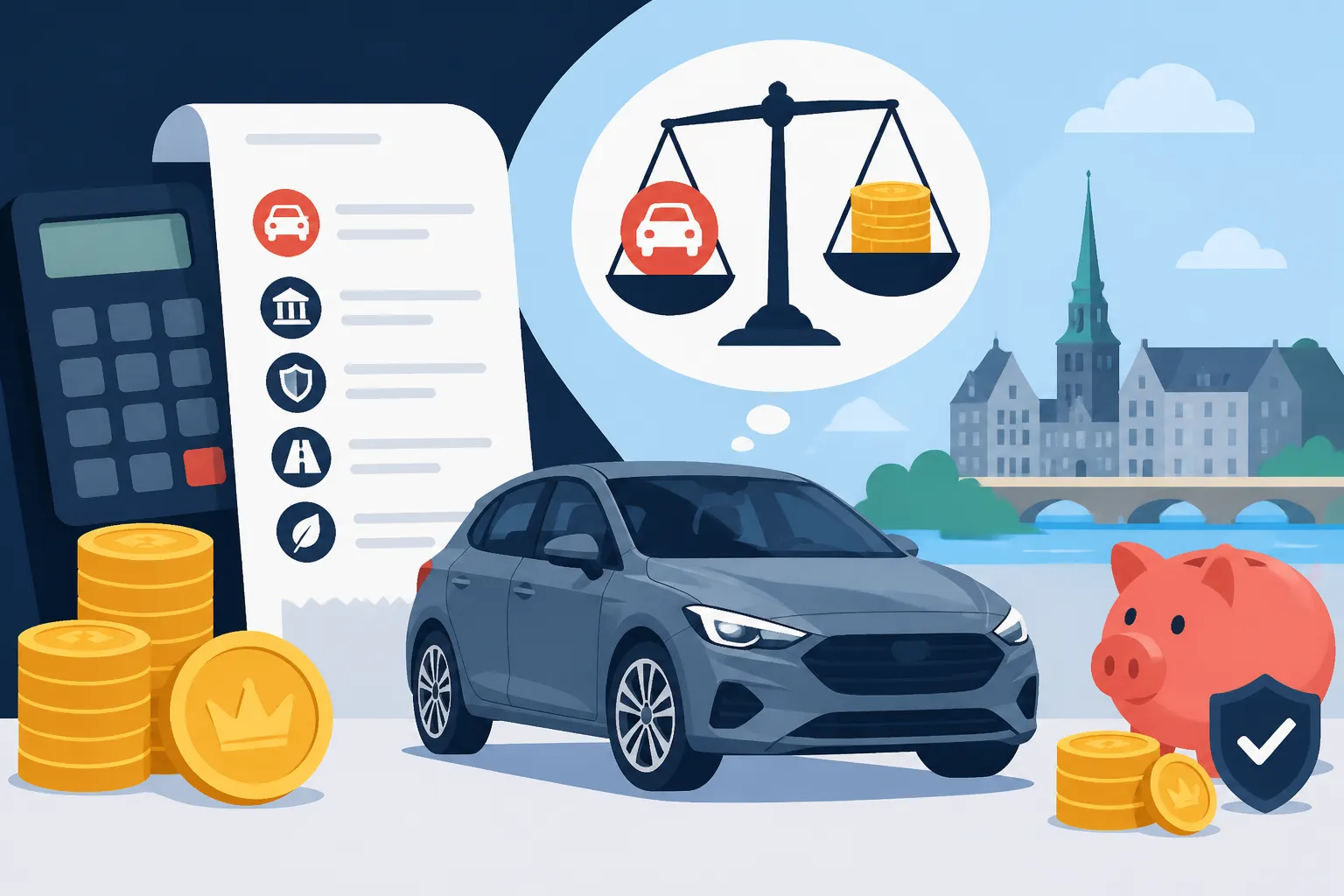
Moving to Denmark is often a dream of cycling through cobblestone streets, but the moment you need a vehicle for work or family, that dream meets the harsh reality of Danish taxation. You might have seen a car priced at 200,000 DKK and thought it was reasonable, only to find the registration tax nearly doubles that figure. This guide meticulously breaks down the massive taxes, hidden recurring fees, and maintenance costs to help you calculate if owning a car in Denmark is actually feasible for your budget.
The Elephant in the Room: The Danish Vehicle Registration Tax
The single biggest shock for any expat looking at the Danish car market is the Registreringsafgift. Historically, this tax could be as high as 180% of the car's value, though recent reforms have adjusted the brackets. Currently, the tax is calculated based on a tiered system where the first 67,800 DKK of the car's price is taxed at 25%, the value between 67,800 and 210,600 DKK is taxed at 85%, and anything above that is taxed at a staggering 150%. This is why a mid-range SUV that costs a reasonable amount in Germany or the US becomes a luxury investment in Denmark.
When you are browsing sites like Bilbasen, you will see two prices: "Ex. afgift" and the final price. Always look for the final price. If you are importing a car from your home country, be prepared for the Danish Tax Agency (Motorstyrelsen) to assess the "current market value" of your car in Denmark and charge you the tax based on that. This often makes importing an older petrol car financially ruinous. If you are handling large sums of money for a car purchase or import, using a service like Wise can help you manage currency exchange fees, but it won't help you dodge the taxman. You should also consult with specialized firms like Taxes for Expats if you are trying to understand how these massive vehicle expenditures interact with your global tax liability.
There are deductions available for safety equipment and high fuel efficiency, particularly for electric vehicles (EVs). In fact, EVs currently enjoy a significant discount on the registration tax, which is part of Denmark's aggressive green transition. However, these "rabatter" (discounts) are being phased out annually. If you plan on Buying and Registering a Car: The 150% Vehicle Registration Tax, doing it sooner rather than later might save you thousands in taxes as the phase-in for EV registration tax continues toward 2030.
Recurring Ownership Costs: Green Taxes and Periodic Fees
Once you have survived the initial purchase price, the costs do not stop. Every car owner in Denmark is subject to a periodic ownership tax, generally referred to as Grøn ejerafgift (Green Tax) or CO2-afgift. For older cars, this was based on fuel consumption (kilometers per liter), but for newer cars registered after July 2021, it is based strictly on CO2 emissions. This tax is billed every six months, and if you drive a heavy diesel vehicle with poor fuel economy, you could easily be looking at 5,000 to 10,000 DKK per year just for the right to keep the car in your driveway.
Furthermore, there is an "Equalization Tax" (Udligningsafgift) specifically for diesel cars. This is intended to make up for the fact that diesel is taxed less at the pump than petrol. This can add several thousand kroner to your annual bill. When you are looking at your Money in Denmark: Banking, Payments, and Financial Setup for Expats, make sure you have a dedicated "car fund" to handle these semi-annual invoices. Many expats find it easiest to set these up via Betalingsservice: Automating Your Rent and Utility Bill Payments so they don't accidentally miss a deadline and face hefty late fees from the state.
Electric vehicles are currently the winners in this category, often paying the minimum rate of roughly 390 DKK per half-year. However, you must factor in the cost of charging. While electricity can be cheaper than petrol, the high "tax on top of tax" nature of Danish utility bills means that unless you have a subscription with a provider like Clever or Spirii, your "fuel" costs might still be higher than you expect. If you are managing your budget through a digital platform like Wise, keep a close eye on your monthly energy outgoings to ensure your subscription is actually saving you money compared to ad-hoc charging.
Insurance and Roadside Assistance: Protecting Your Investment
In Denmark, liability insurance (Ansvarsforsikring) is mandatory by law. You cannot even get your license plates (which are actually owned by the state, not you) without proving you have this coverage. This covers any damage you do to other people or their property. However, most expats—especially those with cars worth more than 50,000 DKK—will also want Kaskoforsikring (comprehensive insurance). This covers damage to your own car in the event of an accident, theft, or vandalism.
The cost of insurance in Denmark is heavily dependent on your "elite driver" status. In many countries, you build up a "no-claims bonus." While some Danish insurers will accept a letter from your previous foreign insurer, many will start you at the bottom of the ladder, leading to premiums as high as 12,000 to 15,000 DKK per year for a new expat. It is often worth shopping around or using a broker. If you are still in the process of Driving in Denmark: Exchanging Your Foreign Driver’s License, be aware that some insurers won't even give you a quote until you have your Danish plastic card in hand.
In addition to insurance, many Danes pay for Vejhjælp (roadside assistance) through companies like Falck or SOS Dansk Autohjælp. Since labor costs in Denmark are incredibly high, a simple tow to a mechanic without a subscription can cost you 2,000 DKK or more. Including this in your insurance package usually adds about 400 to 800 DKK to your annual premium, but it provides essential peace of mind when driving through the dark, windy Jutland countryside in mid-January. If you're a US citizen living here, Taxes for Expats can help you understand if any of these local insurance costs or business-related driving expenses can be leveraged against your US tax filings.
Maintenance, the "Syn," and Hidden Running Costs
Maintenance in Denmark is where many budgets go to die. The hourly rate for a mechanic at a certified dealership often exceeds 1,200 DKK plus VAT (Moms). A standard oil change and "small service" can easily set you back 3,000 DKK. Then there is the Syn—the mandatory roadworthiness inspection. For a standard passenger car, this occurs every two years once the car is four years old. You will receive an invitation in your Digital Nomad and Short-Term Stays: Schengen Visas and Limitations mail (E-boks or Mit.dk). The inspection itself is cheap (around 500 DKK), but the list of repairs required to pass can be extensive and expensive.
You also need to account for the "winter/summer tire" ritual. It is highly recommended (though not technically mandatory) to swap between winter and summer tires to handle the icy conditions and the salt used on Danish roads. If you don't have a garage, you will have to pay for a "tire hotel" (Dækhotel), which costs about 1,000 to 1,500 DKK per season for storage and the swap. Salt is the enemy of cars in Denmark; it eats through undercarriages, so frequent under-washes in the winter are a must.
Finally, consider the cost of Parking Permits in Major Cities. If you live in Copenhagen or Aarhus, a residential parking permit can cost anywhere from a few hundred to several thousand kroner a year depending on your car's fuel efficiency. If you are using Wise to pay for daily parking via apps like EasyPark or ParkMan, be aware that these apps often charge a 15% service fee on top of the actual parking rate. For those working in the city, you might be better off looking into the Commuter Allowance (Kørselsfradrag): Claiming Tax Benefits for Traveling to Work to see if the state will subsidize your high transport costs through a tax deduction.
| Cost Category | Annual Estimated Cost (Small Petrol Car) | Annual Estimated Cost (Electric Vehicle) |
|---|---|---|
| Registration Tax | Amortized over 5-7 years | Significantly lower due to subsidies |
| Green Tax | 1,500 – 4,500 DKK | 780 DKK |
| Insurance (Kasko) | 6,000 – 12,000 DKK | 7,000 – 14,000 DKK (EVs are heavier) |
| Maintenance & Syn | 4,000 DKK | 2,500 DKK (Fewer moving parts) |
| Tire Swaps & Storage | 2,500 DKK | 2,500 DKK |
| Fuel / Charging | 12,000 – 18,000 DKK | 6,000 – 10,000 DKK |
| Total Est. Annual | 26,000 – 41,000 DKK | 18,780 – 29,780 DKK |
Navigating the Emotional and Financial Choice
Choosing to own a car in Denmark is rarely a purely financial decision; it is about quality of life and accessibility. While the public transport system is excellent, as explored in our guide on Public Transport in Denmark: Rejsekort, Trains, and Commuting, it doesn't always reach the remote beaches of North Zealand or the hidden forests of Funen. However, you must be realistic. If you are struggling with the Cost of Living in Denmark 2026: Budgets for Singles and Families, a car is the first thing that will drain your savings.
Many expats opt for car-sharing services like GreenMobility or ShareNow for city driving, or they lease. Leasing is becoming increasingly popular in Denmark because it bundles the registration tax and maintenance into a flat monthly fee, removing the risk of a surprise 15,000 DKK repair bill. If you decide to buy, make sure your Preliminary Tax Assessment (Forskudsopgørelse): Avoiding Tax Debt is updated to reflect any commuter deductions you'll be claiming. Using tools like Wise to manage your international transfers and consulting with Taxes for Expats ensures that your move to Denmark doesn't result in a financial headache across two different tax systems.
Before you sign a sales contract, always ask for the "Servicebog" (service history) and check for any outstanding debt on the car via the Tinglysning portal. In Denmark, debt follows the car, not the owner. If you buy a car with an unpaid loan, you become responsible for that loan. Being a car owner here requires a level of diligence that goes far beyond just checking the oil. But for many of us, the freedom to drive across the Great Belt Bridge at sunset makes every taxed krone worth it.
Disclaimer
This guide is for informational purposes only and does not constitute financial, legal, or tax advice. Tax rates, registration fees, and environmental regulations in Denmark are subject to frequent legislative changes. Always consult with the Danish Tax Agency (Skattestyrelsen) or a certified professional accountant regarding your specific financial situation.