Eating Out in Denmark: Why Restaurant Taxes Make Dining Expensive
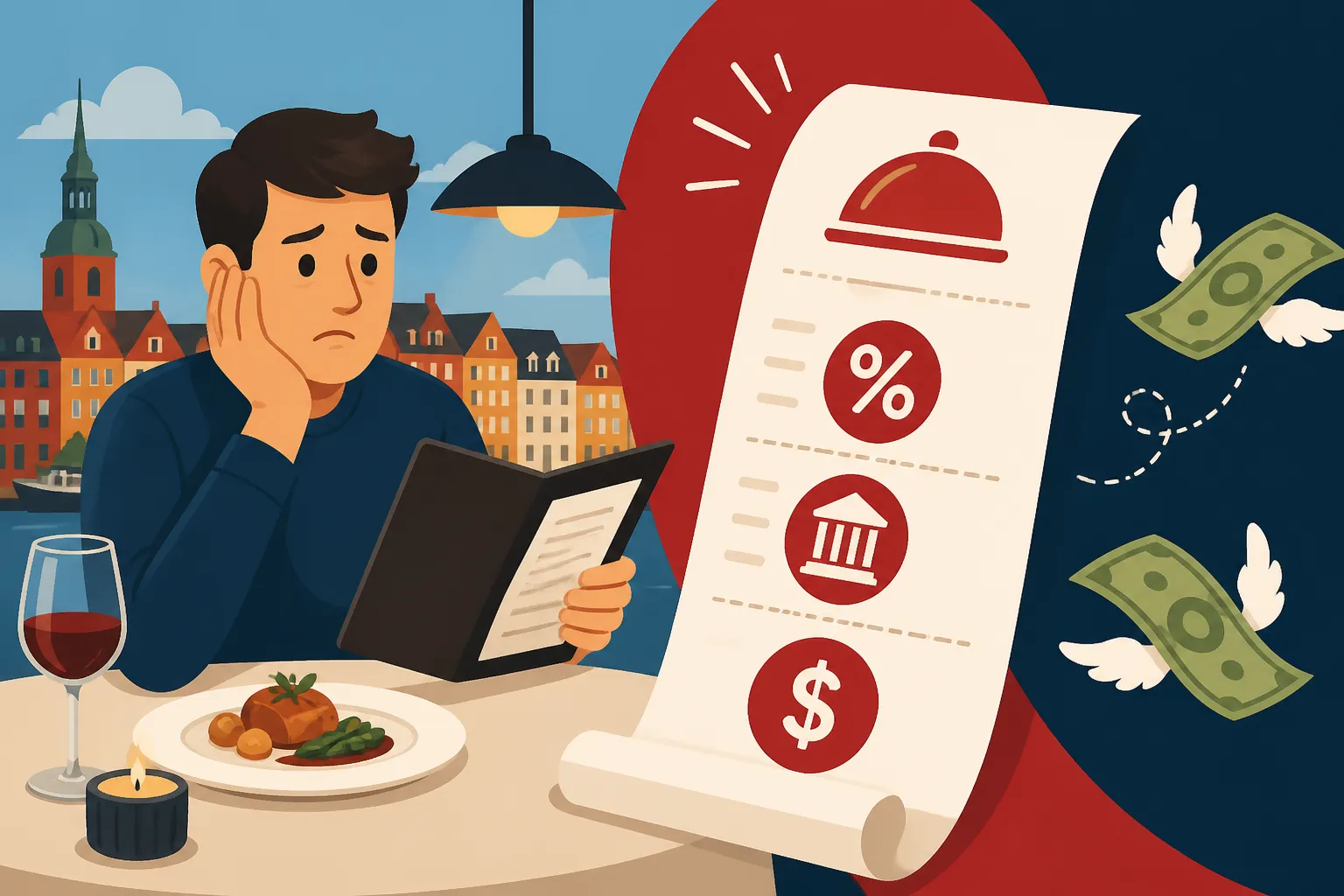
Many newcomers to Denmark experience a distinct "receipt shock" the first time they sit down for a casual dinner in Copenhagen or Aarhus. A simple burger and a beer can easily set you back 250 DKK, leaving many to wonder where all that money is actually going. This guide dives into the complex web of VAT, high labor costs, and operational taxes that make dining out in Denmark a premium experience.
The 25 Percent Elephant in the Room: Understanding Danish VAT
The most immediate reason for high prices on any Danish menu is the Value Added Tax, known locally as Moms. In Denmark, the VAT rate is a flat 25% on almost all goods and services, including restaurant meals. Unlike some other European countries that offer a reduced VAT rate for "essential" services or food items, Denmark applies the full 25% across the board. When you see a steak priced at 300 DKK, you have to realize that 60 DKK of that is going straight to the Danish Tax Agency (Skattestyrelsen) before the restaurant even covers the cost of the meat.
This high tax rate is part of the broader Taxes in Denmark Explained: A-Skat, AM-bidrag, and Marginal Rates framework that funds the country’s extensive social safety net. For the diner, this means that every single bite is heavily taxed. From the perspective of a veteran expat, you eventually stop doing the mental math of "what this would cost back home" because the 25% is simply an inescapable part of the landscape. It is also important to note that, by law, Danish prices must include VAT. The price you see on the menu is exactly what you will pay at the end, which is a small comfort compared to systems where tax is added only at the payment stage.
For those who are meticulously tracking their expenses, understanding how these taxes interact with your personal finances is key. If you are managing complex international tax obligations, services like Taxes for Expats can be helpful in navigating how your spending and living costs in a high-tax jurisdiction like Denmark impact your overall financial picture. While you can't deduct your dinner as a tax expense, understanding the "Moms" system helps you appreciate the Cost of Living in Denmark 2026: Budgets for Singles and Families and why dining out is often reserved for special occasions rather than a daily habit.
High Labor Costs and the Dignity of Service
Beyond the 25% VAT, the largest driver of restaurant prices in Denmark is the cost of labor. Denmark does not have a government-mandated minimum wage in the way many other countries do. Instead, wages are determined by Minimum Wage in Denmark: Collective Agreements (Overenskomst) Explained between labor unions and employer associations. For the restaurant industry, this means that even the person washing the dishes or the junior server is earning a "living wage" that allows them to participate in Danish society without relying on tips.
When you pay for a meal, you are also paying for the social security of the staff. Employers must contribute to various schemes, and the high hourly rates reflect the high Danish Work Culture: Flat Hierarchies, Hygge, and Direct Communication where every worker is valued. In many countries, the service industry is built on low base pay supplemented by tips. In Denmark, the "service" is already baked into the price of the food. The staff receives paid vacation, sick leave, and pension contributions, all of which are funded by that 200 DKK pasta dish you just ordered.
This creates a different dining dynamic. You may notice that service is often more "relaxed" or less proactive than in the US or UK. This isn't necessarily a lack of effort; it's a reflection of a system where the waiter is a professional peer rather than someone performing for a gratuity. If you are coming from a culture where you expect constant attention, the price-to-service ratio in Denmark can feel frustrating. However, once you realize that your server is earning a fair wage and has a stable life, the high prices become a bit easier to swallow.
Hidden Operational Taxes and the Aconto System
The restaurant's physical location and its daily operations are also subject to heavy taxation and high fixed costs. Energy taxes in Denmark are among the highest in Europe, aimed at driving the country's green transition. Restaurants, which require massive amounts of electricity for industrial kitchens and heating for "hyggelig" atmospheres, feel this burden acutely. These costs are often managed through the Aconto Payments: How Danish Heating and Water Bills Are Explained system, where businesses pay estimated amounts throughout the year.
Furthermore, the "Environmental Tax" or "Green Tax" on waste management and packaging adds another layer of expense. If a restaurant offers takeaway, they pay specific levies on plastic and paper packaging. Even the water used to wash your glasses is taxed at a high rate to encourage conservation. For an expat, these might seem like background details, but for a business owner, they are significant line items that must be recovered through menu pricing.
| Expense Category | Estimated Impact on Menu Price | Notes |
|---|---|---|
| VAT (Moms) | 25% | Mandatory and included in the listed price. |
| Labor & Social Sec | 35-45% | Covers living wages, pensions, and insurance. |
| Raw Ingredients | 20-25% | High quality, often organic or locally sourced. |
| Rent & Utilities | 10-15% | High energy taxes and premium urban rents. |
| Profit Margin | 3-7% | Surprisingly thin due to high overheads. |
When you consider that the restaurant might only be making a 5% profit after all these taxes and costs, you realize that the high prices aren't about greed—they are about survival in a highly regulated, high-cost economy. Using tools like Wise to manage your currency if you are still receiving an income in a foreign currency can help you avoid losing even more money to poor exchange rates when paying these high restaurant bills.
Tipping Etiquette and the "Service Included" Reality
One of the most common questions from tourists and new residents is: "Do I tip?" Because the labor costs and taxes are so high, the law requires that service charges be included in the price. This means that, technically, you never have to tip in Denmark. The person serving you is already being compensated fairly through the mechanisms we discussed earlier.
In practice, tipping in Denmark is reserved for exceptional service. It is common to "round up" the bill—for example, leaving 550 DKK on a 530 DKK bill—but a flat 20% tip is virtually unheard of among locals. If you do choose to tip, it is seen as a genuine gesture of appreciation rather than a mandatory obligation. This is a significant factor in Tipping in Denmark: Is Service Included and Should You Leave Extra? and can actually make dining out slightly more predictable than in countries where you have to calculate a tip on top of the menu price.
For those still getting used to the local payment landscape, Money in Denmark: Banking, Payments, and Financial Setup for Expats is essential. Most tipping, if it happens, is done digitally. You will likely be using MobilePay and Cashless Denmark: Surviving Without Physical Cash for almost everything. When the waiter brings the card terminal, it will often ask if you want to "Add a gratuity" (Tilføj drikkepenge). Don't feel pressured. If the service was standard, clicking "No" or "Skip" is perfectly acceptable and will not result in a dirty look.
Strategies for Dining Out Without Breaking the Bank
If you want to enjoy the Danish culinary scene without draining your NemKonto and MitID: The Core of Danish Digital Finance (2027), you need to adopt some local habits. Danes are masters of "Hygge" at home for a reason—it's cheaper. However, when they do go out, they often look for "Dagens Ret" (Dish of the Day) or take advantage of lunch deals. Many high-end restaurants offer a lunch menu that is significantly cheaper than their dinner offerings, even though the quality of the food and the "Moms" remain the same.
Another tip is to watch your beverage spending. In Denmark, the markup on alcohol and even soda is astronomical due to specific "sugar taxes" and high alcohol duties. A large beer can often cost as much as a small starter. Sticking to tap water—which is perfectly safe and usually free or offered for a small "service fee"—can shave 100 DKK off your total bill instantly.
| Dining Strategy | Potential Savings | Why It Works |
|---|---|---|
| Lunch over Dinner | 30-50% | Lower fixed "set menus" for the midday crowd. |
| Tap Water | 50-80 DKK per person | Avoids high beverage taxes and markups. |
| Early Bird Specials | 20-25% | Popular in tourist areas or via apps like EarlyBird. |
| Street Food Markets | 40-60% | Lower overhead for vendors means lower prices for you. |
Managing your daily spending in such a high-priced environment requires a good handle on your Preliminary Tax Assessment (Forskudsopgørelse): Avoiding Tax Debt. If you aren't accounting for your high cost of living in your tax settings, you might find yourself with less disposable income than you anticipated. Using a multi-currency account like Wise can also be a lifesaver if you are a frequent traveler or a digital nomad, as it allows you to pay in DKK without the hidden "convenience fees" that traditional banks often tack on to international card usage.
Why Quality and Sustainability Drive Prices Higher
Finally, it is worth noting that Danish restaurants often prioritize high-quality, organic, and locally sourced ingredients. Denmark has one of the highest percentages of organic food consumption in the world. This commitment to quality isn't just a trend; it's often supported by government initiatives and consumer expectations. Organic meat and produce are significantly more expensive to produce and are taxed accordingly.
When you eat out in Denmark, you are often paying for a level of food safety and animal welfare that is among the highest in the world. The "Elite Smiley" system, where the Danish Veterinary and Food Administration publicly grades restaurant hygiene, ensures that standards remain high, but maintaining those standards requires investment. For the expat, the high price is the cost of entry into a food system that values sustainability over sheer volume.
Ultimately, dining out in Denmark is an exercise in understanding a different social contract. You pay more, but that money supports a system where workers are treated well, the environment is considered, and the food is of a high standard. While the initial "receipt shock" might take a few months to wear off, you eventually come to appreciate the transparency of the system—even if it means you end up cooking at home a few more nights a week than you used to.
Disclaimer
The information provided in this guide is for informational purposes only and does not constitute financial, legal, or tax advice. Tax rates, labor laws, and restaurant pricing in Denmark are subject to change. Always consult with a qualified professional or the relevant Danish authorities, such as SKAT or SIRI, for the most current information regarding your specific situation. Internal links provided are for navigation within this content hub and may require a valid residency or login where applicable.