Transferring a UK Pension (QROPS) to the Danish System
Managing a pension back in the UK while building a new life in Denmark is one of those administrative headaches that keeps many expats up at night. You are likely staring at a mountain of HMRC forms and wondering if the Danish tax authorities (SKAT) are going to swallow half your life savings in fees. This guide breaks down the complex world of Qualifying Recognized Overseas Pension Schemes (QROPS) to help you decide if moving your UK pot to a Danish provider is the right financial move for your future.
The Reality of Managing a UK Pension from the Danish Coast
If you have spent any significant amount of time working in the UK before relocating to Denmark, you likely have a workplace or private pension sitting in a Sterling-denominated account. For many of us, the initial plan is to just "leave it there" and deal with it later. However, as the years go by and you realize your future is in the Nordics, the logistical reality sets in. Dealing with UK providers who don't understand Taxes in Denmark Explained: A-Skat, AM-bidrag, and Marginal Rates can lead to accidental double taxation or missed investment opportunities.
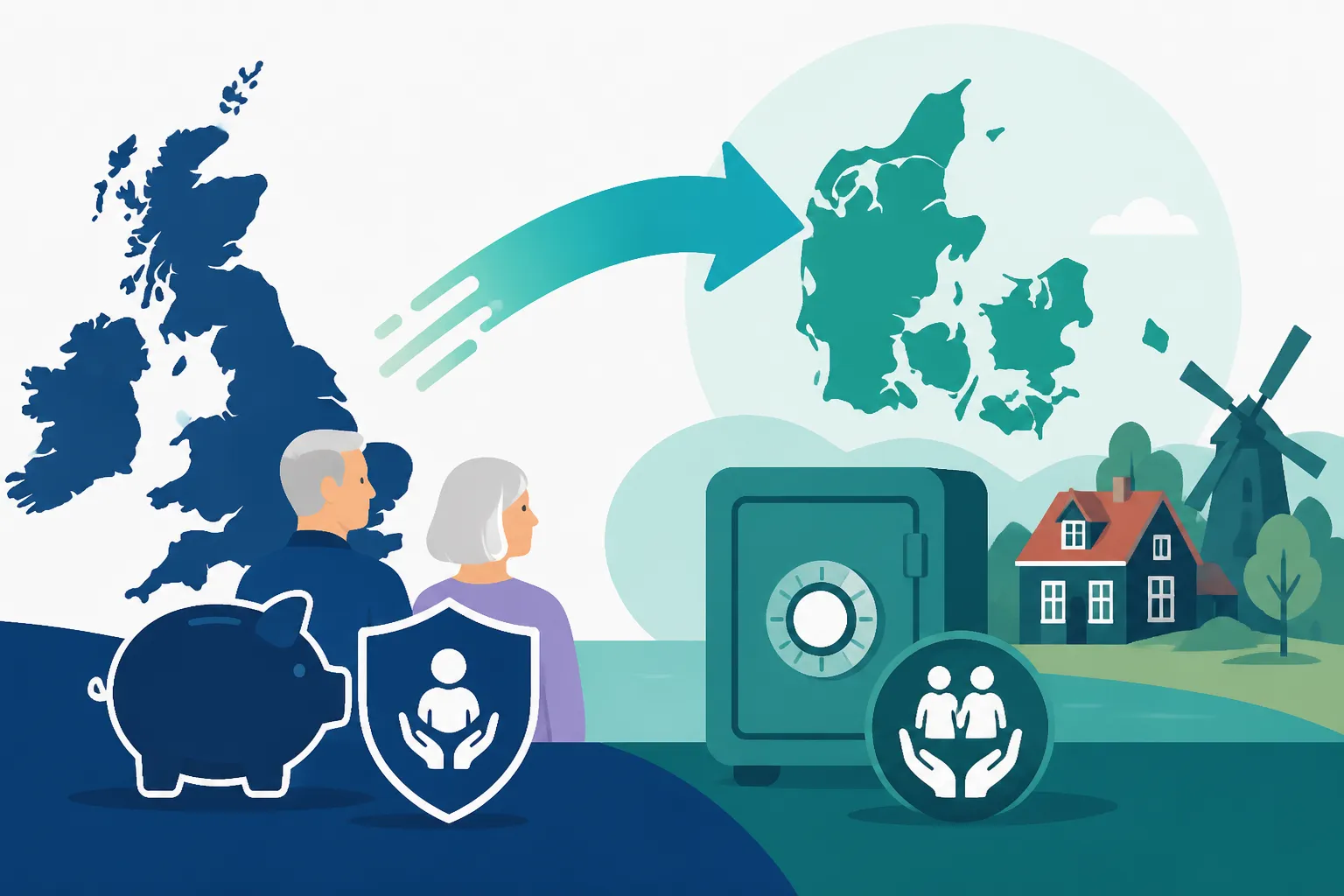
The QROPS system was designed to allow people moving abroad to take their pension with them. In theory, it sounds simple: you find a Danish pension provider that is registered with HMRC as a "Qualifying Recognized Overseas Pension Scheme," and you transfer the funds. In practice, the process is a gauntlet of "Overseas Transfer Charges," Danish "Section 53A" tax rules, and the ever-present shadow of Brexit. I remember the first time I looked at the paperwork; it felt like trying to read a foreign language while underwater. It is vital to validate the frustration here—you are dealing with two of the world's most sophisticated (and rigid) tax systems simultaneously.
Beyond the paperwork, there is the currency risk. If your pension stays in the UK, your eventual retirement income will be subject to the whims of the GBP/DKK exchange rate. If the Pound drops, your Danish purchasing power vanishes. Using a service like Wise can help you manage smaller transfers or currency conversions during your transition, but for the actual pension "pot," you need a structural solution that fits within the Danish Employer Pensions (Arbejdsmarkedspension): Mandatory Savings Explained framework. This guide is about finding that structural fit.
Understanding the QROPS Landscape in Denmark
A QROPS is essentially a foreign pension scheme that the UK’s HMRC recognizes as meeting certain standards, allowing you to transfer your UK pension wealth into it without triggering an immediate 55% unauthorized payment charge. For a Danish scheme to qualify, it must generally restrict access to benefits until age 55 and mirror many of the UK's pension protections. Not every Danish bank or pension fund is a QROPS, which is the first hurdle most expats stumble over.
When you start looking for a provider, you will notice that the list of HMRC-recognized schemes in Denmark is surprisingly short. This is because the Danish Pension System: Folkepension, ATP, and Employer Contributions is heavily regulated and often tied to collective bargaining agreements. Many of the big players like PFA, Danica Pension, or Velliv may have specific products that qualify, but you cannot assume their standard "mandatory" workplace pension is QROPS-compliant. You must specifically ask for a scheme that can accept a "Recognized Overseas Pension Transfer."
Since Brexit, the rules have become even more localized. Fortunately, because Denmark is part of the European Economic Area (EEA), transfers from the UK to a QROPS in Denmark are currently exempt from the 25% "Overseas Transfer Charge" (OTC), provided you are a resident of Denmark at the time of the transfer. If you were moving to a country outside the EEA or a country where you weren't resident, that 25% hit would be unavoidable. This makes Denmark a relatively "safe" destination for UK pension wealth, though you still need to be meticulous with your Setting Up Your NemKonto: How to Link It to Receive Salary and SU to ensure all future payouts are correctly routed through the Danish digital infrastructure.
The Mechanical Process of the Transfer
The actual transfer process usually begins with a request for a "Transfer Value" (also known as a Cash Equivalent Transfer Value or CETV) from your UK pension provider. This document tells you exactly how much your UK pot is worth in pounds today. Be warned: if you have a "Defined Benefit" (final salary) pension worth more than £30,000, UK law mandates that you seek professional financial advice before you can transfer it. This is a consumer protection measure, as final salary pensions are often "gold-plated" and very difficult to replicate in the Danish market.
Once you have your CETV, you must coordinate between your UK provider and your chosen Danish QROPS provider. The UK provider will require Form APSS 263, where you provide details of the receiving scheme. This is where the stress levels usually peak. You will be sending documents back and forth between HR departments and pension administrators who may not speak the same technical "pension-ese." It is often helpful to use a specialized firm like Taxes for Expats to review your situation, as they can spot potential red flags where the UK and Danish definitions of "retirement age" or "lump sum" might clash.
After the UK provider is satisfied that the Danish scheme is legitimate, the funds are moved. This is often done via a bank transfer. While major pension funds handle the bulk of this, if you are managing any part of the liquidity yourself or dealing with smaller private SIPPs, tools like Wise are invaluable for ensuring you aren't losing 3-4% on the currency spread during the conversion from GBP to DKK. Once the money lands in Denmark, it is no longer under UK jurisdiction, but it immediately enters the complex world of Danish pension taxation.
Danish Tax Implications: Section 53A and the Yearly Tax Trap
In Denmark, pensions are usually taxed under a "Deductible" (Pensionsbeskatningsloven Section 18) or "Non-Deductible" (Section 53A) framework. Most UK pension transfers fall under Section 53A. This is a critical distinction that many expats miss until they receive their first Annual Tax Assessment Notice (Årsopgørelse): Claiming Deductions. Under Section 53A, your pension is treated more like a standard investment account than a protected retirement fund in the eyes of the Danish tax man.
The biggest sting of Section 53A is that you may be taxed annually on the "unrealized gains" of the pension fund. In the UK, your pension grows tax-free until you withdraw it. In Denmark, if your transferred QROPS pot grows by 100,000 DKK in a year, SKAT might expect you to pay tax on that growth immediately, even though you haven't touched the money and won't for another twenty years. This "Lagerskat" (storage tax) can be a massive drain on your long-term compounding. You must verify with a tax professional whether your specific transfer can be classified under Section 15 or other exemptions to avoid this annual drain.
Furthermore, you need to understand how these funds interact with your Understanding Your Danish Payslip (Lønseddel): Deductions Decoded. If you are on the Expat Tax Scheme: Eligibility Criteria and Salary Thresholds for 2026, the way your foreign assets are reported can be even more nuanced. Denmark and the UK have a Double Taxation Agreement, which generally prevents you from being taxed twice on the same income, but it does not prevent Denmark from taxing the growth of an asset it considers a standard investment.
Comparing UK vs. Danish Pension Structures
| Feature | UK Pension (SIPP/Workplace) | Danish QROPS (Section 53A) |
|---|---|---|
| Tax on Growth | Tax-free until withdrawal | Often taxed annually on gains (Lagerskat) |
| Currency | British Pound (GBP) | Danish Krone (DKK) |
| Access Age | Currently 55 (rising to 57) | Usually tied to Danish retirement age |
| Lump Sum | 25% tax-free | Varies; often taxed as personal income |
| Inheritance | Generally outside the estate | Subject to Danish inheritance tax laws |
As shown in the table, the trade-off is essentially a choice between currency stability and tax efficiency. Keeping your money in the UK preserves the "tax-free growth" status but leaves you exposed to GBP volatility and the difficulty of managing a foreign account without a UK address. Moving it to Denmark gives you a DKK-denominated asset that is easy to see on Sundhed.dk and MitID: Navigating Denmark’s Digital Health Portals (if integrated), but it exposes you to the "Lagerskat" and potentially higher management fees.
To Transfer or Not: The Decision Matrix
Deciding whether to pull the trigger on a QROPS transfer requires a cold, hard look at your timeline. If you plan to stay in Denmark for less than five years, a transfer is almost certainly not worth the administrative cost and the risk of being caught in a tax trap. You are likely better off keeping your UK pension where it is and perhaps using Wise to manage your monthly contributions or occasional transfers from your Opening a Bank Account in Denmark: Document Checklist and Delays back to your UK SIPP.
However, if you are a "lifer" in Denmark—perhaps you have started a family here or bought property—the consolidation of assets becomes much more attractive. Having all your retirement planning under one regulatory roof simplifies your estate planning significantly. Dealing with a deceased relative's "frozen" UK pension from Denmark is a bureaucratic nightmare that your heirs will not thank you for. By moving the funds into the Danish system, you ensure they are governed by the same rules as your Danish Pension System: Folkepension, ATP, and Employer Contributions, making the eventual payout much smoother.
Another factor is the "Lump Sum" rule. In the UK, the 25% tax-free lump sum is a cornerstone of retirement planning. Denmark does not inherently recognize this "tax-free" status for foreign transfers. If you take that 25% while a tax resident in Denmark, SKAT may view it as regular income and tax it at your marginal rate, which could be upwards of 50%. This is another area where consulting Taxes for Expats is non-negotiable; you need to know if the "tax-free" nature of your UK pension can be preserved via the Double Taxation Treaty or if it evaporates the moment the money crosses the North Sea.
Practical Steps to Start Your Transfer
If you have decided to move forward, your first step is to contact your current employer's pension provider in Denmark. Ask them specifically: "Do you have a scheme that is registered as a QROPS with HMRC?" If they say no, you may need to open a private "Link Pension" or similar product with a provider like Nordnet or a specialized expat wealth manager who understands the Taxation of Student Jobs in Denmark: AM-bidrag and Frikort (oddly enough, the same tax specialists often handle both ends of the spectrum).
Once you have a receiving account, get your UK CETV. Check the expiration date on that valuation; they are usually only valid for three months. If you miss the window, you might have to pay your UK provider for a new valuation. Simultaneously, ensure your Setting Up Your NemKonto: How to Link It to Receive Salary and SU is fully functional, as any future interactions with Danish financial institutions will rely on this.
Finally, prepare for the "Wait." Pension transfers are notoriously slow. It is not uncommon for a UK-to-Denmark transfer to take six to nine months from the initial request to the final DKK deposit. During this time, you will feel like your money is in a black hole. Stay in regular contact with both providers. Document everything. In the world of Danish administration, a paper trail is your only defense against the "system" losing your request.
Summary of Key Considerations for Expats
- The 25% Tax-Free Lump Sum: Do not assume this remains tax-free in Denmark. It often becomes taxable income.
- Lagerskat: Be prepared for the annual tax on unrealized gains if your transfer falls under Section 53A.
- Advisor Fees: UK advisors often charge 1-2% of the total pot for the mandatory "Defined Benefit" advice. Factor this into your costs.
- HMRC Reporting: For ten years after your transfer, the Danish scheme must report any "unauthorized" payments back to HMRC. If you try to take the money out early, the UK will still come for its 55% tax.
- Currency Strategy: Use Wise for any non-pension movements to keep your conversion costs low while you wait for the big transfer to finalize.
Transferring a pension isn't just a financial transaction; it's a commitment to your life in Denmark. It’s about saying, "This is where I belong, and this is where my future will be funded." It is a grueling process, but once that final deposit hits your Danish account and you see it reflected in your local retirement projections, the peace of mind is often worth the struggle.
Disclaimer
The information provided in this guide is for educational and informational purposes only and does not constitute professional financial, legal, or tax advice. Pension transfer rules, specifically QROPS and Danish tax law (Section 53A), are subject to frequent changes by both HMRC and SKAT. Individual circumstances vary greatly, and the tax implications of a pension transfer can be significant. You should consult with a qualified financial advisor and a tax specialist who understands both UK and Danish jurisdictions before making any decisions regarding your pension. The author and publisher are not responsible for any financial losses or tax penalties incurred as a result of using this information.