Navigating Danish Bakeries: What Are Rundstykker and Wienerbrød?
Walking into a Danish bakery for the first time can feel like stepping into a warm, delicious dream. The smell of freshly baked bread, sweet pastries, and strong coffee is utterly intoxicating. But then you look at the names – rundstykker, wienerbrød, rugbrød, snurrer, birkes – and suddenly, that dreamy aroma turns into a confusing linguistic puzzle. Don't worry, my fellow expat, you're not alone. This comprehensive guide is here to demystify the wonderful world of Danish bakeries, so you can confidently order your new favorite morning treat or afternoon fika.
The Heart of Danish Bakery Culture: More Than Just Bread
Danish bakeries, or bagerier, are far more than just places to grab a loaf of bread. They are social hubs, morning rituals, and essential components of Danish hygge. For many Danes, a visit to the bager on a Saturday morning is as ingrained as breathing. It's a cherished weekend tradition, often involving picking up warm rolls and pastries to enjoy with family over coffee and conversation.
You'll find a range of bakeries across Denmark, from small, independent artisan shops that pride themselves on sourdough and specialty loaves, to larger, more modern chains like Lagkagehuset or Reinh van Hauen. Each has its own charm and offerings, but the core essence remains the same: quality baked goods. The tradition dates back centuries, evolving from simple bread-making to the intricate pastry craft that Denmark is famous for today. As an expat, discovering your local bager can be a pivotal moment in feeling settled and connected to your new community.
The Ubiquitous Bakeri: A Danish Institution
From the bustling streets of Copenhagen to the quieter towns of Jutland, a bageri is never far away. These establishments are central to daily life, providing not just sustenance but also a sense of comfort and routine. You'll notice many Danes making a quick stop before work or school, grabbing a rundstykke or a coffee to go. It’s a convenient and delicious way to start the day, and you’ll often find queues forming early, especially on weekends.
These institutions aren't just about the food; they're about the experience. The warm, inviting atmosphere, the display cases filled with tempting treats, and the friendly (if sometimes direct) service all contribute to the unique charm. Whether you're a student trying to find a cheap breakfast or a parent grabbing something for the whole family, the bageri caters to everyone. It's a place where you can pause, enjoy a moment of sensory pleasure, and observe a slice of authentic Danish life unfold around you. And who knows, you might even make a new friend in line, a perfect opportunity for some Social Integration: Making Friends and Understanding Danish Etiquette.
Beyond the Basics: What Else You'll Find
While this guide focuses on the quintessential rundstykker and wienerbrød, Danish bakeries offer a much wider selection. You'll encounter a vast array of breads, most notably the dense, dark rugbrød (rye bread), which is a staple of Danish lunch tables. There are also lighter, fluffier white breads (franskbrød), often used for sandwiches or toast. Beyond bread and pastries, many bakeries also serve excellent coffee, fresh juices, and even light lunch options like smørrebrød (open-faced sandwiches).
Don't be shy to explore the lesser-known corners of the bakery display. You might find delicate cakes for special occasions, seasonal treats like fastelavnsboller (cream buns for Fastelavn), or savory options if you're looking for something other than sweet. Bakeries are also a great place to pick up small gifts, like boxes of handmade chocolates or local jams. So, while you might walk in with a craving for a snegl, keep an open mind – you might just discover a new favorite.
Deciphering the Morning Classics: Rundstykker and Their Cousins
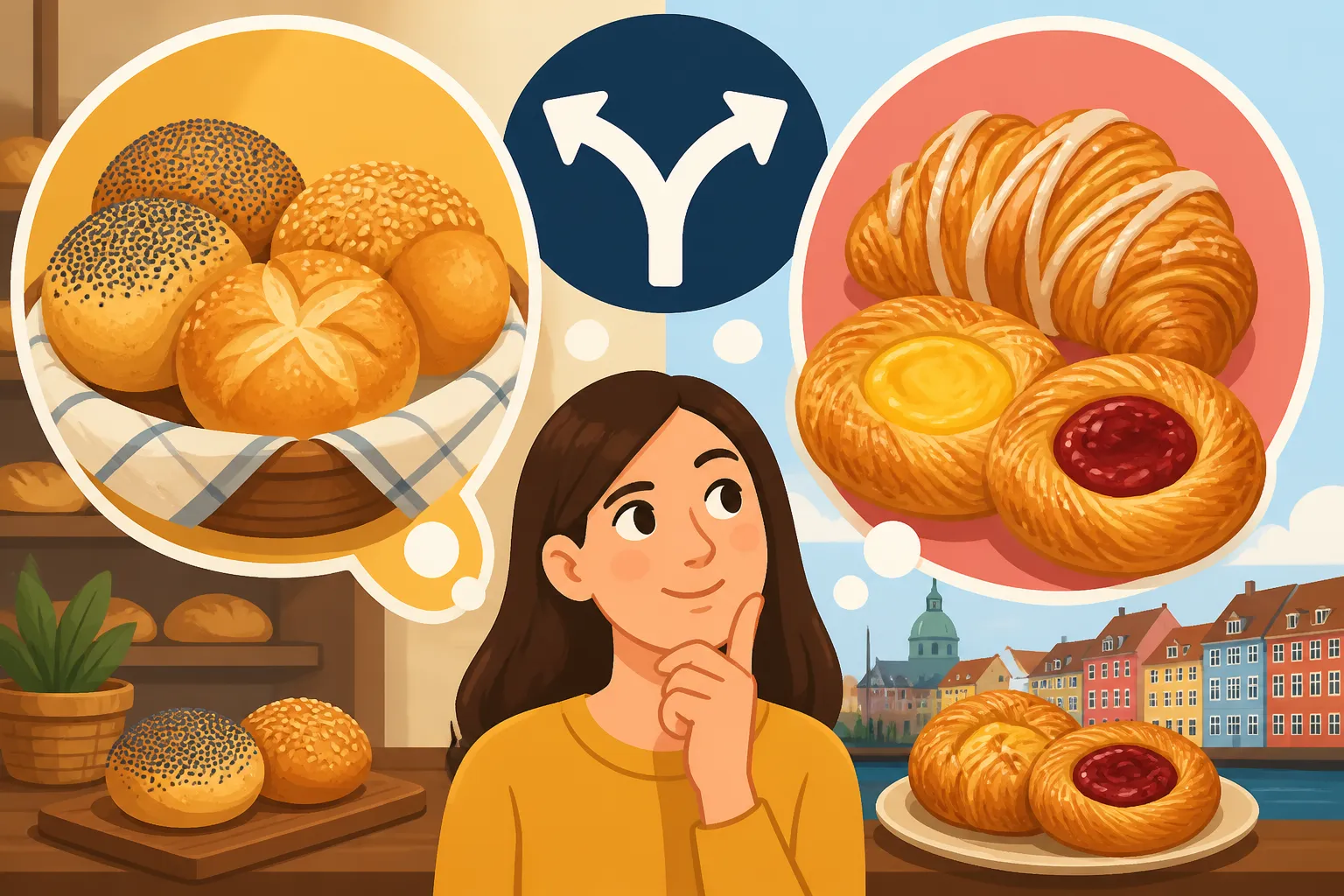
Ah, rundstykker! These round rolls are the heart and soul of a traditional Danish breakfast. Simple, versatile, and utterly satisfying, they are a must-try for any expat wanting to truly embrace the Danish morning ritual. But beware, the term "rundstykker" is a bit of a catch-all, encompassing several delightful variations, each with its own character.
Imagine waking up on a Saturday morning, the air crisp outside, and the thought of warm, crusty rolls filling your mind. That's the rundstykke experience. You spread some cold butter, maybe a slice of cheese or a dollop of jam, and pair it with a strong cup of coffee. It’s a simple pleasure that defines weekend mornings here. Trust me, once you get the hang of it, you'll be joining the Danes in the early morning queues.
Rundstykker: The Everyday Danish Roll
At its most basic, a rundstykke is a small, round, crusty bread roll. However, the Danish rundstykke family is quite diverse. Let’s break down the key players:
- Håndværker: Meaning "craftsman," this is often the most basic and popular rundstykke. It's a white wheat flour roll, typically oval or somewhat irregularly shaped, with a light, airy crumb and a crisp crust. It’s perfect for slicing open and loading with anything from butter and jam to cheese and pålæg (cold cuts).
- Birkes: These are classic rundstykker topped generously with poppy seeds. The seeds add a lovely nutty flavor and a slight crunch. You’ll often find them as a slightly richer, more flavorful option than the plain håndværker.
- Tebirkes: Now, this is where things get interesting! A tebirkes is a birkes roll, but it's filled with remonce, a sweet mixture of butter, sugar, and often marzipan, before being folded and baked. The top is still sprinkled with poppy seeds. It’s richer, sweeter, and incredibly decadent, making it a perfect treat with your morning coffee.
- Grovbolle: For those seeking a healthier option, the grovbolle is a darker, whole-grain roll. "Grov" means coarse or wholemeal, so these rolls are packed with more fiber and have a denser texture. They often contain different seeds and grains, offering a hearty start to the day.
- Franskbrød: While not strictly a rundstykke, small individual franskbrød (French bread) rolls are also common. These are softer, often lighter in color, and less crusty than a typical rundstykke. They’re great for kids or for those who prefer a less rustic bread.
The beauty of rundstykker lies in their simplicity and the endless possibilities for toppings. You can go savory with slices of cheese, ham, or liver pâté (leverpostej), or sweet with jam, honey, or even a classic Danish chocolate spread. No matter your preference, a warm rundstykke is an experience that connects you directly to the heart of Danish food culture.
The Art of the Morning Platter: What to Pair Them With
For Danes, breakfast isn't just about eating; it's about setting the tone for the day, often shared around a table with family. The morgenmad (breakfast) platter, especially on weekends, is a joyful spread built around rundstykker. You'll find a selection of rolls, alongside a variety of pålæg (spreads and toppings). This allows everyone to customize their meal and enjoy a leisurely start to the day. It's a fundamental part of Danish Work Culture: Flat Hierarchies, Hygge, and Direct Communication as it exemplifies the shared experience and comfort of Danish life.
Here’s a glimpse at what might typically grace a Danish breakfast table with rundstykker:
| Rundstykke Type | Description | Typical Toppings/Pairings |
|---|---|---|
| Håndværker | Classic plain, crusty wheat roll. | Butter, cheese (gouda, havarti), cold cuts (ham, salami), jam. |
| Birkes | Håndværker topped with poppy seeds. | Butter, cheese, leverpostej (liver pâté), Marmelade. |
| Tebirkes | Poppy seed roll filled with sweet remonce (butter/sugar/marzipan). | Best enjoyed on its own or with a simple cup of coffee. |
| Grovbolle | Denser, whole-grain roll, often with seeds. | Cream cheese, avocado, sliced boiled egg, light spreads. |
| Franskbrød | Soft, white individual bread roll. | Butter, chocolate spread, soft cheeses, Nutella. |
Beyond the table, rundstykker are also commonly enjoyed in cafes or at work during a kaffepause (coffee break). They're easy to eat on the go, making them a popular choice for a quick, satisfying bite. Once you've sampled a few, you'll likely develop a favorite, and soon you'll be ordering like a seasoned local. Don't be afraid to experiment with different spreads and fillings – that's half the fun!
The Sweet Indulgence: Exploring Wienerbrød and Other Pastries
Now, let's talk about the pastry that put Denmark on the international culinary map: wienerbrød. You probably know it as "Danish pastry," but here in Denmark, we give credit where credit is due – to Vienna, hence wienerbrød, or "Viennese bread." This iconic pastry is a masterpiece of flaky, buttery dough, often filled with rich remonce, fruit, or nuts, and glazed with icing.
For me, wienerbrød isn't just a pastry; it's a celebration. It's what you bring to a birthday, what you share with friends during a cozy afternoon coffee, or what you treat yourself to after a long week. It embodies hygge in its most delicious form. You'll find yourself reaching for a wienerbrød during those dark, cozy Danish winters, perhaps while wrapped in a blanket, soaking up some Hygge, Heating Strategies, and Surviving the Dark.
Wienerbrød: Denmark's Gift to the World
The history of wienerbrød in Denmark is quite fascinating. Legend has it that Austrian bakers brought the technique to Denmark during a strike in 1840s, and the Danes quickly adopted and adapted it, making it their own with unique fillings and shapes. What makes wienerbrød so special is its delicate, multi-layered dough, created by repeatedly folding butter into the dough, similar to puff pastry, but with yeast.
The most classic form is often a square or circular pastry with a dollop of remonce (a buttery, sugary, often marzipan-infused filling) or fruit jam in the center. Here are some popular wienerbrød variations you'll encounter:
- Spandauer: This is arguably the most iconic wienerbrød. It's a square of pastry, often filled with creamy custard (creme) and sometimes a bit of jam (syltetøj), then folded to create a pocket. It’s typically finished with a light sugar glaze and sometimes chopped nuts.
- Kanelsnegl (Cinnamon Snail): While technically a snegl (snail), it's made with the same flaky wienerbrød dough. This spiral-shaped delight is generously filled with cinnamon and butter, often topped with a white icing glaze. It's incredibly popular and a go-to for many.
- Frøsnapper: A long, twisted pastry often topped with poppy seeds, sometimes also containing remonce. It has a satisfying crunch and a lovely, slightly savory sweetness.
- Hindbærsnitte (Raspberry Slice): Two thin layers of pastry (not always wienerbrød dough, but often found in bakeries) with raspberry jam in between, topped with white icing and colored sprinkles. A nostalgic favorite for many Danes.
The richness and complexity of wienerbrød make it a perfect companion to coffee or tea. It's not typically a breakfast item but rather an afternoon treat, a kaffebord (coffee table) staple, or something to bring when visiting friends. It's a true indulgence and a testament to Danish baking artistry.
A Gallery of Sweet Treats: Other Danish Pastries to Try
Beyond wienerbrød, Danish bakeries are treasure troves of other delightful sweet treats. These are the pastries you'll see gracing birthday tables, coffee breaks, and festive gatherings.
- Romkugler (Rum Balls): These are little miracles of Danish frugality and deliciousness. Made from leftover cake scraps, cocoa, and a generous splash of rum, romkugler are rolled into balls and coated in chocolate sprinkles. They’re dense, moist, and wonderfully boozy. A perfect pick-me-up.
- Træstammer (Tree Trunks): Similar to romkugler in their "upcycled" cake-scrap origin, træstammer are cylindrical pastries filled with a rum-flavored cake mix, wrapped in green marzipan, and dipped in chocolate at the ends. They look like mini logs and are surprisingly addictive.
- Napoleonshatte (Napoleon Hats): These charming, triangular shortcrust pastry biscuits are filled with a rich marzipan paste and then dipped in dark chocolate. They are elegant, subtly sweet, and a classic for a reason.
- Kagemand / Kagekone (Cake Man / Cake Woman): For children's birthdays, you’ll often encounter these large, gingerbread-like figures decorated with icing and candy. Breaking off a limb of the kagemand is a traditional and fun part of Danish birthday celebrations. They're usually made from a sweet bun dough, not always pastry.
- Flødeboller (Cream Buns): While not strictly a pastry, these are a beloved confection. A soft marshmallow foam sits on a thin marzipan or wafer base, all coated in a thin layer of chocolate. Available in many variations, they are a light, airy, and utterly delightful treat.
Exploring these various pastries is an adventure in itself. Each tells a small story about Danish culture, traditions, and the love for quality ingredients and craftsmanship. Don't hesitate to point to what looks good, and ask the baker for recommendations!
Navigating the Bakery Experience: Tips for Expats
Stepping into a Danish bakery for the first time can feel a bit daunting, especially if your Danish isn't quite fluent yet. But with a few insider tips, you'll be ordering like a local in no time. The Danes appreciate an effort, and even a simple "goddag" (hello) and "tak" (thank you) can go a long way.
Remember, bakeries are places of comfort and routine. Don't rush, take a moment to absorb the smells and sights. If you're staying in Denmark short-term, perhaps you've found your temporary home through services like Spotahome, which helps expats find furnished apartments. Being near a good bager can really enhance your daily life!
Ordering Like a Local: Language and Etiquette
When you enter, a friendly "Goddag!" is always a good start. Most staff, especially in larger cities like Copenhagen or Aarhus, will speak excellent English, so don't fret if your Danish vocabulary is limited to "ja" and "nej." However, trying a few phrases can be fun and often met with a smile.
- "Jeg vil gerne have…" (Yay vil GERN-eh hav…) – "I would like to have…"
- "…et rundstykke, tak." (…et RUNDS-took-keh, tack.) – "…a roll, please."
- "…en tebirkes, tak." (…en TEA-bir-kes, tack.) – "…a tebirkes, please."
- "…to kanelsnegle, tak." (…to kah-NEL-snyle, tack.) – "…two cinnamon snails, please."
- "Er brødet friskbagt?" (Air broh-eth FRISK-bakkt?) – "Is the bread freshly baked?" (Though it almost always is!)
- "Kan jeg få det skåret?" (Can yay foh det SKO-ret?) – "Can I have it sliced?" (For loaves of bread, they often have a slicing machine.)
- "En kop kaffe, tak." (En kop KAF-fuh, tack.) – "A cup of coffee, please."
Sometimes, especially for smaller items like individual cakes or cookies, you might encounter a "tag selv" (self-service) system, where you use tongs to place items in a bag, then present it at the counter for weighing or counting. It's all part of the unique experience. Don't be shy about asking for help if you're unsure, and remember that Learning Danish: Sprogcenter, FVU, and the Importance of the Language will make these interactions even smoother!
Price Points and Payment: Expectation Management
Let’s be honest: Denmark isn't known for being cheap, and bakeries are no exception. While you can certainly find reasonably priced items, particularly basic rundstykker, a morning haul of rolls, pastries, and coffee for a family can quickly add up. Be prepared for prices that might be higher than what you're used to in other countries. For example, a single tebirkes might cost anywhere from 20-35 DKK, and a loaf of specialty bread could easily be 40-60 DKK. This is just part of the Cost of Living in Denmark 2026: Budgets for Singles and Families.
When it comes to payment, Denmark is rapidly becoming a cashless society. While most bakeries will still accept cash, digital payments are king. MobilePay is by far the most dominant payment method, and you'll find virtually every establishment, from the smallest kiosk to the largest supermarket, accepts it. Having a Danish bank account and setting up MobilePay is highly recommended. If you're a new arrival, you can read more about MobilePay and Cashless Denmark: Surviving Without Physical Cash and how to get your Opening a Bank Account in Denmark: Document Checklist and Delays. Foreign credit and debit cards are generally accepted, but do be aware that some smaller, independent bakeries might prefer or only accept local cards or MobilePay. Make sure your phone is charged or consider a reliable eSIM from a brand like Airalo if you're traveling, so you always have data for payment apps or navigation.
Finding Your Perfect Bakery: Local Gems vs. Chains
Part of the fun of living in Denmark is discovering your own favorite spots. While chains like Lagkagehuset (known for its quality and consistency) and Reinh van Hauen (a Copenhagen institution with many branches) offer reliable options, don't overlook the smaller, independent bakeries. These local gems often have unique specialties, a stronger community feel, and a more personal touch.
In Copenhagen, places like Hart Bageri, Meyers Bageri, or the numerous small bakeries scattered throughout Nørrebro and Vesterbro, offer incredible artisan bread and pastries. In Aarhus, try Briancon or Mor Anna for a taste of local craft. Ask your Danish colleagues or neighbors for their recommendations; everyone has a favorite bager, and it’s a great conversation starter. Don't forget to also check out the bakery sections in larger Supermarkets in Denmark: Netto, Rema 1000, and Føtex Compared for more budget-friendly daily bread options, though the quality and selection of dedicated bagerier are usually superior for pastries.
Whether you're after a classic rundstykke for a cozy morning or a decadent wienerbrød for a special treat, Danish bakeries are an essential part of the expat experience. Enjoy the smells, the tastes, and the delightful immersion into Danish hygge.
Disclaimer
The information provided in this guide is intended for general informational purposes only and does not constitute professional advice. While we strive to ensure the information is accurate and up-to-date, regulations, prices, and availability can change. Always verify details with official sources or local experts.