Avoiding Package Theft: Using Pakkeboks and DAO Deliveries
Oh, the joy (and sometimes, pure exasperation) of receiving packages in Denmark! If you've been living here for a while, you've probably experienced that heart-stopping moment when a delivery notification pops up saying your parcel has been "delivered" – only for it to be nowhere in sight, potentially left in a public hallway, or worse, vanished into thin air. It’s a common expat frustration, and believe me, you're not alone in feeling like the Danish delivery system operates on its own unique, sometimes baffling, logic. This guide is here to walk you through the secure delivery options, particularly the incredibly useful Pakkeboks system and the specifics of DAO deliveries, so you can stop stressing about your online shopping.
The Reality of Package Deliveries in Denmark for Expats
When you first move to Denmark, especially from a country with strict "signature required" policies or secure mailrooms, the local approach to parcel delivery can feel, well, a bit wild. Danes operate on a high level of trust, which is lovely in theory, but in practice, it often means your packages are left in places you might not expect, or even worse, in places that aren't very secure.
Why Danish Delivery Can Feel Different
The standard operating procedure for many delivery services here is often to simply leave the package in the most convenient (for the driver, anyway) spot. This could be by your apartment door, in the building's common area, tucked behind a potted plant, or even just inside the main entrance of your building. For Danes, who have generally grown up in a society with low crime rates, this might not seem like a big deal. They assume their neighbors are trustworthy, and often, they are. But for us expats, especially those used to urban living elsewhere, this can trigger immediate alarm bells. We've all heard the stories, or perhaps even experienced the disappointment, of an anticipated delivery never materializing because it was left in a vulnerable spot. This laid-back approach to package security is one of those cultural quirks that takes some getting used to, but thankfully, there are ways to mitigate the risk. It’s a world away from the secure, direct-to-hand delivery many of us are accustomed to.
The Problem of "Just Leave It" Mentality
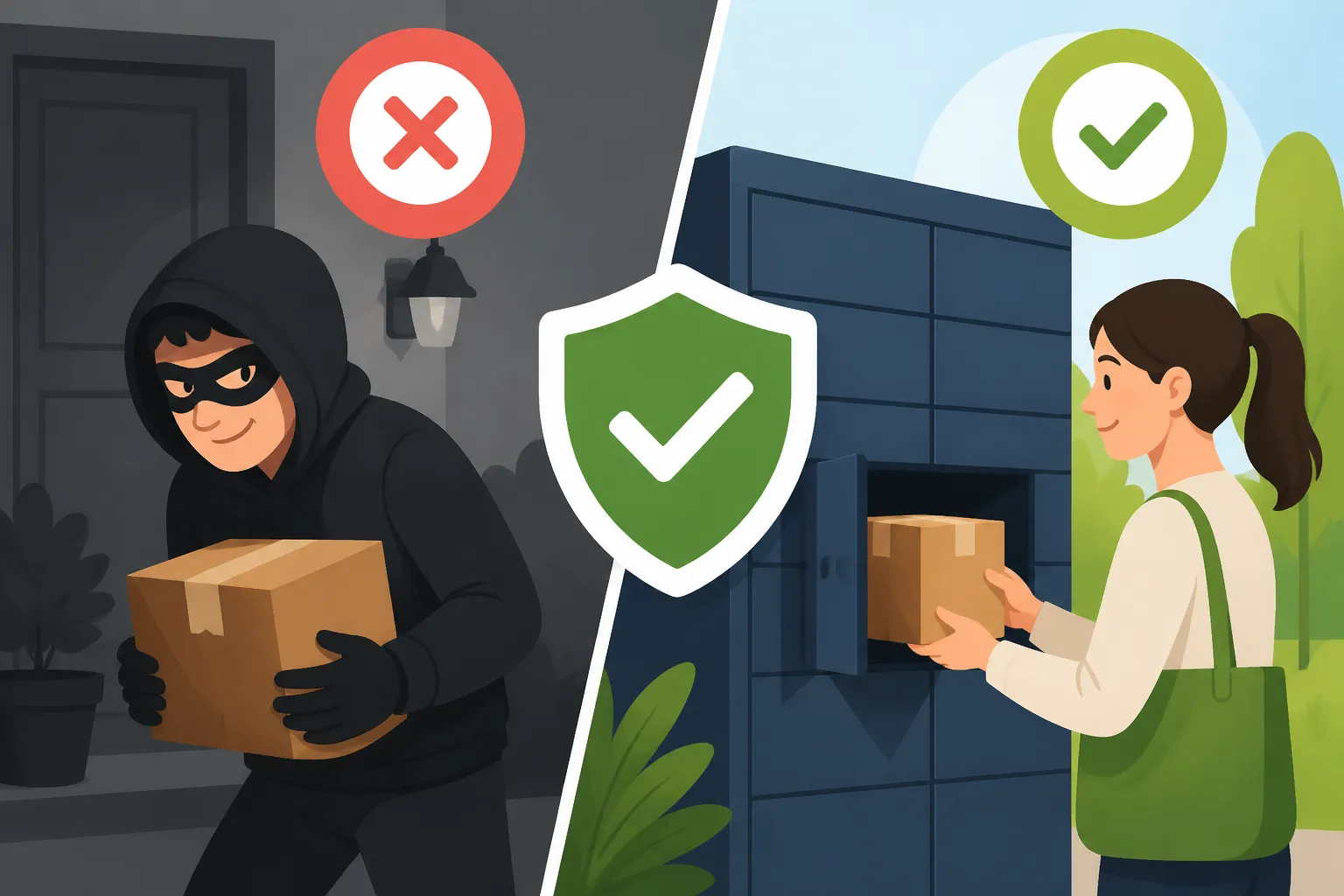
The "just leave it" mentality, while convenient for the driver, can be a real headache for the recipient. If you live in an apartment building with a common entrance or hallway, a package left there is essentially fair game for anyone walking by. Even if your building requires a key to enter, opportunistic individuals can sometimes slip in behind residents or simply find an unlocked door. In single-family homes, parcels might be left on the porch, visible from the street, inviting potential theft. This isn't to say Denmark is rife with package thieves, but when it does happen, it's incredibly frustrating and often unrecoverable. The delivery company generally considers it "delivered" once it's left at the address, making it difficult to claim a lost item. This is why being proactive about how and where your packages are delivered is crucial. If you're looking for a new place to live, it's worth considering the security of package deliveries when exploring your housing options, especially if you use platforms like Spotahome to find your next rental.
Your Best Defense: The "Pakkeboks" System
If there's one piece of advice I can give you to minimize package theft anxiety in Denmark, it's this: embrace the Pakkeboks. This system is a game-changer for secure deliveries.
What is a Pakkeboks and How Does It Work?
A Pakkeboks (package box) is essentially a network of secure, self-service lockers scattered throughout Denmark, often found at supermarkets, train stations, petrol stations, or standalone locations. They are operated by various carriers, with PostNord's network being the most widespread, but you'll also find them from DAO, Bring, and GLS. The concept is simple: instead of having your package delivered to your home address, it goes directly to one of these lockers.
Here's how it typically works: When you're ordering something online, at the checkout page, you'll often be given the option to select a delivery point. Look for options like "Afhentningssted" (pickup point) or "Pakkeboks." You'll then usually see a map showing nearby Pakkeboks locations. You pick the one most convenient for you – perhaps near your home, work, or daily commute. Once your package arrives at the chosen Pakkeboks, you'll receive a notification, usually via SMS or email, containing a unique pick-up code. You go to the Pakkeboks, enter the code on the touchscreen, and voilà, a locker door pops open with your package inside. Most Pakkeboks are accessible 24/7, making them incredibly convenient. This system dramatically reduces the risk of theft and missed deliveries. It also means you don't have to worry about rushing home to intercept a package.
Benefits and Drawbacks of Using a Pakkeboks
Like any system, Pakkeboks has its ups and downs. Understanding these can help you decide when it's the best option for your deliveries.
The Upsides: Security, Convenience, and Peace of Mind
- Unparalleled Security: This is the number one benefit. Your package is locked away, safe from opportunistic thieves and bad weather, until you physically retrieve it. No more frantic searches for a package left "somewhere."
- 24/7 Access: Most Pakkeboks are outdoors or in publicly accessible areas, meaning you can pick up your package at midnight, 5 AM, or whenever suits your schedule. This flexibility is a huge advantage for busy expats.
- No Missed Deliveries: You'll never get that dreaded "sorry we missed you" note again. As long as there's space, your package will be delivered to the Pakkeboks.
- Privacy: If you prefer not to have delivery drivers coming to your door or knowing your exact home address, Pakkeboks offers an added layer of privacy.
- Tracking and Notifications: You receive clear notifications when your package is ready for pickup, usually with a timer (typically 7 days) indicating how long you have to retrieve it before it's returned to the sender. This also integrates well with digital services like the PostNord app, allowing you to manage multiple deliveries from one place.
The Downsides: Small Annoyances and Limitations
- Limited Space and Popularity: During peak seasons (like Christmas) or in densely populated areas, popular Pakkeboks locations can fill up quickly. If your chosen Pakkeboks is full, the carrier might divert your package to a nearby alternative or a Posthus (post office), which can be inconvenient.
- Physical Retrieval Required: You still have to go to the Pakkeboks. While often close by, it might require a walk, a bike ride, or a short drive, which isn't always ideal, especially if you're feeling unwell or it's pouring rain.
- Package Size Limitations: Larger items won't fit into a standard Pakkeboks locker. For oversized deliveries, you'll likely still face traditional home delivery or a different pickup point (like a staffed Posthus).
- Time Limit for Pickup: As mentioned, there's usually a 7-day window to pick up your package. If you're traveling or forget, your item will be sent back. If you are frequently away, staying connected with a good eSIM provider like Airalo can help you receive notifications promptly, even if you’re abroad.
How to Select a Pakkeboks for Your Deliveries
Choosing a Pakkeboks is generally straightforward during the online checkout process. Most Danish retailers, and even international ones shipping to Denmark, will integrate with the various carrier systems.
When you reach the delivery options screen, instead of selecting "home delivery," look for a button or drop-down menu that says something like "Vælg afhentningssted" (choose pickup point) or "Pakkeboks." Clicking this will usually bring up an interactive map. On this map, you'll see icons representing the different Pakkeboks locations. You can zoom in, search by address, and click on an icon to see details about that specific locker, such as its address and opening hours (though most are 24/7).
I recommend having a couple of preferred Pakkeboks locations in mind: one very close to your home, and perhaps one near your workplace or a supermarket you frequent. This gives you flexibility if your primary choice is full. Once you select your desired Pakkeboks, it will be saved for that order, and sometimes even for future orders with the same retailer. Remember, the key is to actively choose this option; otherwise, the default is often home delivery, which might not be the most secure. For crucial documents or expensive items, a Pakkeboks is almost always the safest bet.
Understanding DAO Deliveries for Secure Home Drop-offs
DAO is another major player in the Danish delivery landscape, and they have a slightly different approach to "home delivery" that can offer a compromise between convenience and security, especially when a Pakkeboks isn't an option or is full.
DAO's Approach to Home Delivery
DAO (Dansk Avis Omdeling, originally a newspaper delivery service) specializes in early morning deliveries, often before 7 AM. Their model is built around efficiency and getting parcels to your door when you're likely still asleep, reducing the chance of direct interaction or the need for re-delivery. While they also utilize Pakkeboks lockers, their home delivery service is distinct.
Unlike traditional carriers who might ring your bell and wait (or not), DAO drivers are instructed to leave packages in a "safe" spot at your address. This is where the trust-based Danish system really comes into play. For many, this means the package will be placed directly at your door, inside your building's entrance if it's unlocked, or in a designated spot if you've provided instructions. They aim to deliver discreetly and quickly. It's not a "signature required" service, but the early timing often means fewer people are out and about, theoretically reducing the risk of theft compared to a mid-day drop-off. For those living in smaller, private homes or with very secure building entrances, this can work quite well.
The DAO App and Tracking
To get the most out of DAO's service, downloading and utilizing their app is highly recommended. The DAO app provides real-time tracking, allowing you to follow your package's journey from the sorting center to your address. This is particularly useful given their early delivery times; you can see exactly when it's out for delivery and when it's been marked as "delivered."
A key feature of the app is the ability to leave specific delivery instructions for the driver. You can add a note like "Please leave the package behind the blue bin" or "If main door is locked, leave inside vestibule, not outside." While drivers do their best to follow these, it's ultimately up to their discretion and the practicality of the location. You can also see a photo the driver might take of where the package was left, which can be helpful if you're trying to locate it. This level of communication and transparency is vital for managing expectations and improving the security of your DAO deliveries.
Specifics of DAO "Home" Delivery and Security
While DAO aims for a "secure" drop-off, the reality of "secure" can vary widely depending on your specific living situation. For a house with a private, fenced yard, leaving a package discreetly by the back door might indeed be secure. For an apartment in a bustling city like Copenhagen, a package left inside a communal main entrance, even early in the morning, still carries a risk.
The driver will often use their best judgment. They're looking for a spot that's not immediately visible from the street and ideally protected from the elements. However, they are on a tight schedule, so they won't spend ages searching for the perfect hiding spot. If your building entrance is unlocked, they might place it inside. If it's locked, it could end up at the exterior door. The most secure approach with DAO home delivery is to provide very clear, actionable instructions through their app that lead the driver to a genuinely safe, out-of-sight location that is accessible without a key. However, it's important to understand that even with specific instructions, it's still not as foolproof as a Pakkeboks. It’s a step up from a random drop-off by a different carrier, but it relies heavily on the environment of your home and the driver's interpretation.
General Tips to Further Prevent Package Theft
Beyond choosing a Pakkeboks or understanding DAO, there are several other practical steps you can take to make sure your eagerly awaited deliveries make it safely into your hands. A multi-pronged approach is always best when navigating the sometimes-quirky Danish delivery landscape.
Communication is Key
Don't underestimate the power of clear instructions. While not all carriers offer the same flexibility as DAO, many have systems in place for delivery notes. When ordering online, always look for a "delivery instructions" or "comments" field during checkout. Use it to specify a secure location, e.g., "Please leave the package with neighbor at [Apartment Number]" or "If no answer, please leave behind the large plant pot by the entrance." Even if not strictly followed 100% of the time, it gives the driver a better idea of your preferences.
Furthermore, download the dedicated apps for the major carriers like PostNord and GLS. These apps often allow you to manage your deliveries, track parcels in real-time, and sometimes even update delivery preferences after an order has been placed. For instance, the PostNord app allows you to see which Pakkeboks your parcel is headed to, or if it's been diverted. Being on top of the tracking information means you're prepared to collect your package as soon as it's available, minimizing its time spent in a vulnerable spot.
Consider Work Address or Trusted Neighbor
If your home address simply isn't conducive to secure deliveries – perhaps you live in a large, easily accessible apartment complex, or you're rarely home during typical delivery hours – consider alternative receiving points.
- Work Address: If your workplace allows, having packages delivered to your office can be an excellent solution. Most offices have a reception or a dedicated area for incoming mail, ensuring a secure hand-off. Just make sure your employer is okay with it, and that the package isn't too large or frequent.
- Trusted Neighbor: Building a good relationship with your neighbors is not just great for social integration in Denmark, but it can also be a lifesaver for package deliveries. If you have a trusted neighbor who is often home, ask if they'd be willing to accept packages on your behalf. Just make sure you've communicated this clearly to the delivery company (if possible) and your neighbor. Then, it's just a matter of popping over to collect your goods. This is a common practice in many Danish communities, and a great way to foster hygge within your building.
Leverage Tracking and Quick Pick-Up
Once you've made your purchase, your job isn't over! Active tracking is your best friend. Most online retailers will provide a tracking number that you can use on the carrier's website or app. Keep an eye on its progress.
- Immediate Pickup for Pakkeboks: As soon as you get that notification that your package is in the Pakkeboks, try to pick it up as quickly as possible. While it's secure, it's not meant to be a long-term storage solution. Plus, clearing out the locker makes space for others.
- Prompt Retrieval for Home Deliveries: If you do opt for home delivery, try to be available around the estimated delivery time. If you see it's been delivered to your doorstep, retrieve it immediately. Don't leave it sitting there for hours, especially if you live in a visible location. The less time a package spends unattended, the lower the risk of it being noticed and taken.
Short-Term Solutions for Temporary Stays
If you're new to Denmark and still navigating the initial stages of getting your CPR Registration Rule: Why Your Address Matters, or perhaps living in a temporary arrangement like a serviced apartment or an Airbnb, receiving packages can be even trickier.
- Hotels/Serviced Apartments: If you're staying in a hotel or serviced apartment, check with the front desk if they accept guest packages. Some might, others might have strict policies against it due to liability or storage space. Always ask first!
- Friends or Colleagues: If you have friends or colleagues who are already settled, they might be willing to let you use their address or Pakkeboks as a temporary delivery point. This requires a level of trust, of course, but it can be a lifesaver in those initial weeks.
- Post Office (Posthus) Pickup: While less common for direct delivery selection, if a Pakkeboks is full or a package is deemed too large, it might be diverted to a staffed post office. These are secure, but you'll be limited by their opening hours. Always bring your ID and the pick-up code.
Remember, the Danish system is efficient and generally reliable, but it does require a bit of adaptation from our expat expectations. By understanding and utilizing the tools available, you can enjoy your online shopping experience without the added stress of lost or stolen parcels.
| Feature | Pakkeboks Delivery | DAO Home Delivery | Traditional Carrier Home Delivery (e.g., PostNord) |
|---|---|---|---|
| Security Level | Very High (locked, private locker) | Medium (discreet drop-off at door/spot) | Low-Medium (often left in common areas, doorstep) |
| Access Hours | 24/7 | Varies (often early morning delivery window) | Typical business hours |
| Pickup Required? | Yes (self-service) | No (delivered to address) | No (delivered to address) |
| Ideal For | Valuables, frequent orders, apartment dwellers | Private homes, those receiving early | When other options aren't available |
| Flexibility | Choose specific locker | Provide specific instructions via app | Limited instructions, often default drop-off |
| Notifications | SMS/Email with code | App tracking, photo of drop-off | SMS/Email, sometimes photo of drop-off |
| Size Limitations | Yes (package must fit locker) | No (standard package sizes) | No (standard package sizes) |
| Common Frustrations | Locker full, too far to walk | Driver discretion, less secure than Pakkeboks | Left in public, stolen packages, missed deliveries |
Navigating the Digital Tools and Mindset
Living in Denmark means embracing a truly digital lifestyle, and parcel delivery is no exception. Beyond just using the apps from the individual carriers, you'll find that much of your official communication, including updates on packages, will come through your digital postbox on platforms like E-Boks vs. Mit.dk: Receiving Official Financial Mail from the State. It's a good idea to check these regularly, as sometimes official delivery notices, especially for larger items or returns, might land there.
The mindset shift is perhaps the biggest hurdle. You'll quickly learn that Danes trust systems, and people, implicitly. This is reflected in everything from their Danish Work Culture: Flat Hierarchies, Hygge, and Direct Communication to how they handle packages. While frustrating initially, adapting to this reliance on trust, while still taking personal precautions, will make your life much smoother.
Learning a bit of Danish, even just key phrases related to delivery, can also be surprisingly helpful. Knowing terms like "afhentningssted" (pickup point), "levering" (delivery), "pakke" (package), and "skade" (damage) can make communicating with customer service or understanding delivery options much clearer. If you're planning to stay long-term, investing in Learning Danish: Sprogcenter, FVU, and the Importance of the Language is always a good idea.
And don't forget the broader picture of your daily expenditures! Factor in the cost of potential lost packages (though hopefully, with these tips, that won't happen) when considering your overall Cost of Living in Denmark 2026: Budgets for Singles and Families. Sometimes, paying a little extra for a more secure delivery option, if available, can save you money and headaches in the long run. Many of the apps you'll use for managing deliveries will be among the Best Apps for Daily Life in Denmark: MobilePay, Rejseplanen, and e-Boks, so getting comfortable with them will serve you well across many aspects of life here.
Finally, remember that the "new normal" here means taking a proactive approach. Don't assume. Choose. Track. Collect. And then, enjoy your purchase! Perhaps you’ve just bought some second-hand shopping furniture or a new used bike; ensuring it arrives safely is the final step to integrating these items into your Danish life.
Disclaimer
The information provided in this guide is intended for general informational purposes only and does not constitute legal or professional advice. While we strive to provide accurate and up-to-date information, delivery policies and systems can change. Always refer to the official websites of the specific delivery companies and consult with relevant authorities or legal professionals for advice tailored to your individual situation.