Seasonal Agricultural Work in Denmark: Visa and Work Conditions
Moving to Denmark for seasonal agricultural work can feel like stepping into a bureaucratic maze, where even the simplest tasks, like understanding visa categories or worker rights, become incredibly complicated. You’re not alone if you’re trying to navigate this unique path to living and working in Denmark, and this guide is here to untangle the complexities, offering a realistic look at visas, work conditions, and what to expect when you're here to work the land.
Understanding the Landscape of Seasonal Agricultural Work in Denmark
Denmark, while often associated with advanced technology and urban living, still relies significantly on its agricultural sector, particularly for specialized seasonal crops and certain livestock operations. This isn't your grandfather's farm work; it's often highly mechanized, but the need for hands-on labor during peak seasons remains crucial.
What Kinds of Seasonal Jobs Are We Talking About?
When people think of seasonal agricultural work in Denmark, a few key areas often come to mind. These roles are typically concentrated during specific times of the year, driven by harvest cycles or breeding seasons.
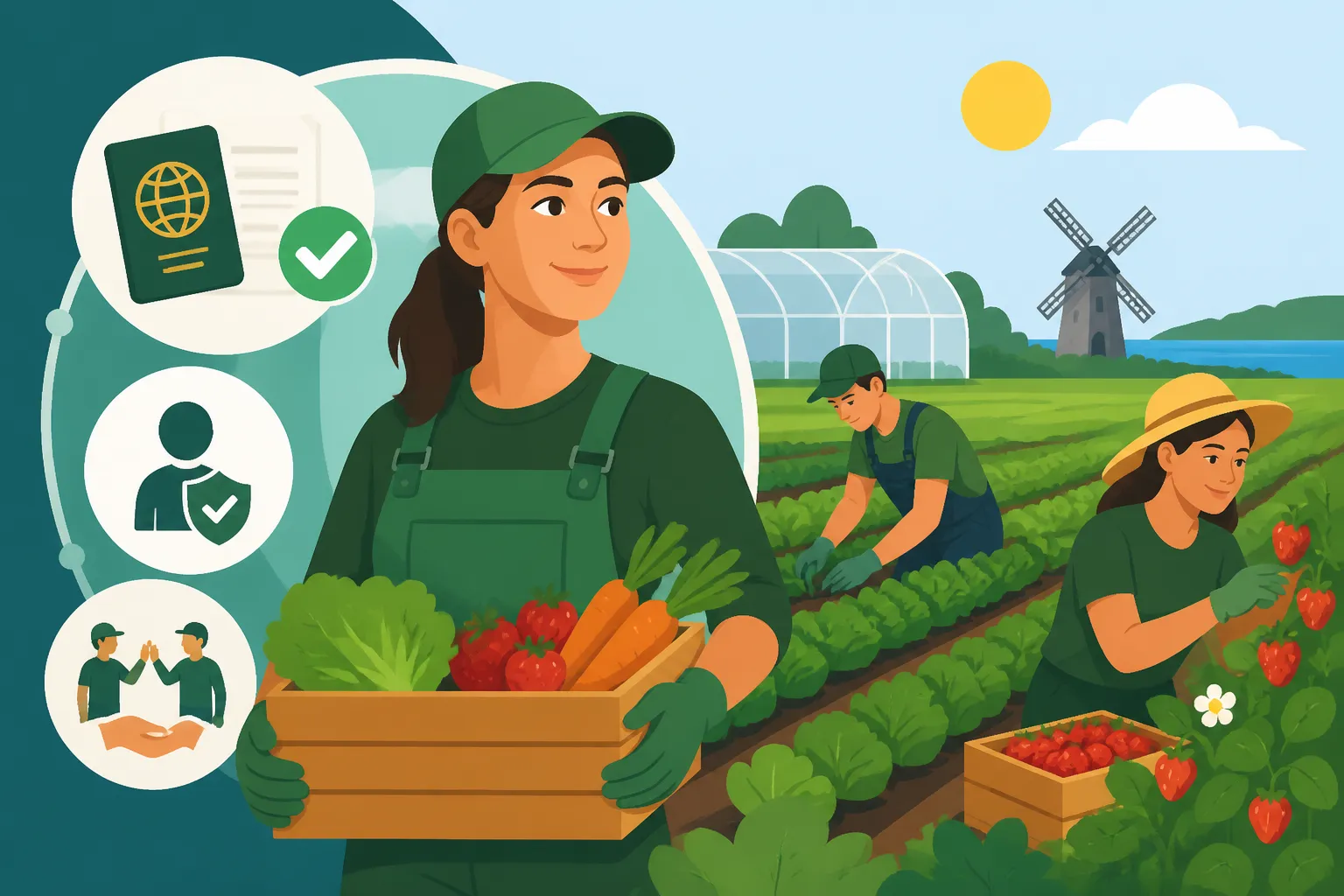
- Berry Picking and Fruit Harvesting: This is perhaps the most iconic seasonal job. Think strawberries in early summer, blueberries later on, and apples or pears into the autumn. Regions like Funen and parts of Jutland are known for their fruit orchards and berry farms. The work is fast-paced, often paid by piece-rate, and demands significant stamina. You’ll spend long hours bending, reaching, and carrying, often under the fickle Danish weather conditions – one minute sunshine, the next a sudden downpour.
- Christmas Tree Cultivation: Yes, Denmark is a major exporter of Christmas trees, particularly the Nordmann fir. The season for this runs from late summer through late autumn, involving tasks like pruning, netting, and ultimately, cutting and preparing trees for shipment. This can be surprisingly heavy work, often in forests or fields that can be muddy and uneven.
- Greenhouse and Nursery Work: This sector, often more stable throughout the year due to controlled environments, still has peak seasons. This includes planting, tending, and harvesting various vegetables, flowers, or saplings. It might involve working in warmer, humid conditions, but often offers a bit more shelter than open-field work.
- Livestock Care and Related Tasks: While less common for "seasonal" foreign workers in the traditional sense, some farms, particularly those with mink or other specialized livestock, might require temporary help with feeding, cleaning, or facility maintenance during specific periods. These roles can be more specialized and might require some prior experience.
- Asparagus and Potato Harvesting: These spring and early summer crops also require intensive manual labor for harvesting, particularly the more delicate asparagus. It's often back-breaking work, but typically offers a clear end date.
The demand for these roles fluctuates annually based on weather, crop yields, and economic factors, so it's always worth researching the current market before committing.
The Reality of the Work
Let's be blunt: seasonal agricultural work in Denmark is physically demanding, often repetitive, and can be solitary. It's not a holiday, and it's not a quick way to get rich.
- Hours and Pace: Expect long hours during peak season, sometimes six or even seven days a week. Flexibility is key, as schedules are dictated by the weather and the crops themselves. If the sun is shining and the berries are ripe, you'll be out there. There will be intense periods, followed by quieter times, but you'll need to be ready to go when called upon.
- Physical Demands: This is manual labor. You'll be bending, lifting, carrying, walking, and standing for extended periods. Expect sore muscles, tired feet, and possibly sunburn or cold, wet hands depending on the season. Proper attire, including waterproofs and sturdy footwear, is non-negotiable.
- Pay and Compensation: While Denmark has no statutory minimum wage, collective agreements often set wage standards in various sectors. For agricultural work, wages can vary, and piece-rate payment (per kilo picked, for example) is common. Make sure your contract clearly outlines the payment structure. Remember, you'll also be subject to Danish taxes, which can feel high, even for temporary work. It's wise to understand the basics of Danish income tax, including A-Skat and AM-bidrag, as soon as you start.
- Cultural Nuances: Danish work culture, even in agriculture, often values efficiency, direct communication, and a certain level of independence. While there might be less of the flat hierarchy seen in corporate offices, professionalism and adherence to safety rules are paramount. Don't expect excessive hand-holding, but do expect clear instructions and a reasonable working environment.
Visa and Residence Permit Requirements for Seasonal Work
This is where things can get a bit tricky, and it’s crucial to understand the specific category you fall under. Denmark has strict rules, and simply showing up hoping to find work won't cut it.
The 'Seasonal Work' Visa vs. Other Permits
For most non-EU/EEA citizens, the primary route for seasonal agricultural work in Denmark is the Seasonal Work Scheme (Sæsonarbejdstilladelse). This is a very specific type of residence and work permit, distinct from other, more general work permits like the Pay Limit Scheme or the Positive List.
- Who is it for? This scheme is designed for non-EU/EEA citizens who have secured a job offer from a Danish employer in a sector explicitly approved for seasonal work. Agricultural sectors, including specific types of crop harvesting and certain types of animal production, are often on this list.
- Key Differences: Unlike many other work permits, the seasonal work permit is typically short-term, usually valid for up to 90 days within a 12-month period. It's tied to a specific employer and specific job, meaning you cannot freely change jobs or employers while on this permit. It does not lead to permanent residency or family reunification. It’s important to differentiate this from a general work visa or a student visa, which have different rules for working rights. For those considering longer-term stays, it's worth reading about topics like the Pay Limit Scheme: Meeting the 2026 Salary Requirements or Student Visas in Denmark: Applications, Part-time Work, and Post-Grad.
For EU/EEA and Swiss citizens, the situation is much simpler. You generally do not need a visa or work permit to work in Denmark. You have the right to live and work here under the rules of free movement. However, if you plan to stay for more than three months, you will need to register for an EU residence certificate (registreringsbevis) with the Danish Agency for International Recruitment and Integration (SIRI). Even for short-term seasonal work, if you earn money, you'll eventually need a CPR number to deal with taxes.
Application Process and Key Documents
For non-EU/EEA citizens, the application process for a seasonal work permit goes through the Danish Agency for International Recruitment and Integration (SIRI). It's a precise process, and missing a single document can lead to significant delays. For many, navigating SIRI can feel like a daunting task, as outlined in our guide on Navigating SIRI: Processing Times, Biometrics, and Appeals.
- Secure a Job Offer: This is the absolute first step. You cannot apply for a seasonal work permit without a concrete job offer from a Danish employer. The employer must be aware of the seasonal work scheme and be willing to go through the necessary procedures. The job offer must be in an approved sector.
- Employer Files the Application: Often, your employer will initiate the application (Form OD1 or similar) with SIRI on your behalf. They will need to provide documentation about the job, the company, and the necessity of hiring a foreign seasonal worker.
- Applicant Submits Supporting Documents: You, as the applicant, will then need to provide a range of documents, which typically include:
- A valid passport.
- Proof of financial means to support yourself during your stay (unless your employer is covering all costs, which is rare).
- Proof of accommodation in Denmark.
- Travel insurance covering your stay.
- A completed application form (often a section you fill out after the employer initiates).
- Payment of the application fee.
- Biometrics: You will need to have your fingerprints and a photo taken. This usually happens at a Danish mission (embassy or consulate) in your home country or a VFS Global center.
- Processing Time: SIRI processing times can vary widely depending on the time of year and the completeness of your application. It’s crucial to apply well in advance of your intended start date. Don't expect an instant decision; patience is a virtue here.
- Receiving the Permit: If approved, you will receive a residence and work permit. This permit will specify the duration of your stay and the employer you are permitted to work for.
Common Pitfalls:
- Incomplete Applications: This is the number one reason for delays or rejections. Double-check every single field and document.
- Lack of Funds: You must demonstrate you can support yourself without becoming a burden on the state, even if your employer provides some benefits.
- Untrustworthy Employers: Be wary of job offers that seem too good to be true or ask for large upfront payments from you. Always verify the legitimacy of the farm or company.
Specific Rules for EU/EEA vs. Non-EU Citizens
As mentioned, the rules diverge significantly based on your citizenship.
For EU/EEA and Swiss Citizens:
- No Visa or Work Permit Required: You can enter Denmark and start working immediately.
- CPR Number: If you plan to stay for more than 3-6 months (depending on municipality) or if you start working, you'll need to apply for a Danish civil registration number (CPR number). This is absolutely essential for everything from getting paid to opening a bank account and accessing public services. For more on this, check out our guide on Understanding CPR Registration and Your Healthcare Entitlement.
- EU Residence Certificate: For stays longer than three months, you must apply for an EU residence certificate from SIRI. This formalizes your right to reside in Denmark.
For Non-EU/EEA Citizens:
- Mandatory Seasonal Work Permit: You must have this permit before you arrive in Denmark and start work. Working without one is illegal and can lead to deportation and future entry bans.
- Employer Sponsorship: Your ability to get this permit is almost entirely dependent on having a legitimate Danish employer willing to sponsor you and navigate the process.
- Limited Duration and Scope: The permit is typically short, non-renewable beyond its specific terms, and tied to agricultural work. It's not a pathway to long-term residency.
Work Conditions and Your Rights as a Seasonal Worker
Even as a seasonal worker, you have rights under Danish labor law. It's vital to know what these are to protect yourself from exploitation and ensure fair treatment.
Employment Contracts and Wages
The backbone of your seasonal employment will be your contract. Don't sign anything you don't understand, and always get a copy in a language you comprehend.
- Written Contract is Essential: Your employer is legally obliged to provide you with a written employment contract. This contract should clearly state:
- Your start and end dates of employment.
- Your job description and duties.
- Your wage rate (hourly, piece-rate, or a combination).
- Payment frequency and method.
- Working hours and breaks.
- Conditions for accommodation, if provided.
- Notice periods for termination.
- Any collective agreements (overenskomst) that apply.
- Minimum Wage (or lack thereof): Denmark famously doesn't have a statutory minimum wage. Instead, wages are typically negotiated through collective agreements between unions and employer organizations. Many agricultural sectors are covered by such agreements. If your employer is part of a collective agreement, you are entitled to the wages stipulated within it. Always ask if your employer is part of an overenskomst and which one. If not, the wage should be explicitly agreed upon in your contract and must be fair for the work performed.
- Holiday Pay (Feriepenge): Even as a seasonal worker, you earn holiday pay (Feriepenge). For every month you work, you accrue 2.08 days of paid holiday. This is typically 12.5% of your gross salary and is usually paid out when your employment ends. This isn't just a bonus; it's a legal entitlement under The Danish Holiday Act (Ferielov): Earning and Spending Vacation Days. It's often managed through a system called Feriekonto or directly by your employer if they're covered by a collective agreement.
Accommodation and Living Arrangements
For many seasonal agricultural workers, accommodation is a significant part of the overall package, or at least a major consideration.
- Employer-Provided Housing: It's common for farms to offer some form of housing for seasonal workers, especially in more rural areas where public transport is scarce. This could be anything from shared rooms in a farmhouse, temporary cabins, or caravan park setups.
- Pros: Convenience, proximity to work, often cheaper or subsidized.
- Cons: Can be basic, shared facilities, potentially isolated, costs might be deducted from your wages.
- Private Rental: Less common for short-term seasonal work due to the difficulty of securing rentals without a CPR number or long-term contract. However, if you find your own place, ensure it's legitimate and you have a clear rental agreement. Be aware that landlords may ask for significant deposits and prepaid rent.
- Costs: Always clarify in your contract whether accommodation is provided for free, or if there's a cost involved, and how that cost will be deducted. Ensure the deduction is reasonable and transparent.
Healthcare Access for Seasonal Workers
Access to healthcare is a critical concern, especially when you're doing physically demanding work in a foreign country.
- CPR Number is Key: Once you receive your CPR number (which you will if you're working legally and for a sufficient period), you will generally be entitled to public healthcare under the Danish system. This includes access to a general practitioner (GP) and emergency services. Your Yellow Health Card (Sundhedskort) will be your proof of entitlement.
- Before CPR Number / Short Stays: If your stay is very short, or if you are still waiting for your CPR number, things are more complicated.
- EU/EEA Citizens: Your European Health Insurance Card (EHIC) covers medically necessary treatment during your temporary stay, under the same conditions as Danish citizens.
- Non-EU/EEA Citizens: This is where it gets tricky. It is highly advisable to have comprehensive private travel or expat health insurance that covers you from the moment you arrive until you are fully integrated into the public system, or for the entire duration of your stay if you won't get a CPR number. If you arrive without a CPR number and without sufficient private insurance, a medical emergency could lead to substantial bills. Read more on Expat Health Insurance: Coverage Before You Get Your CPR Number.
- Workplace Injuries: Your employer is legally obliged to have workplace injury insurance. If you are injured on the job, you should report it immediately to your employer, and they must report it to their insurance company and the Danish Working Environment Authority (Arbejdstilsynet).
Navigating Life Beyond the Fields: Practicalities and Integration
While your main purpose is work, Denmark is a society with its own systems and culture. Understanding these will make your seasonal stay smoother and more enjoyable.
Financial Matters: Banking and Taxes
Getting your finances in order is one of the first and most crucial steps after arriving.
- NemKonto and Bank Account: Once you have a CPR number, you need to open a Danish bank account and designate it as your NemKonto. This is your designated account for receiving all payments from public authorities, including your salary if your employer uses the NemKonto system. Setting up your NemKonto is a fundamental part of Money in Denmark: Banking, Payments, and Financial Setup for Expats. Traditional banks and digital banks like Lunar offer options for expats.
- Taxation: Yes, even seasonal workers pay Danish taxes. Your employer will deduct A-Skat (income tax) and AM-bidrag (labor market contribution) from your salary. The amount deducted depends on your tax card, which is generated by SKAT (the Danish tax authority) based on your income expectations. It's a complex system, and understanding your Taxes in Denmark Explained: A-Skat, AM-bidrag, and Marginal Rates is crucial to avoid unpleasant surprises. Companies like Taxes for Expats specialize in helping foreigners navigate these complexities, especially if you have tax obligations in your home country as well. They can help you understand deductions and ensure you're paying the correct amount.
- MobilePay: Denmark is largely a cashless society. MobilePay is the dominant payment app here, used for everything from splitting bills with friends to paying for small purchases. You'll need a Danish bank account, a Danish phone number, and a MitID to set it up, but it's essential for daily life. Getting your NemKonto and MitID: The Core of Danish Digital Finance (2027) in order is the first step towards this.
Language and Communication
While Danish workplaces, particularly in larger cities, often function perfectly well in English, the agricultural sector, especially smaller, family-run farms, might be different.
- English vs. Danish: Many younger Danes, especially those in supervisory roles, will speak excellent English. However, some colleagues or older farmers might have limited English. Basic Danish phrases for greetings, expressing needs, and understanding instructions can go a long way.
- Learning Resources: Even a few weeks of preparation can make a big difference. Apps like Duolingo or services like iTalki, where you can find tutors for specific languages, can help you learn essential phrases before you arrive. It’s not just about politeness; it can significantly improve your safety and efficiency at work. While formal classes might be difficult for seasonal workers, there are resources for Learning Danish: Sprogcenter, FVU, and the Importance of the Language available for those looking for longer-term integration.
- Digital Communication: Much official communication in Denmark happens digitally, often through platforms like e-Boks or Mit.dk. You'll need MitID to access these, reinforcing the importance of getting that digital ID sorted.
Social Life and Local Integration
Seasonal work can sometimes feel isolating, especially if you’re in a rural area and your accommodation is far from town centers.
- Connecting with Colleagues: Your primary social circle will likely be your fellow seasonal workers. Many farms employ people from diverse backgrounds, creating a unique international community. Embrace it, share experiences, and support each other.
- Local Community: Danes can sometimes seem reserved, but they are generally friendly and appreciate genuine effort to engage. Try to participate in local events, visit village shops, or join local clubs if time allows. This can give you a deeper insight into Danish Work Culture: Flat Hierarchies, Hygge, and Direct Communication and wider Danish society.
- Making Friends: While it can be challenging to form deep connections during a short stay, being open and friendly will help. Many Danes, once you get past the initial reserved exterior, are warm and welcoming. If you’re a parent, knowing your Child Sickness Days (Barns Første Sygedag): Your Rights as a Parent can also be a talking point with local families.
| Aspect | EU/EEA Citizens | Non-EU/EEA Citizens (Seasonal Work Permit) |
|---|---|---|
| Visa/Work Permit | Not required | Required before arrival (Sæsonarbejdstilladelse) |
| CPR Number | Required for stays >3 months/employment | Required upon arrival for legal employment and services |
| Healthcare | EHIC covers medically necessary care; then public system with CPR | Private insurance recommended before CPR; then public system with CPR |
| Employment Contract | Mandatory | Mandatory, specifies employer/job |
| Holiday Pay (Feriepenge) | Accrued as per Danish Holiday Act (12.5% gross salary) | Accrued as per Danish Holiday Act (12.5% gross salary) |
| Accommodation | Find your own or employer-provided (check terms) | Find your own or employer-provided (check terms) |
| Taxation | Pay Danish income tax (A-Skat, AM-bidrag) | Pay Danish income tax (A-Skat, AM-bidrag) |
| Digital ID | MitID required for many services with CPR | MitID required for many services with CPR |
| Social Integration | Easier with longer stays, focus on local life | Primarily with fellow workers, local events if possible |
| Pathway to PR | Possible with long-term, stable employment | No direct pathway to permanent residency |
Seasonal agricultural work in Denmark can be a rewarding experience for those who are prepared for its demands. It offers a unique glimpse into Danish life and a chance to work in beautiful natural settings. By understanding the visa requirements, your rights as a worker, and the practicalities of living in Denmark, you can ensure your seasonal adventure is a positive one.
Disclaimer
The information provided in this guide is for general informational purposes only and does not constitute legal or financial advice. Immigration, tax, and labor laws in Denmark can be complex and may change. Always consult with official Danish authorities (like SIRI, SKAT, or the Danish Working Environment Authority) or qualified legal/financial professionals for advice tailored to your specific situation.