Are There Any ATMs Left in Denmark? Where to Find Cash
You arrive at Copenhagen Airport, fresh off a flight with a wallet full of Euros or Dollars, thinking you are prepared for your new life in the Nordics. But as you approach a coffee kiosk or try to buy a train ticket, you notice something unsettling: nobody is reaching for their wallet. Instead, there is a rhythmic tapping of phones and watches against card readers. You look around for a glowing "ATM" sign to get some local krone, but the walls are bare. Many newcomers face this immediate "digital wall," where the lack of physical cash feels less like a convenience and more like an exclusionary barrier. This guide is designed to help you locate the remaining cash points in Denmark, understand the fees involved, and transition into a society that has largely moved past the banknote.
The Vanishing Act of the Danish ATM
If you feel like you are on a scavenger hunt every time you need twenty quid in Denmark, you aren't imagining things. Denmark is consistently ranked as one of the most cashless societies on the planet. For an expat, this transition can be jarring. I remember my first month in Aarhus, wandering for blocks in the rain because I needed a specific coin for a locker at the gym, only to realize that even the lockers had been upgraded to use digital tokens. The reality is that Danish banks have been aggressively removing physical ATMs—or Pengeautomater—to cut costs and reduce the risk of robberies.
The disappearance of these machines is tied directly to the rise of MobilePay and Cashless Denmark: Surviving Without Physical Cash. When 90% of the population uses a phone app to pay for everything from a hot dog to a used car, the incentive for a bank to maintain a high-maintenance mechanical box in a wall disappears. You will notice that many traditional bank branches in the city centers of Copenhagen or Odense no longer have "teller" services or even an ATM inside. They have become consulting hubs for mortgages and investments, leaving the "dirty work" of cash handling to a few specialized machines.
However, the "Pengeautomat" still exists if you know where to look. Most are now branded under a collaborative network called "Kontanten." This is a joint venture between several smaller banks to share the costs of ATM maintenance. Instead of seeing a machine with a specific bank logo like Nordea or Danske Bank, you are more likely to see a generic, grey-and-blue machine labeled "Kontanten." These are your best bet for reliability. Understanding this shift is part of the broader learning curve of Opening a Bank Account in Denmark: Document Checklist and Delays, as you’ll soon realize your physical interaction with your bank will be almost entirely digital.
Why Cash is Becoming a Rarity in Daily Life
The cultural shift away from cash is driven by efficiency and the Danish obsession with "digital first" government. When the state decided that all citizens must have a digital mailbox and a digital ID, the financial sector followed suit. Today, carrying a 500 DKK note is almost a liability. Tourists who try to pay for a round of beers with a large bill may find that the bartender simply does not have enough change in the till.
There are also legislative factors at play. To combat money laundering, Denmark has strict limits on large cash transactions. While Paying with Cash: Are Supermarkets Legally Required to Accept It? is a common question, the answer is technically "yes" during certain hours, but many businesses are finding ways to circumvent this by going "card only" for safety reasons. This makes finding an ATM less of a daily necessity and more of an emergency task for specific situations.
The Looming Phase-out of High-Denomination Notes
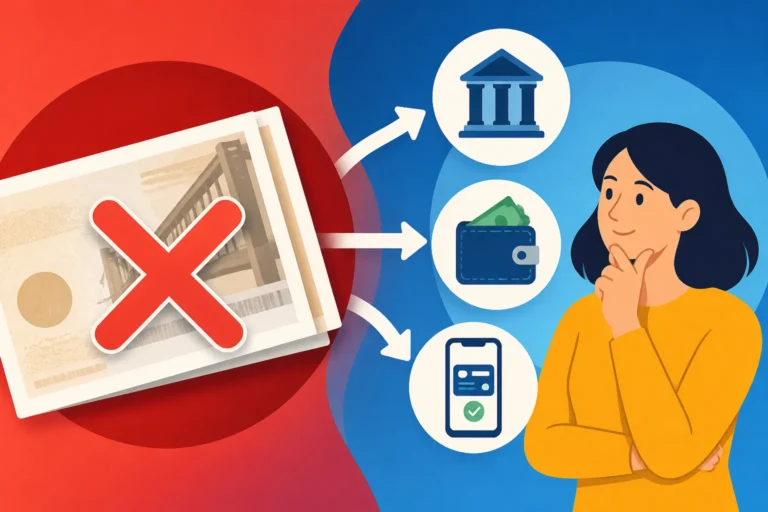
Adding to the confusion for expats is the recent announcement regarding The 1000 DKK Note Phase-Out: What to Do with Old Danish Cash. The Danish Central Bank has decided that the 1,000-krone note will no longer be legal tender after May 2025. This has caused a minor panic at the few remaining ATMs that still dispense these large notes. If you happen to find an ATM and it spits out a purple 1,000 DKK bill, my advice is to take it straight to a supermarket and break it immediately. Retailers are becoming increasingly wary of accepting them, and soon, you’ll only be able to deposit them at specific bank counters—which, as we’ve discussed, are also disappearing.
Where to Find ATMs in Major Cities and Rural Areas
While the numbers are dwindling, there are strategic locations where you can almost always find a working ATM. In major hubs like Copenhagen, Aarhus, or Aalborg, your best bets are transit centers. Central stations (København H, Aarhus Rutebilstation) usually have a cluster of ATMs near the main entrances. These are high-traffic areas where the banks know people might need physical currency for the occasional bus driver who doesn't take cards or for international travelers arriving with nothing but a foreign debit card.
Shopping malls, or "Storcentre," are another reliable haven. Places like Fisketorvet in Copenhagen or Bruun’s Galleri in Aarhus maintain ATMs because they house many small boutique shops and kiosks that might occasionally have "down" card systems. When you are out in the suburbs or rural Denmark, the search becomes harder. In smaller towns, the ATM is almost always attached to the local supermarket, like a Netto, Rema 1000, or SuperBrugsen. Look for a small recessed area near the entrance; often, the machine is tucked away to provide a bit of privacy for the user.
| Location Type | Reliability | Typical Brand | Recommended For |
|---|---|---|---|
| Train Stations | High | Kontanten / Danske Bank | New arrivals, late-night needs |
| Shopping Malls | High | Euronet / Kontanten | Large withdrawals, weekend access |
| Supermarkets | Medium | Bank-specific (Nordea/Jyske) | Rural areas, grocery runs |
| 7-Eleven Stores | High | Danske Bank | Quick cash, 24/7 availability |
| Independent Street ATMs | Low | Euronet | Emergency only (High fees) |
The Euronet Warning for Expats
You will see bright yellow and blue ATMs labeled "Euronet" in heavy tourist areas like Nyhavn or near the Little Mermaid statue. Use these only as a last resort. While convenient, these are independent machines not affiliated with the Danish banking system. They often charge exorbitant transaction fees and use "Dynamic Currency Conversion" (DCC) to offer you a terrible exchange rate.
If you use a Euronet machine with a foreign card, it will ask if you want to be "charged in your home currency." Always say NO. Let your own bank or a service like Wise handle the conversion. The machine’s internal conversion rate is designed to pocket an extra 5-10% of your money. If you are still setting up your local finances and exploring the Traditional Banks vs. Digital Banks (Lunar): Which is Best for Expats? debate, you'll want to keep your costs low by sticking to bank-owned ATMs like those from Danske Bank or Jyske Bank.
Cash Access in North Zealand and Rural Jutland
If you move outside the capital region, the ATM density drops off a cliff. In the coastal towns of North Zealand or the windswept villages of Western Jutland, you might find only one ATM for an entire postal code. In these areas, the local "Kro" (inn) or "Bager" (bakery) might be the only place where cash is still common, but they won't have an ATM inside.
Before heading out on a road trip, it is wise to check a map app for "Pengeautomat" to see where the last outpost of cash is. Many expats find that they don't actually need the cash until they hit a small Finding Flea Markets (Loppemarked) During the Danish Summer, where some older sellers still prefer coins over MobilePay (though even that is changing fast).
Practical Tips for Withdrawing Cash as a Foreigner
Navigating a Danish ATM with a foreign card is a test of patience. Most machines will offer an English language option as soon as you insert your card, but the logic of the machine might feel different. For example, some Danish ATMs will return your card before dispensing the cash. If you are used to the cash coming out first, don't walk away! Wait for the shutter to open.
One thing that surprises many expats is the withdrawal limit. Even if your home bank says you can withdraw $1,000 a day, the Danish machine might cap you at 2,000 or 5,000 DKK per transaction. This is a security measure. If you need a larger sum—perhaps for a deposit on a room where the landlord is acting a bit "old school"—you may need to perform multiple transactions or visit a physical bank branch during their limited opening hours. This is why understanding the Cost of Living in Denmark 2026: Budgets for Singles and Families is vital; you need to plan these larger cash movements in advance to avoid being stuck at an ATM with a daily limit.
Fees, Exchange Rates, and Hidden Costs
When you use a foreign card at a Danish ATM, you are being hit from three sides: your home bank’s foreign transaction fee, the Danish ATM’s usage fee (though some are free), and the exchange rate margin. This is where using a modern fintech solution can save you a fortune. I personally use Wise for my international transfers and their multi-currency card for ATM withdrawals. They provide the mid-market rate, which is significantly better than what a traditional Danish bank will offer you at the machine.
For those who are working and earning in Denmark, you will eventually have your salary paid into a NemKonto and MitID: The Core of Danish Digital Finance (2027) linked account. Once you have a Danish card, specifically The Dankort: Denmark’s National Debit Card and Why You Want One, ATM fees generally disappear. Until then, treat every withdrawal as a "fee event" and try to take out larger amounts less frequently rather than 200 DKK every other day.
Reporting Your Finances and Tax Implications
While finding an ATM is a physical struggle, the digital trail of your money is something the Danish authorities watch closely. If you are withdrawing large amounts of cash or, conversely, depositing large amounts of foreign cash you brought with you, be prepared for the bank to ask questions. Denmark’s anti-money laundering (AML) laws are fierce.
If you are a high-earner or a "digital nomad" expat, you should also be aware of how your cash and assets are viewed by the tax man. Consulting with a specialist like Taxes for Expats can help you navigate the reporting requirements for foreign bank accounts and large cash holdings. Understanding Taxes in Denmark Explained: A-Skat, AM-bidrag, and Marginal Rates is essential to ensure that your "cash under the mattress" doesn't trigger an audit.
Life Beyond Cash: The Danish Payment Ecosystem
Once you have successfully found an ATM and have a few hundred krone in your pocket, you’ll likely find that you rarely use it. The true "currency" of Denmark isn't the paper note; it's the digital infrastructure. The moment you get your CPR number, your first priority should be getting NemKonto and MitID: The Core of Danish Digital Finance (2027) set up. This is the "key" to the kingdom. Without it, you can't get MobilePay, and without MobilePay, you are socially and financially hamstrung.
I remember trying to split a dinner bill with Danish friends before I had MobilePay. It was an administrative nightmare. They all wanted to "ping" each other their shares, and I was left trying to hand over a 200 DKK note that nobody wanted to take because then they would have to deal with the "cash problem." Being an expat in Denmark means embracing the fact that cash is now an "edge case" rather than the norm.
When You Absolutely Must Have Cash
Despite everything I’ve said, there are still a few scenarios where cash is king—or at least a very helpful prince.
- Coin-Operated Laundries: Some older apartment buildings still have "Vaskeri" (laundry) rooms that require 10 or 20 DKK coins.
- Small Hot Dog Stands (Pølsevogne): While most now take cards, the occasional stand in a rural park might have a "broken" terminal.
- Flea Markets: As mentioned, Finding Flea Markets (Loppemarked) During the Danish Summer is a great way to furnish an apartment, and while MobilePay is common, cash can sometimes give you better bargaining power with an older seller.
- Emergency Backup: Denmark’s digital systems are incredibly stable, but a nationwide MitID outage (rare but possible) can leave you unable to pay for anything digitally. Keeping 500 DKK in your phone case is just good veteran expat advice.
Transitioning to a Local Account
To avoid the ATM hunt entirely, you need to transition to a local bank as soon as possible. Whether you choose a legacy giant or go with Traditional Banks vs. Digital Banks (Lunar): Which is Best for Expats?, having a Danish IBAN and a physical debit card makes life infinitely easier. You will no longer worry about "Are there any ATMs left?" because the entire country becomes your "ATM" through cash-back options at supermarkets. In many grocery stores, you can ask to "over-pay" on your card and receive the difference in cash—a process called "modtagelse af kontanter." This is often more convenient than finding a dedicated machine in a dark alley.
Disclaimer
This guide is for informational purposes only and does not constitute financial, legal, or tax advice. While the information provided is based on real-time data and personal expat experience in Denmark for 2026, banking regulations and ATM locations can change frequently. Always verify fees with your specific card issuer before making international withdrawals.