Healthcare in Denmark for Foreign Residents: Complete System Guide (2027)
The first few weeks after landing in Copenhagen or Aarhus can feel like a fever dream of paperwork, where the simple act of needing a doctor becomes a mountain of digital roadblocks. I remember my own first winter here, shivering with a brutal flu and realized I was technically invisible to the system because my residence permit was still processing. This guide solves the labyrinthine journey of the Danish healthcare system, ensuring you never feel stranded when you or your family fall ill.
The Foundation of Danish Healthcare for Expats
When you first arrive, the concept of "free" healthcare is often the most misunderstood aspect of the Danish welfare state. It is not exactly free; it is pre-paid through some of the highest income taxes in the world. As a resident, you are essentially a shareholder in this system, and your entry ticket is the CPR number. Without this ten-digit identification, the system essentially does not see you, which is why the initial waiting period is the most vulnerable time for any newcomer.
Understanding the Gatekeeper Model
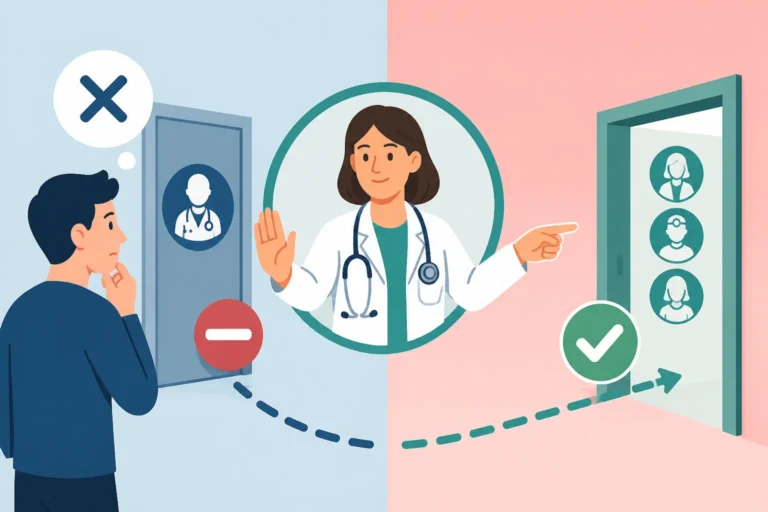
The Danish system relies heavily on a "gatekeeper" model. Unlike many other countries where you might choose to visit a cardiologist or a dermatologist on a whim, in Denmark, everything begins and ends with your General Practitioner (GP). This can be deeply frustrating if you are used to direct access to specialists. I’ve sat in many "fredagsbars" listening to expats vent about being told to "take some Panodil and wait" by their GP when they were convinced they needed a specialist's intervention.
This model is designed for efficiency and to ensure that hospital resources are reserved for those who truly need them. Your GP is your advocate and your medical record keeper. They handle about 90% of all medical issues without ever needing to refer you further. Understanding this cultural shift—from being a consumer of healthcare to being a patient within a structured public trust—is the first step toward a stress-free life in Denmark.
The Role of the Regions
Denmark is divided into five administrative regions: Capital Region (Hovedstaden), Zealand (Sjælland), Southern Denmark (Syddanmark), Central Jutland (Midtjylland), and North Jutland (Nordjylland). Each region manages its own hospitals and GP contracts. While the quality of care is remarkably consistent nationwide, the digital portals or specific phone numbers for "out-of-hours" care can differ depending on whether you are living in the heart of Vesterbro or the suburbs of Odense.
For example, in the Capital Region, you will become very familiar with the number 1813, which is the line for non-emergency but urgent medical needs. In other regions, you might call your GP's out-of-hours service directly. Being aware of these regional nuances prevents that heart-sinking moment of calling the wrong number in the middle of the night.
The Residency Requirement
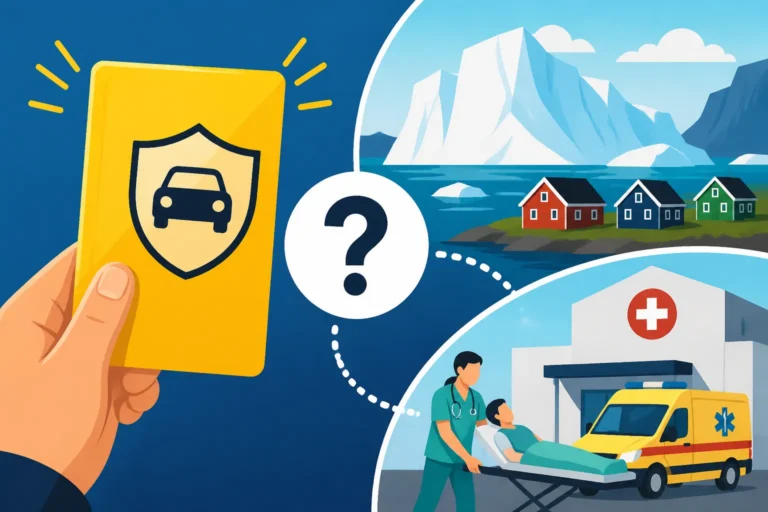
To be fully covered by the public system, you must be a legal resident. For EU citizens, this is relatively straightforward, but for non-EU expats, there is often a "grey zone" between your arrival and the moment you receive your health card. During this period, you are only covered for emergency care. This is why many veteran expats recommend securing a plan from SafetyWing to bridge the gap until your registration is complete.
I personally spent three months without my "Yellow Card" because of a backlog at the International House in Copenhagen. During that time, I felt a constant low-level anxiety about what would happen if I had a non-emergency issue, like a recurring ear infection. Having that secondary coverage isn't just about the money; it’s about the peace of mind while the Danish bureaucracy moves at its own measured pace.
The Yellow Health Card and CPR Registration
The "Sundhedskort," or the Yellow Health Card, is the most important piece of plastic in your wallet. It is your proof of insurance, your ID at the pharmacy, and your "check-in" key at every medical facility. You cannot simply walk into a clinic and pay cash; you must have this card to be processed. The journey to getting this card starts with Understanding CPR Registration and Your Healthcare Entitlement, which is the backbone of your legal existence in the country.
Getting Your CPR Number
The CPR (Central Person Register) number is issued once you have a place to live and a residence permit. In cities like Copenhagen, you’ll likely visit the International House on Gyldenløvesgade. You’ll need your passport, your permit, and a rental contract. One of the biggest hurdles I faced was the "catch-22" of needing a permanent address to get a CPR, but often needing a CPR to sign a permanent lease.
Once your CPR is registered, your Yellow Health Card is automatically triggered to be sent to your mailbox. It usually arrives in a windowed envelope from your local municipality (kommune). It will have your name, address, CPR number, and the name, address, and phone number of your assigned GP. From that moment on, you are fully integrated into the Danish healthcare fold.
Group 1 vs Group 2 Coverage
When you register, you are asked to choose between Group 1 and Group 2. Almost everyone (99% of residents) chooses Group 1. In Group 1, your GP visits and specialist referrals are entirely free. The trade-off is that you are locked into the GP listed on your card and must seek referrals for everything. If you choose Group 2, you have the freedom to visit any GP or specialist without a referral, but you must pay a portion of the fee yourself.
For most expats, Group 1 is the logical choice. However, if you have a very specific medical history and want the freedom to bypass the GP gatekeeper, Group 2 exists. Just be prepared for the administrative headache of paying and then seeking partial reimbursement. For a deeper look at the physical card itself and what all the numbers mean, see The Yellow Health Card (Sundhedskort): Your Key to Danish Healthcare.
What to Do During the Waiting Period
The "wait" for the card can take anywhere from two to six weeks. If you fall ill during this time and you are an EU citizen, your Blue EHIC card will cover you for necessary treatment. If you are from outside the EU, you are technically in a lurch. Some expats have tried to visit a GP without a card, and they were often turned away or told they must pay a high private consultation fee (up to 1,000 DKK) upfront.
This is where Expat Health Insurance: Coverage Before You Get Your CPR Number becomes vital. It acts as a safety net. If you have a policy from a provider like SafetyWing, you can seek treatment at a private clinic and claim the costs back. Once your Yellow Card arrives, you can transition fully to the public system, but that initial protection is what keeps a minor sinus infection from becoming a major financial burden.
Finding and Choosing Your General Practitioner
In Denmark, your GP is more than just a doctor; they are your primary point of contact for everything from a sore throat to a mental health crisis. When you register for your CPR, the system will often show you a list of doctors near your home who are accepting new patients. This is a critical decision because changing your doctor later usually involves a fee of about 225 DKK.
How to Select a GP
When you look at the list on the Borger.dk portal, you’ll see the names of the clinics. I highly recommend doing a bit of "digital stalking" before you click select. Check their websites to see if they have English-speaking staff—most do, but some older practices might be more traditional. Look at their "e-consultation" capabilities. A clinic that allows you to book appointments and renew prescriptions online will save you hours of phone time.
If you are moving to a popular neighborhood like Indre By or Aarhus C, you might find that the closest doctors are all "closed" to new patients. You might have to choose a doctor a bit further away. For step-by-step instructions on navigating this choice, check out How to Choose and Change Your General Practitioner (GP) in Denmark. Doing your homework pays off.
The GP Consultation Experience
Don't expect a 30-minute deep dive into your lifestyle. A standard Danish GP appointment is usually 10 to 15 minutes long. They are remarkably punctual, and they expect you to be as well. You will walk in, scan your Yellow Card at the terminal in the waiting room (this is how the region knows you showed up so the doctor gets paid), and wait for your name to appear on the screen or for the doctor to call you.
Danish doctors tend to be very direct. If you come in asking for antibiotics for a viral cold, they will likely say no and explain why. This "watchful waiting" approach is a hallmark of Danish medicine. It can feel dismissive at first, but it’s actually rooted in high medical standards to prevent antibiotic resistance. You are expected to be an active participant in your health, describing symptoms clearly and concisely.
Changing Your Doctor
Life happens. Maybe you move from Frederiksberg to Amager, or maybe you just don't click with your current GP. You can change your doctor at any time via the Borger.dk website using your MitID. As mentioned, there is a small fee unless you are moving house, in which case it is free. It’s a simple process, but remember that your medical records will need to be transferred, which can take a few days.
If you find that the public GP wait times for non-urgent issues are too long for your liking, some expats opt for supplemental private plans. Providers like Cigna Global can offer access to private GPs who might offer longer consultation times. However, for 95% of your needs, the public GP system is more than sufficient once you understand how to work within its boundaries.
Digital Health: MitID and Sundhed.dk
Denmark is one of the most digitally integrated societies on earth. Your healthcare is no exception. Almost everything—from seeing your blood test results to booking a midwife appointment—happens online. If you are not tech-savvy, the first few months will be a steep learning curve, but once you are set up, you’ll wonder how you ever lived without it.
The Power of Sundhed.dk
Sundhed.dk is the national health portal. It is your "Health CV." Every time you visit a doctor, get a vaccination, or have a hospital stay, it is recorded here. You log in using your MitID (your national digital signature). I remember the first time I logged in and saw the notes my doctor had made during my visit. It was a bit jarring to see their unfiltered observations, but incredibly helpful for keeping track of my own care.
The portal also allows you to see "waiting times" for various specialists across the country. If you need a knee surgery and the wait at Rigshospitalet is six months, you can use Sundhed.dk to see if a hospital in Roskilde can do it in two. For a full breakdown of how to use this tool, see Sundhed.dk and MitID: Navigating Denmark’s Digital Health Portals.
Managing Prescriptions Digitally
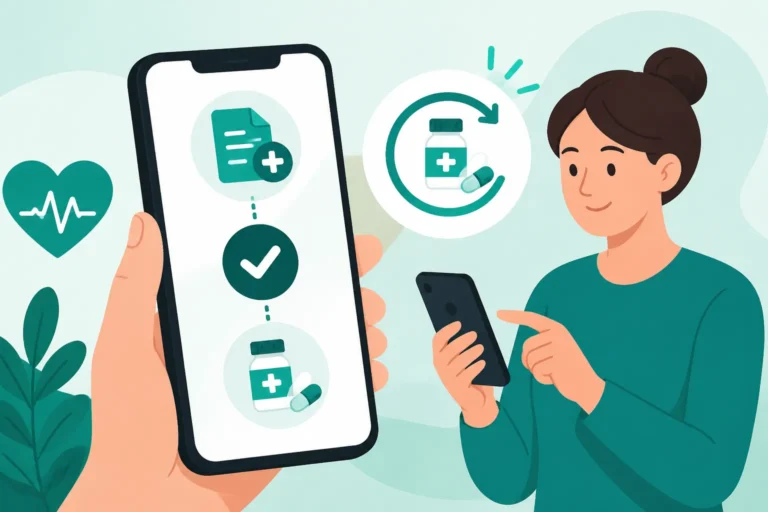
Gone are the days of paper prescriptions. In Denmark, your doctor "uploads" a prescription to the "cloud" (the FMK – Fælles Medicinkort). You can then walk into any pharmacy in the country, scan your Yellow Card, and they will see exactly what has been prescribed for you. There is a fantastic app called "Medicinkortet" that allows you to see how many refills you have left and even request a renewal from your GP with one tap.
This system is a godsend for chronic condition management. I have a friend who manages their asthma this way, and they never have to call the doctor’s office; they just handle it all through the app. To get started with the mobile version of your health card and prescriptions, you should look into Using the Medicinkortet App: Managing Your Prescriptions Digitally.
Laboratory Results and Notes
One of the best features of the digital system is the speed of information. If you go for a blood test at 9:00 AM on a Tuesday, you will often see the results on Sundhed.dk by Wednesday afternoon. There is no more "waiting for the doctor to call with the results." You see exactly what the doctor sees. Of course, this means you might end up Googling medical terms and scaring yourself before the doctor actually reviews the file, so use this power with caution!
The transparency of the Danish system is a double-edged sword. It empowers you as a patient, but it also requires a certain level of health literacy. If you see a value that is "outside the reference range," don't panic. The system highlights anything unusual in red, but your GP will usually only contact you if the deviation is clinically significant.
Emergency Care: 112, 1813, and Lægevagten
One of the most stressful experiences is having an emergency in a foreign country. In Denmark, there is a very clear hierarchy of who to call and when. If you get this wrong, you might find yourself waiting for hours in the wrong place, or worse, being told to go home and call a different number.
Calling 112 for Life-Threatening Emergencies
The number 112 is for life-threatening situations only—heart attacks, severe accidents, or unconsciousness. When you call, you will be asked if you need police, fire, or an ambulance. The dispatchers speak excellent English. I’ve had to call 112 once for a neighbor who collapsed, and the calm, professional response was world-class. Ambulances in Denmark are highly equipped, and the paramedics are often authorized to begin treatment on the spot.
1813 and the Out-of-Hours Service (Lægevagten)
If it is not life-threatening but cannot wait until your GP opens on Monday morning, you call the out-of-hours service. In the Capital Region (Copenhagen), this is 1813. In other parts of the country, it is the "Lægevagten." You must always call first. You cannot just show up at an Emergency Room (Skadestue) in Denmark; you will be turned away unless you have been referred by 1813 or a GP.
The wait times on the 1813 line can be notorious, especially on Sunday evenings during flu season. You will speak with a nurse who will triages your case. They might give you advice over the phone, tell you to see your GP the next day, or tell you to go to a specific "Akutmodtagelse" (Emergency Department). For a guide on what to say to ensure you are taken seriously, read Emergency vs. Out-of-Hours Care: When to Call Lægevagten (1813).
Urgent Care vs. Emergency Room
The Danish system distinguishes between "urgent" and "emergency." A broken finger is urgent, but not a life-threatening emergency. You will likely be sent to an "Akutklinik" (Urgent Care Clinic) rather than a major hospital trauma center. These clinics are often located within hospitals but have their own entrances.
One thing to note: Danish ERs do not operate on a "first-come, first-served" basis. They operate on clinical priority. If you arrive with a deep cut but someone else arrives with chest pains, you will wait. Expats often get very angry in waiting rooms because they’ve been there for four hours with a sprained ankle. It’s important to remember that the system is prioritizing those whose lives are at risk.
| Service Type | Phone Number | When to Use |
|---|---|---|
| Life-Threatening | 112 | Accidents, chest pain, difficulty breathing |
| Out-of-Hours (Copenhagen) | 1813 | High fever, broken bones, sudden illness |
| General Practitioner (GP) | Your Doctor's # | Non-urgent illness, referrals, renewals |
| Poison Control | 82 12 12 12 | If someone has swallowed something toxic |
Specialists and Hospital Care
Accessing specialist care—like a cardiologist, an ENT, or a gynecologist—is almost always done through your GP. This "referral" (henvisning) is sent electronically. Once the referral is in the system, you can contact any specialist in that field who has a contract with the public system and book an appointment.
The Referral Process
When your GP creates a referral, it "floats" in the national system. You don't get a piece of paper. You simply find a specialist on Sundhed.dk, call them, and give them your CPR number. They will pull up the referral and book you in. The wait times can vary significantly. For some specialties, like dermatology, the wait can be several months.
This is where the "Danish patient rights" come into play. If the wait time in the public system for a necessary treatment exceeds 30 days (this varies by condition), you may have the right to be treated at a private hospital at the government's expense. This is known as "Udvidet frit sygehusvalg." For a detailed explanation of how this works, see The Role of the GP: Why You Cannot Go Directly to a Specialist.
Public Hospitals vs. Private Options
Danish public hospitals, like Rigshospitalet in Copenhagen or Aarhus University Hospital, are academic powerhouses. The care for serious illness (cancer, heart surgery, etc.) is exceptional and completely free. However, the "amenities" might be more basic than what you are used to. You might be in a shared room, and the food is… well, it's hospital food.
If you prefer a private room and faster access to non-life-threatening surgeries (like a hip replacement), this is where private insurance like Cigna Global comes in. These policies allow you to bypass the public queues and go straight to private facilities like Aleris-Hamlet. Many Danish employers also provide "Sundhedsforsikring" (private health insurance) as a perk for this very reason.
Being a Patient in a Danish Hospital
If you are admitted to a hospital, the experience is very egalitarian. Doctors usually go by their first names and don't wear white coats as often as they do in the US or UK. They expect you to be informed and to ask questions. There is a strong emphasis on "patient autonomy," meaning they will present the options and expect you to participate in the decision-making process.
One hyper-local tip: Danish hospitals rarely provide everything you might need for an overnight stay. You should bring your own pajamas, toiletries, and even your own snacks if you are picky. The nurses are there for medical care, not for "hospitality" services. It’s a very practical, no-nonsense environment.
Pharmacies and Medication Subsidies
The Danish "Apotek" (Pharmacy) is a place of high regulation and professional advice. You won't find aisles of candy and soda here; it is strictly a medical establishment. Understanding how medication is priced and subsidized will save you a lot of confusion at the checkout counter.
The Subsidy System (Tilskud)
In Denmark, the more prescription medication you buy in a year, the cheaper it becomes. This is a rolling 12-month period. At the start of your year, you pay the full price. Once you have spent over a certain threshold (around 1,100 DKK), the government starts paying a percentage of the cost. If you have very high medical costs, the subsidy can eventually cover 85% or even 100% of the price.
This is handled automatically when you scan your Yellow Card. The pharmacy’s computer knows exactly where you are in your subsidy year. For a deep dive into the math behind this, check out How Medication Subsidies (Tilskud) Are Calculated at the Apotek. It’s a brilliant system for people with chronic illnesses, as it caps their annual out-of-pocket spending.
Over-the-Counter (OTC) Rules
One of the biggest shocks for expats is how restricted "basic" meds are. You cannot buy a 100-pack of Ibuprofen at the supermarket. In fact, supermarkets can only sell very small packs (usually 20 tablets) of weak pain relievers, and they are kept behind the counter or in a locked cabinet. If you need 400mg Ibuprofen, you generally need a prescription or you have to buy it at an Apotek.
Furthermore, many things that are OTC in other countries—like high-dose Vitamin D, certain allergy meds, or Melatonin—require a prescription in Denmark. The Danish Health Authority is very cautious about self-medication. For more on this, see Pharmacies in Denmark: Apotek Rules, Prescriptions, and Subsidies.
Finding an "All-Night" Pharmacy
Most pharmacies close by 5:30 PM or 6:00 PM. However, in every major city, there is at least one "Døgnapotek" (24-hour pharmacy) or one with extended hours. In Copenhagen, the Steno Apotek across from the Central Station is open 24/7. Be prepared to pay a small "out-of-hours fee" (usually around 20-30 DKK) if you visit late at night. It’s a good idea to locate your nearest 24-hour pharmacy before you need it at 3:00 AM for a child's earache.
Mental Health and Dental Care
These two areas are the "outliers" in the Danish system. Unlike general medical care, they are not entirely free, and the rules for access are quite different. This is often where expats feel the most "sticker shock."
Accessing Mental Health Support
Mental healthcare in Denmark starts with your GP. If you are struggling with depression, anxiety, or stress, you visit your GP, and they can provide a referral for a psychologist. With a referral, the state covers about 60% of the cost. However, the waiting lists for psychologists who take public referrals can be incredibly long—sometimes six months or more.
Many expats choose to see private therapists to avoid the wait. If you are looking for an English-speaking counselor in the capital, Mental Health in Denmark: Accessing Psychologists and Therapy for Expats is a great resource. This is another area where private insurance can be a lifesaver. Some Cigna Global plans include robust mental health coverage that allows you to see a therapist of your choice without the public system's wait times.
The Reality of Dental Care
In Denmark, dental care for adults (over 21) is private. While the state provides a very small subsidy for routine checkups, you are responsible for the vast majority of the bill. A simple cleaning and checkup will usually cost between 500 and 800 DKK. Major work like crowns or implants can cost thousands.
Because of these costs, many Danes and expats join "Sygeforsikring 'danmark'," a private, member-owned insurance group. They offer tiered plans that reimburse a significant portion of dental work, glasses, and physiotherapy. To see if it's right for you, read Private Health Insurance (Sygeforsikring "danmark"): Is It Worth It?. For more specifics on dental costs, check Dental Care in Denmark: Costs, Subsidies, and Private Insurance Options.
Children's Health and Dental
The good news? Dental care and medical care for children under 18 are completely free. Children are automatically enrolled in the municipal dental service (Tandplejen) and will receive invitations for checkups at their school or a local clinic. The Danish system is incredibly proactive with pediatric care, focusing heavily on prevention. From the moment a child is born, they are also assigned a "Sundhedsplejerske" (Health Visitor) who comes to your home to check on the baby’s development and the parents' well-being.
Summary Checklist for New Arrivals
- Get Your CPR: As soon as you have your residence permit and an address, register.
- Bridging Insurance: Use SafetyWing until your Yellow Card arrives.
- Choose a GP: Research clinics on Borger.dk before finalizing your registration.
- Set Up MitID: You cannot access your health records or book appointments without it.
- Download the Apps: Get "Sundhedskortet" (the digital card) and "Medicinkortet" on your phone.
- Find Your Numbers: Save 112 and your local out-of-hours number (like 1813) in your contacts.
- Join "danmark": Consider joining Sygeforsikring "danmark" early, as they have rules about pre-existing conditions.
Navigating the Danish healthcare system can feel like learning a new language, but once you understand the rhythm of the GP gatekeeper and the power of your digital tools, you will find it to be one of the most reliable and high-quality systems in the world. Welcome to Denmark—stay healthy!
Disclaimer
This guide is for informational purposes only and is based on the author's personal experience and research as of 2026. Healthcare laws and digital systems in Denmark can change. Always consult official sources like Borger.dk, Sundhed.dk, or your local municipality for the most current legal and medical advice. The author is not a medical professional or legal advisor.