Working as a Freelancer (Enkeltmandsvirksomhed): Tax and VAT Basics
Standing at the precipice of starting your own business in Denmark feels like trying to read a map in a blizzard. I remember staring at the Virk.dk website for hours, paralyzed by the fear of making a massive tax mistake that might jeopardize my residence permit. This guide breaks down the Enkeltmandsvirksomhed structure to make your freelance journey manageable, legal, and profitable.
Understanding the Enkeltmandsvirksomhed Structure
Choosing the right legal framework for your business is the first major hurdle you will encounter. In Denmark, the most common route for solo entrepreneurs is the Enkeltmandsvirksomhed (sole proprietorship). This structure is designed for individuals who want to run a business alone without the complexity of a board of directors or initial capital requirements. It is essentially an extension of your personal legal identity, which simplifies many administrative tasks but carries specific risks you must understand before signing any contracts.
What is a Sole Proprietorship in Denmark
An Enkeltmandsvirksomhed is a business entity where there is only one owner. From a legal and tax perspective, you and the business are seen as the same entity. This means that the profit the business makes is taxed as your personal income. Unlike a limited liability company (ApS), there is no requirement to "pay yourself a salary" in the traditional sense; whatever remains after expenses is yours. This simplicity is why so many expats choose this path when first exploring Freelancing and CVR Registration: Setting Up a Business in Denmark. It allows you to start small, perhaps as a side hustle alongside a part-time job, without the heavy overhead of more complex corporate structures.
The Reality of Personal Liability
The most critical aspect of the Enkeltmandsvirksomhed is that you have unlimited personal liability. Because the state does not distinguish between your personal assets and your business assets, any debt the business incurs is your personal debt. If your business fails or faces a lawsuit, your personal savings, car, or even your home (if you own one) could be at risk. Some expats dive into high-risk ventures without realizing this, and it can be a source of immense stress. This is why it is vital to have solid insurance and well-drafted contracts. If you are providing services like language tutoring on platforms such as iTalki, the risks are generally lower than if you were importing physical goods or providing structural engineering advice.
Comparing the Enkeltmandsvirksomhed to an ApS
When deciding between a sole proprietorship and an Anpartsselskab (ApS), the primary factors are capital and risk. To start an ApS, you need a minimum of 40,000 DKK in capital. In contrast, an Enkeltmandsvirksomhed costs nothing to register. However, an ApS provides a "corporate veil" that protects your personal assets from business liabilities. If your freelance work involves high-value contracts or physical products, the ApS might be safer. For most digital nomads, consultants, and creative freelancers, the Enkeltmandsvirksomhed remains the go-to choice because the administrative burden is significantly lighter, particularly when it comes to annual reporting and auditing requirements.
The CVR Number and Registration Process
Your CVR (Central Business Register) number is the "social security number" for your business. Without it, you cannot legally issue invoices to Danish clients, and you certainly cannot claim VAT deductions. The process of getting one is digital and relatively straightforward, provided you have your residency paperwork in order. If you are still in your first few months in the country, you should consult our guide on Expat Health Insurance: Coverage Before You Get Your CPR Number to ensure your basic residency is stable before adding business registration to the mix.
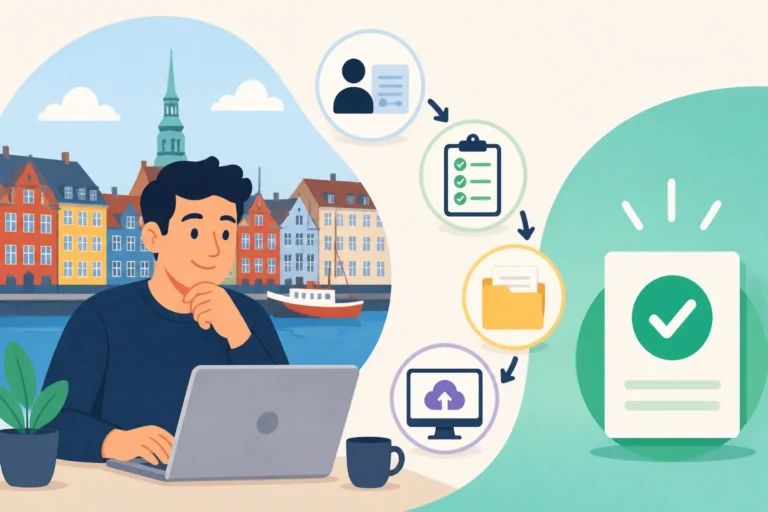
Navigating the Virk.dk Application
The registration happens on the government portal Virk.dk. The website is primarily in Danish, which can be an immediate barrier. I recommend using a browser with a reliable translation plugin or asking a Danish-speaking friend to sit with you. You will need to define your business's "industry code" (branchekode), which tells the state what kind of work you do. Accuracy here matters because it can affect your insurance premiums and whether you are eligible for certain subsidies. If you are working as a translator or teacher, perhaps using iTalki to find students, you need to ensure your industry code reflects educational or linguistic services.
The Crucial Role of MitID
To log into Virk.dk and manage your business, you must have a MitID. This is the digital signature used for everything in Denmark, from banking to viewing your medical records. For a freelancer, MitID is the gateway to your business's digital post (e-Boks or Mit.dk), where you will receive important notifications from the tax authorities. If you haven't set this up yet, you are essentially locked out of the Danish business world. You can find more details on how to secure this in our guide on NemKonto and MitID: The Core of Danish Digital Finance (2027). Without a functional MitID, you cannot even begin the Getting a CVR Number: Step-by-Step Guide for Expat Freelancers process.
Setting Up a Dedicated Business Bank Account
While Danish law does not strictly require a separate bank account for a sole proprietorship, many banks will force you to open a business account (Erhvervskonto) as soon as they see business-related transactions. These accounts often come with a monthly fee, which can be frustrating for a new freelancer. However, having a separate account makes your bookkeeping much cleaner. You will also need to designate a NemKonto for your business, which is the specific account where the state will send any tax or VAT refunds. You can learn more about this in our article on Setting Up Your NemKonto: How to Link It to Receive Salary and SU.
Navigating Danish Taxes and Income Types
Danish taxes are notoriously high, but they are also incredibly logical once you understand the rhythm. As a freelancer, you move away from the world of "A-income" (where your employer handles everything) and into the world of "B-income." This transition requires a mindset shift from being a passive recipient of a paycheck to being an active manager of your tax liability. Failing to plan for this is the number one reason I see expats leave Denmark with a heavy debt to the taxman.
Understanding B-Income (B-indkomst)
For most freelancers, your earnings are classified as B-income. This means that no tax is deducted at the source when a client pays your invoice. You receive the full amount, but you must remember that approximately 35% to 50% of that money does not belong to you—it belongs to SKAT. It is helpful to read up on B-Income (B-indkomst) vs. A-Income (A-indkomst) for Side Hustles to understand how these categories can overlap if you have a part-time job. Managing this requires discipline; it helps to move the tax portion of every invoice into a separate savings account immediately so you aren't tempted to spend it.
The Preliminary Tax Assessment (Forskudsopgørelse)
The most important tool in your tax arsenal is the Forskudsopgørelse. This is where you tell SKAT how much you expect to earn for the coming year. Based on this estimate, SKAT will generate "B-tax" (B-skat) giro cards for you to pay in ten installments throughout the year. If you underestimate your income, you will end up with a large bill at the end of the year. If you overestimate, you’ll struggle with cash flow. You should update this document whenever your business's trajectory changes. More information on this can be found in our guide on Preliminary Tax Assessment (Forskudsopgørelse): Avoiding Tax Debt.
AM-bidrag and Personal Tax Rates
Regardless of your income level, you must pay an 8% Labor Market Contribution, known as AM-bidrag (Labor Market Contribution): The Mandatory 8% Flat Tax. This is calculated on your total turnover before any other deductions are applied. After that, your remaining profit is subject to personal income tax. The exact rate depends on your total earnings and the municipality where you live, as well as whether you fall into the higher tax brackets. For expats with complex international income streams, using a service like Taxes for Expats can be a lifesaver to ensure you are not being double-taxed on foreign assets while reporting your Danish freelance earnings.
| Feature | Enkeltmandsvirksomhed (Sole Pro) | Anpartsselskab (ApS – Limited) |
|---|---|---|
| Startup Capital | 0 DKK | 40,000 DKK |
| Liability | Unlimited Personal Liability | Limited to Company Assets |
| Accounting | Simple Bookkeeping | Strict Year-End Reporting |
| Taxation | Taxed as Personal Income | Corporate Tax + Salary Tax |
| Audit Requirement | Generally None | Possible Audit Requirements |
| Ownership | One Person Only | Can Have Multiple Owners |
VAT (Moms) Registration and Rules
VAT in Denmark is called "Moms," and it is set at a flat rate of 25%. For many freelancers, Moms is a double-edged sword. It adds a 25% surcharge to your invoices, which can make you less competitive if your clients are private individuals who cannot reclaim the VAT. On the other hand, being Moms-registered allows you to "deduct" the VAT you pay on business expenses, such as a new laptop or office supplies.
The 50,000 DKK Threshold
You are not legally required to register for Moms until your turnover (total sales) exceeds 50,000 DKK within any 12-month period. Note that this is a rolling 12-month period, not a calendar year. Once you hit this limit, registration is mandatory. Many freelancers choose to register voluntarily from day one so they can claim VAT back on their initial startup costs. However, once you are registered, you must include Moms on every invoice to Danish clients and file a Moms report every six months (or quarterly, depending on your setup). Detailed deadlines can be found in our resource on Freelancer Taxes: Moms (VAT) Registration and B-Income Deadlines.
How to Report Moms to SKAT
Reporting Moms is done through the TastSelv Borger or Erhverv portal. You report two figures: "Salgs-moms" (VAT you collected from clients) and "Købs-moms" (VAT you paid to suppliers). The difference is what you owe to SKAT or what SKAT owes you. If you are teaching English online via iTalki, your students might be located outside the EU, which changes the Moms rules significantly. Dealing with "Reverse Charge" and international VAT can be complex, and this is another area where professional advice from Taxes for Expats can prevent costly reporting errors.
International Clients and Reverse Charge
When you sell services to a business client in another EU country, you typically do not charge Danish Moms. Instead, you apply the "Reverse Charge" mechanism, where the buyer is responsible for reporting the VAT in their own country. You must verify the client's VAT number and include it on your invoice. For clients outside the EU (like the US or China), Moms is generally not applicable, but you still must report these sales as "VAT-free exports" in your periodic filings. Understanding these nuances is vital for anyone looking at Working in Denmark: Job Market, Flexicurity, and Getting Hired (2027) as a self-employed professional.
Deductions and Business Expenses
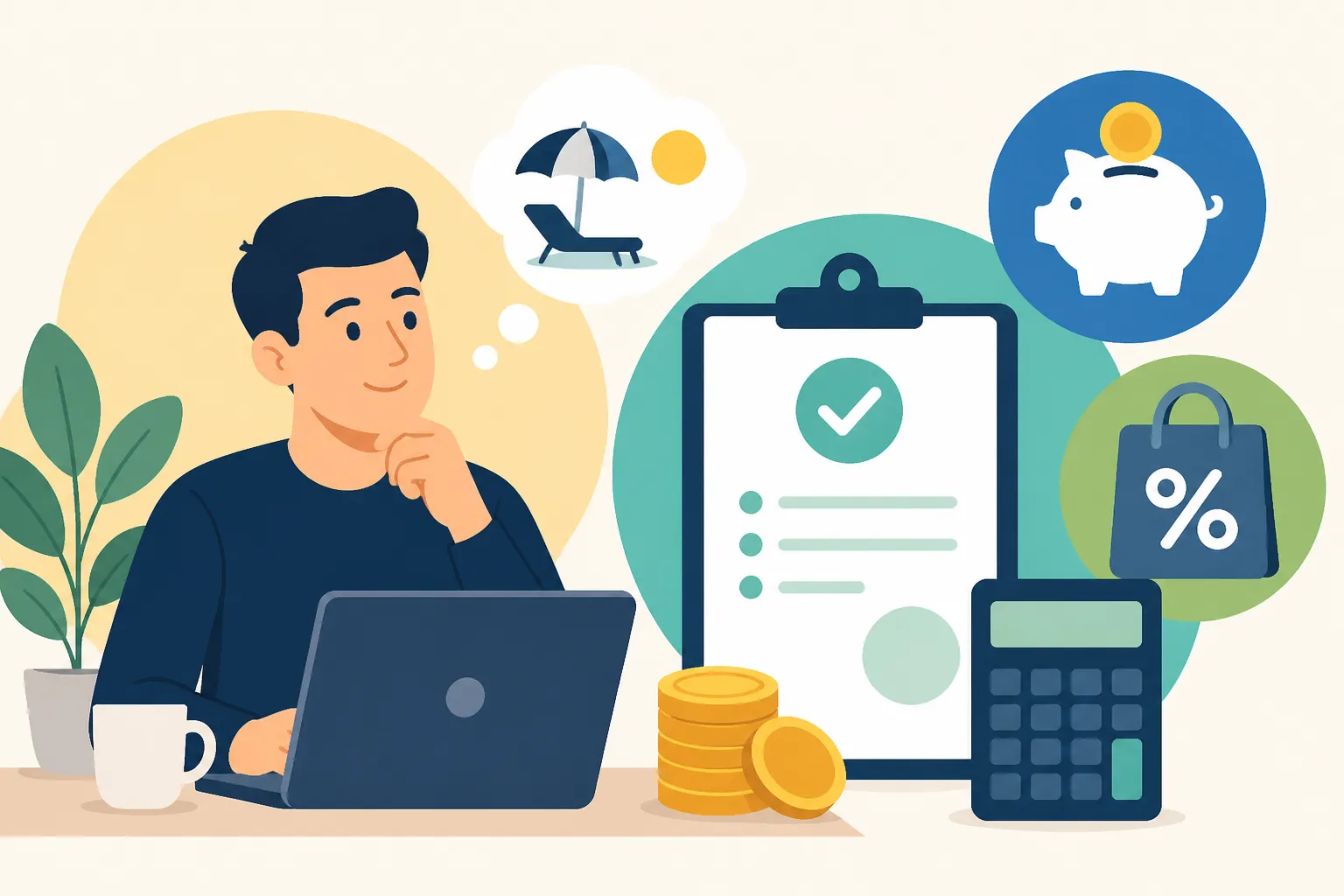
One of the few perks of the Danish tax system is the ability to deduct legitimate business expenses from your taxable income. However, SKAT is very strict about what constitutes a "business expense." The general rule is that the expense must be necessary to "earn, secure, and maintain" your income. If an item has both personal and business use, you can usually only deduct a percentage of it.
Common Deductible Expenses
Typical deductions for a freelancer include software subscriptions, web hosting, office supplies, and professional development courses. If you are learning the local language to better navigate the Danish market, you might wonder if those costs are deductible. While general Danish lessons often are not, specialized business communication training might be. For those using iTalki to improve their Danish or to teach, keep a meticulous record of your receipts. Every Krone you deduct is a Krone you aren't taxed on, which is essential for managing the high Taxes in Denmark Explained: A-Skat, AM-bidrag, and Marginal Rates.
The Home Office Dilemma
Many freelancers work from home, but claiming a deduction for a home office in Denmark is notoriously difficult. To qualify, the room must be used exclusively for business and must be "rendered unsuitable" for living. This means if there is a bed or a TV in the room, SKAT will likely reject the deduction. Most expats find it easier to work from a co-working space, as the membership fee is 100% deductible and provides a clear separation between personal and professional life.
Travel and Commuting Benefits
If you have to travel to see a client, your transport costs are generally deductible. If you use your own car, you can choose between deducting the actual costs or using the state's standard mileage rates (Kørselsgodtgørelse). For those who cycle or use public transport, the rules are slightly different. You can read more about how the state views travel in our guide on Tax Deductions in Denmark: Commuting (Kørselsfradrag) and A-Kasse. Just remember that the commute from your home to your "permanent" place of work (like a co-working desk) is usually subject to different rules than travel to a one-off client meeting.
Managing Finances and Digital Tools
The key to a low-stress freelance life in Denmark is organization. The Danish authorities expect you to keep your records for five years, and they can audit you at any time. In the digital age, there is no excuse for a shoebox full of crumpled receipts. You need a system that tracks every ore that enters and leaves your business account.
Choosing a Bookkeeping (Bogføring) System
There are several excellent cloud-based accounting programs designed specifically for the Danish market, such as Dinero or Billy. These tools integrate directly with your bank account and even allow you to photograph receipts with your phone for instant categorization. Many of them have "freemium" tiers that are perfect for a new Enkeltmandsvirksomhed. Using these systems ensures that when it comes time to file your annual tax return (Årsopgørelse), the numbers are already calculated for you.
Invoicing Etiquette in Denmark
Danish invoices must follow specific legal requirements. They must include your CVR number, a unique invoice number, the date, a description of the services provided, the Moms amount (if applicable), and your payment terms. Standard payment terms in Denmark are often 8, 14, or 30 days. Most Danish businesses prefer to pay via bank transfer or "FI-kort" (giro). Avoid asking for cash payments, as this can be a major red flag for SKAT and may be perceived as "black work," which carries heavy penalties.
When to Hire Professional Help
While the "do-it-yourself" spirit is strong among freelancers, there comes a point where hiring an accountant (Revisor) is a smart investment. An accountant can help you optimize your deductions and ensure you are taking advantage of schemes like the "Business Tax Scheme" (Virksomhedsordningen), which allows you to pay a lower tax rate on profits that you reinvest in the business. If your financial situation involves multiple countries, consulting with Taxes for Expats is highly recommended to navigate the intersection of Danish tax law and your home country's requirements.
Practical Tips for Expat Freelancers
Beyond the numbers and the laws, there is the human element of being self-employed in a foreign country. Isolation can be a significant issue, as can the cultural nuances of Danish business. You aren't just a business owner; you are an expat navigating a new society.
- Networking: Join local expat and freelancer groups. Danes value "Foreningsliv" (club life), and there are many professional associations where you can find mentors.
- Language: While you can run a business in English, learning Danish will open doors to local clients and make your interactions with SKAT much smoother. Using a platform like iTalki to practice "Business Danish" can give you a massive competitive edge.
- A-Kasse: Even as a freelancer, you can join an unemployment insurance fund (A-Kasse) specifically for the self-employed. This provides a safety net if your business suddenly loses its main clients. Check out Trade Unions and A-Kasse: Why Every Expat Must Understand Them for more on how to protect your livelihood.
Disclaimer
The information provided in this guide is for informational purposes only and does not constitute legal, financial, or tax advice. Danish tax laws and business regulations are subject to change, and individual circumstances can significantly impact your legal obligations. Always consult with a qualified professional, such as a certified Danish accountant or an immigration lawyer, before making significant business decisions. Starting a business may also impact your residency status depending on your specific visa type.