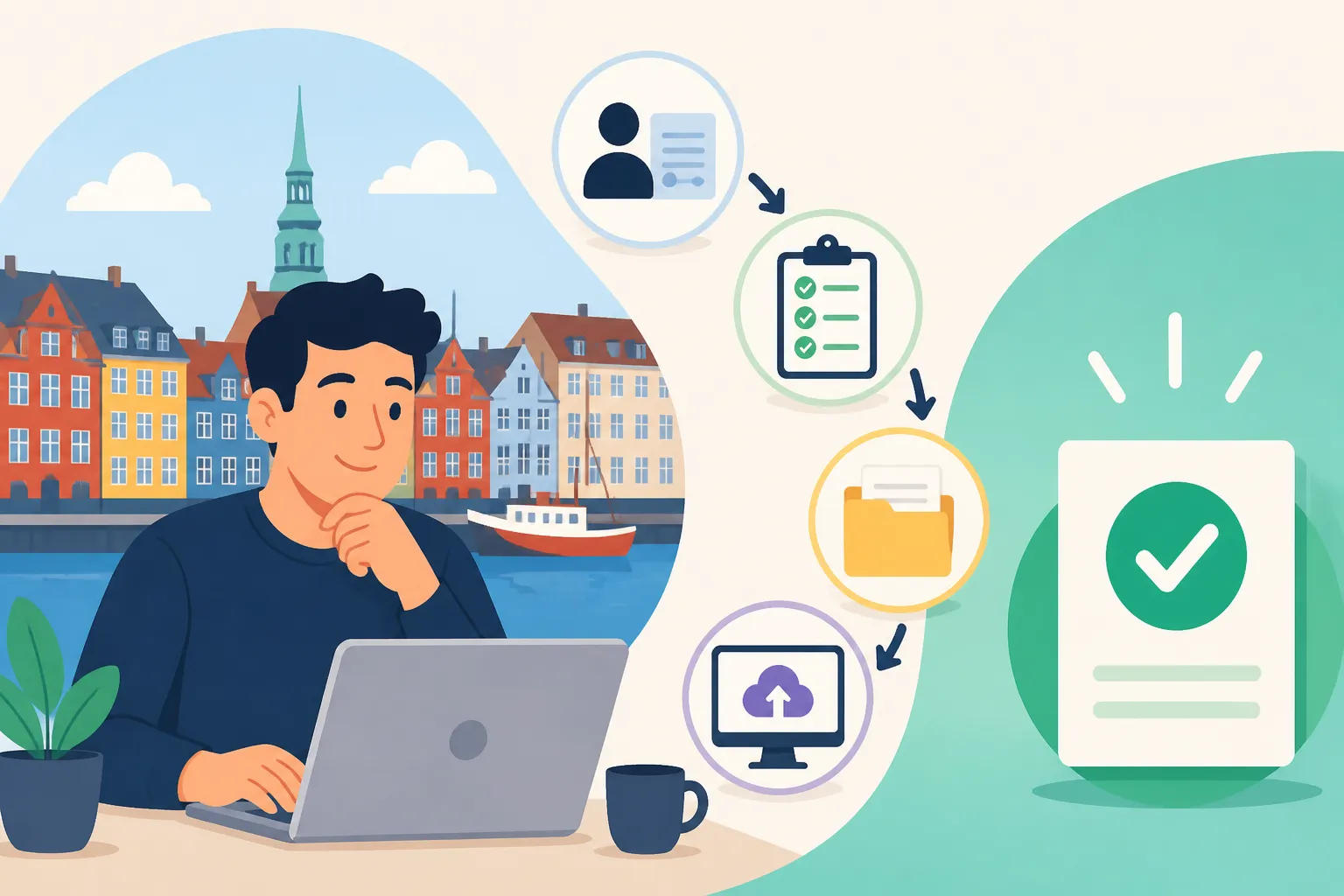
Getting a CVR Number: Step-by-Step Guide for Expat Freelancers
Starting your freelance journey in Denmark can feel like navigating a dense, fog-laden forest, especially when it comes to the administrative side of things. I've been there, staring at official forms written in Danish, wondering if I'm ticking the right boxes or accidentally signing up for a lifetime supply of pickled herring. This guide is here to cut through that fog, offering a step-by-step walkthrough for expat freelancers on how to get your CVR number, turning that daunting task into a clear path forward.
Understanding the CVR Number for Freelancers in Denmark
When you decide to go freelance or start any kind of self-employment in Denmark, one of the first and most crucial steps is getting yourself a CVR number. Think of it as your business's social security number, its unique identifier in the Danish system. Without it, you’re essentially operating in the shadows, and trust me, Danish authorities prefer everything to be out in the open and properly registered.
Why You Need a CVR Number as an Expat Freelancer
The CVR number, which stands for Central Virksomhedsregister (Central Business Register), is more than just a formality; it's your official entry ticket into the Danish business landscape. For starters, you can't legally issue invoices to clients without one. If you're providing services or selling goods, your clients (especially other businesses) will require your CVR number for their own accounting and tax purposes. It's the unique identifier that SKAT (the Danish tax agency) uses to connect your business activities to your personal tax profile, ensuring that everything is above board.
Moreover, having a CVR number allows you to register for VAT (Moms) if your expected turnover exceeds the threshold – currently 50,000 DKK within a 12-month period. Even if you don't meet this threshold immediately, having a CVR number gives your freelance work a legitimate and professional veneer. It enables you to open a business bank account, which is highly recommended for keeping personal and business finances separate, making your life much easier when tax season rolls around. It also opens doors to other business-related services, such as signing up for payment solutions, specific business insurance, or even applying for grants or support programmes if they become available. Without it, you're just doing a "side hustle" that technically isn't recognized as an official enterprise.
Different Business Structures for Freelancers and Sole Proprietors
For most expat freelancers and sole proprietors, the most common and simplest business structure in Denmark is the enkeltmandsvirksomhed, or sole proprietorship. This is essentially you, as an individual, operating a business. There's no legal distinction between you and your business when it comes to liability, meaning you are personally responsible for any debts or obligations the business incurs. While this might sound a bit scary, it's also the easiest to set up and manage, with minimal administrative overhead compared to other company forms.
Other structures exist, such as an anpartsselskab (ApS), which is a private limited company. An ApS offers limited liability, meaning your personal assets are protected if the business goes south. However, setting up an ApS is significantly more complex and costly, requiring a minimum share capital (currently 40,000 DKK) and involving more stringent accounting and reporting requirements. For many freelancers, especially when starting out, an enkeltmandsvirksomhed is often the pragmatic choice due to its simplicity. As your business grows and your income increases, or if you plan to take on more risk, you might then consider converting to an ApS or another company type. It’s important to understand the implications of each, especially regarding your personal financial liability.
Step-by-Step Guide to Registering Your CVR Number
Alright, now for the nitty-gritty: actually getting that CVR number. The entire process for an enkeltmandsvirksomhed is thankfully digital and handled through the Danish business portal, Virk.dk. While the website has an English option, navigating the specific forms and terminology can still be a challenge if you're not used to Danish bureaucracy.
Before You Begin: Essential Prerequisites
Before you even think about logging onto Virk.dk, there are a few things you absolutely need in place. Missing any of these will bring your registration process to a grinding halt.
First and foremost, you must have a valid CPR number and be officially registered with a Danish address. Your CPR number is your personal identification in Denmark, and it links your business activities back to you. If you're still waiting for your CPR number or haven't secured permanent accommodation, you'll need to sort that out first. The Danish system relies heavily on official addresses for all administrative purposes. You also need a MitID, which is Denmark's digital ID system. This is non-negotiable for accessing Virk.dk and signing any official digital documents. If you don't have your MitID set up yet, that's another prerequisite you'll have to tackle before proceeding. It’s your digital signature, and you'll use it for everything from accessing your bank to checking your digital post. For more details on getting this vital digital access, check out our guide on NemKonto and MitID: The Core of Danish Digital Finance (2027).
You'll also need a clear idea of your business activities and a proposed business name. While the name for an enkeltmandsvirksomhed doesn't need to be unique in the same way a limited company's name does, it should accurately reflect your business and not infringe on existing trademarks. Think about what services you'll offer or products you'll sell.
Finally, consider your expected annual turnover. As mentioned, if you anticipate making more than 50,000 DKK (excluding VAT) within any 12-month period, you'll need to register for VAT (Moms) right away during the CVR registration process. Even if you don't expect to hit this threshold immediately, it's good to have an estimate in mind.
The Online Registration Process via Virk.dk
Once you have your CPR number and MitID ready, head over to Virk.dk.
- Log in with MitID: Click on the "Log ind" (Log in) button, and select MitID. You'll authenticate yourself, and then you'll be directed to a page where you can choose to start a new business registration.
- Choose Business Type: Select "Start virksomhed" (Start business) and then choose enkeltmandsvirksomhed. This will ensure you're going down the right path for a sole proprietorship.
- Fill in Personal Details: Many of your personal details (name, address, CPR number) will automatically populate from your MitID profile. Double-check that everything is correct.
- Enter Business Information:
- Business Name: Enter your desired business name. This will often include your own name if you're a sole proprietor (e.g., "Jane Smith Freelance Photography").
- Business Address: This will typically be your registered Danish residential address, as an enkeltmandsvirksomhed doesn't usually have a separate physical office initially.
- Contact Information: Provide your email and phone number.
- Business Activities (Branchekode): This is a critical step. You'll need to select one or more "branchekoder" (industry codes) that best describe your freelance work. Be as specific as possible. For example, if you're a freelance graphic designer, you might look for codes related to "grafisk design" or "kunstnerisk virksomhed." Sometimes it can be tricky to find a perfect match, but choose the closest ones available. If you offer diverse services, list the main ones.
- Start Date: Indicate the date you plan to start your business activities. This can be today or a date in the near future.
- VAT Registration (Moms): If your expected turnover exceeds 50,000 DKK, you must register for VAT here. If you're unsure or expect to earn less, you can initially choose not to register and then register later if your income grows. However, if you're buying services or goods from other VAT-registered businesses, registering for VAT early allows you to deduct their VAT, which can be advantageous. Be honest about your projections.
- Other Registrations (Optional): You might be prompted about other registrations, such as employer registration if you plan to hire staff (unlikely for a new freelancer) or import/export registrations. For most initial freelancers, these won't apply.
- Review and Submit: Carefully review all the information you've entered. It's easy to make a small typo that can cause headaches later. Once you're confident everything is accurate, sign digitally using your MitID and submit the application. You'll usually receive an immediate confirmation that your application has been received.
What Happens After Registration?
The good news is that CVR registration for an enkeltmandsvirksomhed is usually processed very quickly. In many cases, you'll receive your CVR number within a few hours, or at most, a couple of business days. You'll get an official notification via your digital postbox (E-Boks or Mit.dk) confirming your registration and stating your new CVR number. This is a big moment – congratulations, you're officially in business!
Once you have your CVR number, you can then proceed with other essential steps. If you registered for VAT, you'll start having VAT reporting obligations to SKAT. You should also consider setting up a separate bank account for your business. While not legally mandatory for an enkeltmandsvirksomhed, it's highly, highly recommended to keep your personal and business finances distinct. This simplifies accounting, makes it easier to track income and expenses, and looks far more professional. You can approach any Danish bank to discuss opening an "erhvervskonto" (business account). You'll need your CVR number, your MitID, and possibly proof of your business activities or a simple business plan.
Navigating Taxes and Finances as a Freelancer
Ah, taxes. The one constant in life, even for freelancers in Denmark. Don't let the Danish tax system intimidate you; with a CVR number, you're set up to navigate it properly. But it does require understanding a few key concepts.
Understanding Your Tax Obligations
As a freelancer with an enkeltmandsvirksomhed, your business income is taxed as part of your personal income. This means there's no separate corporate tax; it all flows through your personal tax return. This is where understanding your preliminary tax assessment, or [Forskudsopgørelse], becomes paramount. You'll need to update your Forskudsopgørelse on SKAT's website to reflect your expected freelance income. This allows SKAT to calculate your provisional tax rate and ensures you pay tax throughout the year, avoiding a nasty surprise and a large tax bill at the end.
The main taxes you'll pay on your freelance income are:
- A-Skat: This is your primary income tax, similar to what salaried employees pay. It’s calculated based on your estimated annual profit.
- AM-bidrag (Labour Market Contribution): A flat 8% contribution on your gross business profit before other deductions, which goes towards social security benefits.
If you registered for VAT (Moms), you'll have quarterly or semi-annual VAT reporting obligations. This means collecting VAT from your Danish clients and paying it to SKAT, while also being able to deduct VAT paid on your business expenses. Keeping meticulous records of all income and expenses is not just a good idea; it's a legal requirement. We delve much deeper into this in our guide on Freelancer Taxes: Moms (VAT) Registration and B-Income Deadlines. Remember, keeping up with your taxes is crucial for ensuring you can live and work comfortably here, and avoid any unwanted attention from the tax authorities. Many expats find great value in consulting with an accountant who specializes in Taxes for Expats to ensure they're leveraging all applicable deductions.
Managing Your Freelance Finances
Keeping your freelance finances in order from day one will save you immense stress down the line. Beyond opening a separate business bank account, here are a few tips:
- Invoicing: Your invoices must be legally compliant. This means including your CVR number, client details, a clear description of services/products, the date, amount, and VAT breakdown if applicable. For a deeper dive into this, see our article on How to Invoice Domestic Clients Legally with a Danish CVR Number.
- Record-keeping: Keep every receipt, every invoice, every bank statement related to your business. Digital records are generally fine, but ensure you have a robust system for categorizing and storing them. This makes completing your tax return and any potential audits much simpler.
- Budgeting: Freelance income can be irregular. Set aside a portion of every payment for taxes (often 30-50% depending on your income and municipality) and another for future expenses or slower periods. Understanding your personal Cost of Living in Denmark 2026: Budgets for Singles and Families will help you set realistic income goals.
- Digital Tools: Explore accounting software tailored for small businesses or freelancers. Many options are available, some even integrate directly with Danish banking systems, streamlining your bookkeeping.
Common Pitfalls and Tips for Expat Freelancers
Even with your CVR number in hand, the journey of an expat freelancer in Denmark can have its unique challenges. But don't worry, you're not alone, and many of us have navigated these waters before.
Language Barriers and Navigating Bureaucracy
Let's be honest: while many Danes speak excellent English, official communication, especially with government agencies like SKAT or Virk.dk, is predominantly in Danish. This can be a significant hurdle. Even with online translation tools, understanding the nuances of legal or tax terminology can be tricky. This is where patience becomes your best friend. Don't rush; take your time to understand each field on a form.
Consider investing in Danish language classes. Learning Danish, even just enough to navigate official websites and understand basic correspondence, will drastically reduce your stress levels. Look into options like Learning Danish: Sprogcenter, FVU, and the Importance of the Language. In the short term, if you get stuck on a specific form or letter, don't hesitate to ask for help from a trusted Danish friend, a colleague, or a professional. Many expats find it incredibly useful to consult with an English-speaking accountant (revisor) or legal advisor, especially when setting up or dealing with complex tax matters. While not strictly an ApS, such professionals can certainly assist an enkeltmandsvirksomhed with their expertise.
Building Your Network and Client Base
One of the biggest challenges for any freelancer is finding clients, and this can be compounded by being new to the country. Denmark's job market, even for freelancers, often relies heavily on networking and referrals.
- Online Platforms: Utilize platforms like LinkedIn to connect with potential clients and other professionals in your field. Many Danish companies post freelance gigs there.
- Expat Groups: Join expat groups on social media or in person. These communities are invaluable for sharing experiences, tips, and sometimes even leads for work.
- Professional Associations: Look for professional associations related to your field in Denmark. Becoming a member can open doors to networking events, industry insights, and potential clients.
- Learning Danish: Again, while not always essential, having some Danish language skills can help you connect with a broader range of clients, especially smaller local businesses who may prefer to work in Danish. If you’re offering language-related services, for instance, you might use platforms like iTalki to practice or even find your first clients if you teach languages.
- Focus on Value: Emphasize the unique value you bring as an expat – perhaps a global perspective, specific language skills, or experience in international markets.
Remember, building a freelance career takes time and persistence, especially in a new country. Be patient with yourself, embrace the learning curve, and celebrate every small victory. The Danish system, while bureaucratic, is generally well-structured and transparent once you understand its rules.
Key Financial Differences for Freelancers
To make things even clearer, here's a quick comparison of A-income (standard employment) versus B-income (freelance income) and their implications for your tax situation as a freelancer.
| Feature | A-Income (Standard Employment) | B-Income (Freelance / Self-Employment) |
|---|---|---|
| Source | Salary from an employer | Payments for services/goods from clients |
| Tax Deduction | Employer withholds A-Skat & AM-bidrag before payment | You are responsible for setting aside & paying A-Skat & AM-bidrag |
| Forskudsopgørelse | Updated by employer or automatically based on salary | Must be actively updated by freelancer to reflect expected income |
| CVR Number | Not required for the employee | Mandatory for issuing legal invoices and operating a business |
| VAT (Moms) | Not applicable to the employee's income | Required if turnover exceeds 50,000 DKK within 12 months |
| Invoicing | Not applicable to the employee | Mandatory for all services/goods provided |
| Expense Deductions | Limited personal deductions | Broader range of business expenses deductible (e.g., equipment, courses) |
| Pension | Often part of employer benefits | Must be arranged privately by the freelancer |
| Sick Leave / Benefits | Covered by employer/A-kasse if eligible | Depends on personal arrangements (e.g., A-kasse, private insurance) |
This table highlights why understanding the nuances of B-Income (B-indkomst) vs. A-Income (A-indkomst) for Side Hustles is so vital when you make the leap into freelancing. It’s a different ballgame financially, and you need to be prepared to take on more administrative responsibility.
Disclaimer
The information provided in this guide is for general informational purposes only and does not constitute legal, financial, or tax advice. While we strive to keep the information up-to-date and accurate, regulations and procedures in Denmark can change. It is always recommended to consult with a qualified professional (e.g., an accountant or lawyer) for advice tailored to your specific situation, especially regarding tax obligations, legal structures, and immigration status.