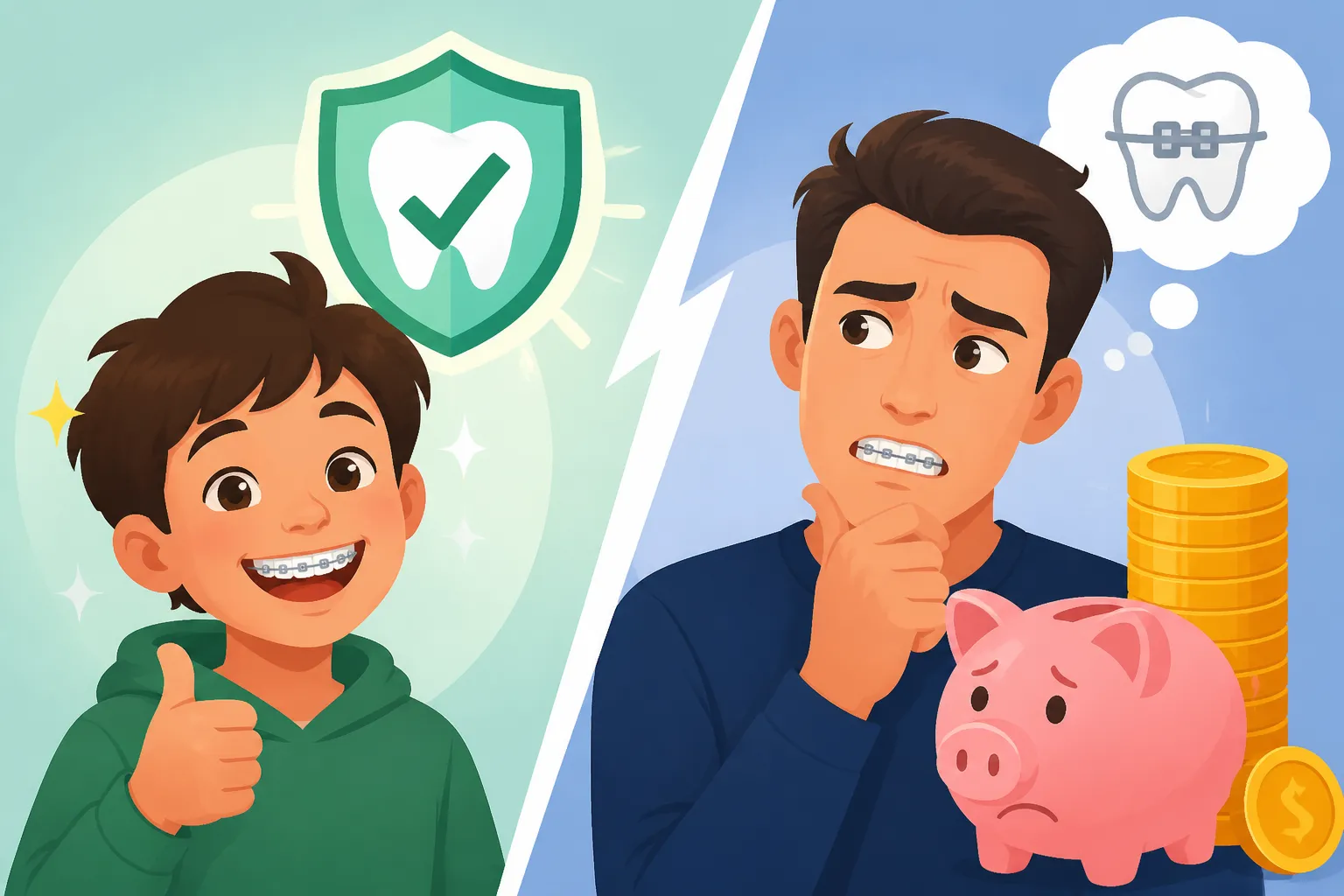
Why Are Dental Braces Free for Kids but Expensive for Adults?
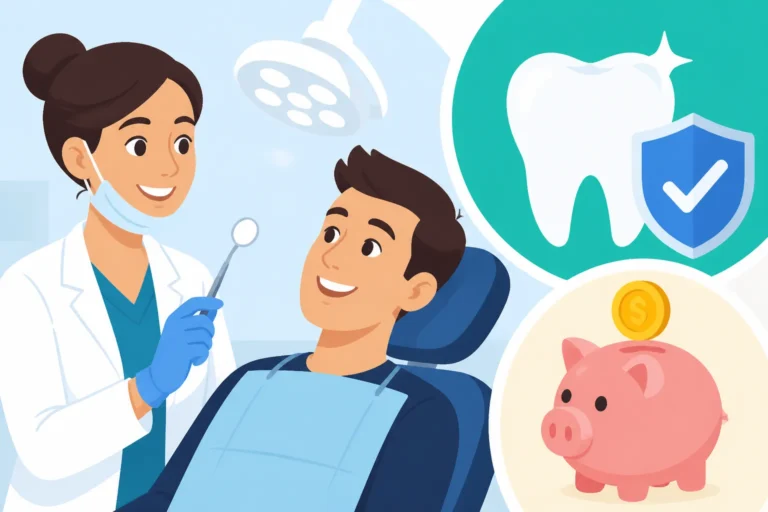
You’ve just received a quote for your Invisalign or traditional track-and-screw treatment in Copenhagen, and the number of zeros at the end of the DKK figure has you questioning every life choice you’ve ever made. I remember sitting in that sterile white chair, staring at a 55,000 DKK estimate, and wondering how on earth my neighbor's teenager is getting the same treatment for absolutely zero kroner. This guide will break down the philosophy behind Denmark's age-based dental divide and how you can manage the eye-watering costs as an adult expat.
The Great Dental Divide Public vs Private Care
In Denmark, the healthcare system is often heralded as "free," but as any expat quickly learns, your teeth are treated as "luxury bones" once you hit adulthood. The fundamental reason braces are free for children but expensive for adults lies in the distinction between municipal public health and the private market.
For children and young adults, dental care is managed by the Børne- og Ungdomstandpleje (Child and Youth Dental Care). This is a municipal service funded entirely by taxes. The logic is preventative: the Danish state believes that correcting a child’s bite or alignment prevents massive, expensive jaw surgeries or chronic health issues later in life. By the time you reach adulthood, the state considers your primary development "complete," and the financial responsibility shifts entirely to you.
It is important to note that the age of "adulthood" in the dental system has recently changed. For those born in 2004 or later, free municipal dental care continues until the age of 22. If you were born before 2004, the cutoff remains 18. This transition can be a shock for expat families moving with older teenagers, as you must ensure you are registered with the local municipality to take advantage of these final free years. Understanding how The Yellow Health Card (Sundhedskort): Your Key to Danish Healthcare works is essential here, as that little card is what grants your child access to the municipal clinic.
Why Adult Orthodontics Carry Such a Heavy Price Tag
When you transition to the private market, you aren't just paying for the brackets and wires; you are paying for the highly specialized expertise of an Specialtandlæge i Ortodonti (Orthodontist). In Denmark, the cost of living and high business taxes mean that running a private clinic is incredibly expensive. These costs are passed directly to the patient.
A typical adult treatment for braces in Denmark ranges from 30,000 DKK to 65,000 DKK. This usually includes the initial consultation, the X-rays, the 3D scans, the fitting, and the monthly adjustments over 18 to 24 months. Unlike the municipal clinics, which operate on a fixed budget provided by the commune, private clinics are competitive businesses. They use the latest technology—like iTero scanners and proprietary clear aligner software—which adds to the overhead.
Furthermore, the Danish "Yellow Card" system provides almost zero subsidies for adult orthodontics. While the state might cover a small percentage of a routine cleaning or a filling, braces are classified as elective or cosmetic unless they are required to treat a life-threatening or severely debilitating condition. You can read more about these nuances in Dental Subsidies in Denmark: What the Yellow Card Actually Covers to see where the state's help actually ends.
The Functional Requirement for Children
Even for children, braces are not "automatically" free just because a parent wants their child to have a Hollywood smile. The municipal dentist must perform a "visitation" (a screening). In this screening, the dentist assesses the child’s teeth against a set of "functional" criteria.
If the misalignment is purely cosmetic—meaning the teeth are a bit crooked but the bite is healthy and there is no risk of damage to the gums or jaw—the municipality may actually refuse to pay for the braces. In these rare cases, parents have to go to a private orthodontist and pay the same high rates as adults. However, the Danish standards for what constitutes a "functional risk" are generally quite inclusive, and most children who truly need alignment will receive it for free.
For adults, this "functional" loophole is almost non-existent. Unless you are undergoing major reconstructive jaw surgery at a public hospital, the system assumes your braces are for aesthetic improvement. This is a tough pill to swallow for expats coming from countries where dental insurance is a standard part of an employment package. If you are still in the process of moving, you might want to look at Expat Health Insurance: Coverage Before You Get Your CPR Number to see how to bridge the gap before you even enter the Danish system.
Comparison of Dental Care Tiers in Denmark
| Feature | Children (Under 18/22) | Adults (18/22+) |
|---|---|---|
| Provider | Municipal Clinic (Tandplejen) | Private Orthodontist |
| Cost of Braces | 0 DKK | 35,000 – 60,000+ DKK |
| Routine Checkups | Free | Partially Subsidized (~300-500 DKK out of pocket) |
| Materials | Traditional Metal (usually) | Metal, Ceramic, or Clear Aligners |
| Waiting Times | Can be 6-12 months for non-urgent | Usually 1-2 weeks for consultation |
| Insurance Needs | None | Private Insurance (e.g., "danmark") highly recommended |
Navigating Private Insurance and Subsidies
Since the public system won't help you, your best bet for reducing the cost of adult braces is joining Sygeforsikring "danmark". This is a private, member-owned insurance group that over 2 million people in Denmark belong to. It is different from "health insurance" as you might know it in the US or UK; it works more like a reimbursement club.
For adult orthodontics, "danmark" can provide a subsidy, but there are strict rules. You usually need to be in "Group 1" or "Group 2" to get significant dental coverage. Even then, the reimbursement for braces is often capped at a certain amount (e.g., 2,000 to 5,000 DKK), which, while helpful, doesn't cover the bulk of a 50,000 DKK bill.
It is also vital to join "danmark" while your teeth are healthy. If you apply for membership after an orthodontist has already documented that you need braces, it may be classified as a pre-existing condition, and they may refuse to cover that specific treatment. For a deeper dive into this, check out Does Sygeforsikring "danmark" Cover Pre-existing Conditions? before you sign up. If you are an international hire, sometimes global policies from providers like Cigna Global or SafetyWing can offer more robust dental riders, especially if you are looking for coverage that travels with you outside of Denmark.
Practical Strategies for Managing Adult Orthodontic Costs
If you've decided that you can't wait and need to get those teeth straightened, there are a few ways to make the financial burden of Dental Care in Denmark: Costs, Subsidies, and Private Insurance Options more manageable.
1. The Afbetaling (Installment Plan)
Almost every private orthodontist in Denmark offers a payment plan. Because treatments take two years, they are very accustomed to patients paying a down payment (often 10,000-15,000 DKK) followed by a monthly interest-free installment of 1,500 to 2,500 DKK. Always ask for an "All-inclusive" price so you aren't surprised by fees for broken wires or retainers at the end.
2. Shopping Outside the Major Cities
Prices in central Copenhagen or Aarhus are significantly higher than in smaller towns like Roskilde, Køge, or Odder. If you are willing to take the train once a month for an adjustment, you could potentially save 10,000 DKK on the total treatment cost. When you start your search, knowing How to Find a GP Accepting New Patients in Copenhagen is one thing, but for dentists, you have total freedom to choose any clinic in the country.
3. Consultations and Second Opinions
In Denmark, a "second opinion" is not seen as rude; it's seen as being a "price-conscious" consumer. Some clinics offer free initial consultations for Invisalign, while others charge 500-1,000 DKK. It is worth visiting at least two different orthodontists. Their treatment plans may differ—one might suggest extractions, while another suggests "shaving" the teeth (IPR)—and these differences can impact the price by thousands of kroner.
Moving to Denmark with a Child mid-Treatment
This is one of the most stressful scenarios for expat parents. If your child already has braces fitted in your home country and you move to Denmark, the municipal system is not obligated to simply "take over" the payments for the existing hardware.
You will need to register with your local Tandplejen immediately. They will conduct their own assessment. If they agree the treatment is "functionally necessary," they will often take over the maintenance. However, if they use a different brand of brackets or wires than your home orthodontist, they might even suggest removing the old ones and fitting their own. To avoid this, ensure you have all medical records ready. You might find my advice on Healthcare in Denmark for Foreign Residents: Complete System Guide (2027) helpful for understanding how to integrate into the digital health portals like Sundhed.dk, where these records will eventually live.
Why You Shouldn't Skip Routine Checkups
While waiting to save up for braces, do not neglect your basic dental hygiene. While the How Much Does a Routine Dental Checkup Cost in Denmark? might seem annoying at 500 DKK, it is much cheaper than the root canal that results from a cavity left to fester under a future brace.
Danish dentists are very thorough, but they are also very expensive. If you are an expat who hasn't quite secured a high-paying job yet, you might feel the sting of these out-of-pocket costs. Remember that while the state doesn't pay for the braces, they do subsidize a portion of the checkup if you have your CPR number and are registered in the system. If you are still waiting for your papers, SafetyWing or Cigna Global can be lifesavers for emergency dental issues that arise during your first 90 days.
Summary of Adult Dental Considerations
Becoming an adult in Denmark means taking full ownership of your oral health. The shock of the cost is real, but the quality of care is exceptionally high. Danish orthodontists are world leaders in digital dentistry, and the results are typically worth the investment.
If you are planning to stay in Denmark long-term, investing in Sygeforsikring "danmark": Which Coverage Level Should Expats Choose? is perhaps the smartest financial move you can make, even if it only covers a small portion of your orthodontic bill. It will pay for itself through subsidized cleanings, fillings, and even prescription medicine over the years.
Disclaimer
This article is for informational purposes only and does not constitute professional medical or financial advice. Dental regulations and subsidy rates in Denmark are subject to change by the Ministry of Health and individual municipalities. Always consult with a licensed Danish orthodontist and your insurance provider regarding your specific case and coverage eligibility.