Moving to Greenland or the Faroe Islands: Danish Visa Variations
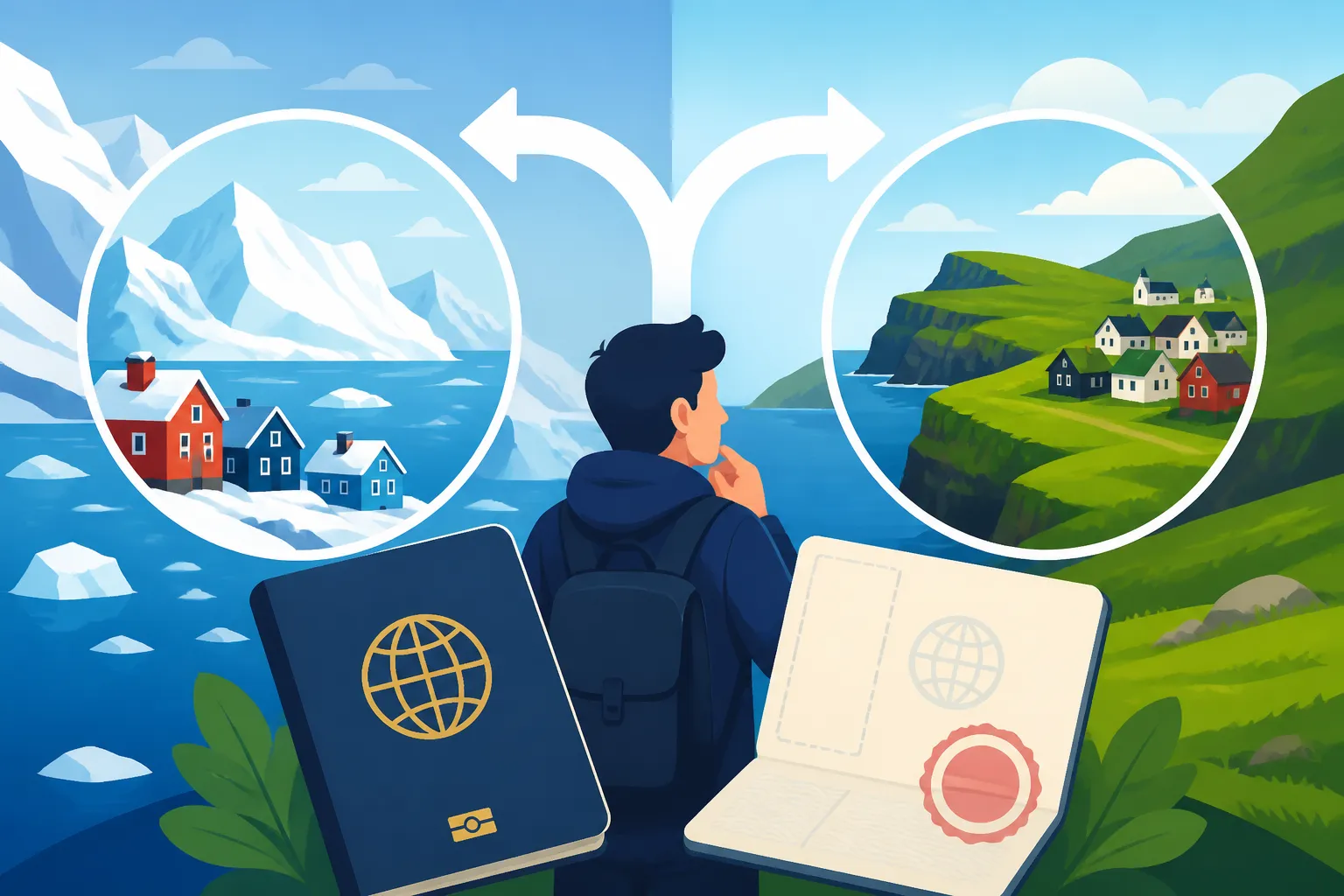
You’ve done it, haven’t you? You’ve navigated the initial maze of bureaucracy in mainland Denmark, perhaps you’ve even mastered the art of hygge and Danish cycling. But now, a different kind of adventure calls – one that whispers of dramatic landscapes, unique cultures, and a life truly off the beaten path. You're dreaming of Greenland or the Faroe Islands, but the burning question in your mind is: do your hard-won Danish residence permits simply transfer over, or is this a whole new ball game? Spoiler alert: it's definitely the latter, and this guide is here to untangle the distinct visa variations for these incredible, self-governing territories.
Understanding the Unique Status of Greenland and the Faroe Islands
Before we dive into the nitty-gritty of permits and paperwork, it's absolutely crucial to grasp a fundamental concept: the Rigsfællesskabet, or the Unity of the Realm. This refers to the constitutional relationship between Denmark, Greenland, and the Faroe Islands. While they are all part of the Kingdom of Denmark, they are far from being administrative extensions of Copenhagen. Both Greenland and the Faroe Islands enjoy extensive self-governance, holding significant autonomy over most internal affairs – and that very much includes their immigration policies.
This autonomy means that while Denmark handles foreign and defense policies, and the monarch is the head of state across the realm, when it comes to who gets to live and work within their borders, Greenland and the Faroe Islands largely call their own shots. This often comes as a surprise, and sometimes a frustration, to expats who assume their Danish residence permit acts as a golden ticket across the entire Kingdom. Unfortunately, it doesn't. Your Danish residence permit is specific to mainland Denmark. Moving to either Greenland or the Faroe Islands means engaging with entirely separate immigration systems, administered by their local authorities, not by SIRI (The Danish Agency for International Recruitment and Integration) in Copenhagen. Think of it less as an internal move and more like applying to a new country, albeit one with strong historical and political ties to Denmark. It's a nuance that can catch many by surprise, adding another layer to the already complex world of expat life.
Visa and Residence Permit Requirements for Greenland
So, you're set on Greenland – the vast, icy wilderness, the vibrant Inuit culture, perhaps a new job in a remote scientific outpost or a bustling fishing port. It’s an incredibly appealing prospect, but the path there is distinct, especially for non-Danish citizens.
Different Rules for Different Nationalities
Let's break down how your nationality impacts your ability to move to Greenland:
- Danish Citizens: For Danish citizens, moving to Greenland is generally straightforward, but it's still not as simple as just packing a bag. They are required to register with the local authorities upon arrival, and their social security and healthcare entitlements shift from the Danish system to the Greenlandic one. While they don't need a "visa" per se, it's a formal relocation process that acknowledges the unique autonomy of Greenland.
- EU/EEA/Swiss Citizens: If you're from an EU/EEA country or Switzerland, you generally have a freer movement right within the EU. However, Greenland is not part of the European Union, nor is it part of the Schengen Area in the same way Denmark is. This means that while you might enter Denmark easily with your EU passport, for Greenland, you will need to apply for a specific residence and work permit if you intend to stay longer than 90 days. The primary requirement is usually proof of employment or sufficient financial means to support yourself, ensuring you won't become a burden on the public system. You'll be dealing with the Greenlandic Immigration Authority, not SIRI.
- Non-EU/EEA Citizens (already residing in Denmark): This is where it gets particularly nuanced and, let's be honest, often frustrating for many expats. Your Danish residence permit, whether it’s for work, study, or family reunification, does not automatically give you the right to live or work in Greenland. It’s a separate jurisdiction with its own immigration laws. This means you will almost certainly need to apply for a new residence and work permit specifically for Greenland. You essentially start from scratch from an immigration perspective.
The Greenlandic Application Process
The authority responsible for immigration to Greenland is the Ministry of Justice in Greenland, or in some cases, the Danish Immigration Service (Udlændingestyrelsen) which handles applications on behalf of Greenland. This can be confusing, as it's not the same Udlændingestyrelsen that handles applications for Denmark directly.
- Work Permits: The most common route for non-Danish, non-EU/EEA citizens is a work permit. You must secure a job offer from a Greenlandic employer before you can apply. The job market in Greenland is specialized – think healthcare professionals, engineers, educators, tradespeople, or those in the fishing and resource industries. Employers often need to demonstrate that no suitable candidate from Denmark or the EU/EEA could be found for the position.
- Study Permits: Limited options exist for studying in Greenland, primarily through institutions like Ilisimatusarfik (the University of Greenland). Again, you'll need acceptance from an educational institution and proof of financial self-sufficiency.
- Family Reunification: If you have family already residing legally in Greenland, you might be eligible for family reunification. The rules are strict and often require the anchor person to have sufficient resources and housing.
Required Documentation and What to Expect
When applying for a Greenlandic permit, expect to provide a host of documents, including:
- A valid passport.
- Your job offer/employment contract.
- Proof of educational qualifications and professional experience (these might need to be translated if not in Danish or English. Services like RushTranslate or Translayte can be invaluable here, ensuring your documents meet legal standards).
- Proof of financial means.
- Accommodation details in Greenland.
- A comprehensive application form.
Processing times can vary significantly, often taking several months. It's not a quick decision, and delays are common, especially given the smaller administrative capacity compared to mainland Denmark. Remember, just like applying for Danish Visas and Residence Permits: The Complete Expat Guide (2027), thoroughness is key. Any missing document or incorrect information can lead to substantial delays or outright rejection.
Healthcare and Social Security: Upon receiving your Greenlandic residence permit, you will be integrated into the local healthcare and social security system. Your The Yellow Health Card (Sundhedskort): Your Key to Danish Healthcare from Denmark will no longer be valid for primary care, though emergency care might still be covered under certain inter-realm agreements for short visits. For long-term residency, you're part of their system now.
Visa and Residence Permit Requirements for the Faroe Islands
If the dramatic cliffs, turf-roofed houses, and unique culture of the Faroe Islands are calling your name, prepare for a similar, yet distinct, immigration journey compared to mainland Denmark. Just like Greenland, the Faroe Islands hold significant autonomy in immigration matters.
The Faroese Immigration Framework
- Danish Citizens: As with Greenland, Danish citizens have a relatively easier time. They must register with the local authorities upon moving and transfer their civic registrations and social benefits to the Faroese system.
- EU/EEA/Swiss Citizens: The Faroe Islands, like Greenland, are not part of the European Union or the full Schengen Agreement. Therefore, while your EU passport grants you considerable freedom within mainland Europe, it does not automatically extend to the Faroe Islands for long-term residency. You will generally need to apply for a specific residence and work permit if you plan to stay longer than three months. Similar to Greenland, a job offer or demonstrable financial self-sufficiency is usually a prerequisite.
- Non-EU/EEA Citizens (already residing in Denmark): This group once again faces the need for a separate permit. Your Danish residence permit does not grant you the right to live or work in the Faroe Islands. You will apply directly to the Faroese Immigration Office (Útlendingastovan) for a new permit. It's a clean slate, so all your hard work getting that Danish permit doesn't carry over in this specific instance.
Applying to the Faroese Immigration Office (Útlendingastovan)
The Útlendingastovan (Faroese Immigration Office) is the primary authority you'll interact with. Their website is typically available in Faroese and English, making navigation a bit easier than some other bureaucratic hurdles you might have faced.
- Work Permits: A valid job offer is almost always a non-negotiable requirement for non-EU/EEA citizens seeking a work permit. The Faroese job market is highly specialized, dominated by fishing, aquaculture, shipping, and a growing tourism sector. Opportunities for international workers often arise in these core industries or in specialized professional fields where local expertise is limited. Your potential employer will likely play a role in the application process, sometimes initiating it on your behalf.
- Study Permits: While there is a university (Fróðskaparsetur Føroya), study opportunities for international students requiring a visa are more limited compared to Denmark. You'll need acceptance into a program and proof of financial support.
- Family Reunification: This is possible if you are joining a spouse or close family member who is a Faroese citizen or legally resident in the Faroe Islands. As always, strict criteria apply regarding financial self-sufficiency, housing, and the strength of the relationship.
Documents and Expectations for Your Application
Expect to compile a dossier of documents for your Faroese application, which will include:
- Your passport.
- A signed employment contract, clearly stating terms and duration.
- Proof of your educational background and professional qualifications (again, ensure these are officially translated if not in English or Danish. RushTranslate and Translayte are services that can help provide certified translations for documents like diplomas or marriage certificates, which are often necessary).
- Evidence of financial capacity.
- Details of your intended accommodation in the Faroe Islands.
- The completed application form and any applicable fees.
Processing times for Faroese permits can also be lengthy, and patience is a virtue. Unlike SIRI Processing Times, Biometrics, and Appeals in Denmark, the Faroese system is smaller and operates on its own timeline. It's always best to apply well in advance of your intended move.
Healthcare and Social Security: Just like Greenland, upon obtaining a Faroese residence permit, you will be covered by the Faroese public health service and social security system. This means your Danish healthcare entitlements, tied to your CPR registration, will cease once you deregister from Denmark.
Practical Steps and Important Considerations for Your Move
Deciding to move to Greenland or the Faroe Islands is a significant life change, even for seasoned expats. Beyond the immigration paperwork, there are a host of practical considerations that need your careful attention to ensure a smooth transition. This isn't just a change of municipality; it's a profound shift in environment, culture, and daily life.
Job First, Visa Second (Always!)
This cannot be stressed enough: secure a job offer before you even think about applying for a permit. For non-EU/EEA citizens, a valid job offer is almost always the cornerstone of your work permit application in both Greenland and the Faroe Islands. Without it, your chances are minimal. Start your job hunt well in advance, research local industries, and tailor your CV and cover letter to the specific needs of these smaller, specialized markets. You might find that opportunities arise in very specific sectors, so understanding the economic drivers of each territory is key. If you've been using strategies for Job Hunting in Denmark: Strategies for English-Speaking Expats, be prepared to adapt them significantly.
Language and Culture
While Danish is an official language in both territories, the local languages – Kalaallisut (Greenlandic) and Faroese – are vibrant and widely spoken. English proficiency might suffice for many professional roles, especially in international companies or tourism. However, learning the local language will profoundly enrich your experience, ease social integration, and open up more job opportunities. Don't expect to rely solely on Danish or English for daily life outside of specific expat bubbles. Embracing the local language and culture shows respect and a genuine desire to integrate, which is highly valued. Even a few phrases go a long way.
Housing: A Major Challenge
Housing in both Greenland and the Faroe Islands is limited and often expensive. Rental markets are small, and finding accommodation can be a significant hurdle. It is highly advisable to secure housing before you move, often with the help of your employer. You won't find the same selection or availability as in major Danish cities, and bidding wars or long waiting lists are not uncommon. Be prepared for potentially simpler, more remote living conditions than you might be used to in mainland Denmark. The idea of hygge is present, but it often looks different when you're dealing with extreme weather and fewer urban amenities.
Cost of Living: Brace Yourself
Both Greenland and the Faroe Islands are known for their high cost of living, often exceeding that of mainland Denmark. While some local goods (like fish) might be affordable, most imported items – groceries, clothing, electronics, cars – come with a hefty price tag due to transportation costs. Budget meticulously. Research average costs for daily necessities, utilities, and transport in the specific area you plan to move to. Your budget for Cost of Living in Denmark 2026: Budgets for Singles and Families will need a serious recalculation.
Climate and Culture Shock: Not for the Faint of Heart
These are Arctic and sub-Arctic environments. Prepare for long, dark winters, short, bright summers, and unpredictable weather year-round. The isolation can be profound, and social circles are often tight-knit. While welcoming, fitting into established communities can take time. This is a dramatic departure from the urban life of Copenhagen or Aarhus. Embrace nature, outdoor activities, and learn to find joy in the dramatic shifts of the seasons. Don't underestimate the psychological impact of long periods of darkness or light.
Deregistering from Denmark's Systems
If your move is permanent, you will need to officially deregister from Denmark's CPR system, notify SKAT (the Danish tax authority), and close your Danish bank accounts (though keeping one open for a transition period can be wise). This has significant implications for everything from your Danish Pension System: Folkepension, ATP, and Employer Contributions to your eligibility for Permanent Residency (Permanent Opholdstilladelse) in Denmark should you ever consider returning. Ensure you understand the consequences of leaving Denmark's civic registration system before you make the leap. For instance, your Understanding CPR Registration and Your Healthcare Entitlement will no longer apply.
Driving Licenses and Other Practicalities
Check the specific rules for exchanging your foreign driver’s license in Greenland or the Faroe Islands. They might differ from those in mainland Denmark. Also, be aware that postal services, internet connectivity, and other infrastructure might operate differently or be more limited in certain areas. Basic administrative tasks can sometimes take longer.
Document Translation and Certification
As mentioned earlier, for your application documents like birth certificates, marriage certificates, university diplomas, or police records, you may need official translations. It’s always best to check the exact requirements with the relevant immigration office. Often, these need to be done by a sworn translator and sometimes require an Apostille stamp, a process you might remember from Apostille Stamps: Document Preparation for Danish Visa Applications for your Danish permit. Services like RushTranslate and Translayte are excellent resources for obtaining these certified translations, ensuring your documents are legally sound for your new application.
Long-Term Considerations: Citizenship and Dual Nationality
If you envision a very long-term future in Greenland or the Faroe Islands, understand that their path to citizenship is distinct from Denmark's. In some cases, acquiring citizenship in one part of the realm might not automatically grant it in another. This becomes relevant if you are considering Dual Citizenship: Does Denmark Allow You to Keep Your Original Passport?, as the rules might differ across the Kingdom's constituent countries.
Moving to Greenland or the Faroe Islands is an extraordinary adventure, offering unparalleled experiences and a unique quality of life for those prepared for it. Just remember that while they share a Kingdom with Denmark, their doors operate on their own distinct sets of keys.
Disclaimer
Please note that immigration laws and regulations are subject to change. While every effort has been made to provide accurate and up-to-date information in this guide, it is crucial to verify all details with the official immigration authorities of Greenland (Ministry of Justice in Greenland) or the Faroe Islands (Útlendingastovan) or the Danish Immigration Service acting on their behalf, as well as the relevant Danish authorities if you are deregistering from mainland Denmark. This guide is for informational purposes only and does not constitute legal advice.