Name Changes on Your Passport: How to Update Your Danish Residence Card
So, you’ve finally gotten that new passport with your updated name, perhaps after getting married, divorced, or simply deciding to embrace a new identity. Congratulations! That’s a huge milestone, and honestly, navigating the bureaucratic maze of your home country to get it done is an achievement in itself. But now you’re in Denmark, holding this shiny new document, and you're probably wondering, "What now?" You might assume everything will just magically update across the Danish system. Oh, sweet summer child, let me tell you, it almost never does. This guide is here to walk you through the very real, often frustrating, but ultimately manageable process of updating your Danish residence card and other essential documents to reflect your new name.
The Initial Shock: Why a Name Change Isn't Automatic in Denmark
Let's face it, one of the first lessons you learn as an expat in Denmark is that the systems here, while incredibly digital and efficient internally, don't always communicate effortlessly with external, international changes. Your shiny new passport, even if it's been processed and acknowledged by your own government, isn't something that automatically triggers an alert across all Danish registers. This can be a source of immense frustration, especially when you've just been through a significant life event that prompted the name change in the first place. You’d think in a country so focused on digital solutions, these things would just sync, wouldn't you? Sadly, for name changes, it's a very manual process, primarily driven by you.
Understanding the Disconnect: Passport vs. CPR vs. Residence Card
In Denmark, your identity is primarily tied to three critical elements for foreigners: your passport, your CPR number (Central Person Register), and your residence card (opholdskort). Each serves a distinct purpose, and each requires specific action to update your name.
Your passport is your primary identification document issued by your home country. It’s what you use to cross borders and prove who you are internationally. When your name changes on this document, it's a big deal back home, but for Denmark, it's just the first step in a multi-layered process. The Danish authorities won't just know you've updated it. You have to tell them, and crucially, prove it.
Then there's your CPR number. This is your lifeblood in Denmark – your key to everything from healthcare to banking to getting paid. When you first moved here, your CPR number was registered with the name on your passport at that time. Any changes to your name need to be officially registered in the CPR system at your local municipality (Borgerservice). This isn't just a formality; it affects everything from your The Yellow Health Card (Sundhedskort): Your Key to Danish Healthcare to your ability to interact with public services. If your CPR name doesn't match your official documents, you're going to hit roadblocks.
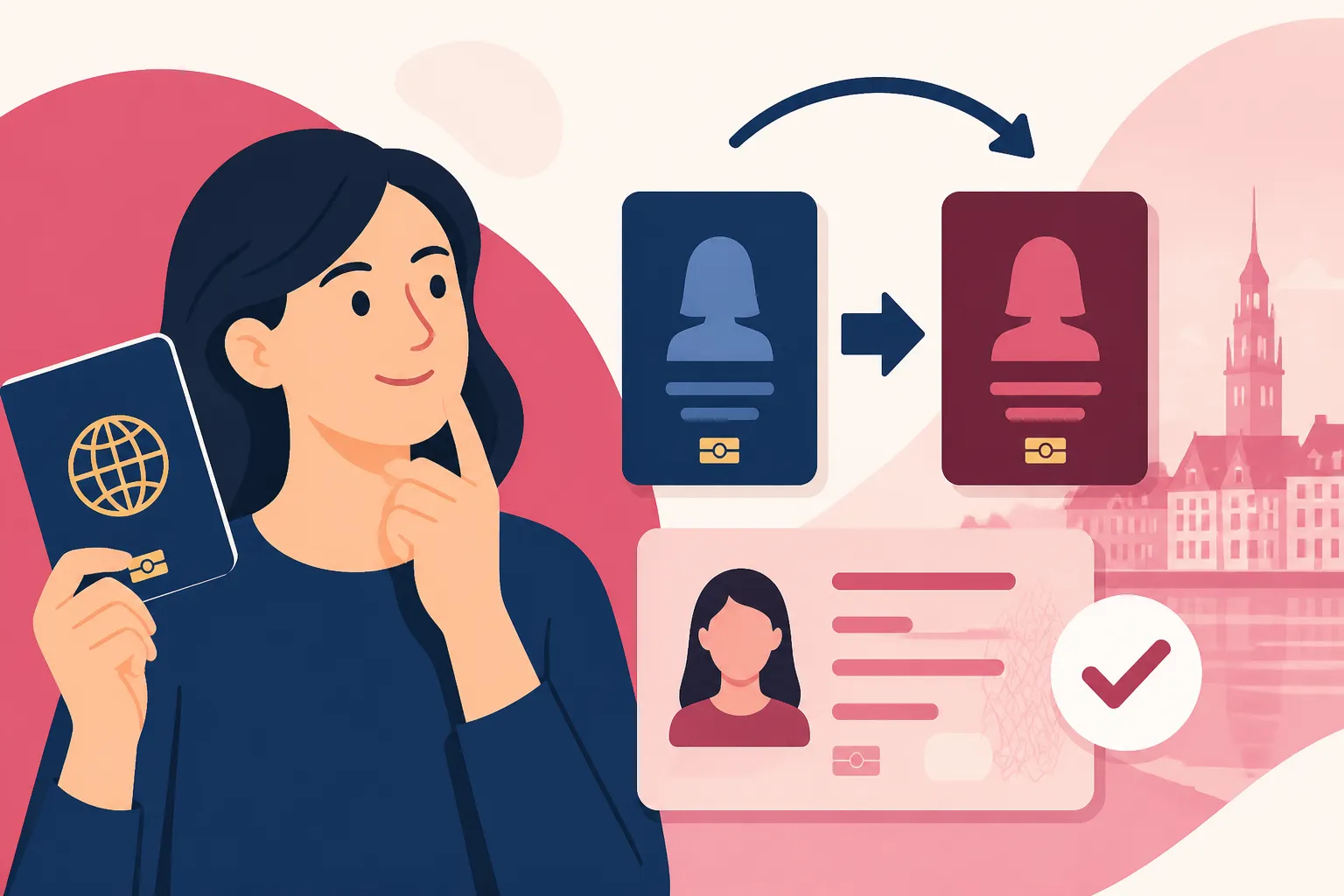
Finally, your residence card (opholdskort) is issued by SIRI (Styrelsen for International Rekruttering og Integration), the Danish Agency for International Recruitment and Integration. This card is your legal proof of residency and work permit status in Denmark. It displays your name, photo, and other key details. Since it's a physical document issued by a separate authority (SIRI, not the municipality), it requires its own application process to reflect your new name. It's not enough that your CPR name is updated; you need a new card to match.
Common Reasons for Name Changes as an Expat
As an expat, life can be incredibly dynamic, and name changes are often intertwined with significant personal journeys. Perhaps you recently tied the knot, and you've chosen to take your spouse's surname – a beautiful new chapter, but also, yes, a fresh heap of paperwork. Or maybe you've gone through a divorce, reclaiming your maiden name, which is an empowering step, but equally demands administrative follow-through. We also see situations where individuals undergo gender affirmation, a profound personal change that absolutely requires official documentation to align with their true identity. Even simpler reasons, like correcting a long-standing misspelling on original documents from your home country, or simply deciding you prefer a different name, are valid.
No matter the reason, the emotional weight behind a name change is real. It’s not just a technicality; it’s part of who you are, or who you are becoming. Having to then jump through what feels like endless hoops, translating documents, booking appointments, and explaining your situation to multiple government agencies, can feel incredibly taxing. It’s okay to feel frustrated and overwhelmed by this additional administrative burden on top of what is already a very personal transition. This guide aims to alleviate some of that burden by clarifying the path forward.
Step-by-Step Guide to Updating Your Danish Residence Card
Alright, let's get down to business. This is where the real work begins. Take a deep breath, gather your documents, and prepare for a series of administrative tasks. Remember, patience is your best friend when dealing with Danish bureaucracy.
Step 1: Update Your Passport First
This is non-negotiable and the absolute starting point for everything else. You must have your new passport, reflecting your desired name, in your hand before you even think about updating your Danish documents. Danish authorities will not accept a name change based on a pending passport application or an expired passport. Your new, valid passport is the foundational proof of your updated identity.
The process for updating your passport will entirely depend on your nationality and where your country's embassy or consulate is located. For some, it might mean a trip to Berlin or Stockholm; for others, your embassy might be right here in Copenhagen. Make sure you check their specific requirements well in advance. This might involve submitting application forms, old passports, birth certificates, marriage or divorce decrees, and new passport photos. Be meticulous in following their instructions to avoid delays. Once you have that new passport in hand, breathe a sigh of relief – the hardest part of this specific name change journey is often behind you.
Step 2: Update Your Name in the Danish Civil Registration System (CPR Register)
With your new passport secured, your next crucial stop is your local municipality, or kommunen, specifically the Borgerservice (Citizen Service). This is where you'll formally update your name in the CPR register, which is fundamentally linked to your identity in Denmark. It's a critical step because your residence card, your bank, your employer, and literally everyone else who interacts with your legal identity in Denmark relies on the CPR register being accurate.
You’ll need to book an appointment with Borgerservice, which you can usually do online via your municipality’s website. When you go, be prepared with your new passport, along with the original document that legally changed your name (e.g., your marriage certificate, divorce decree, or a name change certificate issued by your home country). It is absolutely vital that this document is official and verifiable.
Here’s a crucial point for many expats: if your name change document isn't in Danish, English, German, or Norwegian, you'll need a certified translation. Don't underestimate this requirement. Danish authorities are very strict about the validity of documents. You might need to use a professional translation service like RushTranslate or Translayte to ensure your documents are accepted. These services provide certified translations that are typically accepted by Danish authorities. A simple Google Translate won't cut it. Ensure the translation is officially recognised, usually by a sworn translator. Once your name is updated in the CPR register, it will eventually reflect on your Sundhedskort and within the Sundhed.dk and MitID: Navigating Denmark’s Digital Health Portals digital platform, but often this means you'll eventually receive a new physical yellow card in the mail.
Step 3: Inform SIRI and Apply for a New Residence Card
Now, for the core of the matter: getting that new residence card. This step often surprises expats because, even after updating your CPR name, SIRI doesn't automatically issue a new card. Your residence card is a separate entity that needs a direct application for an update. You are essentially applying for a reissuance of your existing permit with updated personal details.
You'll need to submit an application to SIRI. While there isn't always a specific "name change" form, you typically use a form designed for changes to personal data or to report new information. The form number and specific requirements can vary, so it's always best to check the official SIRI website (nyidanmark.dk) for the most current information. Look for forms related to "change of information" or "re-issuance of residence card."
The documents you'll likely need to provide include:
- A copy of your new, updated passport.
- A copy of the official document proving your name change (e.g., marriage certificate, divorce decree, name change certificate). Again, certified translations are often required if the original is not in one of the approved languages. Services like Translayte are invaluable here for ensuring your paperwork is correct.
- Proof that your name has been updated in the Danish CPR register (e.g., an extract from Borgerservice, or your updated name showing on official digital platforms like Borger.dk).
- Your original residence card. SIRI will typically require you to submit your old card so they can cancel it and issue a new one. Don't worry, they usually handle the cancellation process.
- You will likely need to re-submit your biometrics (fingerprints and photo) for the new card, as these are intrinsically linked to your identity document. You’ll need to book an appointment at a police station or a SIRI office for this. For details on how to schedule this, you can refer to Submitting Biometrics for SIRI: Booking Appointments and Police Stations. Be aware that there might be a fee associated with issuing a new physical card, even for a name change. Check the SIRI website for the latest fee schedule. This is not a fast process, and SIRI processing times can vary, so manage your expectations. If you're concerned about travel during this period, look into applying for a Re-entry Permits (Tilbagerejsetilladelse): Traveling While Waiting for Extension. For general timelines, Navigating SIRI: Processing Times, Biometrics, and Appeals can provide some context.
Step 4: Update Other Danish Documents and Services
Once your name is officially updated in the CPR register and your new residence card is on its way (or ideally, in your hands), it’s time to tackle the rest of your life in Denmark. Proactive communication is key here, as these updates won't always happen automatically.
Firstly, your bank account. Your NemKonto and MitID: The Core of Danish Digital Finance (2027) are intrinsically linked to your CPR number and name. While MitID usually updates automatically once your CPR data is changed, it’s critical to inform your bank. Your bank account name must match your legal name. If it doesn't, you could face issues with receiving your salary, paying bills via Betalingsservice, or even simply making card payments. Visit your bank branch or contact them digitally with your new passport and residence card as proof. You can find more details on Opening a Bank Account in Denmark: Document Checklist and Delays in another guide.
Beyond banking, inform your employer about the change so your payroll records are accurate. This is important for tax purposes and ensures your payslips reflect your correct legal name. Similarly, if you're a member of an A-kasse (unemployment insurance fund) or a trade union, update your details with them. Consistency in your records is paramount to avoid future complications, especially if you ever need to claim benefits. You can learn more about these organizations in Trade Unions and A-Kasse: Why Every Expat Must Understand Them.
Don’t forget other service providers:
- Utility companies: Electricity, water, heating, and internet providers. While not always critical for day-to-day service, having your name correct on bills is important for record-keeping.
- Insurance companies: Home contents insurance (Indboforsikring), car insurance, private health insurance. Ensure your policies are under your correct legal name.
- e-Boks/Mit.dk: These digital mailboxes are where you receive official communication from the government, banks, and other institutions. While linked to your CPR, it's always wise to check that your name displays correctly. This ensures you continue to receive vital official mail without issues, as detailed in E-Boks vs. Mit.dk: Receiving Official Financial Mail from the State.
By systematically working through these updates, you ensure that your new name is consistently recognized across all facets of your life in Denmark.
Navigating the Bureaucracy and Potential Roadblocks
Dealing with administrative changes in a foreign country can feel like navigating a maze blindfolded. Even a seemingly straightforward task like a name change can uncover unexpected hurdles. It's crucial to prepare for these and understand how to overcome them.
The Importance of Certified Translations and Apostilles
I cannot stress this enough: do not skimp on certified translations. If your legal name change document (e.g., marriage certificate, divorce decree, deed poll) is not in Danish, English, German, or Norwegian, it must be translated by a state-authorised translator. In some cases, depending on your home country and the specific document, an apostille or legalisation from your home country's Ministry of Foreign Affairs might also be required. This additional certification verifies the authenticity of the translator's signature or the public document itself.
This might sound like overkill, but trust me, getting it wrong here can cause significant delays and rejections from both Borgerservice and SIRI. They need to be absolutely certain of the document's legitimacy. Services like RushTranslate and Translayte specialize in certified translations that are accepted by official bodies. They understand the specific requirements for legal documents and can provide the necessary stamp and signature. Before you even submit your documents, double-check the latest requirements on nyidanmark.dk and your municipality's website. For more context on document preparation, you can check out Apostille Stamps: Document Preparation for Danish Visa Applications. Being meticulously prepared with correctly translated and apostilled documents will save you a lot of headache and re-submission stress down the line.
Processing Times and What to Expect from SIRI
Ah, SIRI processing times. This is a topic that can test the patience of even the most zen expat. While a name change application might seem minor compared to an initial visa application, it still goes through SIRI's system, and that system isn't known for its lightning speed. Expect to wait several weeks, and potentially even a couple of months, for your new residence card. This is just the reality of dealing with a government agency that handles thousands of applications.
During this waiting period, if you plan to travel outside of Denmark (especially outside the Schengen area), you need to be very careful. Your old residence card will be cancelled when SIRI issues the new one. If you’ve already submitted your old card to SIRI and are waiting for the new one, you might not have a valid residence permit document for re-entry. In such cases, you might need to apply for a re-entry permit (tilbagerejsetilladelse) before you travel. This is a separate application and requires its own processing time. You definitely don't want to find yourself stuck at a border control point because your documentation is in limbo. For a deeper dive into travel during application processing, take a look at Re-entry Permits (Tilbagerejsetilladelse): Traveling While Waiting for Extension. For general SIRI processing insights, Navigating SIRI: Processing Times, Biometrics, and Appeals offers valuable context.
Ensuring Consistency Across All Your Records
Once your name change is initiated at Borgerservice and SIRI, it's not a "set it and forget it" situation. You need to actively ensure that your updated name ripples through all the relevant Danish systems. Inconsistencies can lead to genuine practical problems. Imagine trying to pick up a package at the post office when your ID (your residence card) doesn't match the name on the package, or trying to access medical services when your CPR name differs from your health card.
After updating your CPR name, make it a point to log into your digital portals. Check Sundhed.dk and MitID: Navigating Denmark’s Digital Health Portals to ensure your healthcare records reflect the change. Verify your E-Boks vs. Mit.dk: Receiving Official Financial Mail from the State displays your correct name, as this is how you receive all official government correspondence. Proactive verification prevents future headaches. It might feel like a never-ending checklist, but this diligence ensures a smooth, uninterrupted experience in your new identity in Denmark.
Here’s a summary of the key steps and responsible authorities:
| Step | Primary Authority | Required Documents (General) | Key Action(s) | Estimated Timeframe |
|---|---|---|---|---|
| 1. Update Passport | Your Country's Embassy/Consulate | Old passport, birth/marriage/divorce certificate, application forms | Apply for new passport in your changed name. | Varies widely by country (weeks to months) |
| 2. Update CPR Register | Local Municipality (Borgerservice) | New passport, original name change document (translated/apostilled if needed) | Book appointment, present documents, get name updated. | 1-2 weeks (after appointment) |
| 3. Apply for New Residence Card | SIRI | New passport, name change document, proof of CPR update, old residence card | Submit application form, potentially re-do biometrics, pay fee. | 1-3 months (or more) |
| 4. Update Other Documents/Services | Banks, Employer, A-Kasse, etc. | New passport, new residence card, proof of CPR update | Inform relevant institutions, present documents as requested. | Varies (immediate to several weeks) |
Disclaimer
Please note that while this guide aims to provide accurate and up-to-date information for foreign residents in Denmark, rules and procedures are subject to change by Danish authorities (SIRI, municipalities, etc.). It is always recommended to consult the official websites of SIRI (nyidanmark.dk) and your local municipality for the most current regulations and specific requirements before initiating any processes. This article is for informational purposes only and does not constitute legal advice.