Where to Buy a Used Car (Brugtbil) in Denmark Safely
Ah, the Danish car market. It’s a beast, isn't it? The sticker shock alone can make your eyes water, and for us expats, the whole idea of buying a used car, a brugtbil, can feel like a labyrinth designed to confuse and frustrate. Forget just finding a decent set of wheels; you’re suddenly confronted with a new language of taxes, regulations, and unspoken expectations. But don't despair! This guide is here to untangle that knot for you, walking you through the essential steps and insider tips to safely and confidently purchase a second-hand car in Denmark, so you can hit the open roads with peace of mind.
The Danish Car Market: Why Used is Often the Only Option
Let's be brutally honest: Denmark is not a cheap place to own a car, especially a new one. This isn't just a rumour you hear; it's a stark reality driven by specific government policies. If you've just arrived and are still getting your feet under you – perhaps you're settling into your new apartment, maybe found through a helpful platform like Spotahome – the prospect of adding a brand-new car to your list of expenses is probably out of the question. And that’s perfectly normal! Most Danes themselves opt for used cars, and for very good reason.
Understanding Denmark's Vehicle Registration Tax (Registreringsafgift)
The biggest culprit behind Denmark's sky-high car prices is the registreringsafgift, or vehicle registration tax. This isn't some minor fee; it's a hefty tax levied on new vehicles, often ranging from 85% to 150% of the car's value! Yes, you read that right. Imagine paying for a car, and then essentially buying another one, just for the privilege of driving it in Denmark. This tax is progressive, meaning the more expensive the car, the higher the percentage of tax you pay. It’s designed to discourage private car ownership and encourage public transport and cycling – both of which are excellent in Denmark, but sometimes you just need a car.
This massive tax profoundly impacts the used car market. Because new cars are so expensive, they depreciate slower in Denmark compared to many other countries. A two or three-year-old car might still hold a significant portion of its original value. This means you might find a ten-year-old car still costing what you'd expect a five-year-old car to cost in your home country. It’s a bitter pill to swallow, but it makes buying a brugtbil not just a sensible option, but often the only financially viable one for most residents, especially expats trying to budget their Cost of Living in Denmark 2026: Budgets for Singles and Families.
The Importance of a CPR Number and NemKonto for Car Ownership
Before you even start dreaming about test drives, you need to understand that buying and owning a car in Denmark is inextricably linked to your personal digital identity here. Your CPR number – your unique civil registration number – is absolutely foundational. Without it, you can't register a car, get insurance, or pay the necessary taxes. It's your key to nearly everything in Danish society, including your healthcare entitlements and, yes, your wheels. If you're still navigating the initial steps, make sure you understand The CPR Registration Rule: Why Your Address Matters and get that number sorted out.
Equally important is your NemKonto, your designated bank account for all official payouts from the Danish public sector, including tax refunds, sickness benefits, and any other payments related to your car’s registration or any future rebates. You'll need it linked to your MitID to handle the digital paperwork for car ownership. This digital infrastructure is pervasive in Denmark, so understanding how to set up NemKonto and MitID: The Core of Danish Digital Finance (2027) is crucial. Every payment, every official notification regarding your vehicle, will go through this system. Trying to operate without these two in place is like trying to build a house without a foundation – it simply won't work.
Where to Find Your Brugtbil: Reputable Sources
Alright, so you’re committed to the used car hunt. Now, where do you actually look? Denmark has its own specific ecosystem for second-hand cars, and knowing the right places to look (and the ones to be wary of) is your first step to a safe purchase.
Online Marketplaces and Dealerships: The Digital Hunt
The vast majority of used car sales, both private and through dealers, are advertised online. These platforms are incredibly comprehensive and your best starting point.
- Bilbasen.dk: This is, without a doubt, the king of used car portals in Denmark. Think of it as the Danish equivalent of AutoTrader or Mobile.de. You'll find thousands of listings here, from private sellers to large dealerships. Bilbasen offers extensive search filters, allowing you to narrow down by make, model, year, mileage, fuel type, location, and even specific features. It’s intuitive, easy to use, and almost every car for sale will appear here. Many listings also include detailed specifications, service history notes, and high-quality photos. This should be your first port of call.
- Bilinfo.dk: While perhaps less known to the average private buyer, Bilinfo is another significant platform, particularly used by car dealerships to list their stock. It's often linked directly from dealer websites. You might find some overlap with Bilbasen, but it's always worth checking both to ensure you haven't missed anything.
- Dealership Websites: Many larger dealership chains, like Bjarne Nielsen, Ejner Hessel, and selected brand dealers (e.g., Volkswagen, Toyota, Mercedes-Benz), will also list their used cars directly on their own websites. Often, these are the same cars you'll see on Bilbasen, but sometimes they might have exclusive offers. Buying from a certified dealership often comes with added peace of mind, including warranties and pre-inspection services.
- Social Media (Facebook Marketplace, Expat Groups): While you can find cars here, proceed with extreme caution. The prices might seem enticingly lower, and you might stumble upon a deal from another expat leaving the country. However, the risk of scams or purchasing a vehicle with hidden issues is significantly higher, and your consumer protection rights are virtually non-existent compared to buying from a dealer. If you go this route, due diligence becomes even more paramount.
Physical Dealerships vs. Private Sellers: Pros and Cons
Deciding between a dealership and a private seller is a fundamental choice, and it comes with different levels of risk and reward, especially for an expat who might not be fluent in Danish legal nuances.
-
Dealerships (Forhandlere):
- Pros: This is generally the safer route. Dealerships are bound by Danish consumer protection laws (købeloven), which offer you significant rights in case of faults or misrepresentation. They typically offer a warranty (often 6-12 months), and the car will usually have undergone a service check and a fresh syn (technical inspection, similar to an MOT). They handle all the paperwork for registration and often assist with financing and insurance. While you're out looking at cars, perhaps using your phone for navigation and communication with a reliable eSIM from a provider like Airalo, you'll appreciate the seamless process a dealer offers once you decide on a car.
- Cons: You will almost always pay a higher price for the same car compared to a private sale. This premium covers the dealer's overhead, profit margin, and the consumer protection they provide. There's also less room for negotiation.
-
Private Sellers (Privatsalg):
- Pros: The main advantage here is the potential for lower prices. Private sellers don't have the same overheads as dealerships, which often translates into more competitive pricing. There's also usually more flexibility for negotiation.
- Cons: This is where the expat warning bells should ring loudest. When buying from a private seller, you purchase the car "as is" (som beset). Your consumer protection rights are minimal. If a hidden defect emerges after the sale, you have very little recourse. You're responsible for all the paperwork, including the immediate re-registration of the vehicle (which requires MitID), and arranging your own insurance. Building trust can be challenging, especially with a language barrier.
Special Considerations for Expats: Language and Logistics
Let's face it, navigating a car purchase in a foreign language is daunting. The technical terms, the legal jargon, the informal chats with sellers – it's all a lot.
- Language Barrier: If your Danish isn't quite up to snuff for intricate negotiations and understanding complex contracts, bring a Danish-speaking friend or colleague. Their presence can be invaluable, not just for translation but also for understanding cultural cues and negotiating on your behalf. Don't be shy about asking for help; it's better to be safe than sorry.
- Logistics: Denmark, particularly in cities, can be spread out, and car viewings might take you to different suburbs or even smaller towns. Coordinating test drives, especially if you're relying on public transport like the excellent Public Transport in Denmark: Rejsekort, Trains, and Commuting to get around, can be time-consuming. Make sure you plan your route, perhaps using an app like Rejseplanen, and allocate ample time for each viewing. Staying connected on the go is vital, and a reliable data plan or an eSIM from
Airalocan make a real difference when you're jumping between appointments or need to quickly look up car details.
The Buying Process: Key Steps to Ensure a Safe Purchase
You've found a car you like, and you're ready to take the next steps. This phase is critical, requiring thorough due diligence to avoid costly mistakes.
Inspecting the Vehicle: What to Look For and Essential Checks
Just like you'd meticulously check the lease agreement when The Move-In Inspection (Indflytningssyn): Documenting Property Flaws of a rental, you need to be just as vigilant with a car. Don't let excitement override caution.
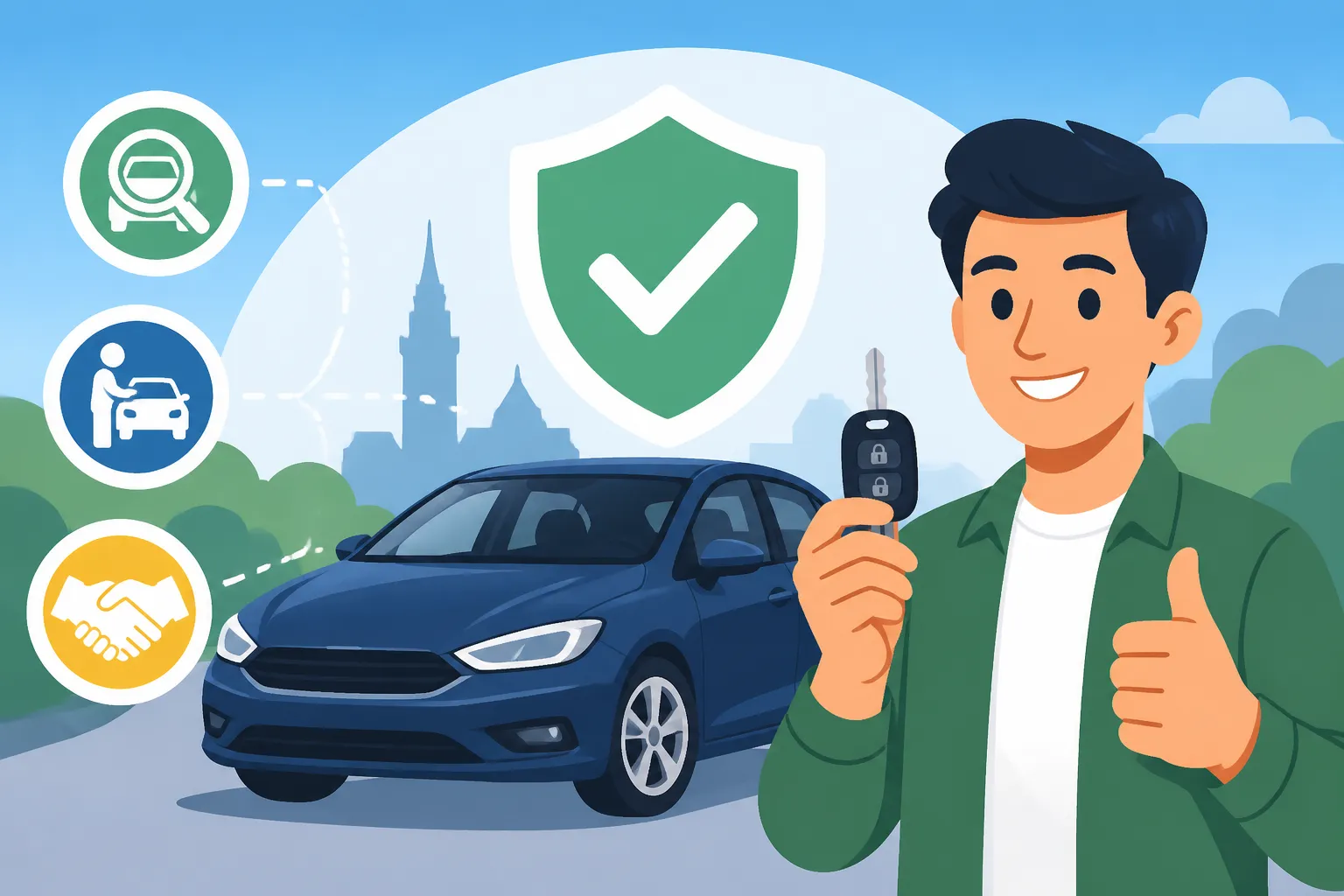
- FDM Inspection (Brugtbiltest): If you are considering a private sale, seriously consider investing in a Brugtbiltest (used car test) by FDM (Forenede Danske Motorejere), the Danish motorists' association. This comprehensive inspection covers over 100 points, from engine and transmission to brakes and electronics. It will reveal any significant defects, upcoming repair needs, and give you a professional assessment of the car's condition. The cost (typically around 2,000-3,000 DKK) is a small price to pay for peace of mind and can give you leverage in negotiations or save you from a lemon. FDM reports are impartial and trusted.
- Your Own Visual Inspection: Before a professional check, do your own walk-around. Look for signs of rust, especially around wheel arches, sills, and under the car. Check for mismatched paint panels, which could indicate accident repairs. Examine tire tread depth and even wear. Look for fluid leaks under the hood and beneath the car. Inside, check upholstery, dashboard warning lights, and all electronic functions (windows, radio, AC).
- Test Drive: Always, always take it for a spin. Listen for unusual noises from the engine or suspension. Test the brakes thoroughly (safely, of course). Check the steering for looseness or pulling. Ensure all gears engage smoothly. Pay attention to how the car handles at different speeds.
- Service History (Servicebog) and Last Syn (MOT): A complete servicebog (service book) indicating regular maintenance is a huge plus. It shows the car has been looked after. Also, check the date of the last syn (technical inspection). Cars in Denmark need to be inspected periodically (usually every two years after the car is four years old). A recent, passed syn means the car meets basic safety and environmental standards.
Understanding the Car's History: Tinglysning and Nummerpladeinfo
This is perhaps the most critical step for an expat. You need to verify the car's legal and historical status to ensure you’re not inheriting someone else's problems.
- Tinglysning (Registration of Debt): This is absolutely non-negotiable. Before you hand over any money, you must check the Tinglysning register to see if there's any outstanding debt (pant) registered against the car. In Denmark, loans can be attached to the vehicle itself, not just the owner. If you buy a car with a debt attached, that debt becomes your responsibility. You can check this online via Tinglysning.dk using the car's registration number. If there's a pant, the seller MUST clear it before the sale, or you must ensure the payment goes directly to the lender to clear the debt. This step protects you from a potentially massive financial headache.
- Nummerpladeinfo (License Plate Information): This is another vital resource provided by Motorstyrelsen (the Danish Motor Agency). You can use official apps or websites (e.g., Motorstyrelsen's own app or Nummerplade.net) to enter the car's license plate number and retrieve a wealth of information. This includes:
- The date of the last syn and its result.
- Basic vehicle data (make, model, year, engine size).
- Mileage history recorded at previous inspections (allowing you to spot any discrepancies).
- Information about outstanding grøn ejerafgift (green owner tax) or other public charges.
- The number of previous owners.
Checking this information gives you a clear picture of the car's official history and can help you identify red flags like suspiciously low mileage for its age or overdue inspections. This due diligence is crucial, as unfamiliarity with these checks is a common vulnerability for foreigners.
Financing, Insurance, and Registration: The Paperwork Trail
Once you're satisfied with the car's condition and history, it’s time to tackle the administrative side.
- Financing: If you need a loan, you can either arrange it through your Danish bank – remember, getting a loan often requires a stable income and a good credit history, which can take time to build as an expat – or directly through the car dealership. Dealerships often have partnerships with financial institutions and can offer competitive rates. When applying for loans or even opening a bank account in Denmark, be prepared for Opening a Bank Account in Denmark: Document Checklist and Delays as a new arrival.
- Insurance (Bilforsikring): Car insurance is mandatory in Denmark. At a minimum, you must have liability insurance (ansvarsforsikring) to cover damage you might cause to others or their property. Comprehensive insurance (kaskoforsikring) is optional but highly recommended if you value your own vehicle. Insurance premiums vary widely based on your age, driving history (especially if you're new to Denmark and don't have a Danish no-claims bonus), the car's make and model, and where you live. Get quotes from several providers before finalizing the purchase. You can explore options from companies like Tryg, Topdanmark, Alka, or Alm. Brand. This is one of those Mandatory Insurances: Dog Insurance, Car Liability, and Fire Insurance you just can't skip.
- Registration (Omregistrering): This is critical. The car MUST be re-registered to your name immediately upon purchase. This can be done online via Motorstyrelsen's website using your MitID. You'll need the car's registration certificate, the seller's CPR number, and your own. The fee for re-registration is typically around 340 DKK (as of early 2024, subject to change). If you buy from a dealer, they will usually handle this for you. For private sales, you are responsible. Do not drive the car until it is registered in your name and insured.
- Bill of Sale (Købsaftale): Always insist on a written købsaftale (bill of sale) clearly stating the car's details, the agreed price, the date of sale, and the full contact information of both buyer and seller. If buying privately, you can find standard templates online from FDM or Forbrugerrådet Tænk (the Consumer Council).
Beyond the Purchase: Living with a Car in Denmark
So, you've successfully navigated the purchase and are now the proud owner of a Danish brugtbil. Congratulations! But the journey doesn't end there. Owning a car in Denmark comes with ongoing responsibilities and costs.
Annual Costs: Taxes, Insurance, and Maintenance
Beyond the initial purchase price, be prepared for the regular financial commitments of car ownership.
- Green Owner Tax (Grøn Ejerafgift / Vægtafgift): You'll pay this semi-annually or annually. The amount depends on your car's fuel efficiency and type. Older cars or less fuel-efficient vehicles generally incur higher taxes. You can check the exact amount for any car on Motorstyrelsen's website by entering the license plate number. This is part of the broader Taxes in Denmark Explained: A-Skat, AM-bidrag, and Marginal Rates that will become a regular part of your financial life here.
- Insurance Premiums: As mentioned, these vary greatly but will be a recurring cost. You pay these monthly, quarterly, or annually depending on your insurer.
- Maintenance and Syn: Regular servicing is essential. Finding a trustworthy mechanic who speaks English can be a challenge, so ask for recommendations in expat groups. Remember the syn (inspection) every two years; this needs to be factored into your budget. Repair costs can be high, so preventative maintenance is key.
Exchanging Your Foreign Driver’s License
If you've moved to Denmark, your foreign driver's license might not be valid indefinitely. The rules differ slightly depending on whether your license was issued in an EU/EEA country or a non-EU/EEA country. Generally, non-EU licenses must be exchanged for a Danish one within a certain period (e.g., 180 days for some nationalities, or it may require a test). Be sure to research the specific requirements for your country's license to avoid issues. We've got a comprehensive guide on Driving in Denmark: Exchanging Your Foreign Driver’s License that breaks down all the details.
Parking and Road Rules: Navigating Danish Roads
Driving in Denmark is generally a pleasant experience – roads are well-maintained, and traffic flows smoothly outside of peak city hours. However, parking, especially in larger cities like Copenhagen or Aarhus, can be a real headache.
- Parking: Parking can be scarce and expensive. Many areas require paid parking, often managed via apps (e.g., Easypark, ParkMan). Look for signs carefully, as parking rules are strictly enforced, and fines are hefty. If you live in a city, consider if your accommodation, perhaps one you secured through a platform like Spotahome, offers dedicated parking, as this is a huge bonus.
- Road Rules: Danish road rules are standard European. Drive with your lights on at all times, even during the day. Speed limits are usually 50 km/h in urban areas, 80 km/h on rural roads, and 130 km/h on motorways (though 110 km/h is common). Danes are generally calm drivers, but cyclists have priority in many situations, so be extra vigilant. Also, always indicate well in advance. Remember, using your phone while driving is illegal and heavily fined.
Buying a used car in Denmark as an expat is certainly a process that demands patience and diligence, but it’s entirely doable. By understanding the unique tax structure, leveraging the right online tools, performing thorough checks, and being mindful of the ongoing costs, you can successfully find a reliable brugtbil and gain a new level of freedom to explore this beautiful country beyond the reach of Danish Cycling Culture: Rules, Buying a Bike, and Safety and the train lines.
Disclaimer
The information provided in this guide is intended for general informational purposes only and does not constitute legal, financial, or professional advice. While we strive to keep the content up-to-date and accurate, regulations and procedures in Denmark can change. Always consult official sources, such as Motorstyrelsen (Danish Motor Agency), SKAT (Danish Tax Agency), and relevant insurance providers, or seek independent professional advice before making any decisions related to purchasing or owning a car in Denmark.