Navigating Waiting Lists for Almene Boliger (Public Housing)
Oh, the quest for affordable housing in Denmark! It's one of those uniquely Danish experiences that can leave even the most seasoned expat scratching their head, particularly when it comes to the famed almene boliger system. Many newcomers arrive hoping to tap into this seemingly utopian public housing, only to be met with the bewildering reality of incredibly long waiting lists and a system that feels like it operates on its own timeline. This guide is here to shed some light on the almene boliger landscape, helping you understand what it is, how these elusive waiting lists work, and what realistic expectations you should have.
What Exactly Are Almene Boliger? Understanding the Concept
When people hear "public housing," their minds often jump to very specific images from their home countries, usually associated with low-income, government-subsidized projects. But in Denmark, almene boliger are a completely different beast, and understanding this distinction is crucial before you dive into the waiting list game.
More Than Just "Public Housing" – The Danish Difference
In Denmark, almene boliger are best described as non-profit housing associations (boligforeninger) that manage a significant portion of the country's rental properties. These aren't government-run projects in the traditional sense; rather, they operate on a self-governing, democratic principle where tenants often have a say in their local housing complex. The core idea is to provide good quality, affordable housing that isn't driven by profit motives. This means the rent is generally lower than in the private market, and any surplus generated by the association is reinvested back into the properties or used to keep future rents stable.
These associations offer a wide array of housing types, from cozy studio apartments perfect for students to spacious family homes, and even specialized housing for seniors. They are often beautifully maintained, integrated into existing neighborhoods, and boast excellent facilities like shared laundries, community rooms, and green spaces. It's a system deeply rooted in the Danish welfare model, aiming to ensure everyone has access to a decent home, regardless of their income. This commitment to quality and affordability is precisely why they're so popular and, consequently, why their waiting lists are legendary.
The Advantages and Disadvantages for Expats
For expats, the allure of almene boliger is strong, and for good reason. The advantages are quite appealing: significantly lower rent compared to the private market can free up a substantial portion of your budget, making Denmark's notoriously high cost of living feel a little less daunting. Contracts are typically long-term and stable, offering much-needed security in a rental market that can sometimes feel precarious. Plus, as a tenant, you often enjoy stronger rights and a more responsive landlord experience through the boligforening. These properties are generally well-maintained, and some even come with communal benefits, fostering a sense of community that can be invaluable for newcomers trying to integrate.
However, it's not all smooth sailing, and there are some significant drawbacks that expats absolutely need to be aware of. The primary hurdle, as you've probably guessed, is the sheer length of the waiting lists. We're talking years, often decades, for popular areas and desirable apartment types. For an expat who might only be in Denmark for a few years, this can make almene boliger seem like an unattainable dream. Furthermore, the application processes can be largely in Danish, presenting a significant language barrier for those not yet fluent. While some boligforeninger are improving their English resources, much of the communication, especially official offers and updates, will likely be in Danish, requiring you to navigate these linguistic hurdles. Eligibility criteria can also be very specific – some apartments are exclusively for students, others for families with children, or for individuals over a certain age, further limiting options.
Deciphering the Waiting List System: How It Works
So, you're intrigued despite the warnings of long waits. How do you even begin to understand this opaque system? Unlike a single national database, the almene boliger system is decentralized, meaning you typically sign up directly with individual housing associations. Each boligforening (or sometimes a collective of them within a municipality) maintains its own waiting lists, and understanding their individual nuances is key.
Seniority Rules and the Point System
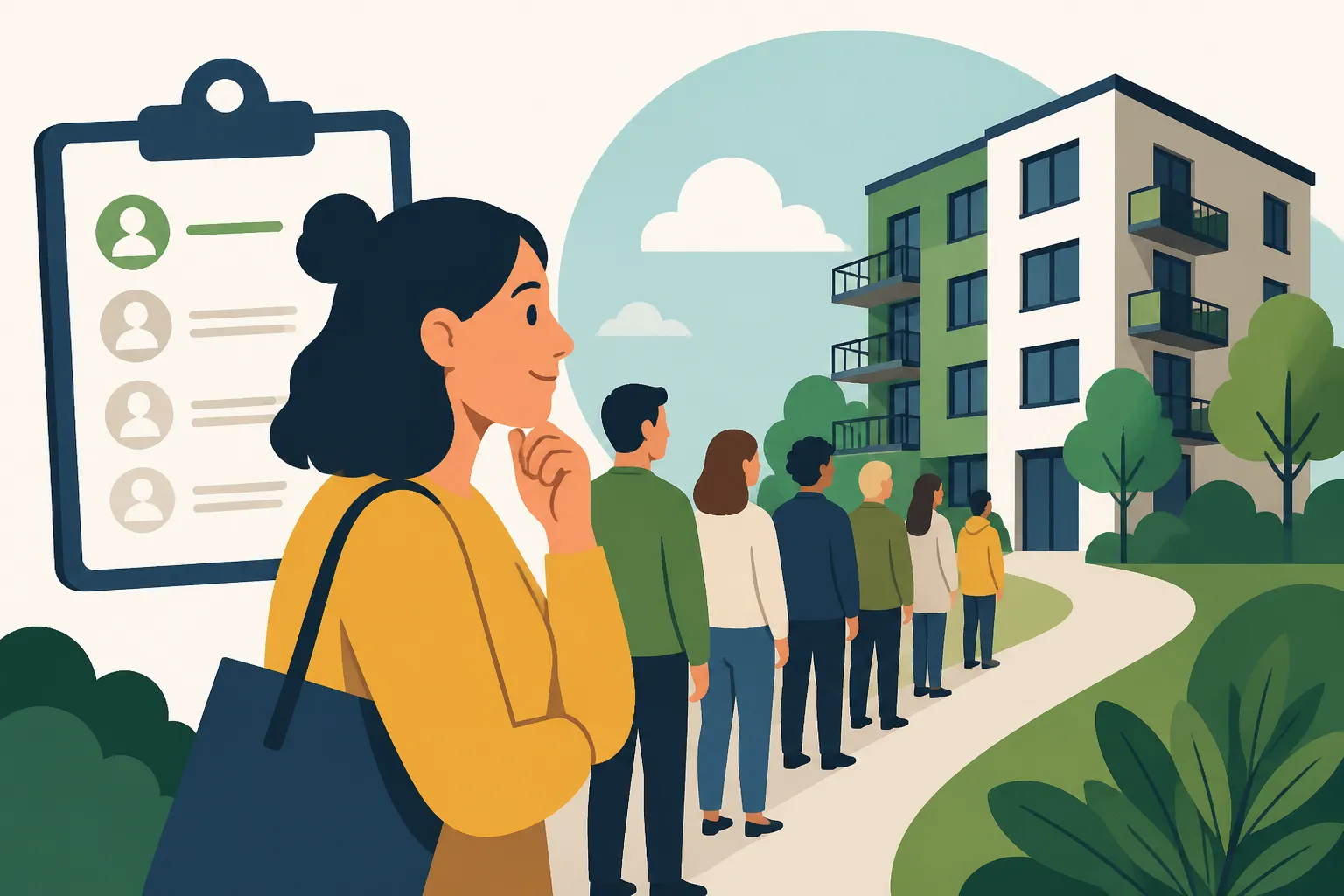
The absolute bedrock of the almene boliger waiting list system is seniority. This simply means: the longer you've been registered on a specific waiting list, the higher your chances of getting an offer. It's a strict first-come, first-served principle, which explains why Danes often sign up their children for a boligforening list at birth! There are generally two main types of lists: the external list, for anyone joining the association for the first time, and the internal list, for existing tenants within the same boligforening who wish to move to a different apartment within their complex or another property managed by the same association. Crucially, internal lists almost always have priority, meaning existing tenants often leapfrog external applicants, even if they have less overall seniority. This further lengthens the wait for newcomers.
To maintain your seniority, you’ll typically need to pay a small annual fee, usually in the range of DKK 100-200. If you forget or fail to pay this fee, you risk being removed from the list and losing all your accumulated seniority, which is a devastating blow if you've been waiting for years. It's also important to differentiate between "active" and "passive" registration. Active means you're actively searching and will receive offers. Passive means you're keeping your seniority but not receiving offers, perhaps because you're temporarily living abroad or don't need an apartment right now. Remember, your position on these lists is sacred, and you'll need to log in regularly to confirm your interest, update your preferences, and ensure your yearly fee is paid.
The Local Authority Factor: Municipal Allocation and Special Circumstances
While seniority is king, there are certain situations where local municipalities (kommuner) can intervene in the almene boliger allocation process. Danish law allows municipalities to nominate individuals for a certain percentage of vacant almene boliger (often around 10-25%). This is known as kommunal anvisningsret. However, this isn't a shortcut for typical expats or a backdoor for general housing needs. This right is almost exclusively used to house individuals facing urgent social challenges, such as those experiencing homelessness, victims of domestic violence, refugees, or people with very specific medical needs that necessitate immediate housing.
For the average expat, even one facing difficulty finding private housing, relying on kommunal anvisningsret is usually not a viable strategy. Your municipality will generally expect you to exhaust all other options in the private rental market before even considering such an intervention. Similarly, some boligforeninger might have specific quotas for certain groups, like students near a university campus, but these are exceptions rather than the rule. It's always worth checking the specific rules of the boligforening you're interested in, but keep your expectations realistic; the vast majority of expats will need to rely on the traditional seniority-based waiting lists.
Finding the Right Boligforening to Join
This is where many new expats get tripped up. There isn't one big, national waiting list for all almene boliger in Denmark. Instead, you need to identify and sign up with individual boligforeninger (housing associations) that operate in your desired geographic areas. Think of it like a puzzle, where you might need to register with several different associations to maximize your chances. Some of the largest and most well-known boligforeninger include KAB (predominantly in the Copenhagen area), Boligselskabet Danmark, Domea, ALBOA (strong in Aarhus), and others. Each region will have its own prominent players.
Your best bet is to do some targeted research. Start by identifying the municipalities or specific neighborhoods where you’d ideally like to live. Then, search online for "almene boligforeninger" or "boligselskaber" in those areas. Their websites will typically have information about how to register for their waiting lists. Be prepared for these sites to be primarily in Danish, so a good browser translation tool will be your friend. The strategy here is volume: sign up for as many relevant lists as you can reasonably afford (considering the annual fees). While this process might seem daunting at first, remember that the goal is to cast a wide net and get your name on as many lists as possible, starting that all-important seniority clock ticking.
Strategies for Getting on (and Through) the Waiting Lists
Given the unique nature of the almene boliger system, a thoughtful and patient approach is essential. This isn't a race, but rather a marathon where consistent, long-term effort is rewarded.
Early Registration and Patience: The Name of the Game
Honestly, for almene boliger, the single most important piece of advice is: register as early as humanly possible, even if you're only considering a long-term stay in Denmark. The concept of "seniority" cannot be stressed enough; every single day you are on a waiting list counts. While you're patiently waiting for your seniority to pay off, you'll need a place to live, right? Many expats turn to platforms like Spotahome for their initial, perhaps temporary, housing in Denmark, as it offers furnished rentals for varying lengths of stay, providing a crucial bridge while you navigate the local systems. Don't be disheartened by the talk of long waits; think of it as an investment in your future stability and potentially lower housing costs.
Once you're on a list, patience becomes your closest companion. Offers might not come for years, especially in popular areas like Copenhagen or Aarhus. You'll receive yearly reminders to pay your small membership fee (typically DKK 100-200) to keep your seniority active. Missing this payment means losing your spot, so mark your calendar or set up automatic payments if possible. The emotional toll of waiting can be real, especially if you're regularly checking your position and seeing minimal movement. Validate that feeling, but remember that many Danes are in the same boat, having waited for years. For more general advice on settling in, remember that The CPR Registration Rule: Why Your Address Matters is the absolute first step to everything official in Denmark, including eventually securing permanent housing.
Understanding Eligibility and Specific Requirements
While seniority is the primary gatekeeper, specific almene boliger units might have additional eligibility criteria that you need to be aware of. For instance, student housing (ungdomsboliger) is typically reserved for individuals who are actively enrolled in a higher education program. You'll need to provide proof of enrollment to qualify. Similarly, elderly housing (ældreboliger) requires applicants to be above a certain age, usually 55 or 60. Some units might also have specific requirements related to family size, ensuring that larger apartments go to families with children, or smaller ones to single occupants.
Occasionally, you might come across almene boliger that have income caps, meaning your household income cannot exceed a certain threshold to be eligible. These are less common for general almene boliger but can exist for certain socially-oriented projects. Always read the fine print on the boligforening's website for each specific property type you're interested in. It's crucial not to waste your time (and money on annual fees) on lists for which you clearly don't qualify. If you're unsure about the details, don't hesitate to reach out to the boligforening directly for clarification, though be prepared that communication might require some Danish language skills.
Practical Steps for Application and Communication
The actual process of applying to join the waiting lists is fairly straightforward, once you've overcome any language barriers. First, visit the website of your chosen boligforening. Look for sections like "Bliv skrevet op" (get listed) or "Venteliste" (waiting list). You'll typically register online, providing your personal details, including your CPR number (which is essential for any official housing in Denmark), contact information, and preferences for apartment size, location, and rent range. You'll then pay the initial registration fee, usually via bank transfer or Dankort. This fee officially places you on the waiting list and starts your seniority.
Making sure you stay reachable is paramount. Your boligforening will contact you via digital post (E-Boks or Mit.dk) or email when an offer comes up, and these offers often come with tight deadlines for response. If you're traveling or prone to changing phone numbers, ensure your contact details are always up-to-date. Having reliable phone service, perhaps even an eSIM from Airalo when you first land to ensure seamless connectivity, is a smart move so you don't miss crucial communications. For more on digital communication, check out E-Boks vs. Mit.dk: Receiving Official Financial Mail from the State. If Danish isn't your strong suit, consider asking a trusted Danish friend or colleague to help you with the registration process and to keep an eye on your digital mail for important housing notifications.
Realistic Expectations and Alternative Housing Solutions
While the dream of securing a highly affordable almen bolig is enticing, it's absolutely vital to approach this with a dose of realism. Denmark's housing market, particularly in urban centers, is incredibly competitive, and almene boliger are not an instant solution for most expats.
The Harsh Reality of Waiting Times
Let's not mince words: the waiting times for almene boliger can be incredibly long. For a family apartment in a prime location in central Copenhagen, you might genuinely be looking at 10-20 years, or even more. Even in slightly less competitive areas or for smaller units outside the major cities, a wait of 3-5 years isn't uncommon. Student housing often has shorter waits, perhaps 1-3 years, but even that requires significant patience. It’s a stark contrast to many other countries where public housing might be a more immediate option for those in need.
To give you a clearer picture, here's a general overview of hypothetical waiting times, but please remember these are estimates and can vary wildly based on the specific boligforening, the type of apartment, and its location:
| Apartment Type & Size | Location | Estimated Waiting Time (Years) |
|---|---|---|
| 1-bedroom (student/single) | Small town / outskirts | 1-3 |
| 1-bedroom (student/single) | Major city (Copenhagen/Aarhus) | 3-7 (student); 5-10+ (general) |
| 2-3 bedrooms (family) | Small town / outskirts | 3-7 |
| 2-3 bedrooms (family) | Major city (Copenhagen/Aarhus) | 10-20+ |
| Elderly housing (1-2 beds) | Varies | 0-5 (often shorter) |
The apartments with the shortest waits are typically those that are less desirable: maybe older, on the ground floor with less light, or located in areas further out from city centers. You might also find slightly shorter waits for properties that require more specific criteria, like being a student, but even then, demand often outstrips supply. This means that for many expats, an almen bolig will remain a future aspiration rather than a present reality.
Combining Strategies: Not Putting All Your Eggs in One Basket
Given these long waiting times, it becomes abundantly clear that relying solely on almene boliger is not a viable strategy for most expats, especially those arriving in Denmark without pre-existing housing. This is a long-term goal, a potential future reward, but not a short-term solution. Therefore, you absolutely must pursue other housing options in parallel. Your primary focus initially should be on the private rental market. While it can be more expensive and competitive, it's where the vast majority of expats find their homes. Our comprehensive guide on Renting in Denmark: Complete Guide for Expats (2027) is an excellent place to start.
Also, don't forget options like Short-Term Rentals and Subletting (Fremleje): Legal Rules for Expats as a potential bridge while you search for something more permanent. Remember the financial implications: private rentals often come with significant upfront costs like deposits and prepaid rent. You'll need to be prepared for Initial Rental Costs: Navigating Deposits and Prepaid Rent Laws before you even start looking. It’s about building a robust housing strategy that acknowledges the reality of the Danish market, ensuring you have a roof over your head from day one, while simultaneously taking steps toward potential future savings through the almene boliger system.
Why Many Expats Don't End Up in Almene Boliger
The honest truth is that a significant number of expats who sign up for almene boliger waiting lists eventually leave Denmark before their number ever comes up. The average duration of an expat stay, especially for those on shorter work contracts or student visas, simply doesn't align with the multi-year waiting periods. This isn't to discourage you from signing up – every year you're on the list is a year closer to a potentially affordable home – but it's important to manage your expectations.
Furthermore, the process of navigating the Danish system, from understanding your CPR Bopælspligt: The 180-Day Residency Requirement for Housing to managing your finances (for more on this, see Money in Denmark: Banking, Payments, and Financial Setup for Expats), is complex enough without adding the stress of indefinite housing waits. Many expats find perfectly suitable, albeit more expensive, private rentals and simply don't need to wait for an almen bolig. However, if you're planning on making Denmark your permanent home, especially if you foresee yourself staying for five, ten, or even more years, then signing up for almene boliger waiting lists is absolutely a worthwhile endeavor. It's a testament to long-term planning and patience, a truly Danish trait.
Disclaimer
The information provided in this guide is for general informational purposes only and does not constitute legal or financial advice. Housing rules and regulations in Denmark, particularly concerning almene boliger, can be complex and are subject to change by municipal authorities and individual housing associations. It is always recommended to consult official sources, such as the websites of specific boligforeninger, relevant Danish government agencies, or seek professional advice for your individual circumstances.