What Happens if Your Employer Uses the Wrong Tax Card?
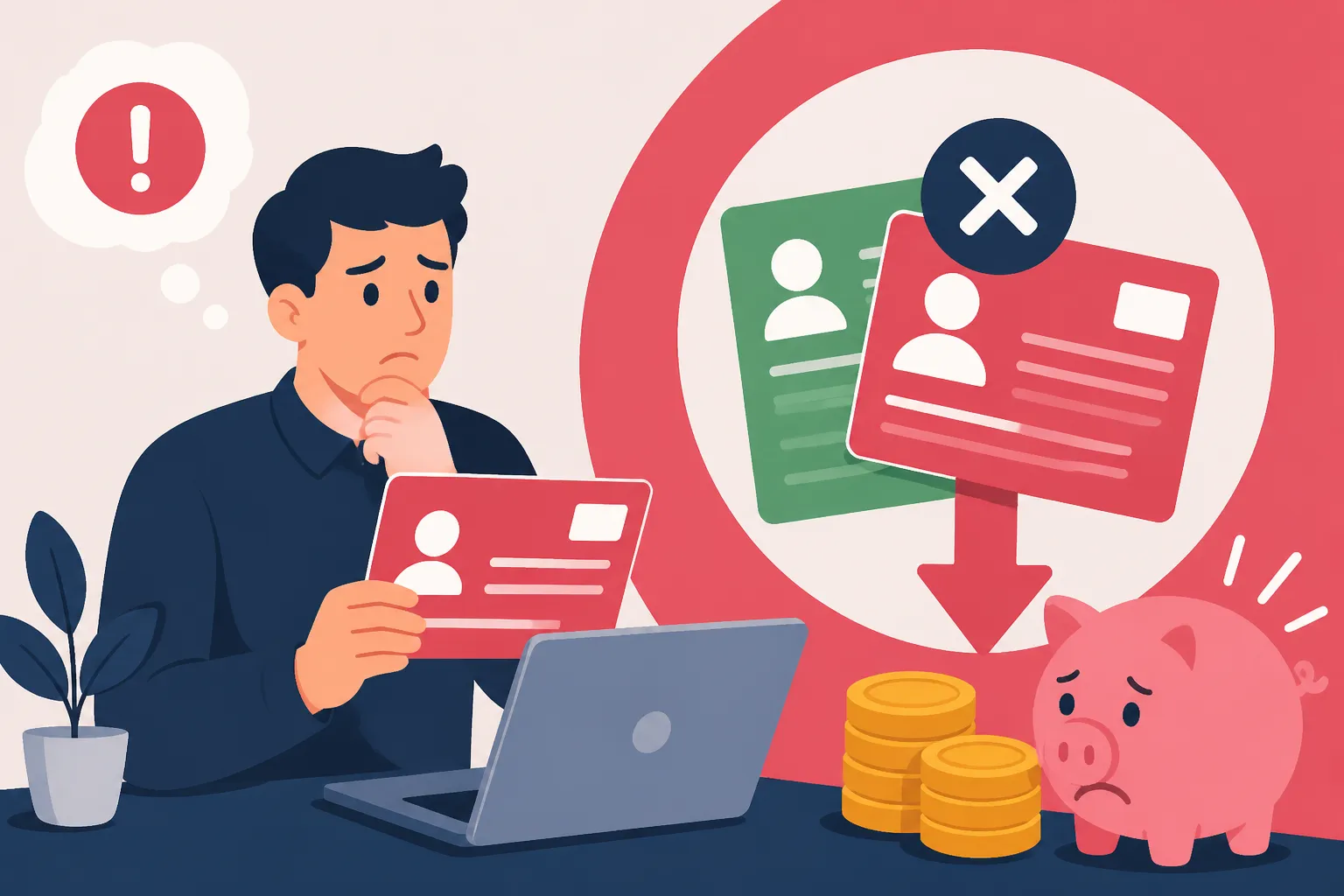
You open your first Danish payslip, expecting a celebration of your new life in Copenhagen or Aarhus, but instead, you see that over half your salary has vanished into the tax void. This guide explains exactly why your employer might be using the wrong tax card, the difference between a Hovedkort and a Bikort, and the concrete steps you must take to reclaim your hard-earned money.
The Mystery of the Hovedkort and the Bikort
To understand why your paycheck looks so small, you first have to grasp the dual-card system that Denmark uses. Unlike many countries where your tax code is a single string of numbers and letters, Denmark operates with a primary card and a secondary card. If your employer pulls the wrong one from the SKAT (Danish Customs and Tax Administration) database, the financial consequences are immediate and painful.
The Hovedkort, or Primary Tax Card, is where your "personfradrag" lives. This is your personal tax-free allowance—an amount you are allowed to earn every year before the state starts taking its share of income tax. This card also contains your specific tax percentage, calculated based on your Preliminary Tax Assessment (Forskudsopgørelse): Avoiding Tax Debt. Most expats will have a tax rate somewhere between 36% and 42% on their Hovedkort, depending on their municipality and deductions.
The Bikort, or Secondary Tax Card, is a different beast entirely. It does not include your personal allowance. It is designed for secondary sources of income, such as a side hustle, a student job, or a pension. When an employer uses the Bikort, they tax every single krone you earn at your flat tax rate without applying any deductions. If your main employer accidentally uses this card, you are essentially paying tax on money that should have been tax-free. This is a classic "newcomer" hurdle, especially if you are still Understanding Your Danish Payslip (Lønseddel): Deductions Decoded for the first time.
Why Your Employer Might Default to the Secondary Card
Errors usually happen during the onboarding phase. When you are hired, your employer’s payroll system automatically "pings" SKAT using your CPR number to see which tax card is available. If you have previously had a small student job or did some freelance work, that old employer might still be "holding" your Hovedkort.
By law, only one employer can use your Hovedkort at a time. If SKAT sees that your primary card is already in use elsewhere, it will only allow your new employer to download the Bikort. This often happens to expats who forgot to tell their old internship supervisor to "release" their tax card. It’s a frustrating administrative loop, but it is one of the most common reasons for a depleted paycheck.
Another scenario involves the timing of your CPR registration. If your employer runs payroll on the 20th of the month but your Preliminary Tax Assessment (Forskudsopgørelse): Avoiding Tax Debt wasn't finalized until the 22nd, the system defaults to a generic secondary card or, even worse, the emergency tax rate. In these moments of liquidity crisis, using a service like Wise can be a lifesaver to move funds from home accounts quickly to cover rent while you wait for the tax mess to settle.
The 55 Percent Shock: The Emergency Tax Scenario
There is a level of tax hell even deeper than the Bikort: the 55% emergency tax. If your employer cannot find a tax card for you at all—perhaps because you haven't activated your Preliminary Tax Assessment (Forskudsopgørelse): Avoiding Tax Debt or your CPR number is brand new—they are legally required to deduct 55% of your gross pay.
This is not because you actually owe 55% in taxes. It is a safeguard designed by the Danish state to ensure that no one avoids their tax obligations. To a fresh expat, it feels like a personal attack. You might see a deduction labeled "A-skat" that looks impossibly high. This is where Taxes in Denmark Explained: A-Skat, AM-bidrag, and Marginal Rates becomes essential reading, as it helps you distinguish between the mandatory 8% labor market contribution and the actual income tax.
| Tax Card Type | Includes Personal Allowance? | Typical Tax Rate | Used For |
|---|---|---|---|
| Hovedkort | Yes | 36% – 42% | Your main job/salary |
| Bikort | No | 36% – 42% | Side jobs, SU, or bonuses |
| Emergency Tax | No | 55% | When no card is found |
If you find yourself stuck in the 55% bracket, do not panic. The money isn't "gone" forever, but it is currently sitting in the government's coffers instead of your bank account. If your situation involves complex international income, you might want to consult with Taxes for Expats to ensure your foreign assets aren't complicating how SKAT views your Danish tax liability.
The Role of the Forskudsopgørelse
Your tax card is only as accurate as your preliminary assessment. If you haven't logged into TastSelv (SKAT’s self-service portal) to enter your expected yearly income, the system has no idea how to calculate your rate. For many expats, the system makes a "best guess" based on historical data that doesn't exist for you.
You must manually go in and update your expected salary. If you expect to earn 500,000 DKK but the system thinks you'll earn 200,000 DKK, your tax rate will be set too low, leading to a massive bill later. Conversely, if the system thinks you'll earn more than you do, your monthly take-home pay will be lower than necessary. While you are in the portal, make sure you know How to Register Your Daily Commute Distance on Your Forskudsopgørelse, as this deduction can significantly lower your effective tax rate.
How to Fix the Wrong Tax Card Error
Fixing a tax card error requires a two-pronged approach: you must deal with SKAT and your employer’s HR department simultaneously. Simply telling your boss "my tax is wrong" won't solve anything because the employer cannot manually change your tax rate; they can only pull what SKAT provides.
First, log into the SKAT website using your MitID. Navigate to your "Forskudsopgørelse" for the current year. Look at the very bottom of the page; it will show you which employer is currently using your Hovedkort. If it’s an old employer or a bank, you need to change this. You can actually "move" the Hovedkort yourself in the portal by indicating which income source should be primary. If you are unsure about the terminology, Taxes for Expats can provide professional guidance on navigating these specific Danish filings.
Second, once you have updated your information in TastSelv, it takes about 24 to 48 hours for the system to update. After this window, send a polite email to your payroll department. You should say: "I have updated my Forskudsopgørelse and confirmed my Hovedkort is available. Please pull a fresh tax card (skattekort) before the next payroll run." Most Danish payroll systems allow for a "re-pull" of data right up until the day they click "submit" for the month.
What if the Deadline Has Passed?
If your employer has already processed the salary with the wrong card (usually by the 25th of the month), they generally cannot "undo" the payment. You will receive the lower amount in your bank account. In this situation, some employers are willing to do an "ekstra udbetaling" (extra payment) if the error was on their end, but most will tell you that the difference will be settled in the next tax year.
This is a bitter pill to swallow if you were counting on that money for a deposit or furniture. If you find yourself short on DKK and need to bridge the gap with savings from home, Wise is often much cheaper than a traditional bank for converting your home currency into Danish Kroner to cover the temporary shortfall. Knowing What Happens if Your Employer Uses the Wrong Tax Card? doesn't make the immediate cash shortage any easier, but it does help you prevent it from happening a second time.
Reclaiming Your Overpaid Tax
The good news is that Denmark is meticulously fair when it comes to the annual reconciliation. Every krone you overpay because of a Bikort or emergency tax error is tracked by SKAT. You don't have to "apply" to get it back; it happens automatically through the Årsopgørelse (Annual Tax Assessment).
In March of the following year, SKAT will release your final statement. If you paid 55% tax for three months when you should have paid 38%, the system will calculate the total overpayment. This sum, often amounting to thousands of kroner, will be deposited directly into your NemKonto (your designated "Easy Account" for government payments). If you haven't set this up yet, you should read about Opening a Bank Account in Denmark: Document Checklist and Delays to ensure you can actually receive your refund.
Can You Get the Money Sooner?
In very specific cases of extreme financial hardship, you can contact SKAT directly and ask for a "manuel regulering." This is rare and usually requires proving that the tax error is preventing you from meeting basic living expenses. For 99% of expats, however, the answer is that you have to wait until the next March.
This is why being proactive in your first month is so vital. Don't wait for the second paycheck to see if the problem "fixes itself." It won't. The Danish system is automated, and it will keep pulling the same wrong card every month until a human (you) intervenes in the digital portal. If you are juggling multiple income streams, perhaps as a freelancer, you should also check What is A-Skat vs B-Skat vs C-Skat in the Danish System? to ensure you are paying the right types of tax on your various invoices.
Navigating Multiple Employers and Side Hustles
If you are a freelancer or working two part-time jobs, the risk of a tax card error increases exponentially. You must decide which employer gets the Hovedkort. Usually, you should give it to the employer who pays you the highest monthly salary. This ensures that your personal allowance (fradrag) is used against the largest possible chunk of income, maximizing your monthly take-home pay.
The second employer must use the Bikort. If both employers try to use the Hovedkort, you will end up underpaying tax because you'll be receiving your tax-free allowance twice. SKAT’s system will eventually catch this, and you will be hit with a "Restskat" (tax debt) notice the following year. This is a common trap for international students who are Studying in Denmark: Admissions, Student Visas, and Campus Life while working at a cafe and doing a bit of delivery work on the side.
Managing the Transition Between Jobs
When you switch jobs in Denmark, there is a "handover" period. Your old employer might not release your Hovedkort until they have paid out your final Feriepenge (Holiday Pay): How to Claim It Through Borger.dk. If your new job starts before that final payment is settled, the new employer will be forced to use your Bikort.
To avoid this, you can log into TastSelv and see the date until which your Hovedkort is "reserved." You can manually adjust the end date for the old employer and the start date for the new one. It takes a bit of digital gymnastics, but it prevents that first-month salary shock. If you are ever confused by the numbers on your statement, Taxes for Expats offers a great service for double-checking that your Danish tax obligations are being met without overpaying.
Essential Summary Table for Expat Tax Cards
| Scenario | Action Required | Resulting Tax Rate |
|---|---|---|
| New Expat, No CPR yet | Apply for CPR and then Forskudsopgørelse immediately | 55% (until fixed) |
| First Job in Denmark | Check TastSelv to ensure Hovedkort is active | Normal (36-42%) |
| Two Jobs Simultaneously | Assign Hovedkort to the highest-paying job | Mixed Rates |
| Old Employer hasn't released card | Contact old employer's HR or move card in TastSelv | Normal (after update) |
By staying on top of your Preliminary Tax Assessment (Forskudsopgørelse): Avoiding Tax Debt and communicating clearly with your HR department, you can avoid the 55% trap. Denmark’s system is highly efficient, but it requires you to be the "director" of your own data. Don't let a simple administrative error ruin your first few months of "hygge" in your new home. If you do find yourself needing to move money around because of a tax mishap, Wise remains a top recommendation for keeping your international finances fluid.
Disclaimer
The information provided in this guide is for informational purposes only and does not constitute professional tax, legal, or financial advice. Danish tax laws and regulations are subject to change, and individual circumstances can vary significantly. Always consult with a qualified tax professional or the official Danish Tax Authority (Skattestyrelsen) regarding your specific situation.