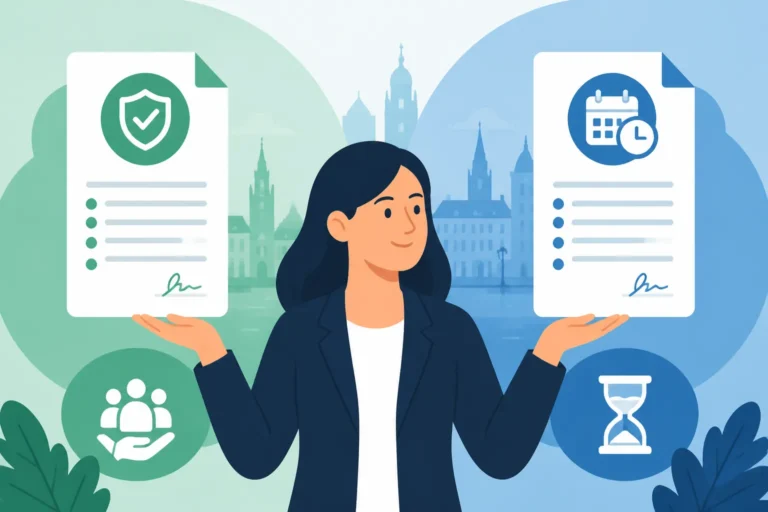
Setting Up a Limited Company (ApS) vs. Enkeltmandsvirksomhed
So, you've landed in Denmark, maybe you've been here a while, and now you're feeling that entrepreneurial itch. You've got a brilliant idea, a service to offer, or a product to sell, but then the classic expat headache kicks in: how on earth do you legally set up shop here? One of the biggest first hurdles is deciding between an enkeltmandsvirksomhed (sole proprietorship) and an anpartsselskab (ApS, or private limited company). This guide will walk you through the nitty-gritty of both, helping you understand the nuances, requirements, and most importantly, the implications for you in Denmark.
Understanding the Enkeltmandsvirksomhed: The Sole Proprietorship
When you first think about starting a small business, especially if it's just you, the enkeltmandsvirksomhed is often the first model that comes to mind. It’s conceptually the simplest, much like a sole trader or sole proprietorship you might know from back home. But "simple" in Denmark doesn't always mean easy, especially when you factor in the administrative layers.
What is an Enkeltmandsvirksomhed?
An enkeltmandsvirksomhed is, quite literally, a "one-man business" (or one-person, of course!). It means that you, as an individual, are directly responsible for the business. There's no legal distinction between you and your company. Your personal finances and the business's finances are, from a legal perspective, intertwined. You own all the assets, you're responsible for all the debts, and you keep all the profits. For many creatives, freelancers, or consultants just starting out, this feels like the natural first step because it seems less intimidating than setting up a full company. It's relatively quick to get off the ground, and the initial paperwork feels less daunting. Think of it as formally registering your side hustle or your primary freelance gig.
Pros and Cons for Expats
Choosing an enkeltmandsvirksomhed comes with its own set of advantages and disadvantages, especially when viewed through an expat lens.
Pros:
- Simplicity and Speed: This is by far its biggest draw. Registration is straightforward, primarily involving getting a CVR number (more on that in a bit) and registering your business activity. You don't need initial capital, nor do you need complex articles of association. For an expat who's already grappling with a new language and bureaucracy, a simpler setup can be incredibly appealing. You can go from idea to legally operating much faster than with an ApS.
- Lower Setup and Running Costs: There are no minimum share capital requirements, and annual compliance fees are minimal compared to an ApS. This means less financial pressure in those crucial early days when your business might not be generating much income. Legal and accounting fees for maintenance are also generally lower, as the structure is less complex.
- Direct Control and Profit Retention: As the sole owner, you have complete control over all decisions. There's no board to answer to, no shareholders to appease. All profits, after taxes, are yours. This can be very motivating and allows for agile decision-making.
Cons:
- Unlimited Personal Liability: This is the absolute biggest drawback and one that every expat must understand clearly. If your enkeltmandsvirksomhed incurs debt, faces a lawsuit, or goes bankrupt, your personal assets (your car, your home, your savings) are on the line. There's no legal separation to protect you. For expats, who might not have deep roots or extensive assets in Denmark yet, this risk can be particularly concerning. Imagine a client suing you, or a supplier invoice you can't pay – your personal financial stability could be severely impacted.
- Perception and Credibility: While perfectly legitimate, an enkeltmandsvirksomhed might be perceived as less "serious" or established by some larger Danish clients or investors. If you're hoping to secure significant contracts or attract external funding down the line, an ApS often carries more weight and credibility.
- Limited Growth and Investment Opportunities: It can be harder to attract investors to a sole proprietorship, as there are no shares to issue. Furthermore, separating personal and business finances for tax purposes can get complicated if the business grows significantly, making it less attractive for scaling up. For expats considering how to manage their tax situation, understanding your income streams is crucial, and it's always wise to consult with experts like Taxes for Expats to ensure compliance.
- Challenges in Selling the Business: An enkeltmandsvirksomhed is tied directly to you. Selling it essentially means selling the assets and goodwill, rather than selling shares in an independent legal entity. This can complicate future exit strategies.
How to Register an Enkeltmandsvirksomhed
Registering your sole proprietorship is done through the Danish Business Authority (Erhvervsstyrelsen) via the online portal, Virk.dk.
- Get Your MitID: Before anything else, you absolutely need your MitID. This is your digital key to pretty much everything in Denmark, from banking to government services. Without it, you can't access Virk.dk. If you're new here, securing your MitID is one of the very first things you'll do after getting your CPR number and setting up your NemKonto. Check out our guide on NemKonto and MitID: The Core of Danish Digital Finance (2027) for a full rundown.
- Access Virk.dk: Head over to Virk.dk and log in with your MitID. This is the central hub for all business registrations in Denmark.
- Choose Your Business Form: You'll select "Enkeltmandsvirksomhed" as your business type.
- Fill in the Details: You'll need to provide:
- Business Name: Choose something unique and relevant. It doesn't need to end with "Enkeltmandsvirksomhed."
- Business Address: This will typically be your home address if you're working from there.
- Business Activity (Branchekode): You'll select a NACE code (standard industrial classification) that best describes what your business does.
- Start Date: The date you wish your business to officially begin.
- VAT Registration (Momsregistrering): If your expected turnover is above DKK 50,000 within a 12-month period, you must register for VAT (Moms). Even if you expect less, you can voluntarily register for VAT, which allows you to reclaim VAT on your business expenses. This is often advisable for many businesses.
- Receive Your CVR Number: Once submitted, usually within a few days (or even minutes for simpler registrations), you'll receive your CVR number (Central Business Register number). This is your business's unique identification number, much like a CPR number for individuals. It's critical for invoicing, tax, and all official communications. For more detailed steps, you can refer to our article on Getting a CVR Number: Step-by-Step Guide for Expat Freelancers.
- Set Up a Business Bank Account (Optional but Recommended): While not legally required for an enkeltmandsvirksomhed, it's highly recommended to open a separate bank account for your business. This helps immensely with financial tracking, tax compliance, and simply keeping your personal and business finances organized. You can find guidance on Getting a NemKonto for Your Business (Erhvervskonto) which is crucial for receiving payments from public institutions.
- Tax Considerations: With an enkeltmandsvirksomhed, your business profits are taxed as part of your personal income. You'll need to set up a forskudsopgørelse (preliminary tax assessment) with SKAT to estimate your income and pay taxes throughout the year. If you're self-employed, understanding the intricacies of Understanding SKAT: Forskudsopgørelse vs. Årsopgørelse Explained is paramount to avoid nasty surprises.
Delving into the Anpartsselskab (ApS): The Limited Company
If you're looking for more protection, a professional image, or planning for significant growth, the anpartsselskab (ApS) is likely the structure you'll need. It's the most common type of limited company in Denmark, somewhat comparable to an LLC or a private limited company in other countries.
What is an ApS?
An ApS is a capital company where the owners (shareholders) are only liable for the company's debts up to the amount of their invested capital. This crucial separation between the company's finances and the owner's personal finances is its defining feature. The company is its own legal entity, meaning it can enter into contracts, incur debt, and be sued, all independently of its owners. This legal personality offers a significant shield for your personal wealth. An ApS must have a board of directors or a management team, and it adheres to stricter accounting and reporting standards compared to an enkeltmandsvirksomhed.
Pros and Cons for Expats
Deciding on an ApS means weighing its benefits against its higher entry and operational barriers.
Pros:
- Limited Personal Liability: This is the paramount advantage. Your personal assets are protected from business debts and legal claims. If the company fails, your exposure is generally limited to the capital you invested in the company. This peace of mind is invaluable, especially for expats who might be investing their life savings or taking on significant commercial risks.
- Enhanced Credibility and Professional Image: An ApS generally conveys a more professional and established image to clients, partners, banks, and investors. This can be crucial for securing larger contracts, attracting skilled employees, and building a strong brand reputation in the Danish market. Many larger Danish companies prefer to work with other limited companies.
- Easier to Attract Investment and Sell: An ApS is structured for growth. It can issue shares, making it much easier to bring in external investors, sell parts of the company, or transfer ownership. If your long-term plan involves scaling up or a future acquisition, an ApS is the clear choice.
- Tax Optimization Opportunities: While the corporate tax rate applies to the ApS (currently 22%), there can be opportunities for tax optimization through salary structures, dividends, and other corporate benefits. For complex financial situations, especially with international earnings, professional advice from specialists like Taxes for Expats is highly recommended to understand these nuances fully.
Cons:
- Minimum Share Capital Requirement: To establish an ApS, you need a minimum share capital of DKK 40,000. This capital must be deposited into a bank account and verified by an accountant or lawyer before registration. For many expats starting out, this upfront capital requirement can be a significant hurdle.
- Higher Setup and Running Costs: Beyond the share capital, setting up an ApS involves legal fees for drafting articles of association and potentially a shareholder agreement. Annual accounting, auditing (in some cases), and legal compliance costs are also significantly higher than for an enkeltmandsvirksomhed. You’ll likely need professional assistance for the initial setup and ongoing accounting. Our guide on Finding an English-Speaking Accountant (Revisor) for Your ApS can be a great starting point for finding the right professional.
- Increased Administrative Burden: An ApS has more stringent reporting obligations to the Danish Business Authority, including annual financial statements. There are also specific rules regarding general meetings, board meetings, and record-keeping that add to the administrative workload.
- Complexity and Time: The process of establishing an ApS is more complex and takes longer than registering a sole proprietorship. It often requires professional legal and financial advice to ensure everything is done correctly.
The Registration Process and Capital Requirements
Setting up an ApS is a more structured process than an enkeltmandsvirksomhed, typically involving legal and financial experts.
- Prepare Share Capital: You need to have the minimum DKK 40,000 share capital ready. This can be in cash or other assets.
- Draft Legal Documents: You'll need to prepare:
- Stiftelsesdokument (Foundation Document): This document officially states your intention to form the company.
- Vedtægter (Articles of Association): These are the company's internal rules, outlining its purpose, share capital, management structure, and shareholder rights.
- Deposit Capital and Verification: The DKK 40,000 share capital must be deposited into a dedicated company bank account. A lawyer or a registered accountant (revisor) must then verify that the capital has been received. This verification is a critical step for registration.
- Register on Virk.dk: With the verified capital and legal documents, you (or your legal/financial advisor) will register the ApS with the Danish Business Authority (Erhvervsstyrelsen) via Virk.dk. This includes providing details like:
- Company name (must end with "ApS")
- Registered office address
- Management (Board of Directors and Executive Management)
- Business activities (NACE codes)
- Receive CVR Number: Once approved, your ApS will receive its unique CVR number.
- Open a Business Bank Account: An ApS must have a separate bank account in its own name. This is where the share capital will be held, and all business transactions will flow through it. As mentioned, our article on Getting a NemKonto for Your Business (Erhvervskonto) provides foundational information.
- Tax Registration: Your ApS will be automatically registered for corporate tax upon CVR registration. You'll also register for VAT if applicable. The company will pay corporate tax (currently 22%) on its profits. As an owner, you will then pay personal income tax on any salary you draw from the company or on dividends you receive.
Key Differences and When to Choose Which
The choice between an enkeltmandsvirksomhed and an ApS hinges on several critical factors, primarily revolving around your risk tolerance, financial situation, and future aspirations for the business.
Liability and Risk: A Major Deciding Factor
The distinction in liability is arguably the most significant differentiator.
- Enkeltmandsvirksomhed: You face unlimited personal liability. Every penny of your personal wealth is potentially at risk if your business runs into trouble. This is a considerable risk, especially if your business involves significant contracts, potential for injury claims (e.g., physical services), or large loans.
- ApS: You benefit from limited liability. Your personal assets are legally separate from the company's assets. If the company incurs debts or faces legal challenges, your personal financial exposure is limited to the DKK 40,000 you invested as share capital (plus any personal guarantees you might have given, though these are typically separate agreements). This protection is invaluable for safeguarding your family's financial security.
When does this matter most? If your business is low-risk, perhaps a consulting service with minimal overhead or a creative pursuit where client interactions are straightforward and potential damages low, an enkeltmandsvirksomhed might be sufficient. However, if you're dealing with products, employees, significant capital, or high-value contracts, the protection of an ApS becomes almost non-negotiable.
Tax Implications and Administrative Burden
The tax landscape and administrative load also differ significantly.
- Enkeltmandsvirksomhed:
- Tax: Business profits are taxed as part of your personal income. This means you’ll pay personal income tax rates (which can be quite high in Denmark) on your business earnings. You'll manage your preliminary tax assessment (forskudsopgørelse) yourself. You can read more about Danish tax basics in Taxes in Denmark Explained: A-Skat, AM-bidrag, and Marginal Rates. You’ll also need to understand how to handle B-Income (B-indkomst) vs. A-Income (A-indkomst) for Side Hustles if you have multiple income sources.
- Administration: Relatively low. You don't need to file separate company accounts beyond your personal tax return (though good record-keeping is essential). No board meetings or formal minutes.
- ApS:
- Tax: The company itself pays corporate tax (currently 22%) on its profits. As an owner, you pay personal income tax on any salary you receive from the company and dividend tax on any profits distributed to you as dividends. This two-tiered taxation can sometimes offer opportunities for tax optimization, but it also means more complex tax planning. Again, consulting a professional accountant or an expert like Taxes for Expats is key here.
- Administration: Significantly higher. Annual financial statements must be prepared and submitted to the Danish Business Authority. You have legal obligations regarding management, shareholder meetings, and record-keeping. You'll almost certainly need a professional accountant to handle your company's bookkeeping and annual reporting.
Growth Potential and Future Investment
Consider where you see your business in 1, 5, or 10 years.
- Enkeltmandsvirksomhed: Best suited for smaller operations, freelancers, and consultants who intend to remain a "one-person show" or grow very organically without external investment. It's difficult to scale an enkeltmandsvirksomhed beyond a certain point or to bring in partners who contribute capital in exchange for equity.
- ApS: Built for growth and scalability. If you envision hiring employees, seeking venture capital, bringing in business partners, or eventually selling the company, the ApS structure is designed to accommodate these ambitions. It provides a clear framework for ownership, shares, and future expansion.
Navigating Danish Bureaucracy and Getting Support
Regardless of which business type you choose, getting started in Denmark involves interacting with several authorities and understanding the digital-first approach to administration. It can feel like a maze, but there are resources to help.
Essential Registrations Beyond CVR
Beyond your CVR number, there are other administrative items you might need to handle, depending on your business.
- VAT Registration (Momsregistrering): As mentioned, if your turnover exceeds DKK 50,000, you must register for VAT. This means you collect VAT on your sales and can reclaim VAT on your business purchases. The process is usually integrated into your CVR registration on Virk.dk.
- Employer Registration (Arbejdsgiverregistrering): If you plan to hire employees, even just one, your business needs to be registered as an employer with SKAT. This involves understanding payroll taxes, holiday pay (feriepenge), and pension contributions.
- NemKonto: Every business needs a NemKonto for receiving payments from public authorities (e.g., tax refunds, VAT refunds). For an enkeltmandsvirksomhed, this can be your personal NemKonto, but a separate business account designated as NemKonto is ideal. For an ApS, it must be a separate business bank account. Our guide on Getting a NemKonto for Your Business (Erhvervskonto) provides full details.
- Digital Post (e-Boks/Mit.dk): All official communications from Danish authorities, including SKAT and Erhvervsstyrelsen, will be sent to your digital postbox (e-Boks or Mit.dk). Ensure your business has access to this, as it's the primary way to receive critical information and deadlines.
Seeking Professional Advice
Trying to navigate all of this alone can be incredibly overwhelming, especially for expats still getting to grips with the Danish language and system.
- Accountants (Revisor): A good accountant is worth their weight in gold. They can advise you on the best business structure, help with registration, handle your bookkeeping, prepare financial statements, and ensure you comply with all Danish tax laws. For an ApS, a revisor is practically essential. For an enkeltmandsvirksomhed, they can save you immense headaches by ensuring you optimize your personal tax situation. If you are looking for an accountant who understands your international background, consider specialists. If you are setting up an ApS, our guide on Finding an English-Speaking Accountant (Revisor) for Your ApS will be invaluable.
- Lawyers: For setting up an ApS, especially if there are multiple shareholders or complex agreements involved, a lawyer is crucial for drafting legally sound documents (articles of association, shareholder agreements). They can also advise on contract law for your business.
- Language Skills: While many Danish professionals speak excellent English, a basic understanding of Danish can make a huge difference in navigating day-to-day bureaucracy and communicating with local clients or suppliers. Platforms like iTalki can be a fantastic way to brush up on your business Danish or even just practical conversation skills, making interactions smoother. Learning Danish doesn't just open up social doors; it genuinely helps with understanding the nuances of local administration, linking to the broader importance of Learning Danish: Sprogcenter, FVU, and the Importance of the Language.
- Business Networks: Join expat business groups or local Danish business associations. These networks can provide invaluable advice, support, and connections, helping you understand the unwritten rules of doing business in Denmark.
Ultimately, the choice between an enkeltmandsvirksomhed and an ApS is a personal one that depends on your specific circumstances and ambitions. Take your time, do your research, and don't hesitate to seek professional guidance.
Here's a quick comparison table to help summarize the key differences:
| Feature | Enkeltmandsvirksomhed (Sole Proprietorship) | Anpartsselskab (ApS – Private Limited Company) |
|---|---|---|
| Legal Liability | Unlimited personal liability | Limited to invested share capital (DKK 40,000) |
| Minimum Capital | None | DKK 40,000 |
| Setup Cost | Low (primarily CVR registration fee, if any) | High (legal, accounting, registration fees) |
| Setup Time | Fast (days) | Longer (weeks, often with professional help) |
| Taxation | Profits taxed as personal income | Company pays corporate tax (22%); owners pay personal tax on salary/dividends |
| Administration | Low (self-management of accounts) | High (annual reports, board meetings, strict bookkeeping) |
| Perception/Credibility | Less formal, suited for freelancers | Highly professional, suited for growth/investment |
| Attracting Investors | Difficult | Easier (can issue shares) |
| Selling the Business | Difficult (selling assets/goodwill) | Easier (selling shares) |
| Best For | Freelancers, small-scale operations, low risk | High-risk ventures, growth companies, multiple owners, professional image |
Disclaimer
The information provided in this guide is for general informational purposes only and does not constitute legal, financial, or tax advice. While we strive to keep the content accurate and up-to-date, laws and regulations in Denmark can change. It is strongly recommended to consult with qualified legal, financial, or tax professionals for advice tailored to your specific situation before making any business decisions in Denmark.