Traditional Banks vs. Digital Banks (Lunar): Which is Best for Expats?
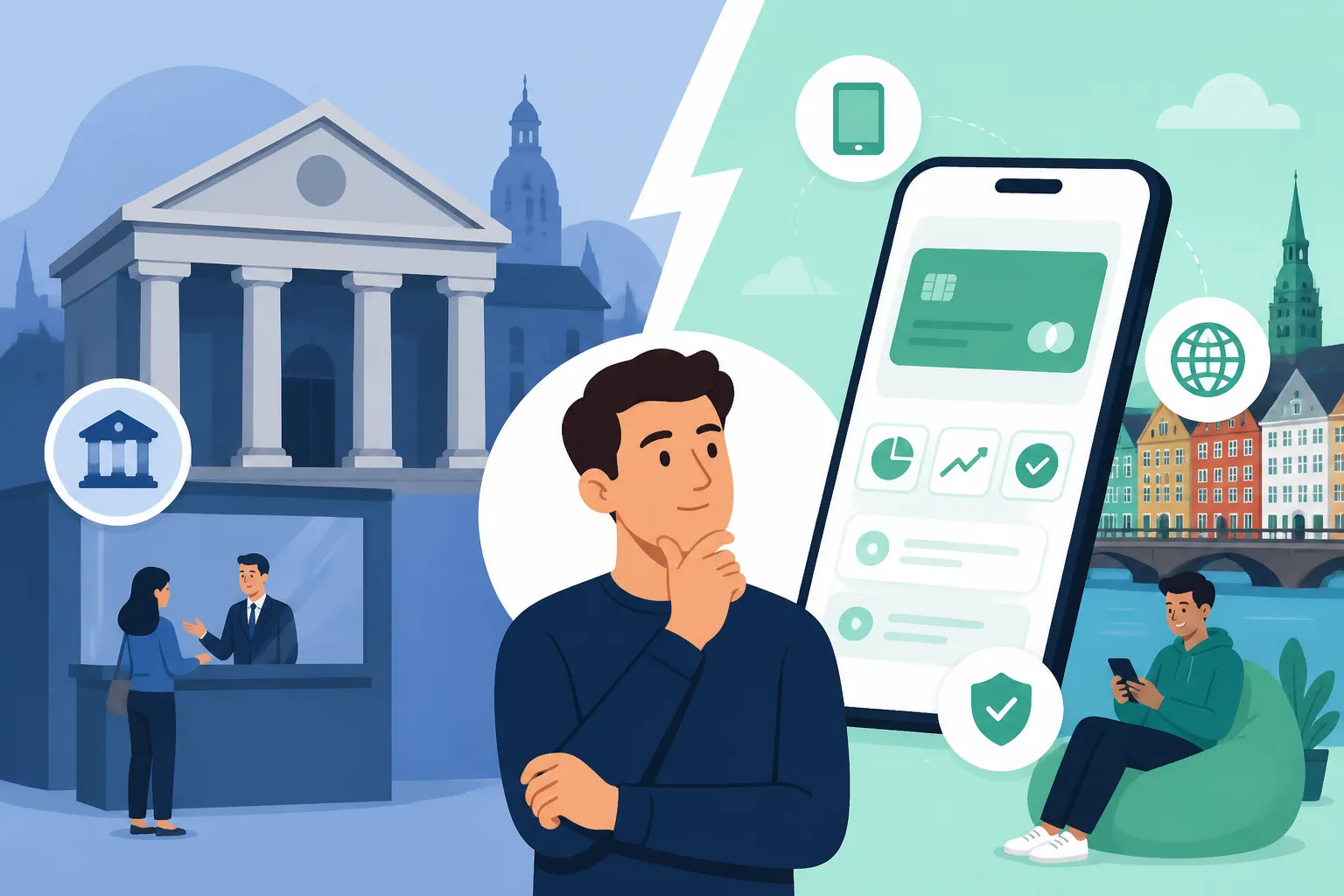
Navigating the Danish banking landscape as a new expat can feel like trying to solve a Rubik's Cube blindfolded while someone explains the rules in a foreign language. The initial struggle to even get a bank account open without a CPR number is a universal frustration, and once you're in, understanding the nuances between traditional brick-and-mortar institutions and the sleek, app-based challengers like Lunar can be daunting. This guide is here to untangle that knot, offering a veteran expat's perspective on the pros and cons of each, helping you decide which banking solution truly fits your life in Denmark.
The Lay of the Land: Traditional Danish Banks
Ah, the traditional banks. They are the established pillars of the Danish financial system, the names you see on every street corner and in every major city. While they offer a sense of security and a comprehensive suite of services, navigating them as an expat can sometimes feel like stepping back in time, with processes that can be surprisingly analog in a highly digitized country.
Established Names and Physical Presence
When you think of traditional banks in Denmark, names like Danske Bank, Nordea, Jyske Bank, and Nykredit likely come to mind. These institutions have been around for generations, deeply woven into the fabric of Danish society. They boast extensive branch networks across the country, from bustling Copenhagen to smaller provincial towns. This physical presence means you can often walk into a branch, sit down with an advisor, and discuss your financial needs face-to-face. For many expats, especially those used to in-person banking from their home countries, this can be incredibly reassuring. There's a tangible comfort in knowing there's a physical location you can visit if something goes wrong, or if you simply prefer a human touch when dealing with complex financial matters. This access to a physical branch can be particularly helpful when you're first setting up your life here, as a friendly face can often smooth over some of the initial bureaucratic hurdles.
However, it's also worth noting that while they have branches, the trend in Denmark, much like elsewhere, is towards digital self-service. Many routine transactions are expected to be done online, and appointments for in-person advice often need to be booked well in advance. So, while the option to visit exists, it's not always the quickest or most efficient route for everyday banking needs. The physical presence can also mean longer queues or more rigid opening hours compared to the 24/7 access of a digital-first solution.
The Full-Service Experience and Fees
Traditional banks are known for their "full-service" model. Beyond your basic checking and savings accounts, they offer a wide array of financial products and services. Think mortgages (Mortgages for Foreigners: Do You Need Permanent Residency to Buy a House?), complex investment portfolios, pension advice (Danish Pension System: Folkepension, ATP, and Employer Contributions), insurance, and even business banking solutions. If you envision your financial life becoming deeply intertwined with Denmark, needing specialist advice for large purchases or long-term planning, a traditional bank is often equipped to handle it all under one roof. They can guide you through the intricacies of the Danish financial system, which can be invaluable when you're grappling with things like understanding your preliminary tax assessment (Forskudsopgørelse) or navigating specific tax deductions as an expat.
This comprehensive service, however, rarely comes free. Traditional banks in Denmark are notorious for their fees. You'll often find monthly account maintenance fees, fees for international transfers, fees for certain types of credit cards, and sometimes even fees for withdrawing cash from ATMs not belonging to their own network. These charges, while seemingly small individually, can certainly add up over time. It's crucial to scrutinize the fee schedule carefully before committing, as many expats find themselves surprised by the cumulative cost of banking. Sometimes, these fees are opaque, buried deep in terms and conditions, making it harder to get a clear picture upfront.
Navigating the Onboarding Process as an Expat
This is where the rubber often meets the road for new arrivals. Opening an account with a traditional Danish bank as an expat can be a bureaucratic marathon. The absolute prerequisite, more often than not, is your CPR number. Without it, many traditional banks simply won't open an account for you. This creates the infamous "CPR number catch-22" – you need a bank account to get a job, but you need a CPR number to get a bank account, and often an address/job to get a CPR number! It’s a loop that drives many expats to distraction.
Even with a CPR number, the process is usually not instantaneous. You'll need to provide a host of documentation, including your passport, residence permit, employment contract, and often proof of address. Anti-money laundering (AML) regulations are strict in Denmark, and banks are diligent in their "know your customer" (KYC) checks. This means interviews, long waiting times for documents to be processed, and sometimes needing to explain the source of your funds or your financial history in great detail. It's not uncommon for the entire process, from first contact to fully functional bank account, to take several weeks, sometimes even months. For EU/EEA citizens, there are some legal protections allowing for a basic payment account without excessive hurdles, but even then, the reality on the ground can vary. Getting your NemKonto setup is the ultimate goal, as this is how you'll receive your salary, SU, and any tax refunds. Setting Up Your NemKonto: How to Link It to Receive Salary and SU is a critical step that traditional banks facilitate once your account is established.
Enter the Digital Challenger: Lunar Bank
In stark contrast to the old guard, digital banks like Lunar have emerged as a breath of fresh air for many expats. They leverage technology to offer a streamlined, app-centric banking experience that aims to cut through the bureaucracy and fees often associated with traditional institutions.
The App-First Approach and Modern Features
Lunar is a prime example of a modern, mobile-first bank. There are no physical branches to visit; your entire banking relationship is managed through a sleek, intuitive app on your smartphone. This means 24/7 access to your finances from anywhere, which is incredibly convenient for those who lead busy lives or travel frequently. Lunar's app is generally well-designed, offering features that often feel more modern and user-friendly than those of some traditional banks. You can track your spending with automatic categorization, set budgets, receive real-time notifications for transactions, and even easily block and unblock your card if you lose it.
Beyond the basics, Lunar often integrates other functionalities that appeal to a younger, more tech-savvy demographic, or simply anyone looking for simplicity. This might include easy bill splitting, virtual cards for online shopping, or integrations with other financial tools. The focus is on making banking as seamless and frictionless as possible, which can be a huge relief after dealing with the often-cumbersome interfaces of legacy banking systems. The experience is designed to be proactive, providing insights and control directly in your hand.
Fee Structures and Transparency
One of Lunar's biggest draws, particularly for expats wary of traditional bank fees, is its often more transparent and generally lower-cost fee structure. Lunar offers different account tiers, often starting with a free basic account that includes a Danish debit card (Dankort/Visa Debit combination), mobile banking, and free transfers within Denmark. This can be a huge advantage, especially for those just starting out or who don't have complex financial needs. While there might be fees for premium features or certain international transfers, they are typically clearly laid out in the app and on their website.
The transparency is refreshing. You usually know exactly what you're paying for, and the absence of hidden charges or surprise monthly fees is a significant relief for many. However, it's essential to compare the different Lunar account tiers (e.g., Light, Standard, Plus, Unlimited) to ensure the free or lower-cost tier meets all your needs. For instance, some tiers might have limitations on free ATM withdrawals or come with charges for international bank transfers. When it comes to sending money abroad, while Lunar offers its own international transfer services, many expats still find third-party services like Wise (formerly TransferWise) to be more cost-effective and faster for currency exchange, especially for larger amounts. This is a crucial consideration for anyone regularly sending money back home or dealing with foreign currency.
Expat-Friendly Onboarding and Support
Lunar has gained a reputation for being more accessible to expats, particularly during the initial phase of moving to Denmark. While a CPR number is ultimately necessary for a full Danish bank account with Lunar, they often provide temporary solutions or a smoother pathway to getting started compared to some traditional banks. They understand the "chicken and egg" problem expats face and aim to reduce that friction. Their digital-first approach means you can often complete most of the application process online, from your phone, without needing to visit a physical branch or navigate multiple in-person appointments.
The verification process, while still adhering to strict KYC/AML regulations, is typically handled digitally, often involving identity verification via video call or by uploading documents directly through the app. This can significantly reduce the waiting time and administrative burden. Furthermore, Lunar often offers English language support, both in their app interface and through their customer service channels, which is a massive bonus for expats who are not yet fluent in Danish. This makes communicating any issues or asking questions far less stressful than trying to navigate support in Danish at a traditional bank.
A Head-to-Head Comparison: Traditional vs. Digital for Expats
Let's dive into the specifics, pulling apart the key differences that will likely sway your decision as an expat in Denmark. This isn't just about features; it's about the entire user experience and how well each type of bank integrates into your unique expat journey.
Ease of Setup and CPR Requirements
This is often the first and most critical hurdle for new arrivals.
Traditional Banks: As mentioned, securing a CPR number is almost always a hard prerequisite for opening a full-service account. Even if you have an EU/EEA passport and the legal right to a basic payment account, the process of setting one up without a CPR can still be convoluted and time-consuming, involving multiple in-person visits and extensive documentation. The "Can You Go to the Doctor in Denmark Without a CPR Number?" dilemma is mirrored in banking – without that crucial ID, much of Denmark's infrastructure is simply inaccessible.
Lunar Bank: While Lunar ultimately requires a CPR number for a full, permanent Danish bank account and NemKonto registration, they are generally more flexible and efficient in the interim. They often allow you to begin the application process and sometimes even set up a basic account with a temporary ID (like your residence permit) while your CPR number is being processed. The entire setup, including ID verification, is done digitally, which can drastically cut down on waiting times and bureaucratic headaches. This makes Lunar an excellent stop-gap solution for many expats trying to get their financial footing quickly upon arrival.
Day-to-Day Banking Experience and Features
How do these banks actually perform in your daily life?
Traditional Banks: They offer robust online banking platforms accessible via web browser and often a separate mobile app. These platforms provide all standard features: bill payments (including Betalingsservice for automated payments), transfers, viewing statements, and managing cards. However, the user experience can sometimes feel a bit clunky or outdated compared to newer digital alternatives. While they've invested in digital, it's often an overlay on top of legacy systems. For instance, while you can view your transactions, advanced budgeting tools or instant notifications might be less sophisticated or non-existent without delving into third-party apps.
Lunar Bank: This is where Lunar truly shines. Its app is designed from the ground up for mobile-first users. Features like instant notifications, detailed spending analytics, budget tracking, virtual cards, and easy peer-to-peer payments are standard. The interface is clean, intuitive, and highly responsive. Managing your card (freezing/unfreezing, setting limits) is instantaneous from the app. For those who appreciate modern tech and want to manage their finances proactively from their phone, Lunar offers a superior daily experience. The platform aims to simplify rather than complicate.
International Transfers and Currency Exchange
Moving money across borders is a common expat need.
Traditional Banks: They offer international bank transfers, but these typically come with higher fees and often less favorable exchange rates compared to specialist services. The process can also be slower, taking several business days for funds to arrive. For frequent international transfers, the costs can quickly accumulate, eating into the money you're sending or receiving.
Lunar Bank: Lunar offers international transfers through its platform, often with more competitive rates and transparency than traditional banks. However, for the absolute best rates and lowest fees, particularly for larger sums or less common currency corridors, many expats find dedicated services like Wise (formerly TransferWise) to be indispensable. Wise specializes in international money transfers, offering mid-market exchange rates and transparent, upfront fees. Using a service like Wise in conjunction with a Danish bank account (whether traditional or digital) often proves to be the most cost-effective solution for expats. It’s important to research how medication subsidies (Tilskud) are calculated at the Apotek. How Medication Subsidies (Tilskud) Are Calculated at the Apotek
Financial Advice, Loans, and Mortgages
For more complex financial products, the landscape shifts.
Traditional Banks: This is their bread and butter. If you're looking for a mortgage to buy a property in Denmark, a personal loan, investment advice, or complex pension planning, traditional banks have the infrastructure, expertise, and licensing to provide these services. They have dedicated advisors who can guide you through the process, which is often reassuring for major financial decisions. Their deeper integration with the Danish financial system also means they are typically better equipped for complex scenarios involving significant assets or liabilities. This is particularly relevant if you're navigating the Expat Tax Scheme (Forskerskatteordningen) and need bespoke advice. Expat Tax Scheme (Forskerskatteordningen): The 27% Flat Tax Guide
Lunar Bank: As a newer digital bank, Lunar's offerings in these areas are more limited. While they might offer some personal loan options or partner with other providers for specific financial products, they generally don't provide the same breadth of services or in-depth financial advisory that a traditional bank does. If you're planning to buy a house or make significant investments, you'll likely need to turn to a traditional bank or a specialized financial advisor. Lunar is focused more on daily banking and simpler financial products.
Security and Regulation
A vital concern for anyone, especially when dealing with money.
Traditional Banks: Being established, heavily regulated institutions, traditional Danish banks have a long-standing reputation for security. They are overseen by the Danish Financial Supervisory Authority (Finanstilsynet) and are part of the Danish Guarantee Fund (Garantiformuen), which protects your deposits up to a certain amount (currently €100,000, approximately 750,000 DKK) in the unlikely event of bank failure. Their security protocols are robust, encompassing multiple layers of encryption, fraud detection, and multi-factor authentication (often through MitID).
Lunar Bank: Lunar is also a fully licensed and regulated Danish bank, meaning it operates under the same strict regulatory framework as traditional banks. It is also covered by the Danish Guarantee Fund, offering the same deposit protection. Therefore, from a regulatory and deposit protection standpoint, Lunar is just as secure as its traditional counterparts. Their digital-first nature means they heavily invest in cybersecurity to protect their platform and your data. The reliance on MitID for secure login and transaction approval further strengthens their security posture. The perception of "new" sometimes equates to "less secure," but in Denmark, a licensed bank is a licensed bank.
Here's a quick comparison table to help visualize the differences:
| Feature/Service | Traditional Danish Banks (e.g., Danske Bank, Nordea) | Digital Banks (e.g., Lunar) |
|---|---|---|
| CPR Requirement | Almost always mandatory for full account | Required for full account, but often more flexible initial setup |
| Onboarding Time | Weeks to months | Days to weeks, largely digital |
| Physical Branches | Yes, extensive network | No physical branches, app-only |
| Account Fees (Basic) | Often monthly maintenance fees | Often free basic tiers available |
| International Transfers | Higher fees, less favorable rates | More competitive rates, but consider Wise for best value |
| MitID Integration | Fully integrated and required | Fully integrated and required |
| User Experience (App) | Can be functional but sometimes clunky | Modern, intuitive, feature-rich app |
| Financial Advice | Comprehensive, in-person advisors | Limited; mostly self-service or external partnerships |
| Mortgages/Loans | Full range available | Limited personal loans, fewer mortgage options |
| Deposit Protection | Danish Guarantee Fund (up to €100,000) | Danish Guarantee Fund (up to €100,000) |
| English Support | Varies by branch/representative | Often built into app and customer service |
When is a Traditional Bank the Right Fit?
Despite the allure of digital banking, there are definitely scenarios where a traditional Danish bank truly is the better, or even necessary, choice for an expat.
Complex Financial Needs and Face-to-Face Interaction
If your financial situation in Denmark is anything but straightforward, a traditional bank might be your best bet. Think about it: buying a house, securing a significant loan, setting up a comprehensive investment portfolio, or navigating the intricacies of corporate banking for your own business. These are not simple, click-and-done transactions. They require in-depth discussions, personalized advice, and often, a human expert to walk you through the complex legal and financial jargon. For example, if you're trying to understand the nuances of a Danish mortgage (Realkreditlån) as a foreigner, having a dedicated advisor who can explain the different loan types, interest rate implications, and the associated risks in person can be invaluable. Realkreditinstitut vs. Bank: Understanding the Danish Mortgage Model
Moreover, some people simply prefer the human touch. If you value the ability to sit down with someone, look them in the eye, and discuss your concerns, especially when dealing with large sums of money or sensitive financial planning, then the physical presence and advisory services of a traditional bank will offer a level of comfort and reassurance that a purely digital bank cannot. This can be especially true for expats who might feel more comfortable explaining their unique situations or asking clarifying questions in a more personal setting, without the pressure of a chat interface or phone call.
Building Long-Term Financial Relationships
Moving to a new country like Denmark often means planning for the long haul. If you intend to settle down, potentially buy property, start a family, or build a career here, you might find significant value in establishing a long-term relationship with a traditional bank. Over time, your bank gets to know your financial history, your goals, and your risk profile. This can be advantageous when you need to apply for larger loans, negotiate better rates, or access specialized financial products. A history of responsible banking with a single institution can be a powerful asset.
For many Danes, their relationship with their bank is a lifelong one, extending to family accounts and generational financial planning. While expats might not have the same generational ties, demonstrating stability and a consistent financial footprint with a traditional bank can open doors to more advanced services and more favorable terms down the line. It's about more than just transactions; it's about becoming a recognized and trusted client within the Danish financial ecosystem.
When Does Lunar Shine Brightest for You?
On the flip side, Lunar and other digital banks offer distinct advantages that make them a perfect fit for a specific kind of expat experience.
Simplicity, Cost-Effectiveness, and Tech-Savvy Expats
If you're an expat who values simplicity above all else, wants to keep banking costs low, and is comfortable managing everything from your smartphone, Lunar is likely to be your champion. For those who are just starting out in Denmark, perhaps on a student visa or a first job, and don't yet have complex financial needs like a mortgage, Lunar's streamlined, app-based approach is incredibly appealing. It offers the essentials – a Danish account, a debit card, and easy payments – without the frills or the associated fees of a traditional bank. It's an ideal choice for managing daily expenses, receiving your salary, and keeping track of your budget without unnecessary complications.
The cost-effectiveness is a major draw. Avoiding monthly maintenance fees and benefiting from more transparent international transfer options (or pairing it with a service like Wise) can save you a significant amount over the year. This is particularly relevant when you're also navigating the complexities of Danish taxes as an expat, where every kroner saved on banking fees can make a difference in your overall budget. For expats who are digital natives, comfortable with technology, and prefer to interact with services on their own terms and time, Lunar's modern interface and instant functionality will feel like a natural extension of their digital lifestyle.
Perfect for New Arrivals and Daily Spending
Lunar truly excels as an entry point into the Danish financial system for new arrivals. As highlighted earlier, their more flexible and digital-first onboarding process can significantly reduce the stress and waiting period associated with getting a bank account, even if you're still in the process of securing your CPR number. This makes it an invaluable tool for getting financially operational almost immediately upon landing in Denmark, allowing you to receive your first salary, pay for basic necessities, and establish your NemKonto without the prolonged bureaucratic battles often faced at traditional banks.
For day-to-day spending, Lunar's mobile app provides excellent control and insight. The real-time notifications, spending breakdowns, and budgeting tools make it easy to manage your money efficiently. In a country that is rapidly becoming cashless (MobilePay and Cashless Denmark: Surviving Without Physical Cash), having a reliable, easy-to-use debit card and seamless MobilePay integration (which Lunar fully supports once your account is established) is non-negotiable. Lunar provides this functionality in a package that feels designed for the modern user, allowing you to swipe, tap, and transfer with ease, ensuring you're never caught off guard in a transaction.
Choosing between a traditional bank and a digital challenger like Lunar ultimately comes down to your personal financial needs, your comfort with technology, and your long-term plans in Denmark. For many expats, a combination approach often works best: using a digital bank for daily spending and immediate needs, while perhaps considering a traditional bank down the line for more complex services like mortgages or investment advice. The Danish banking landscape offers both robust, established players and agile, digital innovators, ensuring there’s a solution for every expat’s unique journey.
Disclaimer
The information provided in this article is intended for general guidance and informational purposes only, and does not constitute financial or legal advice. Banking regulations, fees, and offerings are subject to change. Always consult with the respective bank or a professional financial advisor for personalized advice regarding your specific situation in Denmark.