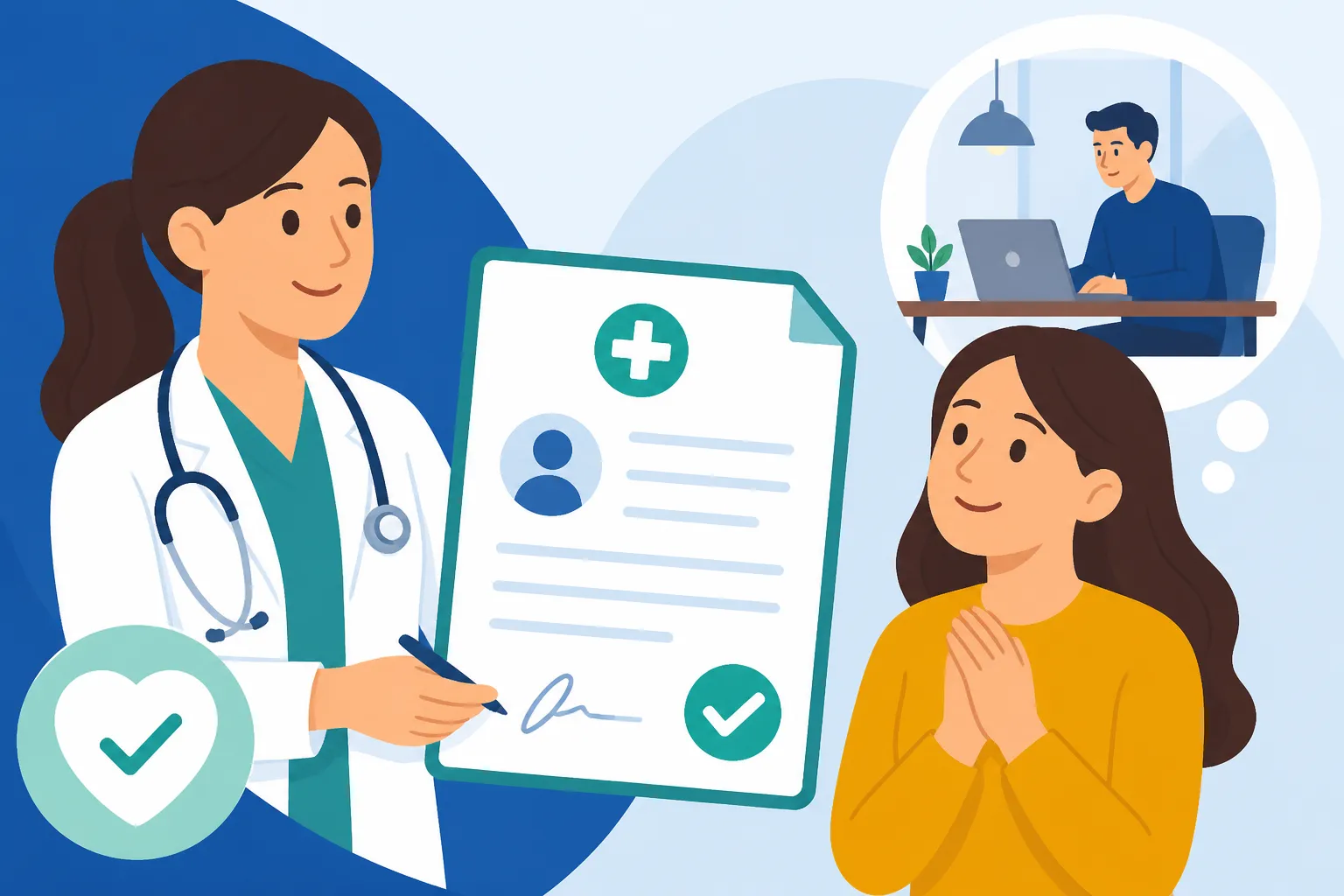
How to Request a Lægeerklæring (Doctor’s Note) for Your Employer
Navigating sick leave in a new country can feel like trying to solve a Rubik's Cube blindfolded, especially when your employer asks for a "doctor's note." In Denmark, this isn't just a casual piece of paper; it's a formal document called a lægeerklæring, and misunderstanding its nuances can lead to headaches for both you and your employer. I remember my own confusion trying to figure out if I could just pop into a clinic for a quick stamp when I first arrived, only to realize the system works quite differently here. This guide will walk you through everything you need to know about requesting a lægeerklæring for your employer, ensuring you follow the proper Danish procedures with confidence.
Understanding the Lægeerklæring in Denmark: More Than Just a "Note"
In many countries, a doctor's note for sick leave is often a quick formality, perhaps a one-liner from your GP confirming you were seen and are unable to work. In Denmark, however, the lægeerklæring (literally "doctor's declaration") carries a bit more weight and typically signifies a more formal assessment of your inability to perform your job duties due to illness. It's not usually something you'd get for a common cold lasting a day or two. Instead, it's generally reserved for longer periods of absence, recurring illnesses, or when your employer specifically requests formal documentation to support your sick leave claim, particularly if it impacts your Sickness Benefit (Sygedagpenge): Your Rights When Off Work Due to Illness.
When your employer asks for a lægeerklæring, they're not just looking for a casual confirmation of illness. They are seeking an official statement from a medical professional that verifies your inability to work. This distinction is crucial because it frames the entire process. Unlike a quick visit to an urgent care clinic for a simple note, obtaining a lægeerklæring typically involves a more thorough assessment by your regular General Practitioner (GP) who knows your medical history. This careful approach helps to ensure the validity of sick leave claims and supports the robust social welfare system in Denmark, where employers often have obligations to pay sick leave for a certain period before municipalities take over.
When a Lægeerklæring Becomes Necessary and When It Doesn't
It's a common misconception among new expats that you need a lægeerklæring for every single day you call in sick. Thankfully, that's usually not the case in Denmark. For short-term illnesses, most employers operate on a trust basis, especially for the first few days of absence. Your employment contract or collective agreement (overenskomst) will usually specify the terms for reporting sick leave, but a lægeerklæring is rarely required immediately. Often, you simply need to notify your employer by phone or email on your first day of sickness.
A lægeerklæring typically becomes necessary in a few key scenarios. The most common is prolonged illness: if you're sick for more than a few days, say three to five working days, your employer might request one. This is because after a certain period, the employer's obligation to pay sick leave can transition, or they may need the documentation for their own internal records or insurance purposes. Another situation is if you have frequent short absences, which might prompt your employer to request a lægeerklæring to understand the pattern and perhaps offer support or adjust work conditions. Always check your specific employment contract or consult your union (if you're a member of Trade Unions and A-Kasse: Why Every Expat Must Understand Them) to understand the exact requirements stipulated for your workplace.
The Legal Framework: Your Rights and Obligations
The Danish legal framework surrounding sick leave and lægeerklæringer is quite robust, primarily governed by the Sygedagpengeloven (Sickness Benefit Act) and specific labor laws such as the Funktionærloven (Salaried Employees Act), which applies to many white-collar workers. These laws outline both the employer's obligations regarding sick pay and the employee's duties to report illness and, if requested, provide documentation. For employees covered by Funktionærloven, the employer is typically obliged to pay full salary during sick leave for an extended period. This financial responsibility is why employers may request a lægeerklæring to verify the illness, especially for longer absences.
As an employee, your primary obligation is to notify your employer about your absence due to illness as soon as possible. If your employer requests a lægeerklæring, you are legally obliged to provide one within a reasonable timeframe. However, this obligation also comes with a right: if your employer requests the lægeerklæring, they are generally responsible for covering the cost of obtaining it. This is a crucial point that often surprises expats, as in many countries, the employee bears this expense. Furthermore, the doctor's note itself generally only needs to confirm your inability to work and the expected duration of your absence; it usually doesn't need to delve into the specifics of your diagnosis, respecting your medical privacy.
The Step-by-Step Process to Requesting a Lægeerklæring
When the moment arrives that your employer requires a lægeerklæring, the process might feel daunting at first, especially if you're still getting the hang of the Danish healthcare system. But don't fret; it's a structured procedure. The key is to remember that your General Practitioner (GP) is your first and often only point of contact for this. Unlike some countries where you might visit any doctor or clinic, the Danish system largely funnels all primary care, including official documentation for work, through your assigned GP.
Understanding the unique role of your GP in Denmark is fundamental to navigating this. Your GP isn't just a doctor you see when you're acutely ill; they are the gatekeepers to the entire public healthcare system and the central hub for your medical records. This integrated approach ensures continuity of care and means your GP has the necessary context to issue an informed lægeerklæring. Trying to get this document from an emergency room (Lægevagten) or a specialist without a GP referral is generally not how the system works for routine sick leave documentation. If you're new to Denmark, make sure you've registered with a GP after receiving your The Yellow Health Card Sundhedskort: Your Key to Danish Healthcare.
Contacting Your GP Almen Praktiserende Læge
The first and most important step is to contact your GP's clinic. Do not just show up. Danish clinics generally operate on an appointment-only basis, and even if they have open consultation hours, showing up unannounced for a lægeerklæring is usually not appropriate. The most common way to book an appointment is either by calling the clinic during their designated phone hours or, increasingly, through digital platforms. Many GP clinics use the MinLæge app, which is a lifesaver for booking appointments, renewing prescriptions, and communicating securely with your doctor. If you haven't already, download and set up your MinLæge app; it will streamline countless interactions with your GP. You can learn more about this in our guide on Booking a Doctor's Appointment in Denmark: MinLæge App Guide.
When you call or use the app, clearly state that you need an appointment to discuss a lægeerklæring for your employer due to your current illness. Be prepared to explain your symptoms and how they prevent you from working. Your GP's assistant or the doctor themselves will decide if a physical consultation is necessary or if they can handle it over the phone based on your medical history and the nature of your illness. Remember, the Danish healthcare system prioritizes phone consultations for many initial assessments, especially if your GP already has a good understanding of your condition. Be polite, patient, and precise in your communication.
What to Expect During Your Doctor's Visit
When you attend your appointment, whether it's in person or via phone, your doctor will assess your condition. This isn't just a rubber-stamping exercise. Your GP will ask about your symptoms, how long you've been ill, and how your illness impacts your ability to perform your specific job functions. It's crucial here to be honest and clear about your limitations. They are not merely confirming you have an illness but rather confirming that this illness renders you unfit for work. This is a subtle but significant difference in the Danish context.
They may perform a physical examination if necessary, or ask specific questions if it's a mental health-related absence. Because your GP holds your full medical history, they are uniquely positioned to make an informed judgment. If you feel unwell but are unsure how to articulate it in Danish, consider using translation apps or, if possible, bringing a Danish-speaking friend, although doctors often speak excellent English. Keep in mind that a doctor has the right to refuse to issue a lægeerklæring if they do not believe your condition warrants an absence from work or if they cannot medically justify it.
Types of Lægeerklæringer: Simple vs. Comprehensive
It might seem like a lægeerklæring is a one-size-fits-all document, but there can be variations in its scope and detail, depending on what your employer specifically requests and the duration of your illness. The most common type is a basic lægeerklæring that confirms your illness and your inability to work from a specific date, often stating an estimated return date. This document will typically be sufficient for most short to medium-term sick leaves requested by employers.
For longer periods of sick leave, or if the illness is complex, recurring, or involves a potential long-term reduction in working capacity, a more comprehensive lægeerklæring might be required. This could include a more detailed medical report, potentially outlining the nature of the illness (without revealing private details beyond what's relevant to work capacity), treatment plans, and a prognosis. This more detailed documentation is often used in cases where the municipality becomes involved in your Sickness Benefit (Sygedagpenge): Your Rights When Off Work Due to Illness payments, or if your employer needs it for specific insurance claims or to plan for your reintegration. Always clarify with your employer exactly what type of lægeerklæring they need, as this can influence the fee and the time it takes your GP to prepare it.
Costs, Payment, and Employer Expectations
The financial aspect of obtaining a lægeerklæring is another area where expats often face confusion. In many countries, the individual is expected to bear the cost of any medical certificates for work. However, in Denmark, the situation is usually different, reflecting the employee-friendly labor laws. Understanding who pays and what your employer can legally ask for will save you a lot of hassle and potential frustration.
It's important to remember that communication is key throughout this process. Don't assume anything, especially regarding costs. A brief, polite email or conversation with your HR department or manager upfront can clarify expectations and prevent misunderstandings down the line. This proactive approach is very much in line with Danish workplace culture, which values clear communication and directness, much like how you might approach improving your Danish language skills with a tutor on a platform like iTalki to enhance your overall communication in Denmark.
Who Pays for the Lægeerklæring?
This is a frequently asked question, and the good news is that generally, your employer is responsible for paying for the lægeerklæring if they are the one requesting it. This principle is enshrined in Danish labor law. The rationale is that if the documentation is required for the employer's benefit (e.g., for their legal obligations, insurance, or planning), then they should bear the cost. Your GP's clinic will often issue an invoice directly to your employer, or they might ask you to pay and then get reimbursed.
When you contact your GP's clinic to request the lægeerklæring, explicitly state that it's for your employer and ask about the payment procedure. If they issue an invoice to you, ensure it's addressed to your employer and contains all necessary details for reimbursement, such as your employer's CVR number (company registration number) if required. Keep a copy of the invoice for your records, especially if you handle the payment initially. If you have questions about expense claims and what you can deduct, consulting services like Taxes for Expats can provide valuable insights, though this specific medical cost is usually reimbursed, not deducted.
What Employers Can and Cannot Ask For
Danish law places a high value on personal data protection and medical privacy. This means there are strict limits on what your employer can legally ask for from your lægeerklæring. In most cases, the document from your GP will simply confirm:
- That you are suffering from an illness.
- That this illness renders you unable to perform your work.
- The expected duration of your absence or the period during which you were unfit for work.
Your employer is generally not entitled to know the specific diagnosis or the exact nature of your illness. This information is considered private and confidential between you and your doctor. If an employer pushes for more detail than what is typically provided in a standard lægeerklæring, it's advisable to politely remind them of your right to medical privacy. In rare cases, for very long-term or complex illnesses, more information might be required to assess your fitness for work or plan for adjusted duties, but even then, it's usually handled with great care and focus on work capacity rather than specific medical details.
Potential Pitfalls and Misunderstandings
Even with clear rules, misunderstandings can arise. One common pitfall is assuming your GP will automatically issue a lægeerklæring just because you're sick. As mentioned, they must medically assess your inability to work. If your condition is minor, or if they believe you can work despite feeling unwell, they might refuse to issue the note. In such cases, discuss their reasoning and explore alternatives, such as partial sick leave or modified duties, if appropriate.
Another issue can be delays. GP clinics are busy, and preparing a formal lægeerklæring takes time. If you need it by a specific deadline for your employer, communicate this clearly to the clinic when you make your appointment. Follow up if you haven't received it within the expected timeframe. Finally, communication barriers can be a problem. While many Danish doctors speak excellent English, administrative staff might not always be as fluent. If you're struggling to communicate, consider practicing key phrases in Danish or using translation tools. It's important to build bridges, and even basic Danish phrases, perhaps learned through a platform like iTalki, can make a huge difference in smooth interactions.
What Happens After You Submit Your Lægeerklæring?
Once you've navigated the process of securing your lægeerklæring and submitted it to your employer, what happens next? It's not usually the end of the conversation. Depending on the length of your sick leave, there might be ongoing communication with your employer, especially concerning your return to work. The lægeerklæring serves as a crucial piece of documentation but is part of a larger process designed to support you during your illness and facilitate a healthy return to your professional life.
The Danish system, with its emphasis on welfare and employee protection, is designed to support individuals who are genuinely unable to work due to illness. This includes provisions for financial support and, in many cases, a dialogue focused on recovery and safe reintegration rather than punitive measures. Your employer also has certain responsibilities to ensure your workplace is safe and, where possible, accommodate any temporary limitations your illness might impose upon your return.
Following Up and Your Rights to Sickness Benefit (Sygedagpenge)
After submitting your lægeerklæring, your employer will process it, and it forms the basis for your continued sick pay. For longer periods of illness (typically beyond 30 days of continuous sickness), the responsibility for your sickness benefit payments often shifts from your employer to your local municipality. This is where the Sygedagpengeloven truly comes into play. The municipality will usually assess your case based on the information provided by your GP and your employer to determine your eligibility for sygedagpenge.
This transition often involves increased communication, not just between you and your employer, but also with the municipality's job center (Jobcenteret). They might invite you for meetings to discuss your health status, your ability to work, and potential rehabilitation or support measures. Your lægeerklæring will be a key document in these discussions. Understanding your rights to Sickness Benefit (Sygedagpenge): Your Rights When Off Work Due to Illness is paramount, as this benefit ensures financial stability during prolonged periods of illness. Don't hesitate to seek advice from your union or a legal expert if you have questions about your sygedagpenge entitlement.
Returning to Work and Gradual Reintegration
The ultimate goal of sick leave, supported by the lægeerklæring, is to allow you to recover and return to work safely. In Denmark, there's often an emphasis on gradual reintegration for longer illnesses. This might involve a "flexi-job" or partial sick leave, where you return to work for fewer hours or with modified duties, slowly increasing your capacity as you recover. This approach benefits both the employee, by providing a structured return, and the employer, by retaining valuable staff and facilitating a smoother transition.
Your employer and, if applicable, the municipality, may engage in a dialogue with you to create a "return to work plan" (fastholdelsesplan). This plan considers your medical condition, as documented by your GP, and aims to find a sustainable way for you to resume your professional responsibilities. It’s a collaborative process, and your input about your capabilities and limitations is highly valued. The lægeerklæring is not just an end-of-process document; it's a starting point for discussions about your well-being and continued employment in Denmark.
Overview of Lægeerklæring Scenarios
To help clarify when and how a lægeerklæring typically applies in Denmark, here's a quick overview:
| Scenario | Typical Employer Expectation | Payment Responsibility | Key Action for Employee |
|---|---|---|---|
| Short-term illness (1-3 days) | Usually no lægeerklæring required; simple notification. | N/A | Notify employer immediately via phone/email. |
| Medium-term illness (3-14 days) | Lægeerklæring often requested after 2-5 days, depending on contract. | Employer | Book GP appointment, inform GP it's for employer, ensure employer receives invoice. |
| Prolonged illness (14+ days) | Lægeerklæring essential, often detailed; regular updates. | Employer | Work with GP for thorough documentation; prepare for potential municipal involvement. |
| Recurring short absences | Employer may request lægeerklæring to understand patterns. | Employer | Discuss with GP to identify underlying issues, ensure clear documentation. |
| Return to work with limitations | Medical assessment for modified duties/partial sick leave. | Employer (for assessment) | Collaborate with GP and employer on a reintegration plan, supported by medical advice. |
| Employer requests specific documentation | Must comply if reasonable, but protect medical privacy. | Employer | Clarify exact requirements with employer, discuss scope with GP. |
Disclaimer
Please note that the information provided in this guide is for general informational purposes only and does not constitute legal or medical advice. Danish laws and regulations regarding sick leave and healthcare can change, and individual circumstances vary greatly. Always consult with your General Practitioner, your employer's HR department, your trade union, or a legal professional for advice tailored to your specific situation.