How Marital Status Affects Your Tax Deductions in Denmark
Many international residents in Denmark view marriage as a romantic milestone or a visa necessity, but they often fail to realize that SKAT views your wedding ring as a financial instrument. The moment you say "I do," your tax profile undergoes a fundamental shift that can either save you thousands of kroner or leave you with a surprise bill. This guide explores the intricate ways marital status affects your tax deductions in Denmark, ensuring you maximize every available benefit while navigating the administrative hurdles of the Danish system.
Understanding the Danish Tax System for Married Couples
When you first arrive in Denmark, you are treated as an individual taxpayer. Your personal allowance (personfradrag) is yours alone, and your deductions for things like commuting or union fees are calculated based on your specific income. However, the Danish tax system is designed with a high degree of "transparency" between spouses. This doesn't mean you file a joint return in the American sense, but rather that your tax assessments are linked in the background of the Skattestyrelsen (SKAT) digital systems.
One of the most confusing aspects for expats is the timing of these changes. In Denmark, if you are married on December 31st, you are considered married for the entire tax year for the purposes of many deductions. This is a massive advantage for couples who marry late in the year. If one spouse has been unemployed or a student for the first eleven months, the working spouse can often retroactively benefit from their partner's unused tax allowances for that entire year. Understanding the difference between the Preliminary Tax Assessment (Forskudsopgørelse): Avoiding Tax Debt and the final annual statement is crucial here. The preliminary assessment is your "best guess" for the coming year, while the annual statement (årsopgørelse) is where the actual marriage-based balancing occurs.
For many of us who have moved from countries with vastly different tax codes, the transparency of the Danish system can feel invasive. SKAT automatically receives information from your bank, your employer, and the civil registry (CPR). Once your marriage is registered—whether it happened at a Danish City Hall or was a matter of Registering a Foreign Marriage in Denmark for Visa Purposes—the system begins to look for ways to "optimize" your household tax. This automation is generally helpful, but it requires you to be proactive in checking your digital post to ensure the data reflects your actual living situation.
Tax Cards and the Personal Allowance
The cornerstone of the Danish tax benefit for couples is the personal allowance (personfradrag). For 2026, this amount is expected to sit around 50,000 DKK. This is a portion of your income that is essentially tax-free. If you are single and earn less than your allowance, the "unused" portion simply vanishes. However, for married couples, if Spouse A does not use their full allowance—perhaps because they are a stay-at-home parent, a student, or still looking for work—the remaining balance is automatically transferred to Spouse B.
Imagine a scenario where you have just moved to Aarhus with your partner. You have a high-paying engineering job, but your spouse is still attending language school and has no income. Without marriage, your spouse's 50,000 DKK allowance goes to waste. With marriage, that 50,000 DKK allowance moves to your tax card. This can result in a direct tax saving of approximately 18,000 to 20,000 DKK per year, depending on your local municipal tax rate. It is one of the most significant financial perks of being married in Denmark.
Joint Liability and the Digital Handshake
While the perks are great, marriage in Denmark also brings joint tax liability. If your spouse ends up owing a significant amount of "restskat" (unpaid tax), SKAT has the legal right to collect that debt from your tax refund or even your salary under certain conditions. This is why it is vital for both partners to keep their Preliminary Tax Assessment (Forskudsopgørelse): Avoiding Tax Debt updated. Many expat couples get into trouble because one spouse underestimated their income, leading to a massive joint debt that ruined their summer vacation budget.
Managing these finances often requires a reliable way to move money between international and Danish accounts, especially if you are still paying off debts or receiving income from abroad. Using a service like Wise can be incredibly helpful during this transition, as it allows you to manage split expenses and currency conversions with much lower fees than traditional Danish banks. When you are balancing two tax cards and potentially two sets of international assets, the transparency provided by Wise ensures that your "shared" financial life doesn't become a nightmare of hidden bank fees.
The Financial Perks of Being Married in Denmark
Beyond the personal allowance, the Danish tax code offers several "hidden" deductions that only become available or significantly more potent once you are married. The system aims to treat the household as a single economic unit in several key areas. For expats, especially those who may be sending money home or managing assets in multiple countries, these nuances can be life-changing. If you are a US citizen, for instance, you may find that marriage in Denmark complicates your US filings, making specialized services like Taxes for Expats essential to ensure you aren't being double-taxed on your newfound Danish benefits.
The way SKAT handles negative capital income is a prime example. If one spouse has significant interest expenses—perhaps from a loan or a mortgage—and the other spouse has positive investment income, SKAT can often offset these against each other across the marriage. This cross-pollination of deductions is handled automatically in The Annual Tax Assessment Notice (Årsopgørelse): Claiming Deductions, but only if your marital status is correctly updated in the system.
Interest Deductions and Debt Sharing
In Denmark, you get a tax deduction for the interest you pay on loans. This includes mortgages, personal loans, and even certain types of credit card debt. For married couples, the placement of this debt matters less than it does for single people. If you and your spouse are Buying Property in Denmark: Mortgage Options and 20% Down Payments, the interest deduction is typically split 50/50 by default. However, if it is more advantageous for the higher-earning spouse to take the full deduction to lower their top-bracket tax (topskat), you can often request a redistribution through your tax returns.
This flexibility is particularly useful if one spouse is earning a much higher salary. By shifting the "negative capital income" (the interest paid) to the spouse with the highest tax burden, the overall tax savings for the household increases. For expats who might still be paying off student loans or property in their home country, it is worth checking if those interest payments can be registered with SKAT. If you are using Taxes for Expats to manage your home-country obligations, they can often provide the necessary documentation to prove these interest payments to the Danish authorities, further lowering your Danish tax bill.
Capital Gains and Investment Offsets
If you are an active investor, marriage provides a safety net against market volatility in the eyes of SKAT. If you sell stocks at a loss, that loss can be used to offset your spouse's capital gains. For example, if you lost 20,000 DKK on the stock market this year but your spouse made a profit of 30,000 DKK, the household is only taxed on the net 10,000 DKK gain. This "loss-sharing" is a major benefit that cohabiting but unmarried couples do not enjoy.
To make the most of this, many expats use Wise to fund their investment accounts, as it allows them to move DKK into Euro or USD platforms without losing a chunk of their capital to poor exchange rates. Keeping your investment records clean is vital, because when SKAT sees a transfer from a foreign account, they may flag it. Having a clear trail from your Wise account to your Danish tax portal makes the annual reporting process significantly smoother.
Registered Partnerships vs. Cohabitation (Samliv)
One of the hardest lessons for expats to learn is that "living together" (samlever) carries almost zero weight with SKAT, regardless of how many years you have shared a bed or a bank account. In many countries, "common-law marriage" provides some tax relief, but in Denmark, the line is very sharp. Unless you are legally married or in a registered partnership, you are two completely separate islands in the eyes of the taxman.
This distinction often catches people off guard when they move for a partner's job. If you are moving to Denmark as a "cohabiting partner" on a visa, you might be sharing a life, but you cannot share a tax allowance. Many expats who spent their first year in Denmark frustrated because they couldn't access their partner's unused allowance, simply because they hadn't signed a marriage certificate. If you are in this position, it is worth calculating the tax savings of a quick trip to the Kommune—often, the tax benefits alone can pay for the wedding.
Why Just Living Together Does Not Count
SKAT requires a legal "tie" to allow the transfer of allowances. Without a marriage certificate, you cannot transfer your personal allowance, nor can you offset each other's investment losses. Even if you have children together and have lived at the same address for a decade, The Annual Tax Assessment Notice (Årsopgørelse): Claiming Deductions will treat you as two single individuals.
The only exception where cohabitation matters is in the calculation of social benefits, such as How to Apply for Municipal Housing Support (Boligstøtte). Paradoxically, the Danish state counts your partner's income when deciding if you are "poor enough" for rent help, but they won't count your partner's existence when it's time to give you a tax break. This "double standard" is a common frustration for the expat community and is a frequent topic of discussion in local forums.
When Cohabitation Does Affect Your Wallet
While it doesn't help with tax deductions, your "samliv" status is scrutinized for things like the "green check" (grøn check) or child benefits. If the state determines you are living with a partner, your eligibility for certain subsidies may decrease because they view your household's combined purchasing power. This makes it even more important to be legally married if you are going to be living together; if you are already suffering the "penalty" of having a combined income for benefits, you might as well get the "bonus" of combined tax deductions.
For those managing a household on a single income while the other partner looks for work, using Wise to manage a shared "household pot" can help keep track of expenses. It’s a practical way to ensure that even if you aren't getting the tax breaks yet, you are at least optimizing how you spend the money you do have. Meanwhile, if you are an American expat in a cohabiting relationship, Taxes for Expats can help you navigate the "Head of Household" status which might still be available to you in the US, even if Denmark doesn't recognize your partnership.
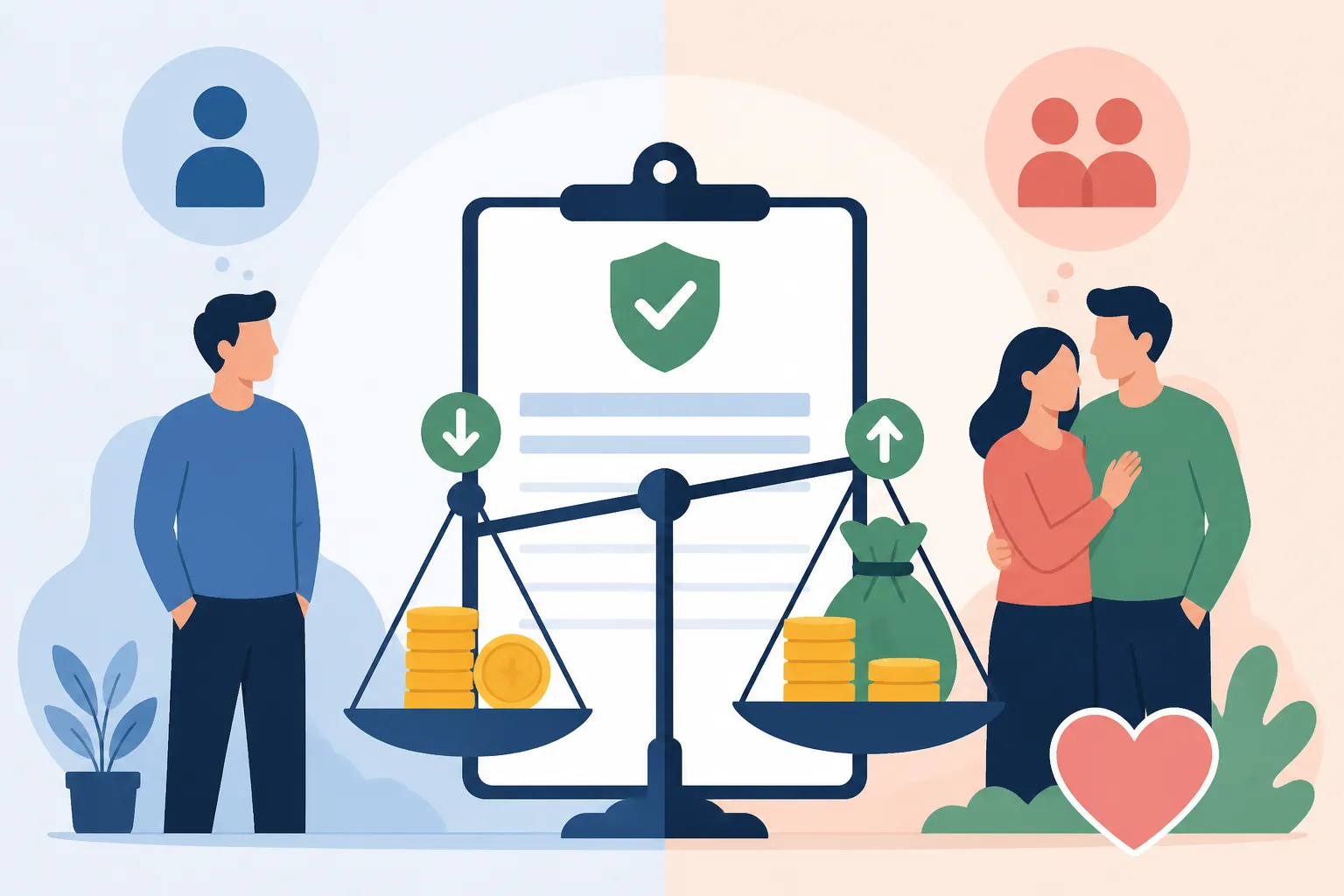
Comparison Table: Marital Status and Tax Benefits
| Feature | Single / Cohabiting | Married / Registered Partners |
|---|---|---|
| Personal Allowance | Individual use only. Unused amount is lost. | Unused amount transfers to spouse automatically. |
| Interest Deductions | Only the person named on the loan can deduct. | Can be shared or moved to the highest earner. |
| Capital Gains/Losses | Losses only offset your own future gains. | Losses can offset spouse's gains in the same year. |
| Topskat (Top Tax) | Individual thresholds apply strictly. | Some flexibility in calculating joint capital income. |
| Joint Liability | No liability for partner's tax debt. | Spouses are jointly liable for tax debts incurred during marriage. |
| Foreign Assets | Reported individually. | Reported individually, but impact shared income. |
Divorce and Separation: The Tax Impact
Unfortunately, not every marriage in Denmark ends in a "happily ever after," and the tax implications of a split are just as significant as the wedding. The moment you file for legal separation (separation) or divorce (skilsmisse), the clock starts ticking on your joint tax benefits. Generally, the tax benefits of marriage persist until the end of the calendar year in which the cohabitation ceases.
This means that if you move out in March, you may still be able to benefit from the shared allowance until December 31st. However, you must update your Preliminary Tax Assessment (Forskudsopgørelse): Avoiding Tax Debt immediately to reflect your new status for the following year. Failing to do so is a leading cause of "back-tax" shocks for newly single expats. Dealing with SKAT while navigating a divorce is incredibly stressful, particularly if you also need to manage Claiming Deductions for Alimony and Child Support Payments.
The Year of Separation
During the year you separate, the "transfer of allowance" still functions if you are still legally married. However, once the divorce decree is final or the new year begins, you revert to individual status. It is crucial to determine who will claim the deductions for any shared assets, such as the family home. If you are selling a property during a divorce, the way you report the interest and the potential "profit" (though primary residences are usually tax-free in Denmark) requires careful coordination.
For many expats, a divorce also means moving money across borders to settle assets. Wise is often the preferred tool here because it allows for transparent, documented transfers that can be shown to lawyers or tax authorities if the source of funds is questioned. If your divorce involves assets in the US or other countries, Taxes for Expats becomes an invaluable ally in ensuring that the division of property doesn't trigger an accidental tax "event" in two different jurisdictions.
Alimony and Child Support Deductions
One of the few "silver linings" in a Danish divorce is the tax deductibility of alimony (ægtefællebidrag). If you are paying alimony to an ex-spouse, you can deduct these payments from your taxable income. Conversely, the person receiving the alimony must pay tax on it. This is a vital distinction to understand when negotiating a settlement.
Child support (børnebidrag), however, is handled differently. While you can often get a deduction for a portion of the child support (specifically the "base" amount or normalbidraget), the child does not pay tax on it. If you are the one paying, you must ensure this is registered on your The Annual Tax Assessment Notice (Årsopgørelse): Claiming Deductions. Many people lose out on thousands of kroner simply because they didn't realize they had to manually enter the amount paid to their ex-partner into the SKAT portal.
Practical Steps to Update Your Tax Status
If you have recently married or are planning to, your first stop shouldn't be the jewelry store—it should be Borger.dk. While the system is automated, it isn't instantaneous. You should check your "Skatteoplysninger" (tax information) to see if the marriage is registered. If you married abroad, you must bring your apostilled marriage certificate to your local International Citizen Service (ICS) or your municipality's "Folkeregister" to have it entered into the system.
Once registered, log into SKAT and adjust your Preliminary Tax Assessment (Forskudsopgørelse): Avoiding Tax Debt. Look for the section on "Egen personlig indkomst" and ensure your spouse's CPR number is linked. If you anticipate your spouse will earn less than the personal allowance, you can sometimes adjust your own tax rate immediately to see more money in your monthly paycheck.
Finally, don't forget the peripheral deductions. If your marriage means you have moved to a new home further from work, make sure you are How to Register Your Daily Commute Distance on Your Forskudsopgørelse. Every kilometer counts, and when combined with a transferred personal allowance, it can mean the difference between struggling with the high cost of living in Copenhagen and actually having enough left over for a nice dinner out. For those with complex international lives, a quick consultation with Taxes for Expats can provide the peace of mind that your Danish tax optimizations aren't creating a headache elsewhere. And for the day-to-day management of your now-joint finances, keeping a Wise account ready for those international transfers will keep your costs down and your transparency up.
Disclaimer
The information provided in this guide is for informational purposes only and does not constitute professional tax, legal, or financial advice. Danish tax laws and rates are subject to change annually. While we strive to keep this information up to date for 2026, you should always consult with a qualified tax professional or contact Skattestyrelsen directly regarding your specific circumstances, especially if you hold assets or citizenship in multiple countries.