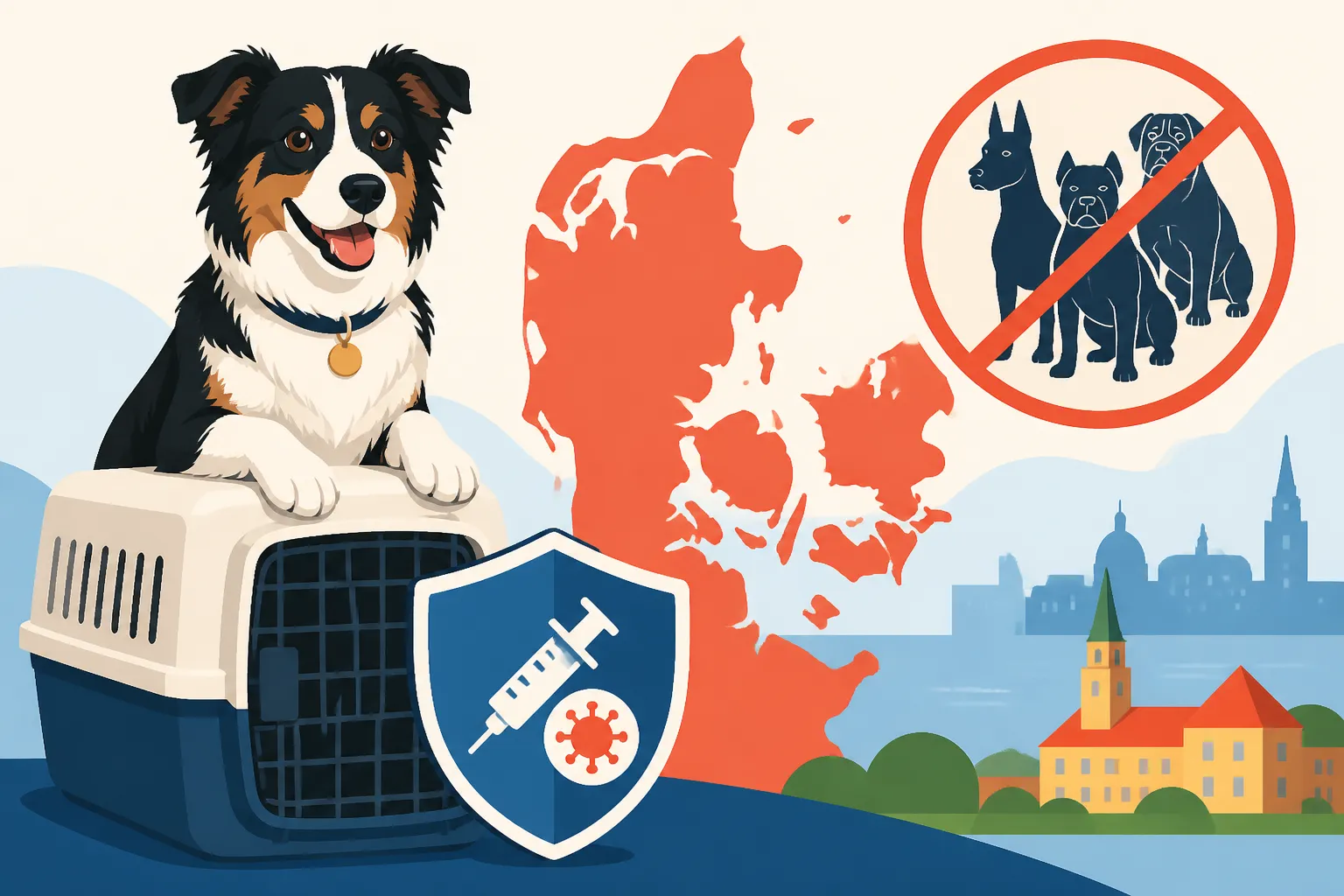
Bringing Your Dog to Denmark: Rabies Titres and Banned Breeds
Oh, moving to Denmark with a furry family member! Believe me, as an expat who's been through the bureaucratic labyrinth here more times than I care to count, I know the anxiety that comes with it. You're not just moving yourself; you're moving a creature who depends entirely on you, and Denmark has some of the strictest rules out there for animal imports. This guide is here to walk you through every single hurdle, from those crucial rabies tests to understanding the notorious banned breeds list, so you can bring your beloved dog safely to your new Danish home without any nasty surprises.
The Doggy Dilemma: Navigating Denmark's Strict Pet Import Regulations
Bringing your dog to Denmark isn't as simple as hopping on a plane. The Danish authorities, under EU regulations and their own national laws, are incredibly particular about animal health and identification to prevent the spread of diseases and manage dog populations. Missing even one small detail can lead to your pet being refused entry, quarantined, or, in the worst-case scenario, even euthanized. It sounds harsh, but it's the reality, and understanding these rules upfront is your first, best defense.
Rabies Vaccination and Titre Test: The Non-Negotiables
This is arguably the most critical and time-consuming part of the whole process. Denmark, like many other EU countries, is considered rabies-free, and they want to keep it that way. For your dog to enter, they must be vaccinated against rabies and, if coming from a "high-risk" country (which includes many non-EU countries like the USA, Canada, UK, Australia, etc.), they absolutely must undergo a rabies antibody titre test.
First, your dog needs to be microchipped before receiving their rabies vaccination. I repeat, microchipped first! If the microchip is implanted after the vaccine, that vaccine isn't considered valid, and you'll have to start over. Once microchipped, your vet can administer the rabies vaccine. After this initial vaccination, you must wait a minimum of 21 days before a blood sample can be taken for the titre test. This waiting period ensures the vaccine has had time to generate an immune response.
Then comes the blood test itself, sent to an EU-approved laboratory to measure the level of rabies antibodies in your dog's blood. The result must show a level of at least 0.5 IU/ml. This is where many expats hit a snag: once you have a successful titre test result, you must wait another three months from the date the blood sample was taken before your dog can enter Denmark. Yes, you read that right, three months. This means the entire process, from initial vaccination to being allowed entry, can easily take four to five months. Start early, my friend, start very, very early. You don't want to be stuck in limbo with your dog far away.
Microchipping and EU Pet Passport: Your Dog's ID
Every dog entering Denmark must be identified by a microchip that complies with ISO standard 11784 or 11785. If your dog has an older microchip, or one that doesn't meet these standards, you'll need to either have a compliant one implanted (and ensure all vaccination records refer to this chip) or carry a compatible scanner with you. Most vets outside the EU can provide this, but it's worth double-checking.
For dogs coming from other EU countries, an EU Pet Passport is your golden ticket. This blue booklet is issued by an authorized veterinarian in an EU member state and contains all your dog's vital information: microchip number, rabies vaccination details (including validity dates), and the results of any rabies titre tests. It essentially serves as your dog's official travel document within the EU. If you're coming from a non-EU country, you won't have an EU Pet Passport initially. Instead, you'll need a health certificate, which we'll cover next. Once in Denmark, a local vet can issue an EU Pet Passport for your dog based on their existing documentation. This will make any future travel within the EU much simpler.
Health Certificates and Worming Treatment: The Final Checks
For dogs arriving from non-EU countries, or "third countries," an official health certificate is mandatory. This document must be issued by an authorized, government-approved veterinarian in your country of origin within 10 days of your dog's planned arrival in Denmark. It certifies that your dog is healthy, fit to travel, and meets all the specific import requirements, including the microchip and rabies vaccination/titre test details. This isn't just a regular vet check-up; it needs specific language and official stamps to be valid. Ensure your vet is familiar with EU import requirements or can consult their national animal health authority.
Additionally, some countries (like the UK, Finland, Malta, Ireland, and Norway) have specific requirements regarding tapeworm treatment. If your dog is travelling to Denmark from a country other than these, and then returning to one of them, or if you're directly importing from some specific non-EU territories, they may need to be treated against Echinococcus multilocularis (a type of tapeworm). This treatment must be administered by a vet 1-5 days (24-120 hours) before your dog's scheduled entry into Denmark, and documented in the pet passport or health certificate. While not always required for entry into Denmark, it's critical if you plan to travel from Denmark to one of these listed countries in the future, so it's good practice to be aware of. Always check the latest requirements from the Danish Food and Veterinary Administration (Fødevarestyrelsen) for the most up-to-date information, as these rules can sometimes change.
The Heartbreaking Reality: Denmark's Banned Breed List
Now, this is where things get genuinely tough, and I can't sugarcoat it. Denmark has one of the most stringent and controversial banned breed lists in Europe. If your dog, or even a mixed breed that looks like one of these, is on this list, you are effectively barred from bringing them into the country. The law doesn't care about your dog's temperament or how loving they are; it's based solely on breed or visual resemblance. This has caused immense heartache for many expat families.
The Full List of Banned Breeds and Crossbreeds
The current list of dog breeds banned in Denmark includes:
- American Staffordshire Terrier (Amstaff)
- Pit Bull Terrier
- Tosa Inu
- Fila Brasileiro
- Dogo Argentino
- American Bulldog
- Boerboel
- Kangal (or Karabash)
- Central Asian Ovtcharka (Centralasiatisk Ovtcharka)
- Caucasian Ovtcharka (Kaukasisk Ovtcharka)
- South Russian Ovtcharka (Sydrussisk Ovtcharka)
- Tornjak
- Sarplaninac
Crucially, this ban extends to crossbreeds of these dogs. So, if your beloved rescue dog is, for example, a Staffordshire Bull Terrier mix that happens to resemble an American Staffordshire Terrier, you're going to face an uphill battle, if not outright refusal. The Danish authorities err on the side of caution, and the burden of proof is entirely on you to demonstrate your dog is not a banned breed or a crossbreed of one. There's also an "eight-year rule" for dogs acquired before March 17, 2010. If you legally owned one of these breeds before that date, you were allowed to keep them, provided they were registered, microchipped, and always leashed and muzzled in public. However, for anyone moving to Denmark now, this rule offers no relief; new imports of these breeds are strictly forbidden.
Proving Your Dog's Breed: The Burden is on You
The gravest part of this law is that if there is any doubt about your dog's breed, the authorities will often assume the worst. Imagine being at the border, exhausted from travel, only to be told your dog resembles a banned breed. It's a terrifying prospect. To avoid this, you would need rock-solid documentation from an official kennel club showing a clear pedigree, a sworn statement from your vet detailing the breed and any mix, and possibly even genetic testing results. Even then, there are reports of individuals facing challenges.
The consequences for having a banned breed (or one deemed to be a banned mix) are dire. Your dog could be refused entry, confiscated, and either deported back to your home country (at your expense) or, in extreme cases, ordered to be euthanized. This is why if you own a breed that is on this list, or might be mistaken for one, you must seek legal advice from a Danish immigration lawyer before even considering the move. Do not take this lightly; it is a life-or-death matter for your pet.
Advice for Owners of 'Questionable' Breeds
If your dog is a breed that is not explicitly on the list but might be visually similar to one (e.g., certain types of Mastiffs, Bull Terriers, or even some larger Labrador mixes that could be mistaken for an American Bulldog cross), you need to be extremely cautious. My advice, heartbreaking as it may be, is to seriously reconsider your move if you cannot unequivocally prove your dog's non-banned lineage.
Before you even book a flight, gather every piece of documentation you can: pedigree papers, veterinary records from birth, breeder statements, and multiple photos clearly showing your dog's features. A DNA test, while not always officially recognized by Danish authorities as sole proof, might bolster your case and give you peace of mind. Consult with a Danish animal welfare organization or an expert on Danish pet import laws for personalized advice. Unfortunately, for some, the reality is that moving to Denmark with their cherished dog might simply not be an option due to these strict regulations. It’s a harsh reality, but one you must confront head-on.
Beyond the Border: Setting Up Life with Your Dog in Denmark
So, you've cleared the initial hurdles and your wonderful dog has arrived in Denmark! Congratulations! Now, let's talk about the practicalities of making a new life together in a new country, because the administrative tasks don't stop at the border.
Finding Pet-Friendly Accommodation: A Real Challenge
One of the biggest headaches you'll encounter as a dog owner in Denmark is finding suitable housing. Danes love their dogs, yes, but many landlords are incredibly hesitant to allow pets in rental properties. It's not uncommon to see "No pets allowed" explicitly stated in rental agreements. This makes the housing search significantly more difficult, especially in popular cities like Copenhagen or Aarhus.
You might find yourself needing to broaden your search to smaller towns or slightly outside the city centers, where landlords might be more flexible. When you do find a potential place, be upfront about your dog. Don't try to hide them; it will only lead to trouble down the line and potentially jeopardize your lease. Be prepared to offer extra deposit money or provide glowing references from previous landlords about your dog's behavior. Showing your landlord a picture of your well-behaved, vaccinated, and insured dog, along with a "dog CV," can sometimes help. Websites like Spotahome might offer filters for pet-friendly properties, which can be a real time-saver in a competitive rental market. However, even with such tools, be prepared for a longer and more challenging housing search than your pet-free counterparts. It's a real struggle, and I know many expats who've compromised on their ideal location just to find a roof for their canine companion. You can find more comprehensive advice in our guide on Renting in Denmark: Complete Guide for Expats (2027).
Travel Logistics: Flights, Ferries, and Border Control
When planning your dog's journey, whether by air or sea, research is paramount. Most airlines have strict rules regarding pet transport, often requiring specific IATA-compliant crates, health certificates issued within a certain timeframe, and climate-controlled cargo areas. Some airlines only allow smaller dogs in the cabin, while larger dogs must travel as checked baggage or cargo. Always confirm with your chosen airline well in advance, as rules can vary and change. Consider direct flights to minimize stress for your dog.
If you're coming from a nearby country, ferries can be a less stressful option. Companies like Scandlines, for example, allow pets on board, often with designated pet areas or cabins. Again, check their specific rules regarding leashes, muzzles, and where your dog can be during the journey. Upon arrival in Denmark, you are legally obliged to declare your pet at border control. This is where all your meticulously gathered paperwork – pet passport or health certificate, vaccination records, and titre test results – will be reviewed. Be prepared for potential delays and have all documents easily accessible. Remember, even if you are traveling from within the EU, they can still perform checks.
Post-Arrival: Vet Registration and Pet Insurance
Once you've settled in, one of the first things you must do is register your dog with a local Danish veterinarian. They can then issue an EU Pet Passport if your dog doesn't already have one, and ensure your dog's details are on file for future vaccinations or health needs. This also helps with integrating your dog into the local system.
Another absolutely mandatory step for dog owners in Denmark is taking out a third-party liability insurance, known as hundeforsikring. This insurance covers any damage or injury your dog might cause to other people, animals, or property. It doesn't cover your dog's own vet bills, but it's a legal requirement, and failing to have it can lead to hefty fines. Many insurance companies offer this, so shop around for the best coverage and price. While hundeforsikring is mandatory, optional health insurance for your dog (to cover vet visits, surgeries, and treatments) is highly recommended. Veterinary care in Denmark can be expensive, and a good pet health insurance policy can save you a significant amount of money in case of illness or accident. Consider companies like Agria or Tryg for these types of policies. Don't forget, you'll also need to get your CPR number and set up your finances, so make sure you've got your new phone number sorted for those first essential calls – perhaps with an eSIM like Airalo to ensure connectivity right from the start.
A Tail of Two Worlds: Dog Ownership Culture and Rules in Denmark
Dog ownership in Denmark comes with a distinct set of cultural expectations and legal responsibilities. While Danes generally love animals and appreciate well-behaved dogs, there are strict rules to ensure public safety and cleanliness. Understanding these nuances will help you and your dog integrate smoothly into Danish society.
Leash Laws and Public Spaces
The general rule of thumb in Denmark is that dogs must be kept on a leash in all public areas, including urban parks, streets, and most beaches during specific seasons (typically from April to September). In urban environments, this is strictly enforced, and you could face a fine if your dog is caught off-leash.
However, Denmark also boasts a fantastic network of designated "dog forests" (hundeskove). These are areas, usually within larger forests or green spaces, where dogs are allowed to run off-leash, provided they are under voice control and not causing disturbance to wildlife or other visitors. These hundeskove are a godsend for dogs who need to stretch their legs freely. Look for signs at forest entrances indicating whether it's a hundeskov and what the specific rules are. Always ensure your dog's recall is solid before letting them off-leash, even in these designated areas. For general public areas and beaches, it’s best to keep them leashed and be aware of any local signage.
Scooping the Poop: It's Mandatory and Monitored
This might seem obvious to many, but in Denmark, the "scoop the poop" rule is taken very seriously, and there's virtually zero tolerance for leaving dog waste behind. Failing to pick up after your dog can result in a fine, and trust me, your Danish neighbors won't hesitate to give you the "stink eye" or even report you. Public bins, often with dispensers for poop bags, are widely available in parks and urban areas. Always carry extra bags with you. This is a small but crucial part of being a responsible dog owner and fitting into Danish society.
Socializing Your Dog: Training and Dog Schools
Danes value well-trained and socialized dogs. Many dog owners attend training classes (known as hundetræning) from puppyhood through adulthood. These classes not only teach basic obedience but also help with socialization, which is key to having a happy, well-adjusted dog in a country with specific social rules. Finding an English-speaking dog trainer might take a bit of searching, but it's well worth the investment. It can also be a great way to meet other dog owners and integrate into the local community. Don't be surprised if your Danish friends assume your dog has attended some sort of school; it's a common expectation here.
Here’s a quick overview of the key requirements:
| Requirement | Details | Timeline / Notes |
|---|---|---|
| Microchip | ISO 11784/11785 compliant. Must be implanted before rabies vaccination. | Permanent identification. |
| Rabies Vaccination | Valid, current vaccination. Administered after microchip. | Wait 21 days after primary vaccination before titre test blood sample. Boosters must be kept up to date. |
| Rabies Titre Test | Required for dogs from high-risk (non-EU listed) countries. Blood sample tested at EU-approved lab. Result must be ≥ 0.5 IU/ml. | Blood sample taken at least 21 days after primary rabies vaccination. You must wait 3 months from the date of successful blood sample before entry to Denmark. |
| Health Certificate | For non-EU countries: Issued by official vet in country of origin, certifying health and compliance with import rules. For EU countries: EU Pet Passport. | Within 10 days of travel (for non-EU health certificate). EU Pet Passport is a continuous document. |
| Tapeworm Treatment | For certain countries (e.g., UK, Finland, Malta, Ireland, Norway) or if returning to these. Treatment against Echinococcus multilocularis. | Administered by a vet 1-5 days (24-120 hours) before scheduled entry (or re-entry). Documented in passport/certificate. |
| Banned Breeds | Explicitly banned breeds and their crossbreeds (Pit Bull, Amstaff, Tosa Inu, Fila Brasileiro, Dogo Argentino, American Bulldog, Boerboel, Kangal, Central/Caucasian/South Russian Ovtcharka, Tornjak, Sarplaninac). | Zero tolerance policy. If your dog is on this list or resembles one, they cannot enter. |
| Mandatory Insurance | Third-party liability insurance (hundeforsikring) is legally required for all dog owners in Denmark. Covers damage/injury your dog causes. | Must be obtained immediately upon arrival/registration of the dog. |
| Vet Registration | Register your dog with a local Danish veterinarian for ongoing care and to obtain an EU Pet Passport if needed. | As soon as possible after arrival. |
Bringing your dog to Denmark is undoubtedly a journey filled with paperwork, waiting, and perhaps a bit of anxiety. But with careful planning, meticulous attention to detail, and a deep understanding of the regulations, you can successfully navigate the process. The joy of having your loyal companion by your side in your new Danish home will make all the effort worthwhile. Just remember to start early, stay organized, and always prioritize your dog's well-being throughout the entire relocation. Best of luck on your new adventure!
Disclaimer
The information provided in this guide is intended for general informational purposes only and does not constitute legal or professional advice. While we strive to ensure the information is accurate and up-to-date, rules and regulations regarding pet imports, banned breeds, and other related topics in Denmark can change. It is essential to consult the official websites of the Danish Food and Veterinary Administration (Fødevarestyrelsen), the Danish Agency for International Recruitment and Integration (SIRI), and other relevant authorities, or seek advice from a qualified veterinarian or legal professional specializing in Danish animal law, for the most current and specific guidance pertaining to your individual circumstances. We cannot be held responsible for any decisions made based on the information presented herein.