Wise vs. Revolut in Denmark: Why They Cannot Replace a Danish Bank
If you're new to Denmark, one of the biggest initial head-scratchers, right after wrestling with your CPR number, is figuring out your money situation. You might be thinking, "Great, I'll just use my trusty Wise or Revolut account, easy!" And while these digital financial services are absolute lifesavers for international transfers and multi-currency management, I'm here to gently, but firmly, tell you that they simply cannot replace the foundational necessity of a traditional Danish bank account for your daily life here. This guide will walk you through the nuances, validating your probable frustrations, and showing you why a hybrid approach is truly the Dane way.
Introduction to the Expat Banking Dilemma in Denmark
Moving to a new country often means rethinking everything, especially when it comes to your finances. You've got your visa, your apartment (maybe!), and now you just need to pay for things and get your salary, right? It sounds straightforward, but Denmark, with its highly digitized society, has a unique financial ecosystem that often catches newcomers off guard. The promise of borderless banking from platforms like Wise and Revolut is incredibly appealing, especially when you're navigating the initial maze of bureaucracy.
Why the Hype Around Digital Banks?
Digital banks and financial services like Wise (formerly TransferWise) and Revolut have revolutionized how many of us manage money across borders. They offer fantastic exchange rates, low fees for international transfers, and the convenience of holding multiple currencies in one app. For many expats, these platforms are the first port of call because they're familiar, accessible with minimal paperwork, and often much faster than traditional banks in their home countries. You can send money to family, get paid in different currencies, and often use their debit cards globally without exorbitant foreign transaction fees. They embody the ideal of modern, flexible finance, making them incredibly attractive to anyone living an international life.
The Danish Banking Landscape: A Quick Reality Check
However, Denmark operates on a very specific, integrated financial system that relies heavily on local infrastructure. Unlike many countries where a simple debit card from any major provider works universally, Denmark has its own national debit card system, the Dankort, and a pervasive digital payment app called MobilePay. Crucially, almost all official transactions, from receiving your salary to paying taxes, accessing benefits, or even getting your holiday pay, are routed through a system called NemKonto, which must be linked to a Danish bank account. This isn't just a suggestion; it's the absolute backbone of interacting with the Danish state and virtually every employer. It's often one of the first things you'll hear about after securing your CPR Registration and Your Healthcare Entitlement. Trying to bypass this system with only a foreign digital bank account is akin to trying to drive a car without wheels – you'll quickly discover the limits.
Wise (Formerly TransferWise): A Deep Dive for Denmark-Based Expats
Wise has built a formidable reputation for transparent and cost-effective international money transfers. It's a tool I personally couldn't live without for certain aspects of expat life, but it’s vital to understand its specific utility and, more importantly, its limitations within Denmark.
What Wise Does Best: International Transfers and Multi-Currency Accounts
Wise shines brightest when you need to move money across borders or manage funds in different currencies. Their mid-market exchange rates, coupled with upfront fees, mean you always know exactly what you're paying and what your recipient will receive. This is invaluable for sending money home, receiving payments from international clients, or converting larger sums when you see a favorable rate.
For example, if your family sends you money from the US, or you freelance for a company in the UK, Wise allows you to receive these payments directly into a multi-currency account with local bank details for various regions (e.g., USD, GBP, EUR). This avoids intermediary bank fees and often offers a better exchange rate than a traditional bank transfer. Their debit card is fantastic for travel outside of Denmark or for online purchases where you want to pay in a foreign currency without your Danish bank charging you conversion fees. It's truly a game-changer for the international aspects of your financial life.
Limitations of Wise for Daily Life in Denmark
Here's where the rubber meets the road: Wise, for all its brilliance, is not designed to function as your primary, all-encompassing bank in Denmark. The most significant hurdle is the NemKonto system. Your Wise account cannot be registered as your NemKonto. This means your Danish salary, any government benefits (like housing support or child benefit), tax refunds from SKAT, or unemployment benefits from your A-kasse, simply cannot be paid into your Wise account. They require a Danish-registered bank account.
Furthermore, while the Wise debit card works for many transactions, it's not a Dankort. Many smaller shops, local markets, and even some larger establishments in Denmark are heavily reliant on MobilePay or exclusively accept Dankort for card payments. If a machine only accepts Dankort, your Wise Visa or Mastercard will often be declined. This can be incredibly frustrating when you're trying to pay for groceries or a coffee and find yourself stuck, despite having funds. Integrating with local payment apps like MobilePay is also a no-go, as MobilePay requires a Danish CPR number and a Danish bank account to link to.
Practical Scenarios: When Wise is Your Best Friend
Despite these limitations, Wise remains an indispensable tool for many expats. Imagine you've just arrived, waiting for your CPR number and to set up your Danish bank account. A Wise account can be your temporary financial bridge. You can receive initial funds from abroad, pay for initial expenses, and even pay your rent if your landlord accepts international transfers (though a Danish bank transfer will eventually be required for official rent payments and deposit returns).
Once established, Wise excels at its core function: international transfers. If you regularly send money to family overseas, or if you receive income in foreign currencies, Wise offers a cost-effective and transparent solution that will save you money compared to traditional bank wire transfers. It's excellent for managing a foreign pension or investment income, keeping it separate from your daily DKK expenses. Think of it as your international financial hub, perfectly complementing your necessary Danish bank account rather than replacing it.
Revolut in Denmark: Benefits, Drawbacks, and Daily Use
Revolut is another popular digital finance app that has attracted a large expat following due to its innovative features and user-friendly interface. It goes beyond simple transfers, offering a suite of financial tools, but it too encounters the unique challenges of the Danish system.
Revolut's Offerings: From Budgeting to Crypto
Revolut provides a much broader range of features than just money transfers. Depending on your plan (Standard, Plus, Premium, Metal, Ultra), you can access budgeting tools, split bills with friends, hold and exchange various currencies, invest in cryptocurrencies and stocks, and even get travel insurance or lounge access. Their mobile app is slick and intuitive, making it a favorite for those who like to have all their financial management in one place. For expats, the ability to exchange money at interbank rates (often with fair usage limits on lower-tier plans) and use a multi-currency debit card without hefty fees is a huge draw, especially for cross-border transactions or travel.
You might find Revolut particularly useful for tracking your spending if you're trying to stick to a budget, or for easy peer-to-peer payments with other Revolut users, regardless of their location. It feels like a futuristic financial tool, promising a seamless global money experience, which is why it's so appealing to internationally-minded individuals.
Where Revolut Falls Short in the Danish System
Similar to Wise, Revolut hits a significant roadblock with Denmark's NemKonto requirement. Your Revolut account cannot be designated as your NemKonto. This means that, just like with Wise, your Danish salary, government payments, or tax refunds from SKAT cannot be directly deposited into your Revolut account. This is a fundamental limitation that prevents it from serving as your primary financial account in Denmark.
While Revolut offers virtual and physical debit cards (Visa or Mastercard), these are not Dankort. Consequently, you will encounter the same payment terminal issues as with Wise – certain shops, particularly smaller ones or those with older POS systems, may only accept Dankort or MobilePay. This can lead to awkward moments at the checkout. Crucially, Revolut also does not integrate with MobilePay, Denmark’s dominant payment app, which is used for everything from splitting restaurant bills to paying for items at flea markets. Without a direct link to a Danish bank, you're outside the MobilePay ecosystem, which significantly hampers daily convenience.
Real-World Applications: Maximizing Revolut's Strengths
Despite these vital limitations, Revolut can still be a valuable asset in your expat financial toolkit. It excels as a travel card, allowing you to spend in various currencies with excellent exchange rates when you leave Denmark. It’s also great for managing a separate pot of money for specific expenses, or for budgeting purposes, leveraging its in-app analytics. If you're someone who dabbles in crypto or wants exposure to certain stocks easily, Revolut offers a convenient platform for that, though it's important to understand the associated risks and the Taxes in Denmark Explained: A-Skat, AM-bidrag, and Marginal Rates implications for such investments.
Consider using Revolut for your discretionary spending money, especially when you're looking for better exchange rates for online international purchases or when traveling within the Schengen area. You can easily transfer DKK from your Danish bank account to Revolut when needed, making it a flexible secondary account for specific uses, but never your main hub for Danish official transactions.
The Indispensable Role of a Traditional Danish Bank Account
When you first arrive, the idea of setting up yet another bank account can feel like a chore, especially if you're already using digital-first solutions. However, in Denmark, a local bank account isn't just a convenience; it's a fundamental requirement for functioning within the society. It’s the gatekeeper to integration.
NemKonto: The Absolute Core of Danish Financial Life
Let's talk about NemKonto. This isn't just another account; it's your designated main account for receiving all payments from the public sector. Your salary from a Danish employer, unemployment benefits from your A-kasse, tax refunds, housing benefits, student grants (SU), and pension payments will all go directly into your NemKonto. There’s no getting around it, and neither Wise nor Revolut can fulfill this role. When you receive your CPR number and move to Denmark, registering your NemKonto is one of the very first things you absolutely must do. It acts as a central hub, simplifying public administration and ensuring you receive your funds efficiently. This system is so ingrained that without it, you'd find yourself unable to receive almost any official payment, making life incredibly difficult.
MitID Integration: More Than Just Logging In
Another crucial piece of the Danish digital puzzle is MitID. This personal digital ID is mandatory for accessing virtually all online services in Denmark – from your bank to Borger.dk (the citizen portal), Sundhed.dk (the national health portal), and even many private services. Your MitID is inextricably linked to your Danish bank account. While you initially use your passport to verify your identity for MitID, its daily functionality, especially for banking, is deeply intertwined with your Danish financial institution. Logging into your bank, authorizing payments, signing documents digitally – all of this relies on MitID. Without a Danish bank account, acquiring and maintaining full MitID functionality for financial transactions becomes problematic, effectively locking you out of secure online financial interactions. For instance, without it, even checking your Understanding Your Danish Payslip Lønseddel: Deductions Decoded or filing your taxes with SKAT would be nearly impossible.
Navigating Daily Danish Transactions: Dankort and Betalingsservice
Beyond official payments, your Danish bank account provides the tools for seamless daily transactions. The Dankort, often issued as a Visa/Dankort or Mastercard/Dankort, is the national debit card and is universally accepted. Many shops prefer it due to lower transaction fees for merchants compared to international cards. Relying solely on a Wise or Revolut card means you might occasionally be caught out in places that don't accept foreign cards or MobilePay.
Then there's Betalingsservice. This is Denmark's ubiquitous direct debit system for recurring bills. Your rent, utilities (electricity, water, heating), internet, phone, and insurance premiums are almost always paid via Betalingsservice directly from your Danish bank account. Setting up these automatic payments is essential for avoiding late fees and ensuring your household runs smoothly. Neither Wise nor Revolut offer direct integration with Betalingsservice. Trying to manually pay all these bills via international transfers would be cumbersome, prone to error, and likely incur additional fees, making it an impractical solution for long-term residency. This is a clear case where a traditional Danish bank account is simply non-negotiable for everyday life.
A Side-by-Side Comparison: Wise, Revolut, and Danish Banks
To truly illustrate why digital services like Wise and Revolut, despite their undeniable advantages, can't fully substitute a Danish bank, let's break down their core features in a comparison. This will highlight where each excels and, more critically, where they fall short in the unique Danish context.
Key Features and Services Matrix
Here's a quick overview of how these services stack up against the essential needs of an expat in Denmark:
| Feature/Service | Wise (Digital Finance) | Revolut (Digital Finance) | Traditional Danish Bank (e.g., Danske Bank, Nordea, Nykredit) |
|---|---|---|---|
| NemKonto Registration | No | No | Yes (Mandatory for public payments) |
| MitID Integration | Limited (mostly for verification, not daily banking actions) | Limited (mostly for verification, not daily banking actions) | Yes (Fully integrated for all online banking and public services) |
| Dankort Availability | No (Offers Visa/Mastercard debit) | No (Offers Visa/Mastercard debit) | Yes (Standard for debit cards, often combined with Visa/Mastercard) |
| MobilePay Integration | No | No | Yes (Directly links to Danish bank account) |
| International Transfers | Excellent (low fees, mid-market rates, multi-currency accounts) | Excellent (interbank rates, multi-currency, some limits) | Good (higher fees, less competitive rates, slower) |
| Local DKK Payments | Via card/bank transfer (if recipient accepts international) | Via card/bank transfer (if recipient accepts international) | Excellent (instant local transfers, Betalingsservice) |
| Bill Payments (Betalingsservice) | No | No | Yes (Essential for automated recurring bills) |
| Salary/Government Payments | No (Cannot be NemKonto) | No (Cannot be NemKonto) | Yes (Directly into NemKonto) |
| In-Person Bank Branches | No | No | Yes (Customer service, complex issues, advice) |
| Credit Cards/Loans | No | Limited (some credit products in certain markets) | Yes (Based on credit history, often requires permanent residency) |
| Tax Reporting | Provides statements (requires manual consolidation) | Provides statements (requires manual consolidation) | Integrated reporting for Danish tax purposes |
Cost Analysis: Fees, Exchange Rates, and Hidden Charges
When it comes to costs, digital banks often shine for international transactions. Wise is renowned for its transparent, low-fee structure and use of the mid-market exchange rate, making it incredibly cost-effective for sending and receiving money in foreign currencies. Revolut also offers excellent interbank exchange rates, particularly for its premium users, though some fair usage limits may apply for free accounts, especially on weekends.
Traditional Danish banks, on the other hand, typically have higher fees for international transfers and less favorable exchange rates. However, they are often free for essential domestic transactions like bank transfers, bill payments, and ATM withdrawals within Denmark. They might charge a monthly fee for your account, but this cost is usually offset by the seamless integration into the Danish financial ecosystem, including services like Betalingsservice which save you time and potential late fees. When considering Cost of Living in Denmark 2026: Budgets for Singles and Families, these small, recurring fees for Danish banks are often a necessary trade-off for convenience and functionality.
It's also worth noting that some digital banks might charge fees for certain card transactions (e.g., ATM withdrawals beyond a certain limit) or for certain premium features. Always check the specific pricing plans for Wise and Revolut to ensure you understand all potential charges.
Regulatory Protection and Security for Your Money
This is a critical point that often gets overlooked. Traditional Danish banks are subject to strict Danish and EU regulations, including deposit guarantee schemes. In Denmark, your deposits in a bank are guaranteed up to a certain amount (currently €100,000) by the Guarantee Fund for Depositors and Investors (Garantiformuen) if the bank were to fail. This provides a high level of security and peace of mind.
Wise and Revolut, while regulated in the countries where they operate (e.g., Wise by the Financial Conduct Authority in the UK, Revolut by the Bank of Lithuania as a licensed bank in the EU), are often "e-money institutions" rather than full-fledged banks in every market. While they safeguard your funds by holding them in segregated accounts with tier-1 banks, this is often different from the direct deposit guarantee that traditional banks offer. For instance, Revolut has obtained a banking license in Lithuania and operates as a bank for its EU customers, offering deposit protection. Wise operates under an e-money license in the EU. It's essential to understand the specific regulatory framework under which your funds are held with these digital providers and how it compares to the protections offered by a fully licensed Danish bank. For substantial savings or long-term financial planning within Denmark, the security of a Danish bank is generally considered superior.
Strategic Hybrid Approach: Making Both Work for You
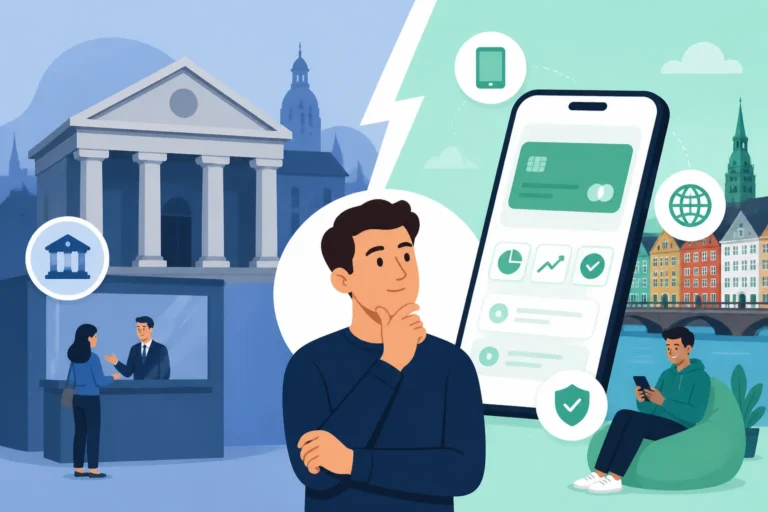
So, what's an expat to do? The answer isn't to pick one or the other, but to intelligently combine the strengths of both traditional Danish banks and innovative digital platforms like Wise and Revolut. This hybrid approach allows you to enjoy the best of both worlds: seamless integration into Danish society for your core financial needs, and flexible, cost-effective international money management.
Optimizing International Money Management
This is where Wise and Revolut truly shine. Use them as your go-to for anything that involves foreign currencies.
- Sending Money Home: If you regularly send money to family in your home country, or anywhere outside Denmark, Wise is likely your most cost-effective option due to its transparent fees and excellent exchange rates. You can easily transfer DKK from your Danish bank account to Wise, convert it, and send it on its way.
- Receiving Foreign Income: If you work remotely for a foreign company, freelance for international clients, or receive passive income from abroad, having a Wise or Revolut multi-currency account allows you to receive these funds directly in their native currency (e.g., USD, GBP, EUR) without incurring conversion fees from a Danish bank. You can then convert these funds to DKK at a favorable rate when you need them for local expenses.
- International Travel: When you travel outside Denmark, particularly outside the Eurozone, using your Wise or Revolut debit card can save you significant money on foreign transaction fees and offer better exchange rates than a typical Danish bank card. Load up the local currency in your digital account before you go, and spend like a local.
- Online International Shopping: For purchases from foreign websites, using a Wise or Revolut card can help avoid currency conversion fees that might be charged by your Danish bank.
By leveraging these platforms for their intended purpose – international money transfers and multi-currency management – you'll maximize your savings and convenience for cross-border financial activities.
Streamlining Local Finances and Bill Payments
Your Danish bank account is, and must be, the bedrock of your financial life in Denmark. It's the engine that powers your daily operations.
- NemKonto and Salary: As soon as you get your CPR number, make it a top priority to open a Danish bank account and register it as your NemKonto. This is non-negotiable for receiving your salary, tax refunds, and any other government benefits. You can learn more about this process in our guide on Opening a Bank Account in Denmark: Document Checklist and Delays.
- MitID Integration: Your Danish bank account will be fully integrated with MitID, providing you with secure access to online banking and all essential public services on platforms like Borger.dk and Sundhed.dk. This digital identity is absolutely crucial for administrative tasks, including managing your Healthcare in Denmark for Foreign Residents: Complete System Guide (2027).
- Daily Transactions with Dankort and MobilePay: Your Dankort (or combined Visa/Dankort) will ensure you can pay everywhere, from the smallest kiosk to the largest supermarket. Crucially, your Danish bank account is the only way to fully utilize MobilePay, Denmark’s dominant payment app. This means easy peer-to-peer payments, paying for goods and services, and interacting seamlessly within the Danish cashless society. Our article on MobilePay and Cashless Denmark: Surviving Without Physical Cash elaborates further.
- Automated Bill Payments (Betalingsservice): Set up all your recurring bills (rent, utilities, insurance, internet, phone) via Betalingsservice from your Danish bank account. This ensures you never miss a payment and avoids the hassle of manual transfers.
- Long-Term Financial Planning: For mortgages, loans, pension contributions, and local investment accounts like the Aktiesparekonto, a Danish bank is your essential partner. They understand the local market and regulatory environment for Investing in Denmark: Aktiesparekonto, Taxes, and Broker Options.
Long-Term Financial Planning and Danish Residency
As you settle into Denmark for the long haul, your financial needs will evolve beyond just daily transactions and international transfers. This is another area where the robust services of a Danish bank become indispensable. They offer financial advice tailored to the Danish system, including guidance on mortgages (Realkreditlån), investment products that comply with local tax laws, and pension schemes.
When it comes to Taxes for Expats, having a Danish bank account simplifies your financial reporting. Your Danish bank will automatically report certain information to SKAT, and your annual tax assessment (Årsopgørelse) will be much easier to manage when your primary income and local expenses flow through a Danish institution. While Wise and Revolut provide statements, consolidating all your financial data for Danish tax purposes can be more complex if your main income is not through a Danish bank. This is particularly relevant when navigating deductions and ensuring compliance with Danish tax regulations.
A Danish bank account also contributes to building a financial history within the country, which is crucial if you ever need to apply for credit cards, personal loans, or especially a mortgage to buy property. While you might use digital services for niche functions, your fundamental financial integration and long-term security in Denmark will depend on your local bank. It’s about more than just moving money; it’s about becoming a fully functioning participant in the Danish economy and society.
Disclaimer
The information provided in this guide is for general informational purposes only and does not constitute financial, legal, or tax advice. While we strive to keep the information up-to-date, financial regulations and service offerings can change rapidly. Always consult with a qualified financial advisor, tax professional, or the relevant authorities (e.g., SKAT, SIRI, your bank) for advice tailored to your specific situation before making any financial decisions.