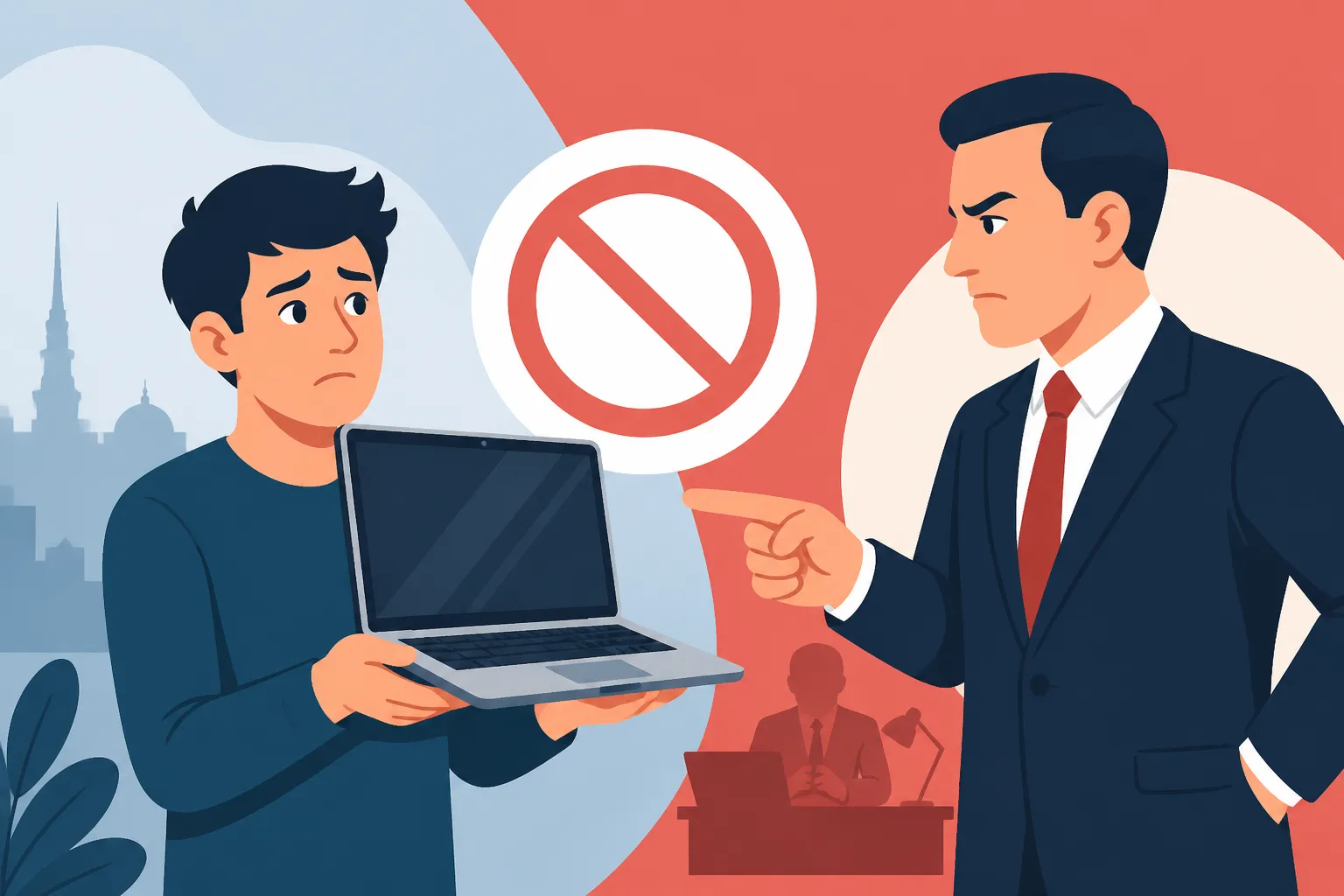
Can an Employer Force You to Use Your Own Laptop?
Moving to Denmark often feels like navigating a maze of unwritten rules and cultural quirks, especially in the workplace. You've landed a job, you're excited, and then suddenly, your employer suggests (or outright expects) you to use your own laptop. It's a situation many of us expats have faced, leaving us scratching our heads and wondering, "Is this even allowed?" This guide will deep-dive into Danish employment norms and legalities surrounding employer-provided equipment, empowering you to understand your rights and confidently address this sometimes-awkward topic.
Understanding Danish Employment Law and Equipment Provision
When you start a new job in Denmark, there's a certain expectation, rooted in strong labor traditions, that your employer will provide you with the necessary tools to do your job. This isn't just about convenience; it's often tied to a broader understanding of workplace safety, efficiency, and legal responsibilities. It’s a bit different from some other countries where "bringing your own device" (BYOD) is more implicitly accepted.
The General Principle: Employer's Responsibility
In Denmark, the general principle is that the employer is responsible for providing the necessary equipment for you to perform your work. This stems from laws like the Arbejdsmiljøloven (Working Environment Act), which, while primarily focused on physical safety, implicitly extends to ensuring employees have a safe and proper working environment, including appropriate tools. Think about it: a carpenter wouldn't be expected to bring their own saw to a construction site, nor would an office worker be expected to supply their own desk or office chair. The laptop falls squarely into this category as a fundamental tool for most modern office-based roles.
This responsibility ensures that all employees, regardless of their personal financial situation, have access to standardized and functional equipment. It also means that the employer can control the software, security settings, and data integrity on the device, which is crucial for business operations and compliance with data protection laws like GDPR. If your job requires specific software, powerful processing, or secure network access, it's inherently the employer's domain to provide a machine that meets those technical specifications. Expecting an employee to foot the bill for high-end professional software or hardware can be seen as shifting a core business cost onto the individual, which doesn't align with the spirit of Danish employment.
The Nuance of "Bring Your Own Device" BYOD Policies
While the default expectation leans towards employer-provided equipment, the concept of "Bring Your Own Device" (BYOD) isn't entirely unheard of in Denmark, but it comes with significant caveats and is far less prevalent than in some other countries. If a company implements a BYOD policy, it needs to be incredibly well-defined, transparent, and crucially, mutually agreed upon. It’s not something an employer can simply force on an employee without clear prior arrangement.
A true BYOD policy, in the Danish context, would typically involve a clear agreement outlining compensation for the employee for the use of their personal device, including wear and tear, potential data usage, and a clear understanding of IT support and security protocols. For instance, an employee might receive a monthly allowance to cover the costs associated with using their personal laptop and phone for work. Without such an agreement and compensation, asking an employee to use their personal device can quickly become a point of contention. Employers often implement BYOD policies to save costs, but they must weigh this against potential risks like data security breaches, compatibility issues with company software, and employee dissatisfaction. It's also worth noting that IT departments can struggle to provide adequate support for a myriad of personal devices, creating more headaches than cost savings.
When Using Your Own Laptop Might Be Considered Acceptable (or Not)
The question of using your own laptop becomes much murkier depending on your employment status and the specific context of your work. It's rarely a black-and-white situation, and understanding these nuances can help you navigate discussions with your employer.
Freelancers, Contractors, and Small Businesses
Here’s where the rules change significantly. If you are working as a freelancer or independent contractor in Denmark, the expectation often flips. As a self-employed individual, you are essentially your own business, and it is generally assumed that you will provide your own tools and equipment to deliver your services. This includes your laptop, software, and any specialized gear required for your trade. You are not an employee but a business entity providing a service to another business.
For freelancers, the costs of equipment, software, and even professional development (like improving your Danish skills with a tutor from iTalki) are typically tax-deductible business expenses. It's crucial for freelancers to understand the distinction between being an employee and being self-employed, as it impacts everything from tax obligations to social security benefits. If you're unsure about the financial implications or how to manage these deductions, consulting a service like Taxes in Denmark Explained: A-Skat, AM-bidrag, and Marginal Rates or a local accountant specializing in expat finances can be invaluable. It is imperative that your contract clearly defines your status as a contractor rather than an employee, to avoid misunderstandings and ensure you are correctly managing your business costs and tax liabilities. This is a vital area for new freelancers in Denmark to get right from the start to ensure compliance and financial well-being.
Temporary Situations and Emergencies
Sometimes, using your own laptop might be a temporary, mutually agreed-upon solution for a specific, short-term situation. Perhaps your company laptop is being repaired, or there's an unexpected delay in ordering new equipment, and you need to get work done urgently. In such cases, it might be reasonable to use your personal device for a very limited period, with the clear understanding that a company-provided solution is imminent. This is often seen as a gesture of goodwill and flexibility from both sides.
However, "temporary" should not turn into "indefinite." If a few days stretch into weeks or even months, that temporary arrangement loses its validity. The employer still has the responsibility to provide the necessary tools. This kind of arrangement should always be discussed openly, and if there are any additional costs incurred by you (e.g., increased internet usage if you're working from home more than usual), these should be reimbursed. Never let a temporary "favor" become a permanent expectation without formalizing it and ensuring you're fairly compensated. It's easy for these situations to drift if not actively managed.
Specific Industry Standards and Roles
While less common in Denmark, certain industries or roles might have different unwritten rules. For example, in some highly specialized creative fields, or very small startups, there might be an expectation for employees to bring certain personal equipment that offers them particular advantages or creative freedom, especially if the company's budget is extremely tight. However, even in these scenarios, this should be explicitly stated during the recruitment process and ideally reflected in the employment contract or a separate equipment policy.
Even if it's "common" in a particular niche, it doesn't automatically make it legally enforceable without agreement. The underlying principle of the employer providing necessary tools remains strong. If you find yourself in such a role, it's crucial to understand the implications for your own equipment's lifespan, warranty, and data security. You should always clarify if any compensation for the use and maintenance of your device will be provided. Without this clarity, you might find yourself footing the bill for equipment depreciation, which quickly adds up.
Your Rights and What to Do If Asked to Use Your Own Device
It's natural to feel a bit awkward when discussing this with a new employer, especially if you're still getting to grips with Danish Work Culture: Flat Hierarchies, Hygge, and Direct Communication. However, knowing your rights is crucial. You're not being difficult by asking questions; you're ensuring a fair and proper working relationship.
Consulting Your Employment Contract
The very first place to look is your employment contract. Danish contracts, while often concise, should detail your terms of employment. Ideally, it should explicitly state that the company will provide the necessary equipment. If it's silent on this, the general legal principle of the employer providing tools for the job still applies by default. Do not assume that silence means consent for you to use your own. Remember that understanding your Employment Rights: Contracts, Holiday Law, and Maternity Leave is a cornerstone of working in Denmark.
If your contract does include a clause about BYOD, read it thoroughly. Does it specify compensation? Does it address data security, maintenance, and who covers repair costs? If the clause is vague or non-existent, you have a strong basis to open a dialogue. Many expats signing their first Danish contract might overlook such details, assuming things will be handled "the right way." It's better to clarify proactively.
Engaging in Dialogue with Your Employer
Approach the conversation professionally and constructively. Frame it as a matter of ensuring you can perform your job to the best of your ability, rather than an accusation. Here are some points to raise:
- Security Concerns: Explain that using a personal device for company work can introduce security vulnerabilities. How will company data be protected? What happens if your personal laptop is lost or stolen with company information on it? This is a legitimate concern for any responsible employer due to GDPR.
- Performance and Compatibility: Will your personal laptop meet the technical specifications required for the work software and tasks? Are there any compatibility issues with company systems? Highlight how a standardized company device ensures seamless operations.
- Wear and Tear/Cost: Gently point out that using your personal laptop for work significantly increases wear and tear, shortening its lifespan. Ask if there's a policy for compensation or a monthly allowance for this. Mentioning the cost of professional software licenses that you might need to acquire personally can also strengthen your case.
- Privacy: Express concern about maintaining a clear separation between your personal and professional digital life. You don't want company IT support accessing your personal files, nor do you want to worry about personal information being mixed with work data.
It's all about finding a solution that works for both parties, but never forget that the onus is generally on the employer to provide the means for you to do your job. Be ready to articulate why a company-provided device is beneficial for the company, not just for you.
Seeking External Advice: Unions and Legal Counsel
If direct dialogue doesn't lead to a satisfactory outcome, or if you feel pressured, it's time to consider external advice. Denmark has strong Trade Unions and A-Kasse: Why Every Expat Must Understand Them that are there to protect employee rights. If you are a member of a union, reach out to them. They can advise you on your specific situation, review your contract, and even intervene on your behalf. Organizations like HK, DJØF, or IDA are well-versed in these types of workplace disputes.
If you're not a union member, or if the situation is particularly complex, you might consider consulting an employment lawyer. While this should be a last resort, it's important to know it's an option. Getting an opinion from an expert can clarify your legal standing and inform your next steps. Remember, your employer generally cannot simply fire you for refusing an unreasonable demand like using your personal laptop without compensation, especially if it's not in your contract. Understanding the nuances of The Danish Flexicurity Model: How Hiring and Firing Actually Works can be reassuring in these situations.
Important Considerations When Using a Personal Device for Work
If, for whatever reason, you do agree to use your own laptop for work, it’s imperative that you fully understand the implications and put protections in place. Many expats overlook these critical details, only to find themselves in a bind later.
Data Security and Privacy Concerns
This is arguably the biggest issue with BYOD. When company data, intellectual property, or sensitive client information resides on your personal laptop, it creates a significant security risk. Who is responsible if that data is compromised due to a virus on your personal machine or if your laptop is stolen? How will the company ensure compliance with GDPR if they don't have full control over the device?
From your personal privacy perspective, do you want your employer's IT department to have access to your personal device, potentially scanning it for company data or security vulnerabilities? What if they need to wipe the device? Will your personal photos, documents, and other private information be affected? Always ensure there's a clear, written policy on data separation, security protocols (e.g., mandatory encryption, specific work partitions), and what access the company IT has to your device. Without such clarity, you are exposing yourself to significant privacy infringements and potential liability.
Wear and Tear, Maintenance, and Insurance
Your personal laptop is an investment, and using it for work will accelerate its wear and tear. Components degrade faster, battery life diminishes, and the overall lifespan shortens. Who will cover the cost of repairs or eventual replacement? If your laptop breaks due down to work-related stress, will your employer reimburse you for the repairs or for buying a new one? This should be explicitly discussed and documented.
Furthermore, consider insurance. Does your personal home contents insurance (Indboforsikring) cover damage or theft of your laptop when it's being used for work? Often, standard personal policies have limitations for equipment used for professional purposes. You might need specific coverage, which should ideally be provided or reimbursed by your employer. Ignoring these details can leave you with a hefty bill if something goes wrong.
Software Licensing and IT Support
When you use your own laptop, questions immediately arise about software. Will the company provide you with licenses for necessary professional software, or are you expected to purchase them yourself? Software licenses can be incredibly expensive, and this cost should absolutely not fall to you.
Equally important is IT support. If you're using your personal machine, will the company's IT department provide full support for it? What if your operating system is older, or you prefer a different type of hardware that their IT team isn't familiar with? It can be a nightmare for IT to support a diverse range of personal devices, often leading to slower troubleshooting and less efficient workarounds. A company-provided device ensures standardized software, hardware, and dedicated IT support, making your working life much smoother. It's not uncommon for expats to face these kinds of challenges, which can sometimes lead to Workplace Harassment and Stress: Your Rights to Union Representation if not handled correctly.
Here’s a quick overview of potential upsides and downsides for employees considering BYOD:
| Feature | Employee Pros (Limited) | Employee Cons (Significant) |
|---|---|---|
| Familiarity | Use a device you're comfortable with. | Potential need for company-specific software/configurations you're not used to. |
| Personalisation | Can customize your environment. | Company policies might restrict software or system changes. |
| Cost Savings | None (unless receiving substantial compensation). | Increased wear and tear, potential out-of-pocket costs for repairs/replacement, software licenses, increased electricity/internet usage. |
| Security | None. | High risk of data breaches, privacy invasion if company access is required, potential liability for lost/stolen data. |
| Support | None. | Limited to no IT support for personal hardware issues, potential compatibility problems with company systems. |
| Portability | Only carry one device (if you only have one). | Need to keep work and personal data strictly separate, creating mental and digital overhead. |
| Legal/Contract | None (unless well-defined compensation/policy exists). | Vague agreements can lead to disputes over compensation, data access, and device ownership after employment ends. |
| Professionalism | None. | May be perceived as unprofessional if the device is old or struggles with work demands, impacting your ability to deliver high-quality work. |
Remember, your employer has a vested interest in your productivity and the security of their data. Providing you with a dedicated work laptop is usually the most straightforward way to ensure both. If they push back, highlighting these issues often helps them see the bigger picture.
Disclaimer
The information provided in this article is for general guidance only and does not constitute legal advice. While we strive to offer accurate and up-to-date information, individual circumstances may vary. For specific advice regarding your employment contract or legal rights in Denmark, it is highly recommended to consult with a Danish trade union or a qualified legal professional specializing in employment law.