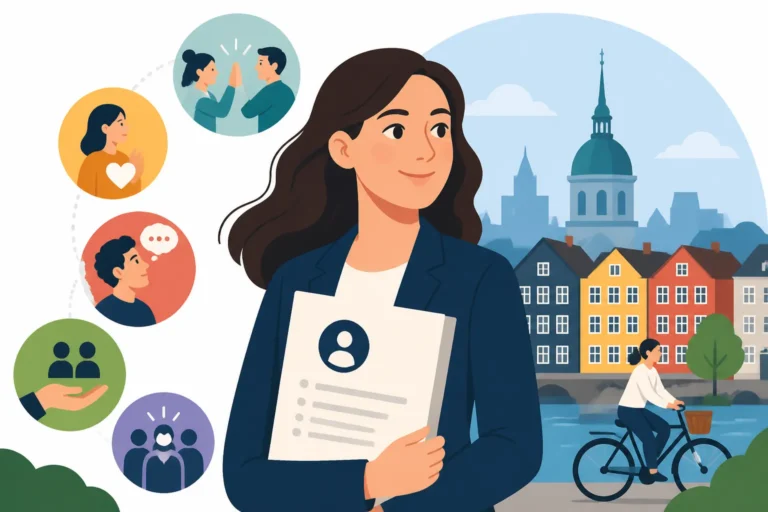
Addressing Your Boss in Denmark: First Names and Flat Structures
One of the most perplexing things when you first land a job in Denmark is figuring out how the heck you're supposed to talk to your boss. In many cultures, there's a clear line, a formal address, and a distinct hierarchy. Here, it often feels like everyone's on a first-name basis, and honestly, it can be a bit jarring and confusing initially. I remember my first team meeting, waiting for someone to call the CEO "Mr. Jensen," only to hear everyone casually using "Peter." This guide is here to walk you through the very Danish nuances of addressing your boss, understanding the flat hierarchy, and making sure you hit the right notes without accidentally causing a cultural faux pas.
The Danish Workplace Philosophy: Flat, Not Flat-Out Casual
The Danish workplace is renowned globally for its flat hierarchical structures, a concept that often takes a while for newcomers to truly grasp. It’s not just about a lack of titles; it’s a deeply ingrained cultural approach to management and collaboration that values equality, consensus, and directness over rigid chains of command. This isn't to say there are no managers or leaders – of course there are – but their role is often more facilitative and collaborative than strictly authoritative.
The Concept of Janteloven and Its Influence
To truly understand why Danish workplaces operate with such a flat structure, you need to know about "Janteloven" – the Law of Jante. This is an unwritten, yet incredibly powerful, social code that dictates that you shouldn't think you're better than anyone else. It discourages individual ambition and boasting, promoting a sense of collective equality. While some argue its negative impacts, in the workplace, it translates into an environment where everyone's voice is theoretically equal, and no one person is elevated above the rest in a way that stifles contribution. This cultural bedrock means that even your CEO is likely to participate in office coffee breaks, clean their own coffee cup, and expect to be addressed just like any other colleague. It fosters an environment where managers are often seen as part of the team, rather than a distant authority figure. This cultural expectation shapes everything, from how decisions are made to how performance feedback is delivered, ensuring that collaboration is prioritized.
Direct Communication vs. Disrespect
For many expats, especially those from cultures where deference to authority is paramount, the Danish style of communication can feel incredibly direct, almost blunt. What might be perceived as disrespectful in another country is often simply considered efficient and honest here. When your Danish boss gives you feedback, it will likely be straightforward and to the point. This isn't a personal attack; it's seen as a way to get things done without unnecessary fluff or ambiguity. They expect you to be equally direct in return, whether you're asking a question, offering an opinion, or even disagreeing with a decision (respectfully, of course!). This directness is a hallmark of Danish professionalism, aiming for clarity and avoiding misunderstandings. The underlying principle is that everyone is an adult capable of handling honest communication, and beating around the bush is a waste of time. It's about ideas and outcomes, not about ego or hierarchy. You'll find this refreshing once you get used to it, though it takes some conscious effort to recalibrate your own communication style.
First Names and the Informal Approach
One of the most immediate and tangible signs of Denmark's flat hierarchy is the widespread use of first names in the workplace. Forget "Mr.," "Ms.," or "Dr." – it's almost universally considered natural and expected to address your boss and colleagues by their first names, regardless of their position or age.
Calling Your Boss by Their First Name
Seriously, just use their first name. From the moment you join a company, whether it's a small startup or a large, established corporation, you'll find that everyone, including the highest-ranking executives, is addressed by their first name. This informality is a cornerstone of the Danish working environment, intended to foster approachability, teamwork, and an open dialogue. It breaks down perceived barriers and encourages a more collaborative atmosphere where ideas flow freely, rather than being filtered through rigid hierarchical channels. It’s not an invitation to be overly casual or unprofessional, but rather a reflection of the egalitarian spirit that permeates Danish society. Trying to use formal titles might actually make your Danish boss feel uncomfortable or signal that you haven't quite grasped the local workplace culture. If you're ever in doubt, just listen to how others address them – but almost certainly, it will be by their first name. This extends to even initial introductions, where a simple "Hej [First Name]" is perfectly acceptable.
Email Etiquette and Meeting Dynamics
This first-name informality extends beyond spoken words into written communication as well. When you send an email to your boss, a simple "Hej [First Name]," or "Hi [First Name]," is the standard greeting. You won't typically see formal salutations like "Dear Mr./Ms. [Last Name]." The tone of emails also tends to be quite direct and to the point, reflecting the general communication style. Long, overly polite preambles are usually eschewed in favor of clarity and conciseness. In meetings, you'll notice a similar dynamic. Everyone is encouraged to contribute, regardless of their position. Your boss might lead the meeting, but they'll often solicit input from everyone, and it's expected that you participate and share your thoughts. There's usually a strong emphasis on achieving consensus, even if it means longer discussions. This can be a significant shift if you're used to meetings where decisions are handed down from on high without much opportunity for junior staff to speak up. It's a sign that your input is valued, so don't hesitate to speak up, even if you feel like you're "just" an entry-level employee.
Navigating Decision-Making and Feedback
The flat structure in Danish workplaces isn't just about how you address people; it profoundly influences how decisions are made and how feedback is exchanged. Understanding these processes is key to thriving in the Danish professional landscape.
Participatory Decision-Making
Danish workplaces often lean heavily into participatory decision-making. This means that instead of a boss simply dictating a directive, there's a strong preference for involving relevant team members in the discussion and decision-making process. The goal is to build consensus and ensure that everyone feels heard and understands the rationale behind a decision. This approach can feel slower than in more hierarchical environments, as it requires more discussion and input, but the benefit is often greater buy-in and commitment from the team once a decision is made. Your manager will often act as a facilitator, guiding the discussion rather than unilaterally making choices. This also means that as an employee, you're expected to contribute your expertise and perspective, not just wait to be told what to do. If you have an idea or a concern, it's not just welcome but often expected for you to voice it. This is a crucial aspect of Danish Work Culture: Flat Hierarchies, Hygge, and Direct Communication.
For example, if your team is considering a new project management tool, your boss might gather everyone for a meeting, present a few options, and then ask for everyone's opinions, even those from junior staff. They might even delegate the research and recommendation phase to a team member. This process builds collective ownership and often leads to better, more sustainable solutions because diverse perspectives are considered. When it comes to managing your personal finances as an expat, understanding how your salary and pension contributions fit into your overall Taxes in Denmark Explained: A-Skat, AM-bidrag, and Marginal Rates is a big deal, and similarly, you might find yourself needing to take initiative in navigating those decisions for yourself.
Giving and Receiving Feedback – The Danish Way
Giving and receiving feedback in a Danish workplace is another area where directness shines, but it's often framed constructively rather than critically. When your boss gives you feedback, expect it to be clear, specific, and focused on improvement. They'll typically tell you what went well, what could be improved, and perhaps suggest ways to do so. This is rarely about blame; it's about growth and efficiency.
Equally important, you are also encouraged to give feedback to your boss. If you have suggestions on how a process could be smoother, how a project could be managed differently, or even how your manager's communication style could be more effective, it's generally okay to voice these thoughts. The key is to do it respectfully, constructively, and usually in a private setting rather than publicly. For instance, instead of saying, "Your instructions were unclear," you might say, "I found it challenging to understand the full scope of that task. Perhaps next time, a written brief could help?" This approach fosters mutual respect and continuous improvement throughout the team, top to bottom. It's also worth noting that formal annual performance reviews might be less rigid and more of an ongoing dialogue than in other countries. You'll also encounter similar directness when looking for resources to learn Danish; platforms like iTalki are often recommended because they offer direct, one-on-one instruction tailored to your needs, much like the direct feedback you'll receive at work.
When Formality Might Still Exist
While the overall trend in Denmark is towards flat hierarchies and informality, it's not a rigid rule without exceptions. Understanding where and why a touch more formality might appear can save you from an awkward moment or two.
Larger Corporations vs. Smaller Businesses
Generally, the flatter, more informal structures are most pronounced in smaller to medium-sized Danish companies and startups. In these environments, the lines between roles often blur, and everyone truly is expected to pitch in and communicate directly. However, in very large, international corporations with a presence in Denmark, or older, more traditional Danish companies, you might encounter a slightly more stratified structure. These companies might have more defined departmental boundaries, more formal meeting protocols, and perhaps a subtle expectation of a bit more deference to senior leadership, especially in very formal settings or when external stakeholders are present. This isn't to say you'll suddenly be expected to use "Mr." or "Ms.," but the casual banter might be less prevalent, and communication might pass through more channels. It's always a good idea to observe the company culture during your first few weeks. Pay attention to how internal emails are structured, the tone of senior leadership during town halls, and how team members interact in different departments. Learning Danish Work Contracts: Permanent vs. Fixed-Term and Essential Clauses will give you further insights into the legal and structural side of your employment.
Public Sector and Traditional Fields
The public sector in Denmark, encompassing government agencies, municipalities, and certain institutions, can also sometimes retain a slightly more traditional approach than the private sector. While still generally less hierarchical than public sectors in many other countries, there might be more emphasis on formal procedures, official titles in external communications, and a greater adherence to established protocols. Similarly, some very traditional fields, like law or certain areas of finance, might have vestiges of a more formal past. However, even in these environments, the internal day-to-day interactions typically lean towards the Danish norm of first-name usage and direct communication.
When in doubt, always err on the side of observing and adapting. It's far better to be slightly more reserved initially and then loosen up as you get a feel for the specific workplace culture, rather than jumping in too casually and misreading the room. Remember, the core values of respect, collaboration, and efficiency remain, even if the outer layers of formality differ slightly.
Here's a quick overview of what to expect:
| Aspect | Typical Danish Workplace (Private Sector) | Potential Variations (Large Corps/Public Sector) |
|---|---|---|
| Addressing Boss | First name, always | Almost always first name, but may vary by context |
| Communication Style | Direct, to the point, collaborative | Still direct, but potentially more structured |
| Decision-Making | Participatory, consensus-driven, inclusive | More defined channels, but still seeks input |
| Feedback | Direct, constructive, mutual (upwards & downwards) | Still direct, but potentially more formalized |
| Email Salutation | "Hej [First Name]," "Hi [First Name]," | "Hej [First Name]," or slightly more formal openers |
| Meeting Etiquette | Open discussion, expected to contribute | More structured, but input still valued |
Navigating these differences will become second nature with time. And as you settle into the Danish professional scene, you might find that understanding The Danish Flexicurity Model: How Hiring and Firing Actually Works will further demystify the fluid nature of Danish employment. You can also explore how to use LinkedIn in Denmark: The Number One Tool for Expat Job Hunters to connect with professionals and understand company cultures before you even apply. Additionally, knowing your Employment Rights: Contracts, Holiday Law, and Maternity Leave is crucial, as is understanding how to utilize Job Centers in Denmark: Mandatory Meetings When Receiving Dagpenge if you ever find yourself between roles. And for those looking to improve their language skills, resources like iTalki can be invaluable for Learning Danish: Sprogcenter, FVU, and the Importance of the Language. Finally, don't forget the importance of the Fredagsbar (Friday Bar): The Importance of Socializing With Danish Colleagues as a casual way to build rapport.
Disclaimer
The information provided in this guide is for general informational purposes only and does not constitute legal, financial, or professional advice. While we strive to provide accurate and up-to-date information, rules and regulations in Denmark can change. Always consult with a qualified professional for advice tailored to your specific situation.